

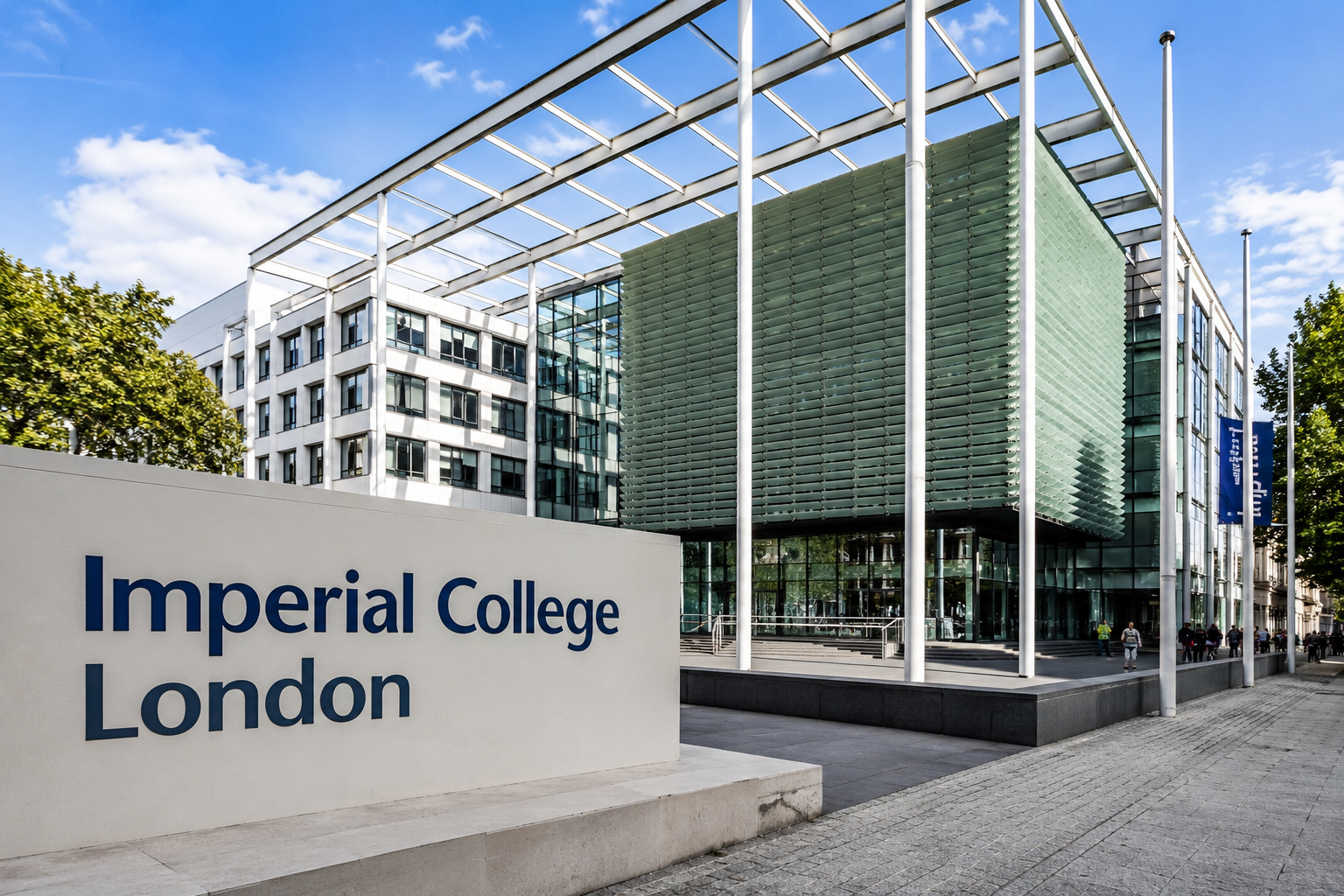
Imperial College London
Introduction
Choosing a university is one of the most significant academic decisions a student will make. For those interested in science, engineering, medicine, technology, and business, Imperial College London consistently appears among the world’s leading universities. Located in the heart of London, the institution is recognized for its research-intensive environment, strong industry partnerships, and focus on solving real-world challenges through innovation.
Unlike many comprehensive universities, Imperial has a specialized academic mission. It concentrates primarily on science, engineering, medicine, and business, allowing it to invest deeply in these disciplines. This specialized approach has helped the university develop a global reputation for research excellence, entrepreneurship, and graduate employability.
Students from more than 140 countries choose Imperial because of its combination of internationally respected academics, modern research facilities, diverse student community, and close connections with industries ranging from healthcare and finance to artificial intelligence and aerospace. Being located in London also provides students with access to one of the world’s largest financial, technological, and cultural centers.
Whether you are a high school student considering undergraduate study, a graduate applicant seeking research opportunities, or an international student comparing universities in the United Kingdom, this guide aims to provide a balanced overview of Imperial College London. It explains what the university is known for, what prospective students should expect, and the factors that make it a distinctive choice for higher education.
What is Imperial College London?
Imperial College London is a public research university located in South Kensington, London, United Kingdom. Established in 1907, it specializes in science, engineering, medicine, and business. The university is internationally recognized for its research output, innovation, and close collaboration with industry.
Students often choose Imperial because of its:
- Strong global academic reputation
- Research-intensive education
- Modern laboratories and facilities
- International student community
- Excellent graduate employment prospects
- Central London location
- Entrepreneurial ecosystem
- Collaboration with leading companies and research institutions
Imperial is particularly well suited for students interested in STEM (Science, Technology, Engineering, and Mathematics), medicine, public health, and business-related disciplines.
Highlights
- Founded in 1907.
- Located in South Kensington, London.
- Specializes in Science, Engineering, Medicine, and Business.
- Home to students representing over 140 countries.
- Known for world-class scientific research and innovation.
- Strong partnerships with industry and government organizations.
- Modern laboratories and research centers.
- Highly competitive admissions process.
- Extensive opportunities for entrepreneurship and startups.
- Located near several internationally recognized museums and research institutions.
- Active global alumni network across academia, business, healthcare, and technology.
- Offers undergraduate, postgraduate, doctoral, and executive education programs.
University Facts
| Category | Information |
|---|---|
| Official Name | Imperial College London |
| Established | 1907 |
| Type | Public Research University |
| Location | South Kensington, London, England, United Kingdom |
| Academic Focus | Science, Engineering, Medicine, Business |
| Campus Setting | Urban |
| Students | Official enrollment figures are updated periodically on the university’s official reports. |
| International Students | Students from over 140 countries |
| Language of Instruction | English |
| Official Website | https://www.imperial.ac.uk |
Note: Enrollment figures, rankings, tuition fees, and admissions statistics may change over time. Always consult the university’s official resources for the latest information.
History of Imperial College London
The Origins
Imperial College London was founded in 1907 through the merger of three well-established institutions:
- Royal College of Science
- Royal School of Mines
- City and Guilds College
The university was established with the goal of advancing education and research in science, engineering, and technology to support the United Kingdom’s industrial and scientific development. Its creation reflected a growing recognition that higher education could play a central role in driving innovation and economic progress.
From its earliest years, Imperial emphasized practical scientific research alongside academic excellence. This approach distinguished it from many traditional universities and helped shape its identity as a research-focused institution.
Growth and Development
Throughout the twentieth century, Imperial expanded its academic offerings while maintaining a strong emphasis on STEM disciplines. Medical education became a major area of growth following the integration of several London medical schools, strengthening the university’s role in healthcare education and biomedical research.
The establishment of Imperial College Business School further broadened the university’s academic portfolio, supporting interdisciplinary collaboration between science, technology, engineering, medicine, and business.
As research funding and international collaborations increased, Imperial invested heavily in advanced laboratories, innovation centers, and partnerships with government agencies and industry leaders. These developments have enabled the university to contribute to fields such as artificial intelligence, climate science, robotics, biotechnology, and public health.
Imperial Today
Today, Imperial College London is recognized as one of the world’s leading research universities. Its academic community includes students, faculty, and researchers from across the globe, fostering an environment that encourages collaboration, innovation, and scientific discovery.
The university continues to focus on addressing complex global challenges through research and education. Areas such as sustainable energy, advanced manufacturing, digital technologies, infectious diseases, and environmental science remain central to its mission.
Its location in London provides additional opportunities for collaboration with hospitals, research institutes, multinational companies, startups, and government organizations, enhancing both academic research and student career development.
Campus Overview
Imperial College London is primarily based in South Kensington, one of London’s most academically significant neighborhoods. Unlike universities located in isolated college towns, Imperial is fully integrated into one of the world’s largest and most internationally connected cities. This urban setting provides students with direct access to research institutions, hospitals, multinational companies, museums, and cultural attractions.
The university’s location shapes much of the student experience. Lectures may be followed by visits to world-renowned museums, internships with leading companies, or collaborative research at nearby institutions. For students interested in innovation and professional networking, London itself becomes an extension of the classroom.
Imperial also maintains additional campuses and specialized facilities that support research, medical education, and innovation across different disciplines.
South Kensington Campus
South Kensington serves as the university’s historic and academic center. Most undergraduate teaching takes place here, along with many postgraduate programs.
The campus is known for its blend of historic architecture and contemporary academic buildings. Modern laboratories sit alongside landmark structures, reflecting the university’s long history of scientific advancement.
Students can easily walk between lecture theatres, laboratories, libraries, cafés, study spaces, and student union facilities, creating a compact yet highly functional academic environment.
Nearby attractions include:
- The Natural History Museum
- The Science Museum
- The Victoria and Albert Museum
- Hyde Park
- Kensington Gardens
- Royal Albert Hall
These nearby institutions enrich both academic learning and student life by offering exhibitions, lectures, networking opportunities, and cultural experiences throughout the year.
White City Innovation Campus
One of Imperial’s most significant recent developments is its White City Campus, designed to expand the university’s research and innovation capabilities.
Rather than functioning as a traditional teaching campus, White City focuses on:
- Scientific research
- Entrepreneurship
- Technology commercialization
- Startup incubation
- Industry collaboration
The campus brings together researchers, entrepreneurs, investors, healthcare organizations, and technology companies, encouraging interdisciplinary collaboration on complex global challenges.
Students interested in innovation and entrepreneurship often benefit from opportunities to engage with startup ecosystems and research commercialization initiatives based at White City.
Silwood Park Campus
Located outside central London, Silwood Park specializes in ecological and environmental sciences.
Research conducted here includes topics such as:
- Ecology
- Evolution
- Environmental management
- Conservation biology
- Sustainable agriculture
The campus provides extensive outdoor research environments that differ significantly from the urban setting of South Kensington.
Medical Campuses
Imperial’s Faculty of Medicine works closely with several NHS teaching hospitals across London.
Medical students gain practical clinical experience in real healthcare environments through partnerships with hospitals and healthcare providers. This integration of academic learning with patient care supports education in medicine, surgery, public health, and biomedical sciences.
Because hospital affiliations may evolve, prospective medical students should consult official faculty resources for the latest clinical placement information.
Campus Environment
Imperial’s campus atmosphere differs from many traditional universities.
Instead of expansive green quads surrounded by residential colleges, Imperial offers:
- Modern academic buildings
- Collaborative research spaces
- Advanced laboratories
- Urban cafés
- Student social spaces
- Innovation hubs
- Technology-focused learning environments
The university’s design reflects its emphasis on research, experimentation, and interdisciplinary collaboration.
Students often describe the campus as academically focused while still offering numerous opportunities to participate in student organizations, sports, volunteering, and cultural events.
Architecture
Imperial combines historic British architecture with contemporary research facilities.
Across campus, students encounter:
- Traditional academic buildings
- Glass-fronted research centers
- Purpose-built laboratories
- Engineering workshops
- Medical teaching facilities
- Collaborative learning spaces
Many recent construction projects have prioritized flexibility, sustainability, and technology integration to support modern research and teaching methods.
Sustainability Initiatives
Environmental sustainability has become an increasingly important area of focus across Imperial College London.
The university has introduced initiatives related to:
- Energy efficiency
- Sustainable building design
- Waste reduction
- Responsible procurement
- Climate research
- Carbon reduction planning
- Biodiversity projects
- Sustainable transportation
Beyond campus operations, sustainability is a major research theme across engineering, environmental science, business, and public policy.
Because sustainability strategies continue to develop, readers should consult the university’s latest sustainability reports for current goals and progress.
Campus Facilities
Imperial provides a wide range of facilities designed to support learning, research, wellbeing, and student life.
Libraries
The university library system offers access to:
- Printed books
- Academic journals
- Digital databases
- Research publications
- Quiet study areas
- Group study rooms
- Computer workstations
Students also have access to numerous electronic resources that support independent research from both on-campus and remote locations.
Library staff assist students with:
- Literature searches
- Research skills
- Referencing
- Academic publishing support
- Data management
Advanced Laboratories
One of Imperial’s greatest strengths is its extensive laboratory infrastructure.
Students in science and engineering disciplines gain experience using advanced equipment in areas such as:
- Robotics
- Artificial Intelligence
- Mechanical Engineering
- Civil Engineering
- Chemical Engineering
- Biomedical Engineering
- Physics
- Chemistry
- Materials Science
- Earth Science
Laboratory experience forms an important part of many undergraduate and postgraduate programs, helping students apply theoretical knowledge to practical problems.
Research Centers
Imperial hosts numerous interdisciplinary research institutes that address global challenges.
Research themes include:
- Artificial Intelligence
- Climate Change
- Infectious Diseases
- Data Science
- Cancer Research
- Public Health
- Clean Energy
- Advanced Manufacturing
- Quantum Science
- Space Technology
Many projects involve collaboration with governments, hospitals, industry partners, and international research organizations.
Innovation and Entrepreneurship Facilities
Innovation is deeply integrated into Imperial’s academic culture.
Students interested in entrepreneurship can access:
- Startup mentoring
- Innovation workshops
- Business competitions
- Networking events
- Accelerator programs
- Commercialization guidance
- Industry partnerships
These opportunities encourage students and researchers to transform scientific discoveries into practical products and services.
Student Union
Imperial College Union plays an important role in student life.
The Union supports:
- Student societies
- Sports clubs
- Cultural organizations
- Academic communities
- Volunteer projects
- Student representation
Hundreds of student-led activities help build friendships, leadership skills, and professional networks outside the classroom.
Sports Facilities
Imperial encourages students to maintain an active lifestyle through a variety of sports and recreational opportunities.
Facilities generally include:
- Fitness centers
- Sports halls
- Squash courts
- Swimming facilities
- Outdoor sports fields
- Exercise studios
Students can participate recreationally or compete in university leagues and national competitions.
Accommodation Support
Although not every student lives on campus, Imperial offers accommodation guidance for undergraduate and postgraduate students.
Housing options may include:
- University-managed residences
- Shared apartments
- Private accommodation
- Family housing (where available)
Because London’s housing market changes regularly, accommodation availability and pricing should always be confirmed through official housing services.
Health and Wellbeing Services
Student wellbeing is recognized as an important component of academic success.
Support services may include:
- Medical services
- Mental health counseling
- Disability support
- Academic wellbeing programs
- Faith and spiritual support
- Financial guidance
- International student support
Students are encouraged to seek assistance whenever needed, and the university provides various resources to promote both physical and mental wellbeing.
Dining and Social Spaces
Across campus, students can find:
- Cafés
- Coffee shops
- Restaurants
- Student lounges
- Study cafés
- Outdoor seating areas
London’s diverse food scene also provides countless dining options within walking distance of the university.
Digital Learning Environment
Imperial invests heavily in educational technology.
Students benefit from:
- Virtual learning platforms
- Online lecture recordings
- Digital coursework submission
- Interactive simulations
- Cloud-based software
- Remote collaboration tools
- Research computing resources
These technologies support flexible learning while complementing traditional classroom teaching.
Accessibility
Imperial continues working to improve accessibility across its campuses.
Support may include:
- Accessible buildings
- Assistive technologies
- Disability advisory services
- Alternative assessment arrangements
- Learning support
- Mobility assistance
Students requiring accommodations should communicate with university support services before beginning their studies whenever possible.
Why the Campus Matters
Imperial’s campuses are designed not simply to deliver lectures but to encourage collaboration between students, researchers, clinicians, entrepreneurs, and industry professionals.
The combination of:
- A globally connected city,
- Advanced research infrastructure,
- Industry partnerships,
- Modern learning spaces,
- Diverse student community,
creates an environment where academic learning is closely connected to practical innovation and professional development.
Academic Reputation
Imperial College London has earned an international reputation as one of the world’s leading universities for science, engineering, medicine, business, and technology. Unlike comprehensive universities that cover nearly every academic discipline, Imperial focuses on a smaller number of specialized fields, allowing it to invest deeply in research, teaching, and innovation.
This focused academic model has helped the university become a destination for students and researchers seeking advanced education in STEM (Science, Technology, Engineering, and Mathematics) and related disciplines.
One of Imperial’s defining characteristics is the close relationship between teaching and research. Undergraduate students are introduced to current scientific developments early in their studies, while postgraduate and doctoral students often work alongside internationally recognized researchers on projects addressing global challenges.
The university also emphasizes problem-solving, interdisciplinary collaboration, and practical application of knowledge. Many degree programs include laboratory work, design projects, research assignments, or industry collaboration, helping students develop both theoretical understanding and practical skills.
Teaching Philosophy
Imperial’s teaching approach encourages students to think critically rather than memorize information.
Across many programs, students are expected to:
- Analyze complex problems
- Apply scientific methods
- Conduct independent research
- Collaborate in multidisciplinary teams
- Present technical findings clearly
- Develop innovative solutions
Teaching methods commonly include:
- Lectures
- Tutorials
- Laboratory sessions
- Project-based learning
- Case studies
- Clinical placements (for medical programs)
- Independent research
This approach prepares graduates for careers in research, healthcare, engineering, finance, consulting, entrepreneurship, and technology.
Research Excellence
Research is central to Imperial’s identity.
The university contributes to advances in areas such as:
- Artificial Intelligence
- Robotics
- Data Science
- Biotechnology
- Climate Science
- Clean Energy
- Aerospace Engineering
- Quantum Technologies
- Biomedical Engineering
- Public Health
- Infectious Diseases
- Cancer Research
Many research projects involve collaboration with governments, hospitals, multinational companies, startups, and international research organizations.
Students benefit from exposure to cutting-edge discoveries that often influence teaching materials and classroom discussions.
Global Rankings
Imperial College London consistently appears among the leading universities in international ranking systems.
Major ranking organizations commonly include:
- QS World University Rankings
- Times Higher Education (THE)
- Academic Ranking of World Universities (ARWU)
- U.S. News Best Global Universities
Although Imperial regularly ranks among the world’s top universities, readers should remember that ranking methodologies differ between organizations. Performance may vary depending on indicators such as research output, academic reputation, employer reputation, teaching quality, citations, and international outlook.
Rather than focusing solely on numerical rankings, prospective students should also evaluate:
- Course quality
- Faculty expertise
- Research opportunities
- Campus environment
- Career support
- Location
- Personal academic goals
Rankings should be considered one factor among many when comparing universities.
Faculties and Schools
Imperial is organized into four main academic divisions.
Faculty of Engineering
The Faculty of Engineering is internationally recognized for research, innovation, and industry collaboration.
Departments include:
- Aeronautics
- Bioengineering
- Chemical Engineering
- Civil & Environmental Engineering
- Computing
- Design Engineering
- Earth Science & Engineering
- Electrical & Electronic Engineering
- Materials
- Mechanical Engineering
Students benefit from extensive laboratory work, engineering design projects, and opportunities to collaborate with industry partners.
Faculty of Medicine
Imperial’s Faculty of Medicine integrates medical education with scientific research and clinical practice.
Areas include:
- Medicine
- Surgery
- Public Health
- Biomedical Science
- Clinical Research
- Medical Education
Medical students gain practical experience through partnerships with NHS hospitals across London.
Faculty of Natural Sciences
This faculty focuses on scientific discovery and fundamental research.
Departments include:
- Chemistry
- Mathematics
- Physics
- Life Sciences
Students receive strong theoretical foundations alongside practical laboratory experience.
Imperial College Business School
The Business School combines management education with science, engineering, healthcare, and technology.
Popular study areas include:
- MBA
- Finance
- Business Analytics
- Innovation
- Entrepreneurship
- Economics
- Marketing
- Risk Management
Its location within a science-focused university encourages collaboration between business students and researchers.
Undergraduate Programs
Imperial offers undergraduate degrees primarily within STEM-related disciplines.
Popular programs include:
Engineering
- Mechanical Engineering
- Civil Engineering
- Chemical Engineering
- Electrical Engineering
- Aeronautical Engineering
- Design Engineering
- Biomedical Engineering
Computing
Students can specialize in areas such as:
- Computer Science
- Artificial Intelligence
- Software Engineering
- Machine Learning
- Cybersecurity
- Data Science
These programs combine theoretical computer science with practical programming experience.
Natural Sciences
Available disciplines include:
- Physics
- Chemistry
- Mathematics
- Biological Sciences
- Earth Science
Many students participate in laboratory research throughout their degree.
Medicine
Imperial’s Medicine program integrates:
- Biomedical science
- Clinical practice
- Research
- Patient care
The curriculum combines classroom instruction with clinical placements in London hospitals.
Postgraduate Programs
Imperial offers a broad range of taught master’s degrees designed for students seeking advanced specialization.
Popular postgraduate fields include:
Engineering
- Artificial Intelligence
- Robotics
- Sustainable Energy
- Advanced Mechanical Engineering
- Structural Engineering
Science
- Data Science
- Applied Mathematics
- Physics
- Chemistry
- Environmental Science
Medicine
- Public Health
- Biomedical Research
- Clinical Sciences
- Genomic Medicine
Business
- MBA
- MSc Finance
- Business Analytics
- Strategic Marketing
- Innovation & Entrepreneurship
Many postgraduate courses include research projects completed under faculty supervision.
PhD and Research Degrees
Imperial is internationally respected for doctoral education.
PhD students work closely with academic supervisors while contributing original research in their chosen discipline.
Research opportunities exist across:
- Engineering
- Medicine
- Physics
- Chemistry
- Biology
- Computing
- Mathematics
- Climate Science
- Health Policy
- Artificial Intelligence
- Quantum Technologies
Doctoral students frequently publish research papers, attend international conferences, and collaborate with global research partners.
Executive and Professional Education
For professionals seeking career advancement, Imperial also offers executive education programs.
These include:
- Executive MBA
- Leadership Development
- Digital Transformation
- Healthcare Leadership
- Finance
- Innovation Management
Many executive programs are designed for working professionals and may use flexible learning formats.
Online Learning Opportunities
Imperial has expanded its digital education offerings in recent years.
Students and professionals may access:
- Online master’s programs (selected subjects)
- Professional certificates
- Executive education
- Short courses
- Continuing professional development (CPD)
The availability of online programs varies by department and academic year.
Why Students Choose Imperial Academically
Students are attracted to Imperial because of its:
- Research-intensive environment
- Specialized STEM education
- International faculty
- Strong employer reputation
- Industry partnerships
- Modern laboratories
- Innovation ecosystem
- Entrepreneurial culture
- Global research collaborations
For students interested in science, engineering, medicine, technology, or business, Imperial provides an environment where academic learning is closely connected with research and real-world applications.
Admissions Overview
Imperial College London has a highly competitive admissions process. The university looks for applicants with strong academic records, subject-specific knowledge, and the ability to succeed in a rigorous learning environment.
Admission decisions are based on several factors, including academic performance, personal statement, references, entrance assessments (where applicable), and interviews for selected programs.
Undergraduate Admissions
Students typically apply through UCAS.
General Requirements
Applicants usually need:
- Strong high school qualifications
- Excellent grades in relevant subjects
- English language proficiency
- Personal statement
- Academic reference
Some programs may also require:
- Admissions tests
- Portfolio (selected courses)
- Interview
Postgraduate Admissions
For master’s and doctoral programs, applicants generally need:
- A recognized bachelor’s degree
- Strong academic performance
- Statement of Purpose
- Academic references
- CV or Resume (for some programs)
- English language test scores (if required)
Research applicants may also need to identify a suitable supervisor before admission.
Required Documents
Common application documents include:
- Academic transcripts
- Degree certificates
- Passport (International Students)
- English language test results
- Personal Statement
- Letters of Recommendation
- CV (where applicable)
Additional documents may be required depending on the program.
English Language Requirements
Applicants whose first language is not English may need to demonstrate English proficiency through approved tests.
Accepted qualifications generally include:
- IELTS
- TOEFL iBT
- Pearson PTE Academic
- Other approved English qualifications
Minimum score requirements vary by course.
Tuition Fees
Tuition fees differ depending on:
- Undergraduate or postgraduate study
- Home or international student status
- Chosen program
Engineering, medicine, and business programs often have different fee structures.
Students should always refer to the official tuition fee pages for the latest figures.
Scholarships & Financial Aid
Imperial offers a variety of funding opportunities, including:
- Merit-based scholarships
- Need-based support
- Departmental scholarships
- Research funding
- External scholarships
Availability and eligibility vary by program and academic year.
International students should also explore scholarships offered by governments and external organizations.
Application Tips
To strengthen an application:
- Maintain excellent academic grades.
- Choose relevant subjects in school or college.
- Write a clear and honest personal statement.
- Highlight research projects, competitions, or internships.
- Apply before the deadline.
- Carefully review all application requirements.
Strong preparation can significantly improve the quality of an application, although admission is never guaranteed.
Why Admissions Are Competitive
Imperial attracts talented students from around the world, resulting in intense competition for many programs. Applicants should focus on demonstrating academic ability, genuine interest in their chosen field, and readiness for a challenging university environment.
tudent Life
Imperial College London offers a diverse and academically focused student experience. Students from over 140 countries create an international campus community where different cultures, ideas, and perspectives come together.
Although academics are demanding, students can participate in clubs, sports, volunteering, and social events throughout the year.
Accommodation
Imperial provides university-managed accommodation for many first-year undergraduate students, while postgraduate students can choose from university residences or private housing across London.
Accommodation options generally include:
- Student halls
- Shared apartments
- Private rentals
- Family accommodation (limited)
Since London housing is competitive, students should apply for accommodation early.
Clubs & Societies
The Imperial College Union supports hundreds of student-led groups covering:
- Academic interests
- Technology
- Entrepreneurship
- Music
- Arts
- Cultural communities
- Volunteering
- Debate
- Gaming
Joining societies is one of the best ways to meet new people and develop leadership skills.
Sports & Fitness
Students can participate in recreational and competitive sports through university clubs.
Popular activities include:
- Football
- Cricket
- Basketball
- Tennis
- Rugby
- Swimming
- Badminton
- Athletics
- Gym & Fitness
Sports help students maintain a healthy balance between academics and personal wellbeing.
International Students
Imperial is one of the UK’s most international universities.
Support services include:
- Visa guidance
- Orientation programs
- English language support
- Academic advising
- Wellbeing services
- Career guidance
These services help international students adjust to studying and living in London.
Research & Innovation
Research is a major strength of Imperial College London.
Key research areas include:
- Artificial Intelligence
- Climate Science
- Robotics
- Biotechnology
- Clean Energy
- Medicine
- Data Science
- Public Health
Students often have opportunities to participate in research projects alongside experienced academics.
Career Services
Imperial’s Careers Service helps students prepare for employment through:
- Career counseling
- CV reviews
- Mock interviews
- Employer events
- Internship support
- Job fairs
Many employers actively recruit Imperial graduates because of the university’s strong academic reputation.
Entrepreneurship
Students interested in starting businesses can benefit from Imperial’s innovation ecosystem through:
- Startup mentoring
- Business competitions
- Networking events
- Innovation programs
- Industry partnerships
These opportunities encourage students to turn ideas into real-world ventures.
Notable Alumni
Imperial College London has produced graduates who have made significant contributions in science, engineering, medicine, business, and public service.
Many alumni have become:
- Scientists
- Engineers
- Doctors
- Entrepreneurs
- Business leaders
- Researchers
- Government advisors
Its global alumni network provides valuable professional and networking opportunities.