

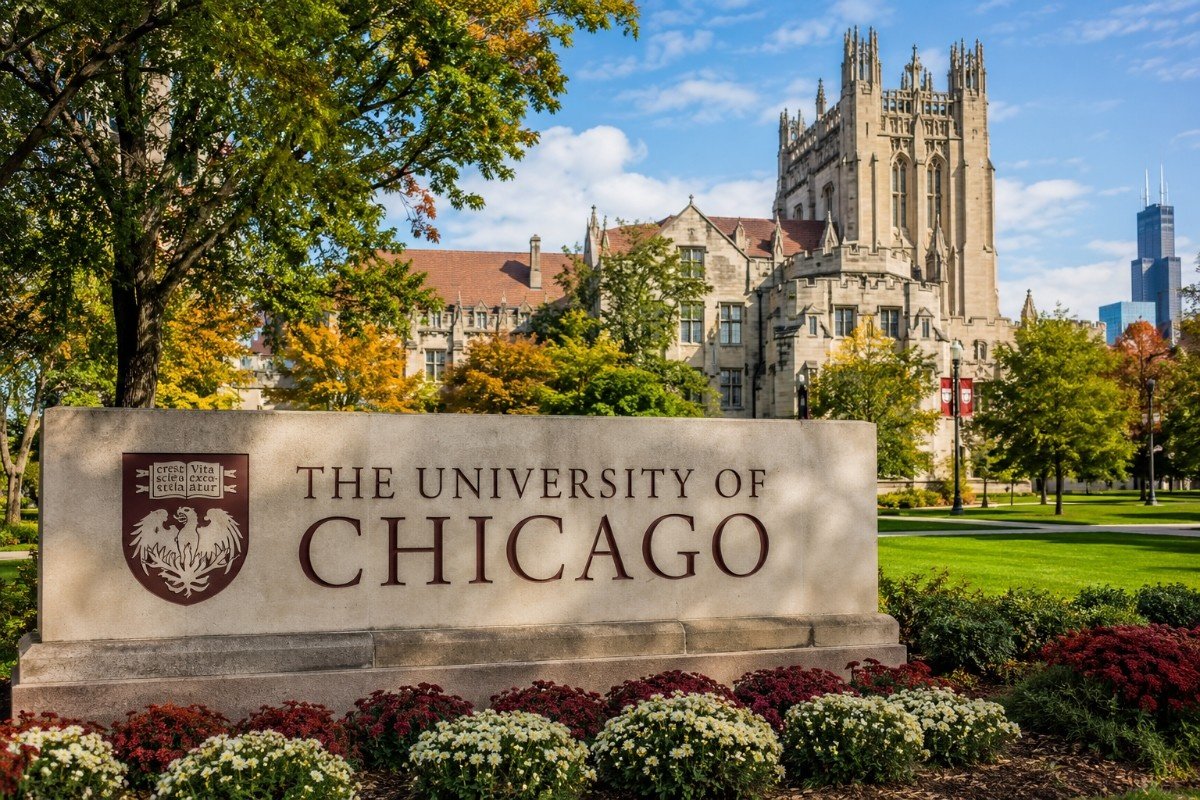
Introduction
The University of Chicago, commonly known as UChicago, is a private research university located in Chicago, Illinois. Founded in 1890, the university has developed a strong academic identity centered on rigorous inquiry, interdisciplinary study, research, and debate.
For prospective students, UChicago is particularly notable for its demanding academic environment and its emphasis on analytical thinking. Undergraduate students study within The College, where the curriculum combines a broad Core curriculum with specialized majors and minors. The university currently lists 68 majors and 57 minors for undergraduate students.
UChicago can be a strong fit for students who enjoy asking difficult questions, conducting research, writing extensively, and exploring subjects across traditional academic boundaries. At the same time, its rigorous academic culture and location in a major US city mean applicants should carefully consider academic workload, personal preferences, and total cost.
Highlights
- Private research university founded in 1890.
- Located in Chicago, Illinois.
- Undergraduate education is centered in The College.
- Offers a broad interdisciplinary Core curriculum.
- Lists 68 undergraduate majors and 57 minors.
- Academic divisions include biological sciences, arts and humanities, physical sciences, and social sciences.
- Strong emphasis on research and critical inquiry.
- Located near the cultural, economic, and professional resources of Chicago.
- Offers undergraduate, graduate, and professional education.
- Provides research opportunities for undergraduate students.
- Career Advancement supports undergraduate students and recent alumni.
- Financial aid policies and costs vary by program and student circumstances.
University Facts
| Category | Information |
|---|---|
| Official Name | The University of Chicago |
| Common Name | UChicago |
| Founded | 1890 |
| Location | Chicago, Illinois, USA |
| Institution Type | Private research university |
| Undergraduate Division | The College |
| Academic Areas | Biological Sciences, Arts & Humanities, Physical Sciences, Social Sciences |
| Undergraduate Majors | 68 |
| Undergraduate Minors | 57 |
| Campus Setting | Urban |
| Main Undergraduate Location | Hyde Park, Chicago |
| Official Website | University of Chicago |
The number of programs and other institutional details can change, so students should consult the latest official university information before applying.
History of the University of Chicago
The University of Chicago was established in 1890 and has grown into a major research university with a distinctive academic culture.
Its history is closely connected with the development of modern research-based higher education in the United States. Over time, the university expanded across the sciences, humanities, social sciences, and professional disciplines.
The institution’s historical importance is relevant to prospective students because its academic culture continues to emphasize questioning, evidence, research, and intellectual debate rather than relying only on memorization or conventional classroom learning.
Campus and Location
The University of Chicago’s main campus is located in Hyde Park, on Chicago’s South Side.
The location gives students access to a major metropolitan environment while maintaining a defined university campus. Chicago itself offers opportunities related to culture, government, finance, business, technology, journalism, healthcare, and the arts.
The city can also function as an extension of the classroom. UChicago notes that students use Chicago for research, coursework, internships, and practical experiences. According to the university’s College site, more than 1,200 undergraduates participate in internships in Chicago each year, while others engage in research assistantships and employment.
For students who prefer a large city, this can be a major advantage. However, applicants who want a traditional college-town atmosphere should think carefully about whether an urban environment suits their lifestyle.
Academic Reputation
UChicago has a reputation for academically demanding and research-oriented education.
One of its defining characteristics is the emphasis on asking why and how, not simply learning established answers. Students are often expected to read critically, analyze evidence, write arguments, and engage with complex ideas.
The university’s undergraduate academic structure combines the Core curriculum with a major or other area of specialization. This approach gives students exposure to multiple academic fields while allowing them to develop deeper expertise.
The university’s academic areas include:
- Biological Sciences
- Arts and Humanities
- Physical Sciences
- Social Sciences
The Division of the Social Sciences, for example, offers doctoral programs in areas including anthropology, economics, history, political science, psychology, and sociology, along with master’s and joint-degree options.
Programs and Courses
Undergraduate Programs
The College offers a wide range of undergraduate majors and minors. Students can study disciplines across the humanities, sciences, and social sciences.
Examples of academic areas include:
- Economics
- Computer Science
- Mathematics
- Physics
- Biology
- Chemistry
- Political Science
- Sociology
- Psychology
- History
- Philosophy
- English
- Public Policy
- Environmental Studies
- Data Science
- Linguistics
- Art and Design-related fields
The complete list of programs should be checked through the latest official academic catalog because program offerings can change.
Graduate Programs
Graduate education is offered across multiple divisions and schools.
Depending on the field, students can pursue:
- Master’s degrees
- PhD programs
- Professional degrees
- Joint degrees
- Interdisciplinary programs
The university is particularly well known for graduate-level research across social sciences, humanities, physical sciences, biological sciences, and professional education.
Applicants should evaluate individual departments rather than relying only on the university’s overall reputation. Graduate admissions requirements, funding, deadlines, and selection processes can vary significantly between programs.
Admissions
Admission to UChicago is highly competitive.
For undergraduate applicants, the process generally involves evaluating the student’s academic preparation, application materials, and overall fit with the university’s academic environment.
Applicants should be prepared to provide relevant materials such as:
- Academic transcripts
- Application form
- Personal essays
- Supplemental essays
- Letters of recommendation, where required
- Standardized test scores, depending on current policy
- English-language proficiency evidence for applicable international applicants
- Financial aid documents, where applicable
Because admissions policies can change, students should verify current requirements through the official UChicago Admissions website before submitting an application.
Application Strategy
A strong application should demonstrate more than high grades.
Applicants should consider showing:
- Academic curiosity
- Intellectual independence
- Strong writing ability
- Depth in areas of genuine interest
- Evidence of meaningful extracurricular involvement
- A clear understanding of why UChicago’s academic environment suits them
Students should avoid treating the application as a simple list of achievements. The strongest applications generally communicate how the student’s interests, experiences, and academic goals connect.
International Students
UChicago attracts students from around the world, making it a relevant option for international applicants seeking a US research university.
International students should pay particular attention to:
- Academic credential evaluation
- English-language requirements
- Application deadlines
- Financial aid policies
- Visa requirements
- Proof of financial resources
- Housing arrangements
- Health insurance requirements
Requirements can vary depending on the degree and applicant category. Students should always check the university’s latest international admissions information before applying.
For international applicants, the total cost of attendance is especially important because expenses can include tuition, housing, food, health insurance, transportation, books, and personal costs.
Tuition and Cost
The total cost of attending UChicago depends on the academic program and individual circumstances.
Students should distinguish between:
- Tuition
- Mandatory fees
- Housing
- Food
- Books and supplies
- Health insurance
- Transportation
- Personal expenses
Graduate students should also examine program-specific tuition structures and funding arrangements.
For example, UChicago’s published 2026–27 graduate living-expense estimates list $29,000 for housing and food, $2,780 for books and course materials, $2,080 for the graduate student service fee, and $5,000 for miscellaneous personal expenses for four quarters. These figures are separate from tuition and may vary by individual circumstances.
Important: Tuition and cost-of-attendance figures change regularly. Students should use the official university financial aid and bursar information for the academic year in which they plan to enroll.
Scholarships and Financial Aid
Financial aid can significantly affect the actual amount a student pays.
Prospective students should investigate:
- Need-based financial aid
- Scholarships
- Grants
- Work-study opportunities
- External scholarships
- Graduate funding
- Fellowships
- Assistantships
UChicago has also announced a significant expansion of undergraduate financial aid beginning in Autumn 2027. According to the university’s May 2026 announcement, students from families with income below $250,000 and typical assets will receive free tuition, while students from families with income below $125,000 and typical assets will also receive free housing, meals, and other fees under the initiative. The policy applies to eligible undergraduate students under the university’s stated conditions.
Students should carefully review the latest official financial aid policies because eligibility criteria and program terms can change.
Student Life
Student life at UChicago combines academics, residential life, student organizations, cultural activities, and access to Chicago.
Students can participate in:
- Student clubs
- Academic organizations
- Cultural groups
- Performing arts
- Publications
- Research organizations
- Athletics
- Community activities
- Career and professional organizations
The university’s environment may appeal to students who enjoy intellectual discussion and academic engagement outside the classroom.
At the same time, students should consider the demanding academic workload. UChicago may be a better fit for students who genuinely enjoy intensive study than for students primarily seeking a relaxed undergraduate experience.
Research and Innovation
Research is central to the University of Chicago’s identity.
Undergraduate students can participate in research through faculty projects, independent research, and programs supporting student scholarship.
For example, the History Department provides opportunities for undergraduate research assistants to work with faculty and offers competitive funding for certain thesis and capstone students conducting archival research.
Across the wider university, research extends into areas such as:
- Economics
- Physics
- Mathematics
- Biology
- Medicine
- Public policy
- Social sciences
- Humanities
- Data and computation
- Energy and environmental research
Students interested in research should examine individual faculty members, laboratories, institutes, and undergraduate research programs when evaluating UChicago.
Career Opportunities
UChicago provides career support through Career Advancement, the university’s undergraduate career services office.
Career support can include:
- Career advising
- Employer connections
- Internship guidance
- Industry-specific preparation
- Job-search support
- Networking
- Professional development
The university states that Career Advancement works with students and recent alumni across different interests and connects them with employers ranging from local nonprofits to multinational companies.
Career outcomes vary significantly by major, industry, degree level, and individual student. Therefore, prospective students should avoid assuming that attending a highly ranked university automatically guarantees a particular career result.
Famous Alumni
The University of Chicago has produced alumni and graduates who have become influential in areas such as:
- Economics
- Science
- Politics
- Business
- Law
- Literature
- Journalism
- Public policy
- Academia
Notable figures associated with the university include Milton Friedman, Saul Bellow, Carl Sagan, Janet Yellen, and David Axelrod, among many others.
The university’s alumni network spans academic, government, business, cultural, and professional fields.
University Comparison
| University | Academic Character | Location | Best Suited For |
|---|---|---|---|
| University of Chicago | Analytical, research-intensive, interdisciplinary | Chicago | Students who enjoy rigorous academic inquiry |
| Harvard University | Broad liberal arts and research environment | Cambridge | Students seeking extensive academic and extracurricular breadth |
| MIT | Highly technical and innovation-focused | Cambridge | Students focused on science, engineering, and technology |
| Stanford University | Interdisciplinary and entrepreneurial | Stanford | Students interested in technology, innovation, and entrepreneurship |
| Princeton University | Undergraduate-focused, research-intensive | Princeton | Students seeking close academic engagement and research |
| Yale University | Broad liberal arts and residential college experience | New Haven | Students seeking interdisciplinary study and strong campus traditions |
The right choice depends on the student’s academic interests, financial situation, preferred campus environment, and career goals. No single university is universally the best option for every student.
Pros and Cons
| Pros | Considerations |
|---|---|
| Strong research environment | Academically demanding |
| Broad interdisciplinary opportunities | Total cost can be significant |
| Distinctive Core curriculum | Urban environment may not suit everyone |
| Major city with career opportunities | Competitive admissions |
| Strong academic reputation | Workload requires effective time management |
| Extensive graduate and professional ecosystem | Program-specific experiences can differ considerably |
| Undergraduate research opportunities | Students should carefully evaluate financial aid |
Application Tips
1. Start Early
Create a timeline for transcripts, recommendations, essays, testing, financial aid, and other documents.
2. Research Your Intended Program
Explore the actual department or major rather than focusing only on the university’s overall reputation.
3. Understand the Core Curriculum
UChicago’s Core is an important part of the undergraduate experience. Applicants should consider whether they genuinely want a broad academic foundation alongside their major.
4. Make Your Essays Personal
Your essays should communicate your own intellectual interests and experiences rather than simply repeating achievements from your résumé.
5. Demonstrate Academic Curiosity
Show how you think, what questions interest you, and how you have pursued those questions.
6. Plan Financially
Calculate the full cost of attendance and investigate financial aid before making an enrollment decision.
7. International Applicants Should Plan Ahead
Allow additional time for academic documents, English-language requirements, financial aid applications, and immigration-related processes.
Frequently Asked Questions
1. Is the University of Chicago a good university?
UChicago is a highly regarded research university with particular strengths across many academic disciplines. Whether it is the right choice depends on the student’s academic interests and preferred learning environment.
2. Where is UChicago located?
It is located in Hyde Park on Chicago’s South Side in Illinois.
3. Is UChicago a college or university?
It is a university. Undergraduate students primarily study through The College.
4. What is UChicago known for?
It is known for rigorous academics, research, critical inquiry, and strong programs across sciences, humanities, and social sciences.
5. Is admission difficult?
Yes. Undergraduate admission is highly competitive, and applicants should prepare a strong academic and personal application.
6. Does UChicago have undergraduate programs?
Yes. The College offers a wide range of undergraduate majors and minors.
7. Does UChicago have a Core curriculum?
Yes. The undergraduate Core is a central part of the academic experience.
8. Does UChicago offer graduate programs?
Yes. Graduate education is available across multiple academic divisions and professional schools.
9. Is UChicago good for international students?
It can be an attractive option for international students, but applicants should carefully research admissions, financial aid, visa requirements, and total costs.
10. Is UChicago expensive?
The total cost can be substantial, but eligible students may receive financial aid. The actual amount paid depends on the student’s financial circumstances and aid package.
11. Does UChicago offer scholarships?
Financial support may include need-based aid, scholarships, grants, and other funding depending on the student’s program and eligibility.
12. Can undergraduate students conduct research?
Yes. Undergraduate research opportunities are available through faculty projects and university programs.
13. Is UChicago located in a safe area?
Students should review current university safety information and consider the specific campus and neighborhood context when making decisions about housing and transportation.
14. What is student life like?
Student life combines academics, clubs, residential activities, cultural organizations, athletics, and the broader Chicago environment.
15. Is UChicago good for economics?
Economics is one of the university’s historically prominent academic areas, and students interested in the subject should explore current undergraduate and graduate offerings.
16. Does UChicago have career services?
Yes. Career Advancement provides career support for undergraduate students and recent alumni.
17. Can students get internships in Chicago?
Yes. The university reports substantial undergraduate participation in Chicago internships and other experiential opportunities.
18. Does UChicago offer professional degrees?
Yes. The wider university includes professional schools and programs in areas such as law, business, medicine, and public policy.
19. Should I choose UChicago over another top US university?
That depends on your intended major, academic preferences, financial aid package, campus environment, and career goals. Compare specific programs rather than rankings alone.
20. Is UChicago suitable for every student?
No. Its rigorous academic culture may be especially appealing to students who enjoy intensive intellectual work. Students seeking a less academically demanding or more traditional college environment may prefer other universities.
Final Verdict
The University of Chicago is a strong option for students who value rigorous academics, research, interdisciplinary learning, and intellectual independence.
Its distinctive academic culture is one of its greatest strengths, but that same intensity can be challenging. Prospective students should consider whether they enjoy deep reading, analytical writing, discussion, research, and demanding coursework.
For international students, financial planning is particularly important. The university’s financial aid policies can make a significant difference, but applicants should review current eligibility requirements and calculate their individual expected costs.
Best fit for:
Students who are academically ambitious, intellectually curious, research-oriented, and comfortable with a demanding academic environment.
Think carefully if:
You prefer a more relaxed academic workload, a traditional small-town college setting, or need a very specific program that may not be offered in the form you want.
Overall, UChicago is best understood not simply as a highly ranked university, but as an institution with a distinctive approach to learning: question deeply, analyze carefully, and engage seriously with complex ideas.