Introduction
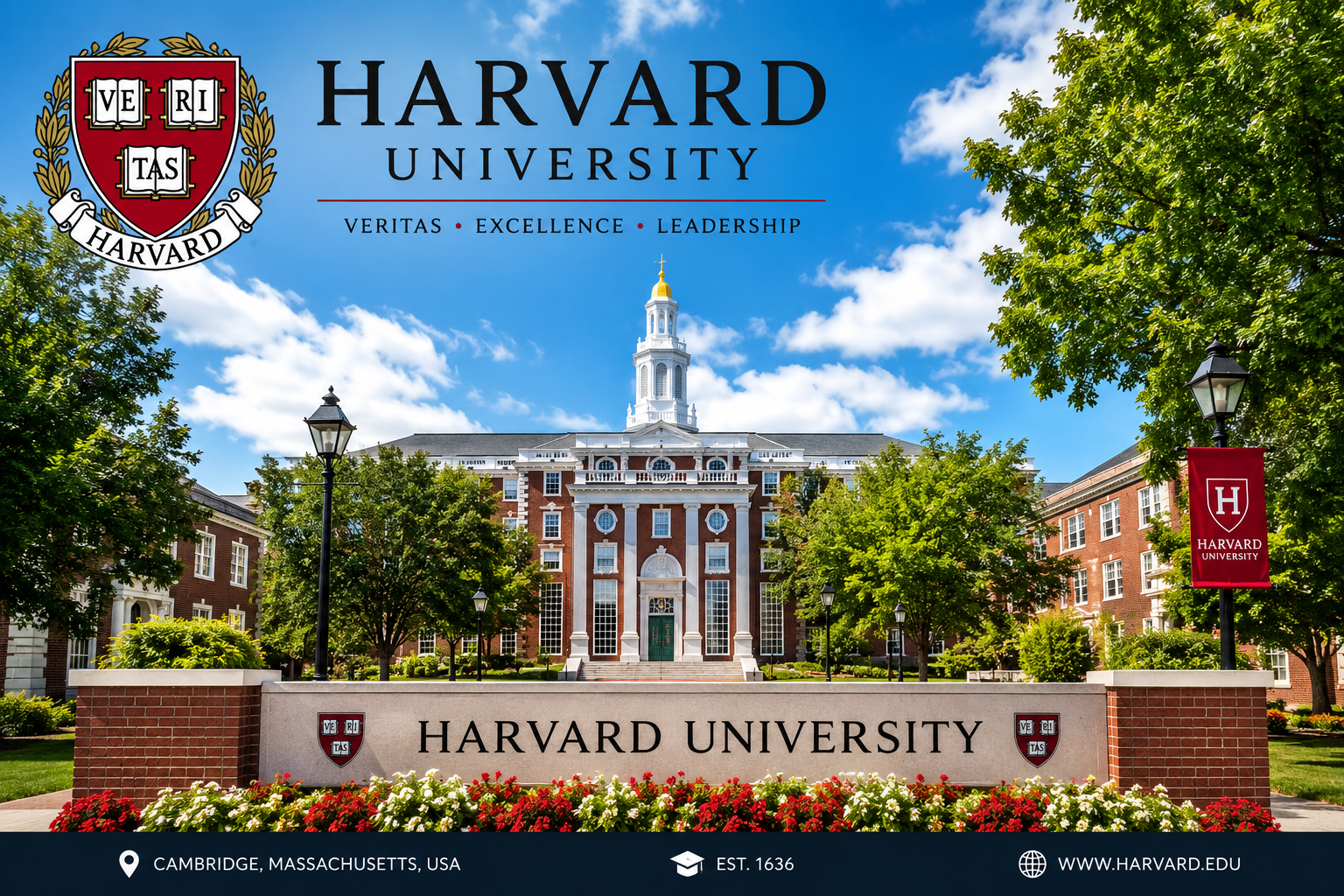
Few universities have achieved the global recognition and historical significance of Harvard University. Established in 1636, Harvard is the oldest institution of higher education in the United States and has played a central role in shaping education, research, public policy, business, medicine, law, and scientific discovery for nearly four centuries.
Located in Cambridge, Massachusetts, just across the Charles River from Boston, Harvard attracts talented students, distinguished faculty, researchers, entrepreneurs, and scholars from more than 140 countries. Its influence extends far beyond its campus through groundbreaking research, influential alumni, and partnerships with governments, industries, and academic institutions worldwide.
For many students, Harvard represents more than academic prestige. It offers access to world-class faculty, extensive research opportunities, one of the largest academic library systems in the world, a vibrant campus community, and an alumni network that spans virtually every profession and continent. However, Harvard is also known for its highly competitive admissions process, rigorous academic expectations, and significant cost of attendance—factors that prospective students should understand before applying.
This comprehensive guide explains Harvard University’s history, academic programs, admissions process, tuition, financial aid, student life, research environment, career opportunities, campus facilities, and much more. Whether you are a high school student, graduate applicant, international student, parent, researcher, or education consultant, this guide is designed to provide balanced, practical, and reliable information to help you make informed decisions.
What is Harvard University?
Harvard University is a private Ivy League research university located in Cambridge, Massachusetts, USA. Founded in 1636, it is the oldest university in the United States and is widely recognized for its academic excellence, research leadership, distinguished faculty, and influential alumni.
Harvard offers undergraduate, graduate, professional, and doctoral programs across a wide range of disciplines, including business, medicine, law, engineering, public policy, education, and the humanities. Students choose Harvard for its rigorous academics, exceptional research opportunities, global reputation, extensive financial aid programs, and strong career network.
Highlights
- Founded in 1636, making it the oldest institution of higher education in the United States.
- Member of the prestigious Ivy League.
- Located in Cambridge, Massachusetts, with close access to Boston’s academic and innovation ecosystem.
- Offers undergraduate, graduate, doctoral, and professional degree programs.
- Home to internationally recognized schools including Harvard College, Harvard Business School, Harvard Law School, and Harvard Medical School.
- Maintains one of the world’s largest academic library systems.
- Conducts research across medicine, engineering, artificial intelligence, economics, public health, climate science, and many other fields.
- Enrolls students from around the world, creating a highly diverse academic community.
- Provides generous need-based financial aid for eligible students.
- Features hundreds of student organizations, athletic teams, cultural activities, and leadership opportunities.
- Graduates have gone on to become Nobel laureates, heads of state, entrepreneurs, judges, scientists, and business leaders.
Harvard University Quick Facts
| Feature | Details |
|---|---|
| Official Name | Harvard University |
| Established | 1636 |
| Type | Private Research University |
| University System | Independent |
| Athletic Conference | NCAA Division I – Ivy League |
| Location | Cambridge, Massachusetts, USA |
| Campus Setting | Urban |
| Primary Language | English |
| Degree Levels | Undergraduate, Graduate, Professional, Doctoral |
| Known For | Research, Liberal Arts, Business, Law, Medicine, Public Policy, Engineering |
| Official Website | https://www.harvard.edu |
Note: Student population, tuition, admissions statistics, and ranking positions may change over time. Applicants should consult Harvard University’s official website for the most current information.
History of Harvard University
The Founding of Harvard University
Harvard University’s story began in 1636, only a few years after the establishment of the Massachusetts Bay Colony. The colonial legislature created the institution to educate clergy and civic leaders, recognizing the importance of higher learning in the development of the new colony.
Although the university initially served primarily religious purposes, its mission gradually expanded as American society evolved. Over the centuries, Harvard transformed from a small colonial college into one of the world’s most influential research universities, educating leaders across government, science, business, law, medicine, education, literature, and technology.
The institution was named after John Harvard, a young minister who donated his personal library and a significant portion of his estate to the newly established college following his death in 1638. His contribution provided essential resources during the institution’s early years and helped shape its future. Today, the iconic John Harvard Statue remains one of the university’s most recognizable landmarks, attracting visitors from around the world.
Growth During the Colonial and Early American Period
Throughout the seventeenth and eighteenth centuries, Harvard steadily expanded its curriculum beyond theology to include philosophy, mathematics, natural sciences, classical studies, and law. This broader academic approach reflected the changing educational needs of a growing nation.
As the United States developed, Harvard increasingly emphasized scholarly inquiry, critical thinking, and public service. During the nineteenth century, the university underwent major reforms that introduced elective courses, professional schools, expanded libraries, and stronger research programs. These changes laid the foundation for the modern research university model that many institutions around the world later adopted.
Campus Overview
Harvard University’s campus is spread across several locations in and around Cambridge, Massachusetts, with additional academic and medical facilities in neighboring Boston. While many people associate Harvard solely with the historic Harvard Yard, the university actually operates an interconnected network of campuses that support undergraduate education, graduate studies, professional schools, cutting-edge research, athletics, and innovation.
The campus combines nearly four centuries of history with modern academic infrastructure. Historic brick buildings stand alongside contemporary research facilities, creating an environment where tradition and innovation coexist. Walking through Harvard’s campus, students encounter centuries-old architecture, tree-lined pathways, modern laboratories, museums, libraries, and collaborative learning spaces that reflect the university’s continued evolution.
Unlike universities with a single enclosed campus, Harvard integrates closely with the surrounding communities of Cambridge and Boston. Students benefit from access not only to university facilities but also to one of the world’s leading centers for higher education, healthcare, biotechnology, entrepreneurship, and research.
Harvard Yard
At the heart of Harvard University lies Harvard Yard, the university’s oldest and most recognizable area. Serving as the historic center of Harvard College, Harvard Yard contains academic buildings, residence halls, administrative offices, green spaces, and several landmarks that have become symbols of the institution.
For first-year undergraduate students, Harvard Yard is more than a historic location—it serves as the center of academic and residential life. Many introductory courses, student activities, and campus traditions begin here, helping new students build a sense of community during their first year.
Its open lawns and centuries-old trees also provide gathering spaces where students study, socialize, attend events, and participate in university traditions throughout the academic year.
The River Houses
After their first year, most Harvard College students move into one of the university’s residential Houses, many of which are located along the Charles River.
The House system is designed to create smaller academic and social communities within the larger university. Each House includes:
- Student residences
- Dining facilities
- Academic support
- Faculty mentors
- Libraries
- Common rooms
- Student organizations
- Cultural events
This residential model encourages close interaction between students, faculty members, and peers from different academic disciplines.
Allston Campus Expansion
Across the Charles River, Harvard has significantly expanded its presence in Allston, an area that has become a major center for future campus development.
Several schools and research initiatives now operate in Allston, including facilities focused on engineering, applied sciences, business education, entrepreneurship, and interdisciplinary collaboration.
The university continues to invest in this area to create additional research laboratories, innovation spaces, public amenities, and academic buildings designed to support emerging fields of study.
Longwood Medical Area
Many of Harvard’s medical and health-related programs operate within Boston’s internationally recognized Longwood Medical Area.
Students and researchers benefit from close collaboration with leading hospitals and biomedical research institutions, creating opportunities for clinical education, scientific discovery, and interdisciplinary healthcare research.
This proximity allows medical students and researchers to engage directly with patient care, public health initiatives, and translational research that connects laboratory discoveries with real-world medical practice.
Campus Architecture
Harvard’s architecture reflects its long history while embracing contemporary academic needs.
Visitors will find:
- Colonial-era buildings
- Georgian architecture
- Modern research laboratories
- Contemporary classrooms
- Historic libraries
- Sustainable academic facilities
- Student residence halls
- Public gathering spaces
Rather than preserving the campus as a historical monument, Harvard continues to renovate and modernize many of its buildings to support changing educational and research requirements.
Sustainability Initiatives
Harvard has made sustainability an important institutional priority through efforts aimed at reducing environmental impact and promoting responsible resource management.
The university supports initiatives related to:
- Energy efficiency
- Sustainable building design
- Climate research
- Waste reduction
- Water conservation
- Sustainable transportation
- Green purchasing practices
Many academic departments also integrate environmental sustainability into research projects and educational programs, allowing students to contribute to solutions for global environmental challenges.
Because sustainability goals and projects continue to evolve, readers should consult Harvard’s official sustainability resources for the latest initiatives and progress reports.
Campus Facilities
Harvard’s reputation extends beyond its classrooms. The university has developed an extensive network of facilities that support teaching, research, innovation, student well-being, athletics, and cultural engagement.
Rather than functioning as isolated buildings, these facilities work together to create an environment that encourages collaboration across disciplines.
Harvard Library System
One of Harvard’s greatest academic strengths is its library system, which is widely recognized as one of the largest academic library systems in the world.
Students and researchers have access to:
- Millions of books
- Academic journals
- Historical archives
- Rare manuscripts
- Digital collections
- Government publications
- Maps
- Multimedia resources
- Research databases
The library system supports virtually every field of study, making it an invaluable resource for undergraduate learning as well as advanced scholarly research.
Widener Library
Among Harvard’s many libraries, Widener Library is perhaps the most iconic.
Located in Harvard Yard, Widener serves as one of the university’s principal research libraries and houses an enormous collection of scholarly materials across numerous academic disciplines.
Beyond its extensive collections, Widener provides:
- Quiet study areas
- Collaborative workspaces
- Research assistance
- Digital scholarship services
- Archival resources
For many students, the library becomes one of the most frequently used academic spaces throughout their university experience.
Research Laboratories
Harvard operates advanced laboratories supporting research across numerous disciplines, including:
- Artificial Intelligence
- Computer Science
- Biomedical Engineering
- Physics
- Chemistry
- Environmental Science
- Public Health
- Neuroscience
- Data Science
- Materials Science
These facilities enable students and faculty to conduct research that addresses scientific, technological, and societal challenges.
Many undergraduate students also have opportunities to participate in faculty-led research projects, gaining practical experience beyond traditional classroom learning.
Museums
Harvard manages several museums that support both education and public engagement.
These collections include materials related to:
- Art
- Archaeology
- Natural history
- Anthropology
- Science
- Cultural heritage
Students from many disciplines use these museums for coursework, research, and experiential learning, while members of the public also benefit from exhibitions and educational programs.
Innovation and Entrepreneurship Resources
Entrepreneurship has become an increasingly important part of Harvard’s academic ecosystem.
Students interested in launching startups or developing innovative ideas can access:
- Startup incubators
- Innovation programs
- Business competitions
- Mentorship opportunities
- Venture development resources
- Networking events
- Interdisciplinary collaboration spaces
Harvard’s location within the Boston–Cambridge innovation corridor further expands opportunities to engage with technology companies, investors, research organizations, and entrepreneurial communities.
Athletics and Recreation
Harvard supports a broad range of athletic opportunities through NCAA Division I sports, club sports, and recreational programs.
Facilities include:
- Athletic fields
- Indoor training centers
- Swimming pools
- Fitness centers
- Tennis courts
- Rowing facilities
- Ice hockey venues
Participation in athletics allows students to maintain physical well-being while balancing demanding academic schedules.
Student Support Services
Harvard provides numerous services intended to support student success throughout their academic journey.
These include:
- Academic advising
- Career counseling
- Mental health resources
- Disability support services
- International student assistance
- Health services
- Writing support
- Tutoring resources
These services aim to help students navigate academic challenges, personal development, and career planning while fostering an inclusive learning environment.
Why the Campus Experience Matters
A university’s campus influences far more than where classes take place. At Harvard, the combination of historic surroundings, advanced research facilities, extensive libraries, residential communities, and access to the broader Boston–Cambridge academic ecosystem creates an environment where students can pursue intellectual growth both inside and outside the classroom.
The diversity of academic spaces, extracurricular opportunities, and interdisciplinary collaboration encourages students to engage deeply with their studies while developing the skills and relationships that often extend well beyond graduation.
Academic Reputation
Harvard University has earned a global reputation for academic excellence through centuries of scholarship, research, and innovation rather than any single ranking or achievement. It is consistently recognized among the world’s leading research universities because of its rigorous academic standards, distinguished faculty, extensive research output, and broad influence across numerous disciplines.
One of Harvard’s defining characteristics is its commitment to both teaching and research. Students learn from professors who are not only educators but also active researchers, authors, policymakers, physicians, scientists, entrepreneurs, and leaders in their respective fields. This environment encourages students to engage with current ideas and emerging discoveries rather than relying solely on established knowledge.
Unlike universities that focus primarily on undergraduate education or professional training, Harvard combines liberal arts education, graduate studies, professional schools, and interdisciplinary research within a single academic community. This structure allows students from different disciplines to collaborate on complex problems that require diverse perspectives.
Teaching Philosophy
Harvard emphasizes active learning, intellectual curiosity, and critical thinking. Rather than encouraging students to memorize information, many courses are designed to help students:
- Analyze evidence critically
- Evaluate competing viewpoints
- Develop independent arguments
- Conduct original research
- Solve complex problems
- Communicate ideas effectively
Small discussion sections, seminars, laboratory work, collaborative projects, and faculty mentorship complement traditional lectures, providing students with multiple ways to engage in the learning process.
Faculty Excellence
Harvard’s faculty includes internationally recognized scholars whose work has influenced fields such as medicine, economics, law, public policy, engineering, education, psychology, literature, physics, chemistry, biology, and computer science.
Faculty members frequently contribute to:
- Scientific discoveries
- Public policy development
- Medical advances
- Technological innovation
- Economic research
- Legal scholarship
- Global health initiatives
Their active involvement in research enables students to learn from individuals who are helping shape developments within their disciplines.
Interdisciplinary Learning
Many of today’s global challenges—such as climate change, artificial intelligence, public health, cybersecurity, and sustainable development—cannot be solved by a single academic discipline. Harvard supports interdisciplinary education by encouraging collaboration across its schools and departments.
Students may combine coursework and research from areas such as:
- Engineering and Medicine
- Computer Science and Biology
- Economics and Public Policy
- Business and Environmental Science
- Law and Technology
- Education and Psychology
This approach prepares graduates to work in increasingly interconnected professional environments.
Global Rankings
Harvard University is regularly included among the world’s highest-ranked universities by several internationally recognized ranking organizations. However, prospective students should understand that rankings vary because each organization uses its own methodology and evaluation criteria.
Some rankings emphasize research output, while others focus on teaching quality, employer reputation, faculty citations, international collaboration, or student outcomes. As a result, Harvard’s position may differ slightly across ranking systems and from year to year.
Well-known organizations that evaluate Harvard include:
- QS World University Rankings
- Times Higher Education (THE) World University Rankings
- Academic Ranking of World Universities (ARWU)
- U.S. News & World Report
Rather than relying solely on rankings, students should consider additional factors such as:
- Academic programs
- Faculty expertise
- Research opportunities
- Campus environment
- Financial aid
- Career support
- Personal academic interests
These factors often have a greater impact on a student’s educational experience than a university’s exact ranking position.
Important: Rankings are updated annually and should be verified through the official websites of the respective ranking organizations.
Schools and Academic Programs
Harvard University consists of several schools that collectively offer undergraduate, graduate, professional, and doctoral education across a wide range of academic disciplines.
Each school has its own admissions process, curriculum, faculty, and degree requirements while benefiting from the resources of the broader university.
Harvard College
Harvard College is the undergraduate division of the university and offers bachelor’s degree programs grounded in a liberal arts and sciences education.
Students can explore numerous fields before selecting a concentration, allowing flexibility to discover academic interests while developing strong analytical, communication, and research skills.
Popular areas of study include:
- Computer Science
- Economics
- Government
- Psychology
- Mathematics
- Biology
- Physics
- Chemistry
- English
- History
Graduate School of Arts and Sciences
The Graduate School of Arts and Sciences offers master’s and doctoral programs across the humanities, social sciences, and natural sciences.
Graduate students conduct advanced research under faculty supervision while contributing to new knowledge within their disciplines.
Harvard Business School
Harvard Business School is internationally recognized for its MBA program and executive education offerings.
Its case-method teaching approach encourages students to analyze real-world business situations, make decisions, and defend their reasoning in classroom discussions.
Areas of study include:
- Management
- Finance
- Entrepreneurship
- Marketing
- Operations
- Leadership
- Strategy
Harvard Law School
Harvard Law School offers programs for students pursuing careers in law, public service, academia, business, and international organizations.
The curriculum emphasizes legal reasoning, advocacy, constitutional law, corporate law, international law, and public policy.
Harvard Medical School
Harvard Medical School prepares future physicians, researchers, and healthcare leaders through medical education, biomedical research, and clinical training.
Students benefit from collaborations with leading teaching hospitals and research institutions throughout the Boston area.
Harvard Kennedy School
The Harvard Kennedy School focuses on public leadership and public policy.
Its programs attract students interested in:
- Government
- International Development
- Public Administration
- Public Policy
- Nonprofit Leadership
- Global Affairs
Harvard Graduate School of Education
This school prepares educators, researchers, administrators, and policymakers dedicated to improving education systems around the world.
Harvard School of Engineering and Applied Sciences
The School of Engineering and Applied Sciences offers programs in areas such as:
- Computer Science
- Data Science
- Bioengineering
- Electrical Engineering
- Mechanical Engineering
- Environmental Engineering
- Applied Mathematics
Its close collaboration with industry and research centers provides students with opportunities to participate in innovative projects.
Admissions Process
Admission to Harvard University is highly competitive. Every year, the university receives applications from talented students around the world, and only a limited number are offered admission.
Admissions decisions are based on a holistic review rather than a single academic metric. The university evaluates each applicant’s overall achievements, personal qualities, and potential contributions to the campus community.
Applicants are encouraged to demonstrate not only strong academic performance but also intellectual curiosity, leadership, integrity, creativity, and meaningful engagement outside the classroom.
Undergraduate Admissions
Applicants to Harvard College typically complete an online application and submit supporting materials for review.
Although application requirements may change over time, undergraduate applicants are generally expected to provide:
- Academic transcripts
- Personal essays
- Letters of recommendation
- School report
- Mid-year academic report (when applicable)
- Information about extracurricular activities and achievements
International applicants may also need to satisfy English language proficiency requirements depending on their educational background.
Graduate Admissions
Graduate and professional programs have separate admissions procedures established by each school.
Depending on the program, applicants may need to submit:
- Academic transcripts
- Statement of purpose
- Resume or curriculum vitae
- Letters of recommendation
- Research proposal (for certain programs)
- Writing samples
- Portfolio (for applicable fields)
- Standardized test scores where required
Admission criteria vary significantly between programs, so applicants should carefully review the requirements for their chosen school.
Eligibility Requirements
Although eligibility differs by program, successful applicants typically demonstrate:
- Excellent academic performance
- Strong analytical ability
- Leadership potential
- Community involvement
- Research experience (where appropriate)
- Effective written and verbal communication skills
Meeting the minimum requirements does not guarantee admission because the applicant pool is exceptionally competitive.
English Language Requirements
Applicants whose previous education was not conducted primarily in English may be required to demonstrate English language proficiency.
Accepted examinations and minimum score requirements differ by program and are subject to change. Applicants should always consult the official admissions website for current policies.
Standardized Tests
Harvard’s standardized testing policies have evolved in recent years.
Requirements for examinations such as the SAT, ACT, GRE, GMAT, MCAT, or LSAT depend on:
- The academic program
- The admissions cycle
- Current university policy
Applicants should verify the latest testing requirements before submitting an application.
Application Timeline
Application deadlines vary depending on:
- Undergraduate or graduate program
- Early or regular application round
- Professional school
- International application requirements
Because deadlines may change from year to year, applicants should rely on Harvard’s official admissions calendar when planning their applications.
Tuition and Cost of Attendance
The cost of attending Harvard University includes more than tuition alone. Students should also consider expenses such as housing, meals, books, health insurance, transportation, and personal costs when planning their education.
Tuition and fees differ depending on factors such as:
- Undergraduate or graduate enrollment
- Academic program
- Professional school
- Housing arrangements
- Individual course requirements
Because tuition is reviewed periodically, prospective students should consult Harvard’s official financial aid and admissions websites for the most current cost information before applying.
Scholarships and Financial Aid
Harvard is widely recognized for its commitment to making education accessible through comprehensive financial aid programs.
For undergraduate students, financial assistance is primarily need-based, meaning awards are determined according to a family’s financial circumstances rather than academic merit alone. Eligible students may receive support that helps cover tuition and, in many cases, additional educational expenses.
Graduate and professional schools maintain their own funding policies, which may include:
- Fellowships
- Scholarships
- Research assistantships
- Teaching assistantships
- Grants
- Student employment opportunities
International students should review the financial aid policies specific to their chosen school, as eligibility requirements vary among programs.
Important: Financial aid policies, tuition, scholarship availability, and application procedures are subject to change. Applicants should always verify the latest information through Harvard University’s official financial aid resources.
Student Life
Harvard University offers an educational experience that extends well beyond the classroom. While academics remain at the center of university life, students are encouraged to develop leadership skills, build meaningful relationships, explore new interests, and contribute to the campus community through a wide range of extracurricular activities.
The university’s diverse student body brings together individuals from different countries, cultures, academic backgrounds, and life experiences. This diversity enriches classroom discussions and helps students gain broader perspectives on global issues.
Student Organizations
Harvard is home to hundreds of student organizations representing academic, cultural, artistic, social, entrepreneurial, political, athletic, and service interests. Participation in these organizations allows students to:
- Develop leadership and teamwork skills
- Organize events and conferences
- Engage in community service
- Explore professional interests
- Build lifelong friendships
- Network with alumni and industry professionals
Whether students are interested in debate, entrepreneurship, music, robotics, journalism, or public service, there are opportunities to become actively involved.
Diversity and Inclusion
Harvard enrolls students from across the United States and more than 140 countries. The university promotes an inclusive learning environment through cultural organizations, diversity initiatives, mentoring programs, and student support services.
Students regularly participate in international festivals, cultural celebrations, academic discussions, and community outreach activities that encourage cross-cultural understanding.
Athletics
As a member of the Ivy League, Harvard competes in NCAA Division I athletics across numerous sports. Students may participate as varsity athletes, club sport members, or recreational participants.
Popular sports include:
- Rowing
- Basketball
- Soccer
- Swimming
- Tennis
- Track and Field
- Ice Hockey
- Football
- Volleyball
- Fencing
Even students who are not varsity athletes have access to fitness centers, recreational facilities, and wellness programs that encourage healthy lifestyles.
Arts and Culture
Creative expression plays an important role in campus life. Students can participate in:
- Theater productions
- Music ensembles
- Dance groups
- Literary magazines
- Film organizations
- Art exhibitions
- Photography clubs
Harvard’s museums, libraries, performance venues, and cultural centers further enrich the student experience.
Housing and Dining
Residential House System
One of Harvard College’s distinctive features is its residential House system. After their first year, undergraduate students typically become members of one of several Houses that serve as smaller communities within the larger university.
Each House generally offers:
- Student housing
- Dining hall
- Study spaces
- Common rooms
- Faculty mentors
- Social events
- Academic support
This system encourages close interaction among students from different academic disciplines and class years.
Dining Services
Harvard Dining Services provides meals across campus while accommodating a variety of dietary preferences and nutritional needs.
Students can generally find options for:
- Vegetarian diets
- Vegan diets
- Gluten-sensitive diets
- Religious dietary requirements
- International cuisine
Dining halls also serve as important social spaces where students gather between classes and participate in community life.
Research and Innovation
Research is one of Harvard University’s defining strengths. Faculty members, graduate students, postdoctoral researchers, and many undergraduates contribute to projects that address some of the world’s most significant scientific, technological, medical, economic, and social challenges.
Harvard supports interdisciplinary collaboration across numerous research fields, enabling scholars from different disciplines to work together on complex problems.
Major Research Areas
Research activities span a wide range of subjects, including:
- Artificial Intelligence
- Machine Learning
- Public Health
- Biomedical Sciences
- Climate Change
- Environmental Science
- Economics
- Law
- Education
- Psychology
- Physics
- Chemistry
- Data Science
- Biotechnology
- Neuroscience
Innovation Ecosystem
Harvard encourages entrepreneurship by connecting students and researchers with startup resources, mentors, investors, and collaborative innovation programs.
Students interested in launching new ventures can benefit from:
- Innovation labs
- Startup competitions
- Entrepreneurship courses
- Business mentoring
- Networking events
- Industry partnerships
The university’s location within the Boston–Cambridge innovation ecosystem provides additional opportunities to collaborate with technology companies, research institutions, hospitals, and startups.
Career Services and Employment Outcomes
Harvard provides comprehensive career support throughout a student’s academic journey and after graduation.
Career services typically include:
- Career counseling
- Resume and cover letter reviews
- Interview preparation
- Internship guidance
- Employer networking events
- Career fairs
- Graduate school advising
- Alumni mentoring
Students also benefit from Harvard’s extensive alumni network, which spans industries including business, government, healthcare, education, technology, finance, consulting, journalism, and nonprofit organizations.
Note: Graduate employment statistics vary by school and program. Applicants should consult the official career services pages of their respective Harvard school for the latest employment reports.
Notable Alumni
Harvard University has educated numerous influential individuals across politics, science, business, literature, entertainment, and public service.
Some notable alumni include:
| Name | Known For |
|---|---|
| Barack Obama | 44th President of the United States |
| John F. Kennedy | 35th President of the United States |
| Franklin D. Roosevelt | 32nd President of the United States |
| Bill Gates* | Microsoft Co-founder (attended Harvard but did not graduate) |
| Mark Zuckerberg* | Meta Co-founder (attended Harvard but did not graduate) |
| Natalie Portman | Academy Award-winning Actress |
| Ban Ki-moon | Former Secretary-General of the United Nations |
| Michael Bloomberg | Entrepreneur and Former Mayor of New York City |
*Attended Harvard but left before completing their degree.
Harvard University vs Other Top Universities
| Feature | Harvard | MIT | Stanford | Yale |
|---|---|---|---|---|
| Founded | 1636 | 1861 | 1885 | 1701 |
| University Type | Private | Private | Private | Private |
| Strongest Areas | Law, Medicine, Business, Liberal Arts | Engineering, Technology | Engineering, Entrepreneurship | Humanities, Law, Liberal Arts |
| Research Strength | Excellent | Excellent | Excellent | Excellent |
| Campus Setting | Urban | Urban | Suburban | Urban |
| Entrepreneurship | Very Strong | Exceptional | Exceptional | Strong |
Which University May Be the Better Fit?
- Harvard – Students seeking broad academic opportunities across many disciplines.
- MIT – Students primarily interested in engineering, technology, and applied sciences.
- Stanford – Students interested in entrepreneurship and innovation, particularly within Silicon Valley.
- Yale – Students drawn to humanities, arts, law, and a close-knit residential college experience.
Each university offers outstanding opportunities, and the best choice depends on a student’s academic goals, interests, financial considerations, and preferred learning environment.
Pros and Cons
| Pros | Cons |
|---|---|
| Outstanding global reputation | Extremely competitive admissions |
| World-class faculty | High overall cost of attendance |
| Exceptional research opportunities | Demanding academic workload |
| Extensive alumni network | Limited admission spaces |
| Generous need-based financial aid | Housing demand in surrounding areas |
| Strong career support | Adjustment to a rigorous academic environment may be challenging |
Application Tips
Prospective applicants can strengthen their applications by:
- Maintaining excellent academic performance throughout high school or previous university studies.
- Choosing challenging coursework when appropriate.
- Participating meaningfully in extracurricular activities rather than joining many organizations without sustained involvement.
- Demonstrating leadership, initiative, and community engagement.
- Writing thoughtful, authentic application essays that reflect personal experiences and goals.
- Requesting recommendation letters from individuals who know their academic abilities well.
- Carefully reviewing all application requirements and deadlines on the official admissions website.
- Preparing financial aid documentation early if applying for assistance.
Remember that no strategy can guarantee admission, as Harvard evaluates applicants through a holistic and highly competitive process.
Frequently Asked Questions (FAQs)
1. Is Harvard University part of the Ivy League?
Yes. Harvard is one of the eight Ivy League universities in the United States.
2. Where is Harvard located?
Cambridge, Massachusetts, USA.
3. Is Harvard difficult to get into?
Yes. Admission is highly competitive.
4. Does Harvard accept international students?
Yes. Students from many countries apply and enroll each year.
5. Does Harvard provide financial aid?
Yes. Harvard offers substantial need-based financial aid for eligible students.
6. Does Harvard offer scholarships for graduate students?
Many graduate schools provide fellowships, assistantships, grants, and other funding opportunities, though policies vary by program.
7. What language are classes taught in?
English.
8. Can undergraduate students participate in research?
Yes. Many undergraduates engage in faculty-led research projects.
9. Is on-campus housing available?
Yes, although housing policies differ by student level and program.
10. Does Harvard have exchange programs?
Yes. Opportunities vary depending on the academic school and department.
11. What are Harvard’s most popular fields of study?
Business, Law, Medicine, Computer Science, Economics, Government, Biology, Engineering, and Psychology are among its well-known areas.
12. Does Harvard require standardized tests?
Testing policies vary by program and admissions cycle, so applicants should verify current requirements.
13. How large is Harvard’s library system?
It is widely recognized as one of the largest academic library systems in the world.
14. Does Harvard support entrepreneurship?
Yes. Students have access to innovation programs, mentorship, and startup resources.
15. Are internships available?
Yes. Career services help students identify internship opportunities and connect with employers.
16. Can students join clubs?
Yes. Hundreds of student organizations are available.
17. Is Harvard good for international students?
Harvard provides extensive academic, cultural, and support resources for students from around the world.
18. Does Harvard have athletic programs?
Yes. Harvard competes in NCAA Division I athletics and offers numerous recreational activities.
19. How can I learn about current tuition and deadlines?
Always refer to Harvard University’s official admissions and financial aid websites for the latest information.
20. Who should consider applying to Harvard?
Students with strong academic records, intellectual curiosity, leadership potential, and a desire to contribute meaningfully to their communities may find Harvard to be a strong fit.
Final Verdict
Harvard University has earned its global reputation through centuries of academic excellence, influential scholarship, and a commitment to advancing knowledge across diverse fields. Its combination of rigorous academics, distinguished faculty, world-class research, generous need-based financial aid, and extensive alumni network makes it an attractive option for many students.
At the same time, prospective applicants should carefully consider the university’s highly selective admissions process, demanding academic environment, and the overall cost of attendance. Choosing a university should involve evaluating academic goals, financial circumstances, preferred learning environment, and personal aspirations—not reputation alone.
For students seeking a challenging education supported by outstanding academic and research opportunities, Harvard remains one of the world’s leading institutions of higher learning.
Official Resources
For the most up-to-date information, consult Harvard University’s official resources:
- Official Website
- Admissions Office
- Harvard College
- Graduate & Professional Schools
- Financial Aid Office
- International Office
- Housing Services
- Career Services
- Harvard Library
- Campus Map
Suggested Image SEO
| Section | Suggested Image | Alt Text | Caption | File Name |
|---|---|---|---|---|
| Introduction | Harvard Yard | Harvard Yard at Harvard University | Historic center of Harvard University | harvard-yard-campus.webp |
| Campus | Johnston Gate | Johnston Gate entrance | Main entrance to Harvard Yard | harvard-johnston-gate.webp |
| Academics | Widener Library | Widener Library exterior | One of Harvard’s most iconic libraries | harvard-widener-library.webp |
| Student Life | Students on campus | Harvard students walking through campus | Student life at Harvard University | harvard-student-life.webp |
| Research | Research laboratory | Harvard research laboratory | Research and innovation facilities | harvard-research-lab.webp |
| Housing | Residential Houses | Harvard residential house courtyard | Residential House system | harvard-residential-house.webp |
Internal Linking Suggestions
To help readers continue exploring related topics, consider linking this guide to:
- Complete Guide to MIT
- Complete Guide to Stanford University
- Best Ivy League Universities
- Study in the USA Guide
- Undergraduate Admissions Guide
- Graduate School Application Guide
- International Student Visa Guide
- Scholarship Guide for International Students
- Cost of Living in the United States
- Best Computer Science Universities
Editorial Note
This guide is intended to provide a balanced overview of Harvard University using reliable, publicly available information. Because university policies, tuition, financial aid, admissions requirements, rankings, and deadlines can change over time, readers should always verify the latest information through Harvard University’s official resources before making application or enrollment decisions.