

Introduction
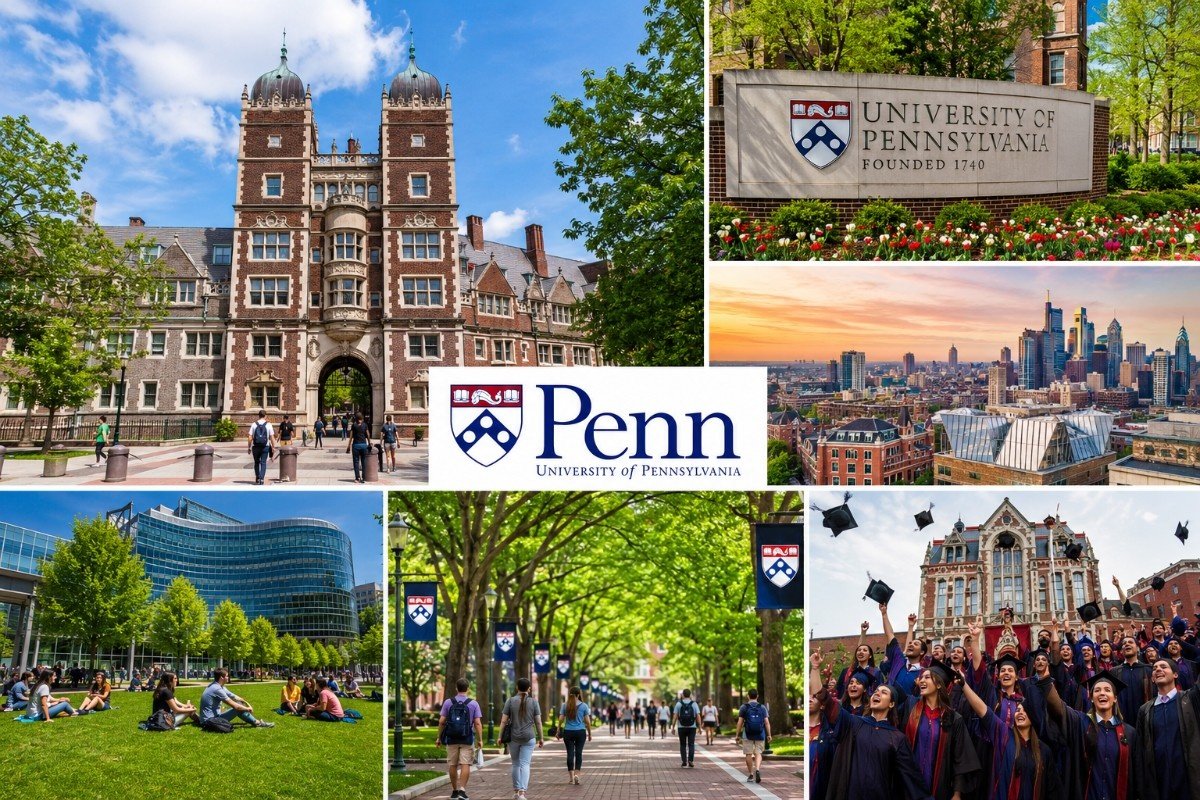
The University of Pennsylvania (Penn) is one of the oldest and most influential universities in the United States. Located in Philadelphia, Pennsylvania, it is a member of the prestigious Ivy League, a group of eight private universities known for academic excellence, research, and highly selective admissions.
Founded before the American Revolution, Penn combines a long academic tradition with a strong emphasis on innovation and interdisciplinary learning. It is widely recognized for pioneering professional education in fields such as business, medicine, nursing, and engineering while maintaining a broad commitment to the liberal arts and sciences.
Students from across the United States and more than 100 countries choose Penn for its rigorous academics, vibrant campus community, extensive research opportunities, and close connections to industry, government, healthcare, and nonprofit organizations. Its location in Philadelphia also provides access to internships, cultural institutions, and one of the nation’s largest healthcare ecosystems.
This guide explains what prospective students, parents, and researchers should know about the University of Pennsylvania—from its history and campus environment to academics, admissions, student life, and career opportunities.
University Facts
| Category | Information |
|---|---|
| Official Name | University of Pennsylvania |
| Common Name | Penn |
| Established | 1740 |
| Type | Private Research University |
| Athletic Conference | Ivy League |
| Location | Philadelphia, Pennsylvania, USA |
| Campus Setting | Urban |
| Founder | Benjamin Franklin played a central role in the university’s development and educational vision |
| Academic Calendar | Semester System |
| Official Colors | Red and Blue |
| Mascot | Quaker |
| Motto | Leges Sine Moribus Vanae (“Laws without morals are useless”) |
| Official Website | https://www.upenn.edu |
History
Early Beginnings
The origins of the University of Pennsylvania date back to 1740, when a charitable trust was established to build a school and meeting hall in Philadelphia. Although that original institution did not immediately become a university, it laid the foundation for what would later evolve into Penn.
A major turning point came through the vision of Benjamin Franklin, who believed higher education should prepare students not only in classical subjects but also in practical fields such as commerce, public service, and science. His educational philosophy emphasized knowledge that could benefit society, an idea that continues to shape the university today.
Development into a Modern University
Penn gradually expanded from a small educational institution into one of the world’s leading research universities. Throughout the nineteenth and twentieth centuries, it established professional schools in medicine, business, engineering, law, dentistry, nursing, veterinary medicine, and other disciplines.
Rather than operating as isolated schools, Penn developed a culture of interdisciplinary collaboration. Students often have opportunities to combine studies across different academic areas, reflecting Benjamin Franklin’s original vision of a broad, practical education.
Research and Innovation
During the twentieth century, Penn became a major center for scientific discovery and innovation. Faculty and researchers have contributed to advances in medicine, genetics, artificial intelligence, neuroscience, economics, and public policy.
The university’s close relationship with Penn Medicine has also strengthened its reputation in biomedical research and healthcare.
Why Penn’s History Matters Today
Penn’s historical emphasis on combining theoretical knowledge with practical application continues to influence its educational model. Many programs encourage students to work across disciplines, participate in research, and engage with real-world challenges through internships, community partnerships, and entrepreneurship initiatives.
Campus Overview
Location
Penn’s main campus is located in University City, a neighborhood in West Philadelphia. The area is home to several universities, hospitals, research institutes, technology companies, museums, restaurants, and cultural organizations.
Its urban setting provides students with opportunities beyond the classroom, including internships, volunteer work, research collaborations, and professional networking.
Campus Environment
Although situated in a major city, Penn’s campus features landscaped walkways, green spaces, historic buildings, modern academic facilities, and pedestrian-friendly streets. Many students describe the campus as offering a balance between the energy of city life and the atmosphere of a traditional university campus.
The campus supports a wide range of academic, residential, recreational, and cultural activities, allowing students to spend much of their daily life within walking distance.
Architecture
Penn’s architecture reflects more than two centuries of development. Historic collegiate Gothic buildings stand alongside contemporary research laboratories, student centers, libraries, and collaborative learning spaces. This blend illustrates the university’s combination of tradition and innovation.
Residential Areas
Penn offers a variety of university-managed housing options for undergraduate and graduate students. Residential communities are designed to support academic success and student engagement through programming, advising, and shared facilities. Availability and housing policies may vary by student category and academic year.
Sustainability
The University of Pennsylvania has adopted sustainability initiatives related to energy efficiency, waste reduction, climate action, transportation, and sustainable campus operations. These efforts are coordinated through university-wide programs and continue to evolve as institutional goals are updated.
Why Students Choose Penn
Many students are drawn to Penn because it offers:
- A rigorous Ivy League education.
- Strong interdisciplinary learning opportunities.
- Access to leading faculty and researchers.
- Extensive undergraduate research experiences.
- A globally recognized business school.
- Connections with major healthcare and research institutions.
- An active campus community with hundreds of student organizations.
- Career opportunities in Philadelphia, New York, Washington, D.C., and beyond.
- A diverse international student population.
- A powerful global alumni network.
Academic Reputation
The University of Pennsylvania (Penn) is recognized as one of the world’s leading research universities. As a member of the Ivy League and the Association of American Universities (AAU), Penn is known for combining rigorous scholarship with professional education and interdisciplinary collaboration.
A defining feature of Penn’s academic model is its encouragement of cross-disciplinary study. Students often have opportunities to take courses across different schools, pursue dual degrees, or combine majors and minors. This flexibility reflects Benjamin Franklin’s vision of an education that connects theory with practical application.
Penn’s faculty include internationally recognized scholars, researchers, clinicians, entrepreneurs, and public policy experts. Many are leaders in their fields and actively involve students in research, innovation, and community-based projects.
What Makes Penn Academically Distinct?
- Strong integration of liberal arts and professional education.
- Emphasis on interdisciplinary learning.
- Research opportunities available to both undergraduate and graduate students.
- Close collaboration between academic schools and Penn Medicine.
- A curriculum that encourages critical thinking, leadership, and real-world problem-solving.
Academic Structure
The University of Pennsylvania is organized into 12 schools, offering undergraduate, graduate, and professional education.
| School | Primary Focus |
|---|---|
| School of Arts & Sciences | Humanities, social sciences, and natural sciences |
| The Wharton School | Business and economics |
| School of Engineering and Applied Science | Engineering, computer science, and technology |
| School of Nursing | Nursing education and healthcare leadership |
| Perelman School of Medicine | Medicine and biomedical sciences |
| Penn Carey Law | Legal education |
| Stuart Weitzman School of Design | Architecture, landscape architecture, city planning, and design |
| School of Dental Medicine | Dentistry |
| School of Veterinary Medicine | Veterinary medicine |
| Graduate School of Education | Education and learning sciences |
| School of Social Policy & Practice | Social work and social policy |
| Annenberg School for Communication | Communication and media studies |
Undergraduate Programs
Penn offers a broad range of bachelor’s degree programs across its undergraduate schools.
Popular Areas of Study
- Economics
- Finance
- Accounting
- Marketing
- Computer Science
- Artificial Intelligence
- Data Science
- Mechanical Engineering
- Bioengineering
- Biology
- Chemistry
- Physics
- Mathematics
- Political Science
- Psychology
- International Relations
- English
- History
- Philosophy
- Nursing
Students can often explore interdisciplinary pathways, allowing them to combine interests across different schools.
Graduate and Professional Programs
Penn is widely recognized for its graduate and professional education.
Notable Graduate Programs
Business
The Wharton School offers MBA, Executive MBA, doctoral, and specialized master’s programs. It is internationally known for finance, entrepreneurship, management, analytics, and leadership.
Medicine
The Perelman School of Medicine is among the oldest medical schools in the United States and is recognized for clinical education and biomedical research.
Law
Penn Carey Law emphasizes interdisciplinary legal education, allowing students to complement legal studies with coursework in business, public policy, medicine, and other fields.
Engineering
Graduate engineering programs cover areas such as:
- Robotics
- Artificial Intelligence
- Computer Engineering
- Bioengineering
- Materials Science
- Electrical Engineering
- Mechanical Engineering
- Systems Engineering
Education
The Graduate School of Education offers programs in educational leadership, learning sciences, higher education, literacy, counseling, and educational policy.
Interdisciplinary Learning
One of Penn’s defining strengths is interdisciplinary education.
Examples include:
- Engineering + Business
- Nursing + Public Health
- Computer Science + Medicine
- Economics + Political Science
- Design + Urban Planning
Students are encouraged to work across schools through joint programs, research projects, and elective courses.
This collaborative environment is particularly valuable for students whose interests span multiple disciplines.
Research & Innovation
Research is central to Penn’s mission.
The university supports research across medicine, engineering, business, social sciences, humanities, public health, and emerging technologies.
Major Research Strengths
Medicine
Penn researchers have contributed to significant advances in:
- Cancer research
- Immunotherapy
- Gene therapy
- Neuroscience
- Precision medicine
- Infectious disease research
Penn Medicine is closely integrated with the university’s research enterprise, creating opportunities for collaboration between clinicians and scientists.
Engineering
Research areas include:
- Robotics
- Artificial Intelligence
- Machine Learning
- Cybersecurity
- Nanotechnology
- Energy systems
- Biomedical engineering
Business
Wharton faculty conduct research in:
- Finance
- Behavioral economics
- Entrepreneurship
- Leadership
- Global markets
- Healthcare management
Social Sciences & Humanities
Research addresses topics such as:
- Public policy
- Political science
- Sociology
- Psychology
- Linguistics
- Archaeology
- History
- Ethics
Research Institutes and Centers
Penn hosts numerous research institutes and specialized centers across its schools.
Examples include:
- Penn Institute for Biomedical Informatics
- Perry World House
- Penn Center for Innovation
- Institute for Computational Science
- Leonard Davis Institute of Health Economics
- Center for Neuroscience & Society
These centers encourage collaboration among faculty, students, government agencies, nonprofit organizations, and industry partners.
Innovation & Entrepreneurship
Innovation is an important part of Penn’s academic culture.
Students interested in entrepreneurship have access to:
- Startup mentoring
- Innovation competitions
- Business incubators
- Venture funding opportunities
- Entrepreneurial courses
- Networking events
The Penn Center for Innovation helps translate university research into real-world applications by supporting technology commercialization and partnerships.
Global Reputation
Penn has developed a strong international reputation through:
- Global research collaborations.
- International student enrollment.
- Exchange and study abroad opportunities.
- Worldwide alumni network.
- Partnerships with universities and research organizations across many countries.
This international outlook benefits students seeking careers in multinational organizations, academia, healthcare, government, and global business.
Global Rankings
The University of Pennsylvania is consistently placed among the world’s leading universities by major ranking organizations.
Commonly referenced rankings include:
- QS World University Rankings
- Times Higher Education (THE) World University Rankings
- U.S. News & World Report Best Global Universities
- Academic Ranking of World Universities (Shanghai Ranking)
Understanding Rankings
Rankings evaluate universities using different methodologies. Criteria may include:
- Academic reputation
- Employer reputation
- Faculty research
- Citations
- International outlook
- Teaching environment
- Research impact
Because methodologies differ, Penn’s exact position varies from one ranking organization to another and may change each year. Rankings should be viewed as one factor among many when choosing a university.
Libraries
Penn’s library system supports teaching, learning, and research across all disciplines.
Students have access to:
- Extensive print collections.
- Digital journals and databases.
- Rare books and manuscripts.
- Special collections.
- Research consultations with librarians.
- Collaborative study spaces.
- Digital scholarship support.
The library system serves undergraduate students, graduate students, researchers, and faculty across the university.
Laboratories
Many departments maintain specialized laboratories for teaching and research.
Examples include facilities supporting:
- Engineering
- Biomedical sciences
- Chemistry
- Physics
- Computer science
- Materials science
- Neuroscience
Access to laboratories varies depending on a student’s program and research involvement.
Campus Facilities
Penn offers a wide range of facilities designed to support academic success and student well-being.
Academic Facilities
- Modern classrooms
- Collaborative learning spaces
- Computer laboratories
- Lecture halls
- Innovation spaces
- Research laboratories
Student Facilities
- Student centers
- Dining facilities
- Recreational centers
- Fitness facilities
- Performing arts venues
- Museums
- Health and wellness services
Technology Resources
Students have access to:
- High-speed campus Wi-Fi.
- Computer labs.
- Cloud-based learning platforms.
- Digital library resources.
- Academic software.
- Research computing resources (where applicable).
Why Penn’s Academic Environment Stands Out
Penn’s academic environment is shaped by several key characteristics:
| Strength | Why It Matters |
|---|---|
| Interdisciplinary education | Encourages students to connect ideas across fields. |
| Research opportunities | Students can participate in meaningful research projects. |
| Professional schools | Provides pathways into business, law, medicine, nursing, and engineering. |
| Urban location | Offers access to internships, hospitals, companies, and cultural institutions. |
| Global community | Students learn alongside peers from many countries and backgrounds. |
Admissions
Admission to the University of Pennsylvania is highly selective. The university evaluates applicants through a holistic review process rather than relying on a single factor such as grades or test scores.
Admissions committees consider a student’s academic preparation, intellectual curiosity, extracurricular involvement, leadership, personal qualities, and potential contributions to the Penn community.
The specific requirements vary depending on whether you are applying as:
- First-year undergraduate student
- Transfer student
- International student
- Graduate student
- Professional school applicant
Each school at Penn may also have additional program-specific requirements.
Undergraduate Admissions
How the Admission Process Works
Penn reviews applications holistically. This means admissions officers consider the overall profile of each applicant rather than focusing solely on academic scores.
Common evaluation factors include:
- High school academic performance
- Strength of curriculum
- Letters of recommendation
- Personal essays
- Extracurricular activities
- Leadership experience
- Community engagement
- Special talents or achievements (where applicable)
Strong academic preparation is important, but Penn also looks for students who demonstrate curiosity, initiative, and a willingness to contribute to campus life.
Academic Preparation
Competitive applicants typically complete a challenging secondary school curriculum.
Examples include:
- Advanced Placement (AP)
- International Baccalaureate (IB)
- A-Levels
- Honors courses
- National or state-level advanced curricula
Students are encouraged to take rigorous courses in subjects relevant to their intended field of study whenever possible.
Application Plans
Penn offers multiple application options for first-year students.
Early Decision
- Binding admission plan.
- Students commit to attending Penn if admitted.
- Intended for applicants who have identified Penn as their first-choice university.
Regular Decision
- Non-binding.
- Allows applicants to compare admission and financial aid offers from multiple universities before making a final decision.
Important: Application deadlines may change from year to year. Applicants should verify current deadlines on Penn’s official admissions website.
Required Application Materials
Most undergraduate applicants are generally expected to submit:
- Completed application form
- High school transcript
- School report
- Counselor recommendation
- Teacher recommendations
- Personal essay(s)
- Application fee (or approved fee waiver)
- Mid-year report (when applicable)
Certain programs may request additional materials such as portfolios or auditions.
Standardized Testing
Penn’s standardized testing policies have evolved in recent admission cycles.
Applicants should review the university’s current policy regarding:
- SAT
- ACT
- Test-optional or test-required status (if applicable)
Because testing requirements can change, students should rely on the official admissions website for the most current guidance.
English Language Proficiency
Applicants whose primary language is not English may be asked to demonstrate English proficiency.
Penn accepts several internationally recognized English-language examinations, including:
- TOEFL iBT
- IELTS Academic
- Duolingo English Test (when accepted)
- Other approved assessments (if applicable)
Whether an applicant must submit English-language test scores depends on factors such as previous education and language of instruction.
Always verify current requirements before applying.
International Student Admissions
Penn welcomes students from around the world and provides resources to support international applicants throughout the admissions process.
International applicants generally follow the same holistic review process as domestic applicants, although they may also need to provide:
- Official academic transcripts (with certified translations if required)
- Proof of English-language proficiency (when applicable)
- Financial documentation after admission for visa processing
- Passport information during enrollment
Visa Support
Admitted international students typically receive guidance from Penn’s international student office regarding:
- Form I-20 issuance
- F-1 student visa process
- Immigration documentation
- Arrival preparation
- Orientation programs
Visa regulations are determined by the U.S. government and may change. Students should consult both Penn and official U.S. immigration resources.
Transfer Admissions
Students wishing to transfer from another college or university may apply for transfer admission.
Transfer applicants are generally evaluated based on:
- College academic performance
- Previous coursework
- High school academic record
- Essays
- Recommendations (where required)
Credit transfer policies vary by academic school and department.
Graduate Admissions
Graduate admissions differ significantly across Penn’s schools.
Requirements often include:
- Bachelor’s degree from an accredited institution
- Academic transcripts
- Statement of purpose
- Resume or curriculum vitae (CV)
- Letters of recommendation
- Writing samples (for some programs)
- Portfolio (design-related fields)
- GRE, GMAT, MCAT, LSAT, or other standardized tests (only if required by the specific program)
Each graduate program establishes its own admissions criteria.
Application Timeline
Although timelines differ across schools and programs, applicants are encouraged to begin planning well in advance.
A typical preparation schedule might include:
| Time Before Enrollment | Recommended Action |
|---|---|
| 12–18 months | Research programs and admission requirements |
| 10–12 months | Prepare standardized tests (if needed) |
| 8–10 months | Request recommendation letters |
| 6–8 months | Draft and revise personal essays |
| 4–6 months | Submit applications before deadlines |
| After Admission | Complete financial, housing, and visa requirements |
Always follow the official deadlines published by Penn.
Tuition and Cost of Attendance
The cost of attending Penn includes more than tuition.
Students should budget for:
- Tuition
- Mandatory university fees
- Housing
- Dining
- Books and academic supplies
- Personal expenses
- Health insurance (where required)
- Transportation
Important Note
The University of Pennsylvania updates tuition and fees annually.
Prospective students should consult the official Student Financial Services website for the latest figures.
Estimated Cost Categories
| Expense Category | Applies To |
|---|---|
| Tuition | Undergraduate and graduate students |
| University Fees | Most enrolled students |
| Housing | Students living in university housing |
| Food | Meal plans or personal food expenses |
| Books & Supplies | Varies by program |
| Personal Expenses | Individual spending |
| Transportation | Depends on residence and travel needs |
| Health Insurance | May be required for certain students |
Actual costs vary depending on the student’s program, housing choice, and personal circumstances.
Financial Aid
Penn is widely recognized for offering substantial financial aid, particularly to eligible undergraduate students.
Financial aid may include:
- University grants
- Scholarships
- Work-study opportunities
- Student employment
- Federal aid (for eligible U.S. students)
- Loans (where applicable)
Eligibility depends on individual circumstances and program type.
Need-Based Financial Aid
Penn emphasizes need-based financial aid for eligible undergraduate students.
Financial aid awards are determined after evaluating a family’s demonstrated financial need according to university policies.
Students should complete all required financial aid forms by the published deadlines.
Merit Scholarships
Unlike many universities, Penn’s undergraduate financial aid focuses primarily on demonstrated financial need rather than broad merit scholarships.
Some graduate and professional schools may offer merit-based funding, fellowships, or assistantships depending on the program.
Funding opportunities vary considerably across schools.
Financial Aid for International Students
International applicants should carefully review Penn’s financial aid policies, as eligibility differs from that of U.S. citizens and permanent residents.
Some international students may qualify for institutional financial assistance, while others may need to demonstrate the ability to finance their education.
Policies and available funding can change, so applicants should consult Penn’s official financial aid resources.
Scholarships
Potential funding sources include:
- University grants
- Departmental scholarships
- Graduate fellowships
- Research assistantships
- Teaching assistantships
- External scholarships from governments or private organizations
Availability depends on the academic program and applicant eligibility.
Housing Costs
Students can choose from various housing options depending on availability and eligibility.
Housing costs generally depend on:
- Residence hall type
- Room configuration
- Meal plan selection
- Academic year
- Graduate or undergraduate status
Students should review official housing information for current rates and application procedures.
Living Expenses in Philadelphia
In addition to university charges, students should budget for everyday expenses such as:
- Groceries
- Local transportation
- Mobile phone service
- Clothing
- Personal care items
- Entertainment
- Study materials
Actual living costs vary according to lifestyle and accommodation choices.
Budget Planning Tips
Prospective students should:
- Review the official cost of attendance.
- Apply for financial aid early.
- Explore scholarship opportunities.
- Compare housing options.
- Create a realistic monthly budget.
- Account for inflation and annual fee adjustments.
Good financial planning can help students manage expenses more effectively throughout their studies.
Student Life
The University of Pennsylvania offers an active campus environment where academics are complemented by leadership, service, research, athletics, entrepreneurship, and cultural engagement.
Because Penn is located in University City, Philadelphia, students benefit from both a traditional campus experience and access to one of the largest metropolitan areas in the United States. Museums, hospitals, startups, research organizations, nonprofit institutions, and Fortune 500 companies are all within easy reach.
Many students describe campus life as intellectually stimulating and fast-paced. Balancing coursework with extracurricular activities requires effective time management, but it also creates opportunities to develop practical skills beyond the classroom.
Campus Culture
Penn’s culture reflects three defining characteristics:
Academic Excellence
Students are encouraged to challenge themselves through rigorous coursework, collaborative learning, and independent research.
Collaboration
Although admissions are highly competitive, many academic programs emphasize teamwork, interdisciplinary projects, and peer learning rather than individual competition alone.
Practical Learning
Penn has long promoted the idea that education should prepare students to solve real-world problems. Internships, community engagement, entrepreneurship, and research projects are integrated into many academic experiences.
Residential Life
Living on campus can help students build friendships, participate in campus events, and stay connected to university resources.
Penn provides a variety of university-managed housing options for undergraduate and graduate students, including:
- Traditional residence halls
- College houses
- Apartment-style residences
- Graduate housing (where available)
Residential communities often include:
- Faculty engagement
- Student programming
- Academic advising
- Social events
- Wellness initiatives
Housing availability varies by student status, academic year, and application deadlines.
Dining
Penn offers multiple dining locations across campus.
Students typically have access to:
- Residential dining halls
- Campus cafés
- Food courts
- Grab-and-go options
- Coffee shops
- Restaurants in the surrounding University City neighborhood
Dining plans vary depending on housing arrangements and student preferences.
Many dining locations accommodate common dietary needs, though offerings may change over time.
Student Organizations
Student involvement is a significant part of campus life.
Penn has hundreds of registered student organizations, covering interests such as:
Academic Organizations
- Engineering societies
- Business clubs
- Debate teams
- Academic honor societies
Professional Organizations
- Finance clubs
- Entrepreneurship groups
- Marketing organizations
- Consulting clubs
- Pre-med organizations
- Pre-law societies
Cultural Organizations
- International student associations
- Language clubs
- Cultural heritage organizations
- Religious communities
Creative Arts
- Orchestra
- Choir
- Theater groups
- Dance teams
- Film organizations
- Photography clubs
Community Service
Students can participate in volunteer initiatives involving:
- Education
- Healthcare
- Environmental sustainability
- Food security
- Community development
These experiences allow students to build leadership skills while serving local communities.
Leadership Opportunities
Penn encourages students to take on leadership roles through:
- Student government
- Residential leadership
- Club executive boards
- Peer mentoring
- Orientation leadership
- Community engagement programs
Leadership experiences often complement classroom learning by strengthening communication, teamwork, and organizational skills.
Diversity and Inclusion
Penn enrolls students from a wide range of geographic, cultural, socioeconomic, and educational backgrounds.
The university supports inclusion through:
- Cultural centers
- Identity-based student organizations
- International student services
- Accessibility resources
- Educational programming
- Community dialogue initiatives
These resources aim to help students feel supported while contributing to an inclusive campus environment.
Athletics
Penn competes in NCAA Division I athletics as a member of the Ivy League.
Students may participate as:
- Varsity athletes
- Club sport participants
- Intramural competitors
- Recreational athletes
Popular sports include:
- Basketball
- Soccer
- Rowing
- Track and field
- Swimming
- Tennis
- Lacrosse
- Football
- Volleyball
- Wrestling
Athletics contribute to campus spirit while providing opportunities for physical fitness and teamwork.
Recreation and Wellness
Penn offers facilities and programs designed to support students’ physical and mental well-being.
Examples include:
- Fitness centers
- Swimming pools
- Group exercise classes
- Recreational sports
- Wellness workshops
- Counseling services
- Health education programs
Maintaining well-being is especially important in a demanding academic environment.
Arts and Culture
Students interested in the arts have access to numerous cultural opportunities.
These include:
- Performing arts venues
- Student theater productions
- Music ensembles
- Art exhibitions
- Museums
- Public lectures
- Film screenings
- Literary events
Philadelphia’s broader arts and cultural scene also provides additional opportunities beyond campus.
Career Services
Penn places significant emphasis on career development throughout a student’s academic journey.
Career support is available through university-wide services as well as individual schools.
Typical resources include:
- Career advising
- Resume reviews
- Interview preparation
- Internship search assistance
- Career fairs
- Employer information sessions
- Networking events
- Graduate school advising
Students are encouraged to begin career planning early rather than waiting until their final year.
Internship Opportunities
Penn’s location in Philadelphia provides access to internships across many industries.
Common internship sectors include:
- Finance
- Banking
- Consulting
- Healthcare
- Biotechnology
- Technology
- Government
- Nonprofit organizations
- Media
- Education
- Public policy
Many students also pursue summer internships in cities such as New York, Boston, Washington, D.C., San Francisco, and internationally.
Employer Engagement
Penn maintains relationships with employers from a wide range of sectors.
Recruiters regularly visit campus to:
- Attend career fairs
- Conduct interviews
- Host networking sessions
- Present company information
- Recruit interns and full-time employees
Employer participation varies by industry and recruiting cycle.
Alumni Network
Penn has a large global alumni community spanning business, government, healthcare, technology, academia, science, law, media, and the arts.
Alumni often contribute through:
- Mentorship
- Career networking
- Guest lectures
- Philanthropy
- Internship opportunities
- Industry connections
A strong alumni network can be valuable for students exploring career paths or seeking professional guidance.
Career Outcomes
Penn graduates pursue careers across many sectors, including:
- Investment banking
- Consulting
- Technology
- Healthcare
- Research
- Public service
- Law
- Entrepreneurship
- Education
- Nonprofit leadership
Many graduates also continue their education in graduate or professional schools.
Note: Graduate employment outcomes vary by program and year. Readers should consult official career reports published by individual Penn schools where available.
Entrepreneurship
Penn has developed a strong entrepreneurial ecosystem.
Students interested in startups may benefit from:
- Innovation competitions
- Business incubators
- Venture funding opportunities
- Startup mentoring
- Entrepreneurship courses
- Alumni entrepreneur networks
This environment is particularly attractive to students interested in launching companies or commercializing research.
Global Opportunities
Penn encourages students to develop an international perspective through:
- Study abroad programs
- International research collaborations
- Global internships
- Language learning
- Exchange partnerships
- International conferences
Participation depends on the student’s program, academic standing, and available opportunities.
Notable Alumni
Penn’s alumni include leaders in business, science, politics, medicine, entertainment, journalism, and technology.
Some well-known alumni include:
| Alumni | Known For |
|---|---|
| Donald Trump | 45th President of the United States; graduate of the Wharton School. |
| Elon Musk | Entrepreneur; attended Penn and earned degrees in economics and physics before founding companies including Tesla and SpaceX. |
| John Legend | Grammy Award-winning singer, songwriter, and producer. |
| Noam Chomsky | Influential linguist and public intellectual who earned his Ph.D. at Penn. |
| Elizabeth Banks | Actress, producer, and director. |
| Warren Buffett | Attended the Wharton School before completing his degree elsewhere. |
| William Henry Harrison | Ninth President of the United States; attended Penn’s medical school but did not graduate. |
Editorial Note: Attendance at Penn does not necessarily imply graduation. The table distinguishes graduates from notable attendees where relevant.
Student Life at a Glance
| Area | Highlights |
|---|---|
| Campus Environment | Urban, academically active, diverse |
| Student Organizations | Hundreds of clubs and societies |
| Athletics | NCAA Division I, Ivy League |
| Housing | Residence halls, college houses, apartments |
| Dining | Multiple campus dining options |
| Career Support | Advising, internships, networking, employer events |
| Research | Opportunities across many disciplines |
| Arts | Museums, theater, music, exhibitions |
| Wellness | Health services, counseling, recreation |
University Comparison
The University of Pennsylvania is often compared with other highly selective research universities. Each institution has distinct strengths, academic cultures, and learning environments. Rather than asking which university is “best,” applicants should consider which one aligns with their academic interests, career goals, and preferred campus experience.
| University | Known For | Best Fit For |
|---|---|---|
| University of Pennsylvania | Interdisciplinary education, business, medicine, nursing, entrepreneurship | Students seeking a blend of liberal arts and professional education |
| Harvard University | Broad academic excellence, law, government, medicine | Students interested in a wide range of disciplines and extensive research opportunities |
| Princeton University | Undergraduate teaching, mathematics, physics, humanities | Students who prefer a strong undergraduate focus and a smaller campus community |
| Yale University | Humanities, law, arts, residential college system | Students looking for a close-knit residential experience and strengths in the arts and humanities |
| Columbia University | Journalism, international affairs, urban research | Students who want to study in New York City with strong global connections |
| Massachusetts Institute of Technology (MIT) | Engineering, computer science, innovation | Students focused on science, engineering, and technology |
| Stanford University | Entrepreneurship, engineering, computer science | Students interested in innovation and close ties to Silicon Valley |
Who Might Prefer Penn?
Penn may be an excellent choice for students who:
- Want to combine business with another field.
- Value interdisciplinary learning.
- Seek research opportunities from the undergraduate level.
- Plan careers in healthcare, finance, technology, consulting, or public policy.
- Enjoy studying in a major city with extensive internship opportunities.
Pros and Cons
A balanced assessment helps applicants understand both the opportunities and challenges of studying at Penn.
| Pros | Cons |
|---|---|
| World-renowned Ivy League education | Highly competitive admissions |
| Outstanding faculty and research opportunities | Significant academic workload |
| Home to the globally recognized Wharton School | Tuition and living costs can be high |
| Strong professional and alumni network | Some popular courses may be competitive to enroll in |
| Extensive interdisciplinary programs | Urban environment may not suit students seeking a rural campus |
| Excellent internship and career opportunities | On-campus housing demand may exceed availability for some students |
| Diverse student body | Fast-paced academic culture may not appeal to everyone |
| Access to Penn Medicine and research hospitals | Weather includes cold winters and hot summers |
None of these points should be viewed in isolation. The importance of each factor depends on a student’s personal preferences and academic goals.
Application Tips
Applying to Penn requires thoughtful preparation. While there is no guaranteed formula for admission, the following practices can strengthen an application.
Build a Strong Academic Record
Choose challenging courses when appropriate and maintain consistent academic performance throughout high school or previous university studies.
Develop Meaningful Extracurricular Activities
Rather than participating in many unrelated activities, demonstrate sustained commitment and leadership in areas that genuinely interest you.
Write Authentic Essays
Admissions essays should explain your experiences, motivations, and goals in your own voice. Focus on why Penn’s academic environment aligns with your interests instead of simply listing achievements.
Request Strong Recommendations
Select teachers or mentors who know your work well and can provide detailed, specific examples of your academic ability and character.
Research Your Intended Program
Understanding the curriculum, faculty, and opportunities within your chosen school can help you prepare a more focused application.
Stay Organized
Track application deadlines, required documents, financial aid forms, and standardized testing policies. Missing a required document can delay or affect an application.
Frequently Asked Questions (FAQs)
1. Is the University of Pennsylvania an Ivy League university?
Yes. Penn is one of the eight private universities that make up the Ivy League.
2. Where is Penn located?
Penn’s main campus is located in University City, Philadelphia, Pennsylvania, USA.
3. Is Penn difficult to get into?
Yes. Admission is highly selective, and successful applicants generally present strong academic records and well-rounded applications.
4. What is Penn best known for?
Penn is widely known for the Wharton School, Penn Medicine, interdisciplinary education, research, and entrepreneurship.
5. Does Penn accept international students?
Yes. Penn enrolls students from many countries and provides support services for international students.
6. Does Penn offer financial aid?
Yes. Penn provides need-based financial aid for eligible students, with additional funding opportunities available in many graduate and professional programs.
7. Can undergraduate students participate in research?
Yes. Many undergraduate students have opportunities to work with faculty on research projects across a variety of disciplines.
8. Does Penn require SAT or ACT scores?
Testing policies may change. Applicants should review the official admissions website for the current requirements.
9. What is the primary language of instruction?
English is the primary language used in teaching and academic communication.
10. Are internships available?
Yes. Penn’s location and employer partnerships provide many internship opportunities in business, healthcare, technology, government, and nonprofit organizations.
11. Is on-campus housing guaranteed?
Housing policies vary by student type and year. Applicants should review the latest information from Penn Residential Services.
12. Does Penn have study abroad programs?
Yes. Students can participate in a variety of approved international study and exchange opportunities, subject to program requirements.
13. What are Penn’s strongest academic fields?
Business, medicine, nursing, engineering, computer science, economics, law, communication, and many areas within the arts and sciences.
14. How large is the campus?
Penn has an urban campus in West Philadelphia with academic buildings, residence halls, libraries, research facilities, athletic venues, and green spaces. For the latest campus information, consult the official campus map.
15. Does Penn support entrepreneurship?
Yes. Students have access to entrepreneurship courses, competitions, mentoring, innovation programs, and startup resources.
16. What sports does Penn offer?
Penn competes in NCAA Division I athletics and offers varsity, club, and intramural sports.
17. Can students combine different academic disciplines?
Yes. Interdisciplinary study is one of Penn’s defining characteristics, and many students pursue coursework across multiple schools.
18. What career support is available?
Career advising, resume reviews, interview preparation, networking events, employer recruiting, and internship assistance are available through university career services.
19. Is Philadelphia a good city for students?
Many students appreciate Philadelphia’s history, cultural institutions, public transportation, and internship opportunities. Individual experiences depend on personal preferences and lifestyle.
20. Where can applicants find the most reliable information?
The university’s official website, admissions office, financial aid office, and academic departments are the most reliable sources for current information.
Official Resources
For the latest verified information, prospective students should consult the following official University of Pennsylvania resources:
| Resource | Purpose |
|---|---|
| Official Website | General university information |
| Office of Admissions | Undergraduate admissions requirements and deadlines |
| Graduate Admissions | School-specific graduate admissions |
| Student Financial Services | Tuition, fees, and financial aid |
| Penn Residential Services | Housing information |
| International Student and Scholar Services | Visa guidance and international student support |
| Career Services | Career advising and employer resources |
| Penn Libraries | Research resources and library services |
| Campus Map | Buildings, facilities, and directions |
Final Verdict
The University of Pennsylvania is one of the world’s leading private research universities, offering a distinctive combination of liberal arts education and professional training. Its strengths in business, medicine, engineering, nursing, law, and interdisciplinary learning make it attractive to students with diverse academic and career ambitions.
Penn’s location in Philadelphia provides valuable access to internships, healthcare institutions, research organizations, cultural attractions, and employers across multiple industries. Combined with its strong alumni network and research environment, this creates opportunities that extend beyond the classroom.
However, prospective students should also consider the university’s highly selective admissions process, rigorous academic expectations, and the financial commitment associated with attending a private university. These factors mean Penn may not be the ideal choice for every applicant.