
Top Universities in China for Indian Students 2027
QS 2027 ranks, fees, CSC scholarship, MBBS rules, HSK and visa — verified from official sources.

QS 2027 ranks, fees, CSC scholarship, MBBS rules, HSK and visa — verified from official sources.
By Rohit Gupta | Last updated: 6 November 2026
If you are an Indian student weighing the top universities in China for Indian students, here is the fact that should stop you scrolling: Peking University is 13th in the world and Tsinghua University is 14th in the QS World University Rankings 2027 — both inside the global top 15 for the first time [1][2]. China now has 85 universities ranked by QS, more than any country except the United States and the United Kingdom [2]. And the Chinese Government Scholarship (CSC) pays full tuition, free dormitory housing, medical insurance and a monthly stipend of CNY 2,500–3,500 — roughly ₹35,000–49,000 a month [13]. On paper, China is the cheapest route to a top-15 university on the planet.
But there is a catch, and I am putting it in the first paragraph because it decides everything else in this guide: most undergraduate teaching in China is in Chinese. The low fees you see quoted everywhere — about CNY 26,000–30,000 a year (roughly ₹3.6–4.2 lakh) at Tsinghua and Peking — are the Chinese-taught prices. The English-taught bachelor’s at the same universities costs CNY 100,000 a year (about ₹14 lakh) at Tsinghua and CNY 120,000 a year (about ₹16.8 lakh) for engineering at Shanghai Jiao Tong [4]. And from the 2026 intake, bachelor’s applicants at CSC-participating universities must also sit a new test, the China Scholastic Competency Assessment (CSCA) [4][33]. If you plan for the cheap price but need English teaching, your budget is wrong by a factor of three.
I wrote this guide to give you the real numbers — the two prices side by side, the scholarship that can erase them, the MBBS rules that decide whether your degree counts in India, and the visa steps. Wherever the fee sources disagree, I say so instead of picking the prettiest number.
Key points
- Best overall: Peking University is ranked 13th in the world in QS 2027 and Tsinghua University 14th — China’s two best-ever global positions [1][2].
- Scale: mainland China has 3,196 higher education institutions, of which 1,412 can award a bachelor’s degree or higher (Ministry of Education, 17 June 2026) [4]. 85 of them are ranked by QS in 2027 [2].
- Free tuition exists: the Chinese Government Scholarship (CSC) covers full tuition, dormitory, insurance and a monthly stipend of CNY 2,500 (bachelor’s), CNY 3,000 (master’s) or CNY 3,500 (PhD) — but not airfare [13]. The 2027 cycle is expected to open in December 2026, with deadlines in January–April 2027 [13].
- The language trap: Chinese-taught bachelor’s costs about CNY 20,000–30,000 a year; the English-taught equivalent at the top universities costs CNY 100,000–120,000 a year [4]. Check the medium of instruction before you budget.
- MBBS warning: only 45 universities are approved by China’s Ministry of Education to teach MBBS in English, and Indian students need NEET qualification plus HSK Level 4 before clinical rotations [9][30]. In FMGE 2024, 14,214 Chinese medical graduates appeared and 2,765 passed — 19.45% [9].
- My advice: if you do not speak Chinese, apply for the CSC scholarship and target English-taught master’s programmes, where the choice is widest and the price gap is smallest. For a bachelor’s, either learn Chinese first or budget the English-track fee honestly.
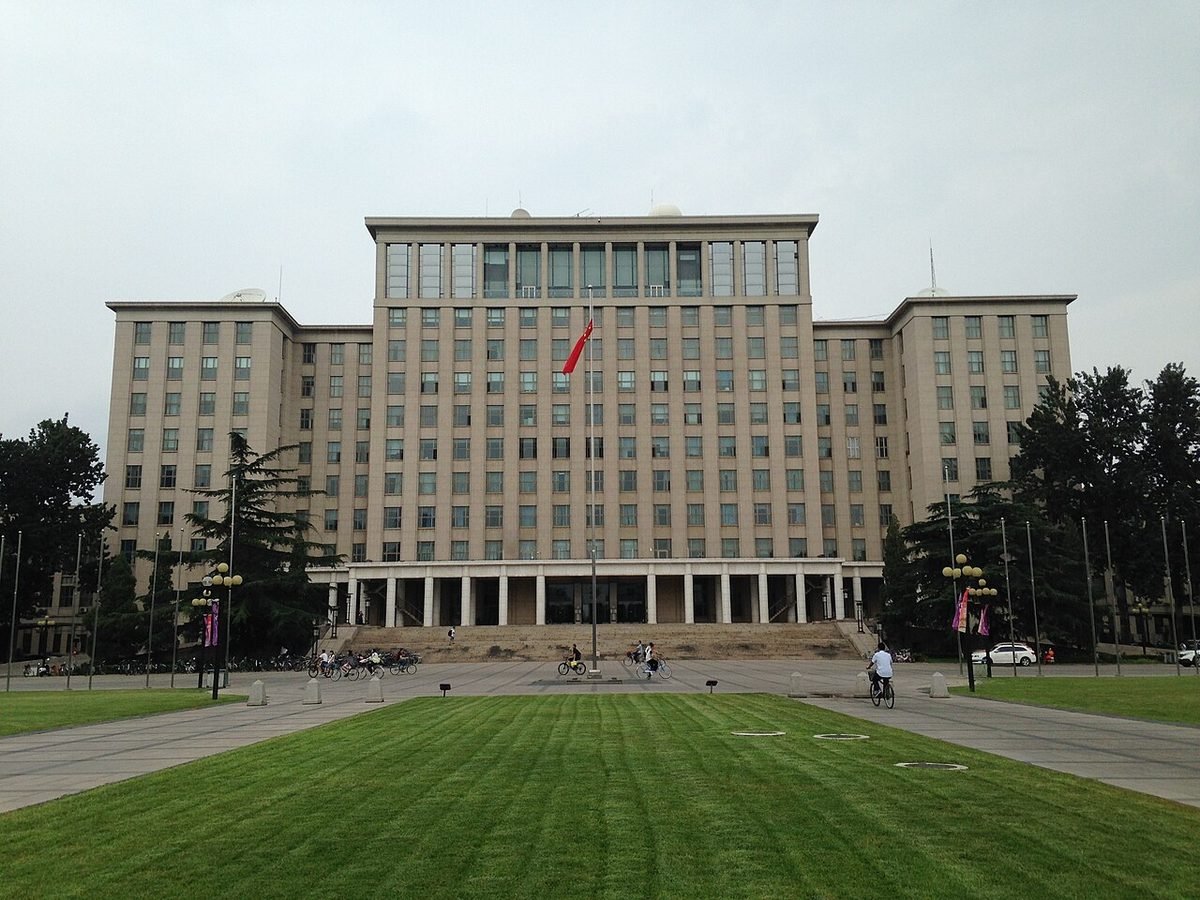
Table of Contents
Why This Matters
China is the only country where an Indian student can realistically aim at a top-15 world university without a top-15 world budget. Peking at 13th and Tsinghua at 14th in QS 2027 [1][2] sit above every university in continental Europe except ETH Zurich, and above every university in Asia except the University of Hong Kong. Fudan at 26th, Shanghai Jiao Tong at 36th and Zhejiang at 47th mean China has five universities in the world top 50 [1][2]. The Times Higher Education 2026 list agrees at the top — Tsinghua 12th, Peking 13th [3] — and places Fudan 36th, Shanghai Jiao Tong 40th and Zhejiang 39th [3].
The second reason is the scholarship system. The Chinese Government Scholarship is one of the largest fully funded schemes in the world — it supports more than 60,000 international scholars a year at over 280 designated universities [13]. A CSC scholar pays no tuition, lives in a free dormitory, holds comprehensive medical insurance, and receives CNY 2,500 a month as an undergraduate, CNY 3,000 as a master’s student and CNY 3,500 as a PhD student [13]. At roughly ₹14 to the yuan, that is about ₹35,000, ₹42,000 and ₹49,000 a month — enough to live on in most Chinese cities. On top of CSC, Tsinghua hosts the Schwarzman Scholars programme [14], and most top universities run their own tuition scholarships.
The third reason is scale and choice. China has 3,196 higher education institutions and the government’s Double First-Class programme singles out 147 universities for world-class funding [4]. Nine of them form the C9 League — Peking, Tsinghua, Fudan, Shanghai Jiao Tong, Zhejiang, Nanjing, USTC, Xi’an Jiaotong and Harbin Institute of Technology [7][8] — China’s answer to the Ivy League.
Note: The Indian student community in China is smaller than the agency websites suggest. The Government of India’s own count, as of January 2025, is 5,339 Indian students in China — 5,330 in universities and 9 in schools [10]. Some agency guides claim 25,000 Indian MBBS students alone, which contradicts the official figure; I use the government’s number in this guide the 25,000 claim is unverified. [RESEARCH GAP: Requires manual lookup of a verified count of Indian MBBS students in China]
One honest warning upfront: China is not an easy country to study in. The language barrier is real, the internet works differently, and the admission system changes every year — the CSCA test did not exist for bachelor’s applicants two years ago, and now it does [4][33]. This guide is my attempt to give you the numbers as they actually are — including the places where the numbers disagree.
The Confusion: “Cheap China” — Until You Want English
Important: the famous “China costs ₹3–6 lakh a year” figure is the Chinese-taught price. If you cannot study in Chinese, your real price is three to four times higher — and no agent will tell you this until you have already applied.
Here is how the confusion works. A guide says “Tsinghua costs CNY 26,000 a year”. That is true — for the Chinese-English taught programmes, where most teaching is in Chinese [4]. The English-taught bachelor’s programmes at Tsinghua cost CNY 100,000 a year (about ₹14 lakh) [4]. At Shanghai Jiao Tong, engineering in Chinese costs about CNY 24,800 a year, while the English-taught engineering cluster costs CNY 120,000 a year (about ₹16.8 lakh) [4]. At Peking, a Chinese-taught bachelor’s is CNY 26,000–30,000 a year, but an English-taught master’s programme costs CNY 80,000–190,000 for the whole programme [5]. The cheap price and the English language do not come together at bachelor’s level. At master’s level the gap shrinks — Tsinghua’s English-taught master’s programmes run from CNY 30,000 to CNY 198,000 depending on the programme [4] — which is why I advise most Indian students without Chinese to aim at a master’s, not a bachelor’s.
| Chinese-taught bachelor’s | English-taught bachelor’s | |
|---|---|---|
| Tsinghua University | CNY 26,000–30,000/yr (₹3.6–4.2 lakh) [4] | CNY 100,000/yr (₹14 lakh) [4] |
| Shanghai Jiao Tong University | CNY 24,800/yr engineering (₹3.5 lakh) [4] | CNY 120,000/yr engineering (₹16.8 lakh) [4] |
| Peking University | CNY 26,000–30,000/yr (₹3.6–4.2 lakh) [5] | No English-taught bachelor’s — Chinese only [5] |
| Language needed | HSK Level 5, or HSK 6 for exam-free entry at PKU [5] | IELTS 6.5+ or TOEFL 90+ [5] |
| CSCA test (from 2026) | Required for bachelor’s applicants at CSC universities [4][33] | Required for bachelor’s applicants at CSC universities [4][33] |
The second confusion is the alphabet soup: C9, 985, 211, Double First-Class. The C9 League is the nine elite research universities listed in this guide — the closest thing China has to the Ivy League [7][8]. Double First-Class is the government’s current funding programme: 147 universities whose chosen departments get world-class funding [4]. The older 985 and 211 labels were earlier versions of the same idea and are now mostly replaced by Double First-Class in official use.
The third confusion is the CSCA test. From the 2026 intake, international applicants to bachelor’s programmes at universities that take part in the Chinese Government Scholarship must take the China Scholastic Competency Assessment (CSCA), set by the China Scholarship Council [4][33]. Check the CSCA requirement on your chosen university’s own admissions page before you assume an application is just paperwork.
What It Covers — The Top Universities in China for Indian Students
I have profiled the 12 universities below in QS 2027 order. The first table is the shortlist view — rank, city, best subject and the reported tuition. The second table adds the Times Higher Education 2026 rank and marks every metric I could not verify, so you can see exactly where my data stops.
| University | QS 2027 [1][2] | QS 2026 [2][3] | City | Best for | Tuition note (reported) |
|---|---|---|---|---|---|
| Peking University | 13 | 14 | Beijing | Humanities, sciences, medicine | UG CNY 26,000–30,000/yr [5] |
| Tsinghua University | 14 | =17 | Beijing | Engineering, computer science | UG CNY 26,000–30,000/yr; English UG CNY 100,000/yr [4] |
| Fudan University | 26 | 30 | Shanghai | Medicine, economics, business | UG CNY 28,000–40,000/yr [7] |
| Shanghai Jiao Tong University | 36 | =47 | Shanghai | Engineering, medicine, business | UG CNY 30,000–45,000/yr; English engineering CNY 120,000/yr [4][7] |
| Zhejiang University | 47 | 49 | Hangzhou | Engineering, medicine, agriculture | UG CNY 20,000–30,000/yr [7] |
| Nanjing University | =90 | 103 | Nanjing | Sciences, humanities | UG CNY 22,000–35,000/yr [7] |
| University of Science and Technology of China (USTC) | =134 | 132 | Hefei | Physics, quantum, computer science | UG CNY 20,000–30,000/yr [7] |
| Tongji University | 146 | 177 | Shanghai | Architecture, civil engineering | UG CNY 20,000–35,000/yr [7] |
| Wuhan University | =165 | 186 | Wuhan | Law, medicine, computer science | UG CNY 20,000–32,000/yr [7] |
| Harbin Institute of Technology (HIT) | 190 | 256* | Harbin | Engineering, aerospace, robotics | UG CNY 18,000–30,000/yr [7] |
| Sun Yat-sen University | Not verified | 276 | Guangzhou | Medicine, business, social sciences | UG CNY 22,000–36,000/yr [7] |
| Xi’an Jiaotong University | Not verified | 305 | Xi’an | Engineering, medicine, management | UG CNY 18,000–30,000/yr [7] |
* HIT’s QS 2026 rank is 256 in one QS 2026 list and 281 in another guide — the two sources disagree, so treat the 2026 figure with caution. QS 2027 ranks for Sun Yat-sen and Xi’an Jiaotong were not verified before this guide was written.
| University | QS 2027 | THE 2026 | Acceptance rate | Researcher-to-faculty ratio | Publication volume |
|---|---|---|---|---|---|
| Peking University | 13 [1][2] | 13 [3] | [RESEARCH GAP: Requires manual lookup of Peking University acceptance rate, researcher-to-faculty ratio and publication volume] | — | — |
| Tsinghua University | 14 [1][2] | 12 [3] | [RESEARCH GAP: Requires manual lookup of Tsinghua University acceptance rate, researcher-to-faculty ratio and publication volume] | — | — |
| Fudan University | 26 [1][2] | 36 [3] | [RESEARCH GAP: Requires manual lookup of Fudan University acceptance rate, researcher-to-faculty ratio and publication volume] | — | — |
| Shanghai Jiao Tong University | 36 [1][2] | 40 [3] | [RESEARCH GAP: Requires manual lookup of Shanghai Jiao Tong University acceptance rate, researcher-to-faculty ratio and publication volume] | — | — |
| Zhejiang University | 47 [1][2] | 39 [3] | [RESEARCH GAP: Requires manual lookup of Zhejiang University acceptance rate, researcher-to-faculty ratio and publication volume] | — | — |
| Nanjing University | =90 [1][2][6] | [RESEARCH GAP: Requires manual lookup of Nanjing University THE 2026 rank] | [RESEARCH GAP: Requires manual lookup of Nanjing University acceptance rate, researcher-to-faculty ratio and publication volume] | — | — |
| University of Science and Technology of China (USTC) | =134 [1][2][6] | [RESEARCH GAP: Requires manual lookup of University of Science and Technology of China THE 2026 rank] | [RESEARCH GAP: Requires manual lookup of University of Science and Technology of China acceptance rate, researcher-to-faculty ratio and publication volume] | — | — |
| Tongji University | 146 [1][2][6] | [RESEARCH GAP: Requires manual lookup of Tongji University THE 2026 rank] | [RESEARCH GAP: Requires manual lookup of Tongji University acceptance rate, researcher-to-faculty ratio and publication volume] | — | — |
| Wuhan University | =165 [1][2][6] | [RESEARCH GAP: Requires manual lookup of Wuhan University THE 2026 rank] | [RESEARCH GAP: Requires manual lookup of Wuhan University acceptance rate, researcher-to-faculty ratio and publication volume] | — | — |
| Harbin Institute of Technology (HIT) | 190 [1][2][6] | [RESEARCH GAP: Requires manual lookup of Harbin Institute of Technology THE 2026 rank] | [RESEARCH GAP: Requires manual lookup of Harbin Institute of Technology acceptance rate, researcher-to-faculty ratio and publication volume] | — | — |
| Sun Yat-sen University | Not verified — [RESEARCH GAP: Requires manual lookup of Sun Yat-sen University QS 2027 rank] | [RESEARCH GAP: Requires manual lookup of Sun Yat-sen University THE 2026 rank] | [RESEARCH GAP: Requires manual lookup of Sun Yat-sen University acceptance rate, researcher-to-faculty ratio and publication volume] | — | — |
| Xi’an Jiaotong University | Not verified — [RESEARCH GAP: Requires manual lookup of Xi’an Jiaotong University QS 2027 rank] | [RESEARCH GAP: Requires manual lookup of Xi’an Jiaotong University THE 2026 rank] | [RESEARCH GAP: Requires manual lookup of Xi’an Jiaotong University acceptance rate, researcher-to-faculty ratio and publication volume] | — | — |
Two rank conflicts in my sources remain unresolved. Peking University’s THE 2026 rank is 13 in one source [3] and 12 in another [7]; I use 13. Harbin Institute of Technology’s QS 2026 rank is quoted as 256 in one QS 2026 list and 281 in another guide [2][7], so I state no single 2026 figure for HIT as fact. QS 2027 ranks for Sun Yat-sen University and Xi’an Jiaotong University were not verified before this guide was written; I give only their QS 2026 ranks (276 and 305) [2].
The per-university tuition ranges below are guide-reported [7]; no official per-programme fee schedule was verified for each university. [RESEARCH GAP: Requires manual lookup of official per-programme fee schedules for Fudan, Shanghai Jiao Tong, Zhejiang, Nanjing, USTC, Tongji, Wuhan, Harbin Institute of Technology, Sun Yat-sen and Xi’an Jiaotong universities] Confirm the exact fee on the university’s own page and in the admission letter before paying. Rupee figures use approximately ₹14 per Chinese yuan and move with the exchange rate. Founding years are the universities’ own published histories, cited to their official sites [16][17][18][19][20][21][22][23][24][25][26][27]; I did not re-verify each against a second source. [RESEARCH GAP: Requires manual lookup of second-source verification of founding years for Fudan, Shanghai Jiao Tong, Zhejiang, Sun Yat-sen and Xi’an Jiaotong universities]
My insider tip: The famous “China costs ₹3–6 lakh a year” figure is the Chinese-taught price. If you cannot study in Chinese, your real price is three to four times higher, and no agent discloses this until after you have applied. I say it again here because it is the single most expensive mistake in this guide: check the medium of instruction before you set any budget.
1. Peking University (PKU), Beijing
Peking University is China’s number one university — 13th in the world in QS 2027, up from 14th in QS 2026 [1][2] — and 13th in THE 2026 [3]. Founded in 1898 [17], it is China’s oldest national university, and its campus — built around Weiming Lake and the Boya Pagoda — is the most beautiful in the country. It leads in the humanities, social sciences, natural sciences and medicine. For Indian students, Peking has one hard limit I want you to understand first: its bachelor’s degrees are taught only in Chinese [5]. You enter either through a written entrance exam in Chinese, English and mathematics, or without the exam on the strength of high SAT, IB, A-Level or CSCA results plus HSK Level 6 at 210 or above [5]. At master’s level the door opens wider — around fifteen English-taught programmes, including International Relations, the LL.M. in Chinese Law, International Master of Public Administration, computer science and China Studies [5]. Tuition for a Chinese-taught bachelor’s is CNY 26,000–30,000 a year (about ₹3.6–4.2 lakh); a standard master’s is CNY 29,000–33,000 a year; English-taught master’s programmes cost CNY 80,000–190,000 for the whole programme [5]. The application fee is CNY 800 (about ₹11,200) [5]. Peking’s total enrolment is roughly 45,000 students, about 7% of them international — a guide-reported figure I could not verify against the university’s own statistics [5]. [RESEARCH GAP: Requires manual lookup of Peking University total enrolment and international-student share from the university’s own statistics]
2. Tsinghua University, Beijing
Tsinghua is China’s engineering powerhouse — 14th in the world in QS 2027, up from joint 17th in QS 2026 [1][2], and 12th in THE 2026 [3]. Founded in 1911 [16], its computer science, engineering and architecture departments are among the best anywhere. It also hosts Schwarzman College, home of the Schwarzman Scholars programme [14]. Tsinghua changed its international undergraduate admissions in the 2025 cycle to an application-review system rather than a single standardised test — a change the university itself says is meant to raise the bar, not lower it [4]. International undergraduate tuition is CNY 26,000 a year for economics, finance, law and similar fields, and CNY 30,000 a year for sciences and engineering (about ₹3.6–4.2 lakh) [4]. The English-taught bachelor’s tracks — Global Talents in Science and Engineering, Urban Regeneration and Design, and Politics, Economics and Sociology — cost CNY 100,000 a year (about ₹14 lakh) [4]. Graduate tuition runs CNY 28,000–75,000 a year depending on the programme [4]. The application fee is CNY 800 [4]. A single secondary source reported 63,132 registered students as of 31 December 2025; I list that figure as unverified because it is not checked against the university’s own statistics. [RESEARCH GAP: Requires manual lookup of Tsinghua University total registered students from the university’s own statistics]
3. Fudan University, Shanghai
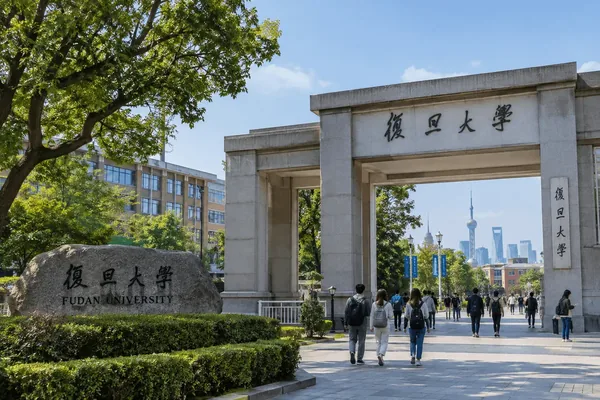
Fudan is China’s third-ranked university — 26th in the world in QS 2027, up from 30th in QS 2026 [1][2]. Founded in 1905 [18], it sits in Shanghai and leads in medicine, economics, business, international studies and the liberal arts. Its Shanghai Medical College, with the Zhongshan and Huashan hospitals, is one of China’s top clinical training networks [9]. My own site already carries a full Fudan guide — see the link at the end of this guide. Fudan’s international undergraduate tuition is reported at CNY 28,000–40,000 a year (about ₹3.9–5.6 lakh) [7], and it offers a solid set of English-taught programmes — but the price jumps sharply for medicine: the English-taught MBBS costs CNY 75,000 a year (about ₹10.5 lakh) [9]. Its International MBA costs CNY 369,800 for the two-year programme (about ₹51.8 lakh in total) [7].
4. Shanghai Jiao Tong University (SJTU), Shanghai
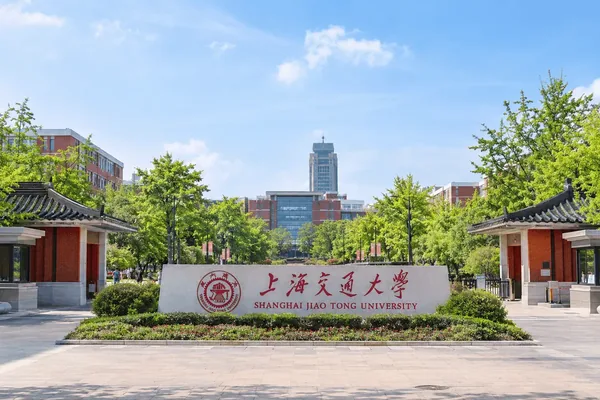
Shanghai Jiao Tong is China’s fourth-ranked university — 36th in the world in QS 2027, up from joint 47th in QS 2026 [1][2]. Founded in 1896 [19], it is an engineering and medicine giant, and its Antai College of Economics and Management is one of Asia’s best business schools. My site already carries a full SJTU guide — see the link at the end of this guide. SJTU’s international undergraduate tuition is reported at CNY 30,000–45,000 a year (about ₹4.2–6.3 lakh) [7]. The English-taught engineering cluster — the track most Indian applicants ask me about — costs CNY 120,000 a year (about ₹16.8 lakh), against about CNY 24,800 a year for the Chinese-taught equivalent [4]. The English-taught MBBS at its School of Medicine costs CNY 75,000 a year (about ₹10.5 lakh) [9]. The Antai International MBA costs CNY 184,000 for the two-year programme (about ₹25.8 lakh in total) [7].
5. Zhejiang University (ZJU), Hangzhou
Zhejiang is China’s fifth-ranked university — 47th in the world in QS 2027, up from 49th in QS 2026 [1][2]. Founded in 1897 [20], it is one of China’s largest research universities, in Hangzhou — the city of Alibaba and West Lake, about an hour from Shanghai by high-speed train. It leads in engineering, computer science, software, medicine and agriculture [4]. I rate Zhejiang the best-value C9 university in this guide. International undergraduate tuition is reported at CNY 20,000–30,000 a year (about ₹2.8–4.2 lakh) [7], and its English-taught MBBS costs CNY 42,800 a year (about ₹6 lakh) — nearly half the Shanghai medical schools’ price — with 100–180 English MBBS seats a year [9][34]. Its Global MBA costs CNY 109,000 for the 2.5-year programme (about ₹15.3 lakh in total) [7]. Hangzhou is also cheaper to live in than Beijing or Shanghai, at about CNY 2,500–4,500 a month [34].
6. Nanjing University (NJU), Nanjing
Nanjing University is joint 90th in the world in QS 2027, up from 103rd in QS 2026 [1][2][6]. Founded in 1902 [21], it is a C9 League university known for the natural sciences, humanities and a famously independent academic culture. International undergraduate tuition is reported at CNY 22,000–35,000 a year (about ₹3.1–4.9 lakh) [7]. Nanjing offers English-taught programmes, and its Chinese language programme costs about CNY 21,000 a year for students who want a foundation year first [7]. I see it as a good pick for science and humanities students who want a C9 name without Beijing or Shanghai prices.
7. University of Science and Technology of China (USTC), Hefei
USTC is joint 134th in the world in QS 2027, against 132nd in QS 2026 [1][2][6]. Founded in 1958 in Hefei [22], it is a C9 university devoted almost entirely to science — physics, quantum research, computer science and new technologies. International undergraduate tuition is reported at CNY 20,000–30,000 a year (about ₹2.8–4.2 lakh) [7]. English-taught options are limited — most teaching is in Chinese [7] — so I would shortlist USTC only if you already have Chinese, or as a master’s or PhD applicant in an English-taught research programme. Hefei is an inland city and one of the cheapest in this guide to live in.
8. Tongji University, Shanghai
Tongji is 146th in the world in QS 2027, up from 177th in QS 2026 [1][2][6]. Founded in 1907 in Shanghai [23], it is China’s benchmark for architecture, civil engineering, urban planning and environmental sciences. International undergraduate tuition is reported at CNY 20,000–35,000 a year (about ₹2.8–4.9 lakh) [7], and it offers English-taught programmes. One practical warning I want you to budget for: Tongji’s application fee is CNY 600, and undergraduates who receive a pre-admission offer must pay the full first-year tuition within two weeks to secure their seat and start the visa documents [7]. Budget for that lump sum before you apply — it is not a small deposit.
9. Wuhan University, Wuhan
Wuhan University is joint 165th in the world in QS 2027, up from 186th in QS 2026 [1][2][6]. Founded in 1893 [24], it has one of China’s most beautiful campuses — a lakeside campus famous for its cherry blossom — and is strong in law, medicine, computer science and engineering. International undergraduate tuition is reported at CNY 20,000–32,000 a year (about ₹2.8–4.5 lakh) [7]. The application fee is CNY 800, and the full tuition is paid on registration rather than as a pre-admission deposit [7]. Monthly living costs run about CNY 2,000–3,500 [34] — the lowest in this guide.
10. Harbin Institute of Technology (HIT), Harbin
Harbin Institute of Technology is 190th in the world in QS 2027 [1][2][6]. Founded in 1920 [25], it is a C9 League engineering powerhouse — China’s best for aerospace, robotics and space research. International undergraduate tuition is reported at CNY 18,000–30,000 a year (about ₹2.5–4.2 lakh) [7] — the cheapest in this guide alongside Xi’an Jiaotong. One caution: HIT’s QS 2026 rank is quoted as 256 in one QS 2026 list and 281 in another guide, so I do not state the 2026 figure as settled [2][7]. The QS 2027 rank of 190 is consistent across the sources I checked [1][6].
11. Sun Yat-sen University (SYSU), Guangzhou
Sun Yat-sen University is 276th in the world in QS 2026 [2][3]. Founded in 1924 [26], it is a large comprehensive university in Guangzhou — China’s southern trade capital, next to Hong Kong — strong in medicine, business and the social sciences. Its QS 2027 rank was not verified before this guide was written, so I give only the 2026 figure. [RESEARCH GAP: Requires manual lookup of Sun Yat-sen University QS 2027 rank] International undergraduate tuition is reported at CNY 22,000–36,000 a year (about ₹3.1–5 lakh) [7].
12. Xi’an Jiaotong University (XJTU), Xi’an
Xi’an Jiaotong University is 305th in the world in QS 2026 [2][3]. Founded in 1896 [27], it is a C9 League university in Xi’an — the ancient capital, home of the Terracotta Army — strong in engineering, medicine and management. Its QS 2027 rank was not verified before this guide was written, so I give only the 2026 figure. [RESEARCH GAP: Requires manual lookup of Xi’an Jiaotong University QS 2027 rank] International undergraduate tuition is reported at CNY 18,000–30,000 a year (about ₹2.5–4.2 lakh) [7] — joint-cheapest in this guide.
Living costs — what the city adds to the fee. I have folded the campus-living facts here because the city you pick changes your monthly budget as much as the tuition does. Living costs vary sharply by city tier, and every figure below is a guide-reported estimate, not an official figure. [RESEARCH GAP: Requires manual lookup of official living-cost figures by city tier]
| City tier / city | Monthly living cost | Source |
|---|---|---|
| Tier 1 cities (Beijing, Shanghai, Guangzhou) | CNY 3,500–6,000 | [34] |
| Tier 2 cities | CNY 2,500–4,500 | [34] |
| Hangzhou | CNY 2,500–4,500 | [34] |
| Wuhan | CNY 2,000–3,500 | [34] |
| General range across cities | CNY 2,200–6,000 | [9] |
Wuhan, at about CNY 2,000–3,500 a month, is the lowest in this guide [34]; Hangzhou, at about CNY 2,500–4,500 a month, is cheaper to live in than Beijing or Shanghai [34]; Hefei is an inland city and one of the cheapest in this guide to live in. CSC scholars pay no accommodation cost, since the scholarship covers free on-campus dormitory housing [13]. I could not verify what a self-funded student pays for a dormitory bed — the draft gives no dormitory price beyond the CSC’s free housing. [RESEARCH GAP: Requires manual lookup of on-campus dormitory costs for self-funded international students]
Campus settings differ as much as costs. Peking’s campus is built around Weiming Lake and the Boya Pagoda. Wuhan’s lakeside campus is famous for its cherry blossom. Zhejiang sits in Hangzhou, the city of Alibaba and West Lake, about an hour from Shanghai by high-speed train. Sun Yat-sen is in Guangzhou, China’s southern trade capital, next to Hong Kong. Xi’an Jiaotong is in Xi’an, the ancient capital and home of the Terracotta Army.
Research & Labs at the Top Universities in China for Indian Students
Across the top universities in China for Indian students, I divide the 12 institutions into three academic clusters, and in my judgement the choice of cluster matters more than the choice of rank. Engineering and technology dominate at Tsinghua, Shanghai Jiao Tong, Zhejiang, USTC, Harbin Institute of Technology, Xi’an Jiaotong and Tongji. Medicine and the life sciences lead at Peking, Fudan, Shanghai Jiao Tong, Zhejiang, Wuhan and Sun Yat-sen. The humanities, social sciences and business are strongest at Peking, Fudan, Nanjing and Shanghai Jiao Tong’s Antai College of Economics and Management.

Engineering, computer science and the physical sciences
Tsinghua’s computer science, engineering and architecture departments are among the best anywhere [4], and its English-taught bachelor’s tracks in Global Talents in Science and Engineering, Urban Regeneration and Design, and Politics, Economics and Sociology show where its international teaching is concentrated [4]. That concentration is what lets an English-speaking applicant actually study at Tsinghua rather than only admire its rank. Shanghai Jiao Tong’s English-taught engineering cluster is the track most Indian applicants ask about [4], and its Antai College of Economics and Management is one of Asia’s best business schools. Zhejiang leads in engineering, computer science, software, medicine and agriculture [4]. USTC is devoted almost entirely to science — physics, quantum research, computer science and new technologies [22] — with English-taught options limited and most teaching in Chinese [7]. Harbin Institute of Technology is China’s best for aerospace, robotics and space research [25]. Xi’an Jiaotong is strong in engineering, medicine and management [27]. Tongji is China’s benchmark for architecture, civil engineering, urban planning and environmental sciences [23].
I have to be honest about the limit of my evidence here: the draft names no specific laboratories, research centres or equipment for these departments beyond the clinical facilities below. [RESEARCH GAP: Requires manual lookup of flagship laboratories, research centres and major equipment at Tsinghua, Shanghai Jiao Tong, Zhejiang, USTC, Harbin Institute of Technology, Xi’an Jiaotong and Tongji universities] No professor is named in the draft, and I name none here. [RESEARCH GAP: Requires manual lookup of named faculty and research-group leadership at the 12 universities] I also found no verified detail on libraries, computing clusters or database access at any of the 12 universities. [RESEARCH GAP: Requires manual lookup of library holdings, computing cluster access and database access at the 12 universities]
Medicine and clinical training
The strongest verifiable facility facts I have are clinical. Fudan’s Shanghai Medical College works through the Zhongshan and Huashan hospitals, one of China’s top clinical training networks [9]. Shanghai Jiao Tong’s School of Medicine has 12 affiliated hospitals [9]. Zhejiang’s School of Medicine runs the best-value English MBBS in this guide, at CNY 42,800 a year with 100–180 English MBBS seats a year [9][34]. Fudan offers 40 English MBBS seats a year and Shanghai Jiao Tong 30–50 [9]. Peking leads in medicine alongside the humanities, social sciences and natural sciences, and Wuhan and Sun Yat-sen are both strong in medicine [9][24][26]. These hospital networks are the facilities that make clinical training possible — they are what let a medical student see real patients in affiliated hospitals rather than only study theory. The draft gives me no equivalent detail for non-medical laboratories. [RESEARCH GAP: Requires manual lookup of non-medical laboratory and research facility details for the 12 universities]
Humanities, social sciences and interdisciplinary study
Peking leads in the humanities, social sciences, natural sciences and medicine [17], and offers around fifteen English-taught master’s programmes, including International Relations, the LL.M. in Chinese Law, International Master of Public Administration, computer science and China Studies [5]. That breadth is what lets a master’s applicant cross from one discipline into another without leaving Peking. Fudan leads in medicine, economics, business, international studies and the liberal arts [18]. Nanjing is known for the natural sciences and humanities and a famously independent academic culture [21]. The clearest interdisciplinary structure I found is Tsinghua’s Schwarzman College, home of the Schwarzman Scholars programme, which admits graduates aged 18–28 from every country and every academic background into a one-year Master’s in Global Affairs [14][15]. Wuhan is strong in law, medicine, computer science and engineering [24], and Sun Yat-sen in medicine, business and the social sciences [26].
Funding, Grants & Assistantships at the Top Universities in China for Indian Students
The Chinese Government Scholarship (CSC)
The CSC is the scholarship that makes China affordable, and it is the first thing I tell you to apply for — before you finalise your university list, because the CSC application runs on its own calendar. It is run by the China Scholarship Council under China’s Ministry of Education and supports more than 60,000 international scholars a year at over 280 designated universities [13]. That scale figure is guide-reported and not verified against the China Scholarship Council’s own statistics. [RESEARCH GAP: Requires manual lookup of China Scholarship Council official statistics on scholars supported per year and designated universities] It covers 100% of tuition fees, free on-campus accommodation, comprehensive medical insurance (CNY 800 a year), and a monthly living stipend: CNY 2,500 for a bachelor’s, CNY 3,000 for a master’s, CNY 3,500 for a PhD [13]. What it does not cover is international airfare — you arrange and pay for your own flights [13].
| Level | Monthly stipend [13] | Approx. ₹/month | What is covered |
|---|---|---|---|
| Bachelor’s | CNY 2,500 | ₹35,000 | Full tuition, dormitory, insurance, stipend |
| Master’s | CNY 3,000 | ₹42,000 | Full tuition, dormitory, insurance, stipend |
| PhD | CNY 3,500 | ₹49,000 | Full tuition, dormitory, insurance, stipend |
There are three routes. Type A is through the Chinese Embassy in your home country — for Indian students, that means the Embassy of China in New Delhi. Type B is direct to a CSC-designated Chinese university, on that university’s own timetable. Type C is through specific international organisations and partner programmes [13]. The application portal is Campus China (campuschina.org) and the CSC Information System at studyinchina.csc.edu.cn [11][12]. The 2027 cycle is expected to open in December 2026, with embassy deadlines in January–February 2027 and university deadlines running to April 2027 [13]. As of late October 2026 the 2027 round had not yet been announced — treat those dates as the expected pattern, not confirmed deadlines [13]. [RESEARCH GAP: Requires manual lookup of confirmed CSC 2027 portal opening and deadline dates]
My advice: Apply for CSC and the university directly at the same time. The two applications are separate — a university admission does not automatically give you the scholarship, and a CSC award does not automatically give you admission. Students who apply to only one track lose a year.
Schwarzman Scholars (Tsinghua)
The Schwarzman Scholars programme is a fully funded, one-year Master’s in Global Affairs at Tsinghua University in Beijing [14]. It covers tuition, room and board, health insurance, travel to and from Beijing, and a personal stipend of $4,000 — and no Chinese language proficiency is required [14]. It is open to graduates aged 18–28 from every country and every academic background, and no GRE or GMAT is required [14].
Important: the 2027–28 application window is already closed. The U.S. and Global deadline was 9 September 2026 at 3:00 p.m. EDT [15]. The next cycle, for the class of 2028–29, is scheduled to run from April to September 2027, with the programme beginning in August 2028 [15]. If Schwarzman is your target, prepare through 2027 and apply when the window opens in April — do not wait for a 2027 deadline that no longer exists. The April–September 2027 window is the announced pattern; confirm it on schwarzmanscholars.org when the cycle opens. [RESEARCH GAP: Requires manual lookup of confirmed Schwarzman Scholars 2028–29 application dates on the official site]
University and city scholarships
Most top universities run their own awards on top of CSC. Tsinghua runs the Tsinghua University Tuition Scholarship and Beijing offers the Beijing Government Scholarship for International Students, covering full or partial tuition for one academic year, renewed competitively [4]. Peking offers the Peking University Scholarship for international students [5]. Shanghai, Hangzhou and other cities run their own municipal scholarships.
Teaching and research assistantships
I found no information in the draft on teaching assistantships or research assistantships — no availability, pay rates, hours or eligibility rules for Indian students — so I will not guess at any of it. [RESEARCH GAP: Requires manual lookup of teaching and research assistantship availability, pay and eligibility for Indian students at the 12 universities] No external funding source beyond the municipal scholarships above is named in the draft. [RESEARCH GAP: Requires manual lookup of external funding and fellowship sources for Indian students at the top universities in China for Indian students beyond CSC, Schwarzman and municipal scholarships]
Step-by-step aid-application sequence
1. Decide the route first. CSC Type A through the Embassy of China in New Delhi, Type B direct to a CSC-designated university, or Type C through a partner organisation [13]. 2. Register on the portals. Campus China (campuschina.org) and the CSC Information System at studyinchina.csc.edu.cn [11][12]. 3. Prepare the documents before the portal opens. Transcripts, two recommendation letters, study plan, language scores and the physical examination form — the documents listed under Eligibility below. 4. Submit the CSC application before the January–April 2027 deadlines. Type A in January–February 2027, Type B up to 30 April 2027 (some universities earlier, for example 28 February) [13]. 5. Apply to the university directly in parallel. On the university’s own portal and timetable, and pay the application fee (usually CNY 400–800, about ₹5,600–11,200) [5][7]. 6. If Schwarzman is your target, prepare through 2027. Apply in the April–September 2027 window for the class of 2028–29, beginning August 2028 [15].
Eligibility
Language and test thresholds
For the top universities in China for Indian students, admission is decided first by language, because it changes both the fee and the test list. For a Chinese-taught bachelor’s, you need HSK Level 5 (or HSK 6 at 210 or above for exam-free entry at Peking) [5]. For English-taught programmes, you need IELTS 6.5+ or TOEFL 90+ [5]. From the 2026 intake, bachelor’s applicants at CSC-participating universities must also take the China Scholastic Competency Assessment (CSCA), set by the China Scholarship Council [4][33]. The two fee schedules behind those thresholds are in the comparison table in The Confusion section above — Chinese-taught bachelor’s at CNY 26,000–30,000 a year at Tsinghua and Peking, against CNY 100,000 a year for Tsinghua’s English-taught bachelor’s and CNY 120,000 a year for Shanghai Jiao Tong’s English-taught engineering [4][5].
My compliance note: The CSCA is mandatory, not optional. From the 2026 intake, international applicants to bachelor’s programmes at universities that take part in the Chinese Government Scholarship must take the China Scholastic Competency Assessment [4][33]. I want you to check the CSCA requirement on your chosen university’s own admissions page before you assume an application is only paperwork.
Peking’s bachelor’s applicants sit a written exam in Chinese, English and mathematics in late March, then a second-round exam in mid-April [5]. Tsinghua uses an application-review system with interviews for shortlisted candidates [4]. Master’s applicants are usually interviewed online. Book these tests months ahead — HSK and IELTS slots fill up.
Documents, SOP and study plan
Your study plan must answer three questions: why this university, why this subject, and what you will do afterwards. The full document list is under Documents below. I found nothing in the draft about how admissions committees weigh publications against GPA against the SOP or study plan, so I will not rank them for you. [RESEARCH GAP: Requires manual lookup of how admissions committees weigh publications against GPA and SOP at the 12 universities]
MBBS-specific thresholds
My compliance note: China’s Ministry of Education approves exactly 45 universities to teach MBBS (Clinical Medicine) in English to international students [9]. The Embassy of India in Beijing has issued a specific advisory: do not seek admission in any university other than those 45 — students enrolled elsewhere are not eligible for FMGE [9][30]. Before you pay anyone, check the university against the MOE list, the World Directory of Medical Schools [29], and the NMC [28].
Under the NMC’s Foreign Medical Graduate Licentiate (FMGL) Regulations, 2021, your degree counts in India only if the course is at least 54 months of theory, taught entirely in English, followed by a 12-month internship at the same institution, and you become eligible for registration to practise in China [9][33]. You must also have qualified NEET-UG before admission — without it, you cannot sit FMGE afterwards [9]. And you must pass HSK Level 4 (the Chinese proficiency test) before clinical rotations, usually in Year 3, because you will be talking to Chinese patients [9].
| University | English MBBS tuition/yr [9][34] | Approx. ₹/yr | Notes |
|---|---|---|---|
| Fudan University (Shanghai Medical College) | CNY 75,000 | ₹10.5 lakh | 40 English MBBS seats/yr; Zhongshan & Huashan hospitals |
| Shanghai Jiao Tong University School of Medicine | CNY 75,000 | ₹10.5 lakh | 30–50 English MBBS seats/yr; 12 affiliated hospitals |
| Zhejiang University School of Medicine | CNY 42,800 | ₹6 lakh | 100–180 English MBBS seats/yr; best value in this guide |
| Other MOE-listed universities | CNY 33,000–50,000 | ₹4.6–7 lakh | Cheapest at Jilin University (CNY 33,000) [9] |
The honest number on outcomes: in FMGE 2024, 14,214 Chinese medical graduates appeared and 2,765 passed — a pass rate of 19.45% [9]. A Chinese MBBS is cheap and the teaching hospitals are excellent, but roughly four out of five graduates do not clear FMGE on a given attempt.
Note: Some universities in China have scaled back or paused English-medium international intake since the pandemic [9]. Verify that your shortlisted university is actively admitting international MBBS students for the 2027 intake — do not rely on a 2023 or 2024 brochure.
How to Apply
1. Shortlist by language first, rank second. I suggest you decide whether you will study in Chinese or English, then shortlist. If you need English at bachelor’s level, cross off Peking (Chinese only) [5] and budget the English-track fee at Tsinghua and SJTU [4]. For MBBS, shortlist only from the 45 MOE-approved universities [9].
2. Check the test requirements. For a Chinese-taught bachelor’s you need HSK Level 5 (or HSK 6 at 210+ for exam-free entry at Peking) [5]. For English-taught programmes you need IELTS 6.5+ or TOEFL 90+ [5]. From the 2026 intake, bachelor’s applicants at CSC-participating universities must also take the CSCA test [4][33]. Book these tests months ahead — HSK and IELTS slots fill up.
3. Prepare your documents. Passport, Class 10 and 12 certificates and transcripts, degree certificates and transcripts (for master’s/PhD), two recommendation letters, a personal statement or study plan, language test scores, the CSCA report, and a physical examination form.
4. Apply on the university’s own portal. Each university has its own online application system and its own deadline — there is no common application for China. Pay the application fee (usually CNY 400–800, about ₹5,600–11,200) [5][7]. Note that some universities, like Tongji, require the full first-year tuition within two weeks of a pre-admission offer [7].
5. Apply for the CSC scholarship in parallel. Register on Campus China and the CSC Information System [11][12], choose Type A (embassy) or Type B (university direct), and submit before the January–April 2027 deadlines [13].
6. Sit the exam or interview. Peking’s bachelor’s applicants sit a written exam in Chinese, English and mathematics in late March, then a second-round exam in mid-April [5]. Tsinghua uses an application-review system with interviews for shortlisted candidates [4]. Master’s applicants are usually interviewed online.
7. Accept the offer and get the JW form. Your university sends the Admission Notice and the JW201 form (if you hold a scholarship) or JW202 form (if you are self-funded) [31]. The JW form is issued by the university, not the embassy — and it is the single most common source of visa delays, so chase it the moment you accept.
8. Apply for the X1 visa. With the Admission Notice and JW form, apply in person at a Chinese Visa Application Service Centre (CVASC) in India [31]. Indian citizens get no visa on arrival and no eVisa for China — you must hold the visa before you travel [31].
9. Convert to a residence permit within 30 days of arrival. Register your address with the local police within 24 hours of arrival, do the medical examination at a designated hospital, and apply for the residence permit at the local Public Security Bureau — it costs CNY 400–800 (about ₹5,600–11,200) [31][32]. The permit replaces your visa for the whole duration of your degree.
My advice on timing
Start now, in November 2026, even though the 2027 notices are not all published. The HSK test, the CSCA preparation, the recommendation letters and the physical examination each take weeks. The students who miss out are not the ones who are unqualified — they are the ones who find out about the CSC deadline in the last week. And check the official pages again in December 2026, when the CSC portal is expected to open [13]. My five chronological steps: Step 1 — November–December 2026: decide the language, then book the tests. Confirm the medium of instruction for your top three programmes, write down the real fee for each, book your HSK or IELTS/TOEFL test date, ask two teachers for recommendation letters now, and download the Foreigner Physical Examination Form and find your nearest designated hospital. Step 2 — December 2026: register for the scholarship on Campus China and the CSC Information System, choose Type A (embassy) or Type B (university direct), and confirm the 2027 dates on the official pages [13]; check the CSCA requirement on each chosen university’s own admissions page [4][33]. Step 3 — January–April 2027: file both applications — CSC Type A in January–February 2027, Type B up to 30 April 2027 (some universities earlier, for example 28 February) [13] — apply to each university directly, pay the application fee (usually CNY 400–800) [5][7], and budget for Tongji’s full first-year tuition within two weeks of a pre-admission offer [7]; shortlist MBBS only from the 45 MOE-approved universities [9]. Step 4 — March–April 2027: sit the exams and interviews. Peking’s bachelor’s written exam falls in late March, with the second-round exam in mid-April [5]; Tsinghua interviews shortlisted candidates [4]; master’s applicants are usually interviewed online. Step 5 — May–September 2027: secure the offer, the visa and the permit. Admission results and JW201/JW202 forms are issued in May–July 2027; apply for the X1 visa at a CVASC in June–August 2027, confirm the visa fee at the visa centre first (my sources quote ₹2,900 and ₹3,800) [31][32], then register with the local police within 24 hours of arrival, complete the medical examination, and convert the X1 into a residence permit within 30 days of arrival [31][32]; the semester starts in September 2027.
Key Dates
| Step | Date |
|---|---|
| Prepare now: HSK / IELTS / TOEFL / CSCA preparation, documents, recommendations | November–December 2026 |
| CSC portal expected to open | December 2026 (expected, not confirmed) [13] |
| Peking University bachelor’s applications (2026 cycle, as a guide) | 19 December–28 February [5] |
| Tsinghua undergraduate applications (2026 cycle, as a guide) | Closed 14 January 2026 [4] |
| CSC Type A (embassy) deadlines | January–February 2027 (expected) [13] |
| CSC Type B (university) deadlines | Up to 30 April 2027 (some universities earlier, e.g. 28 February) [13] |
| Peking bachelor’s written exam (2026 cycle, as a guide) | Late March 2027 [5] |
| Peking second-round exam (2026 cycle, as a guide) | Mid-April 2027 [5] |
| Schwarzman Scholars 2028–29 applications open | April 2027 [15] |
| Admission results and JW201/JW202 forms issued | May–July 2027 |
| X1 visa applications at CVASC | June–August 2027 |
| Semester starts | September 2027 |
Note: Most 2027 dates in this table are the expected pattern from the 2026 cycle — no Chinese university or scholarship body had published its full 2027 calendar when I wrote this guide on 6 November 2026. Confirm the CSC December opening, the January–April deadlines and the Schwarzman April opening on the official pages in December 2026.
Documents
I have put everything you need in this list — you must meet all of these — a missing document is the most common reason an application stalls.
- Passport — valid for at least 6 months, with blank pages [31].
- Class 10 and 12 certificates and transcripts — for bachelor’s applicants [31].
- Degree certificates and transcripts — for master’s and PhD applicants.
- Language proof — HSK Level 5 (Chinese-taught) or IELTS 6.5+ / TOEFL 90+ (English-taught) [5].
- CSCA report — required from the 2026 intake for bachelor’s applicants at CSC-participating universities [4][33].
- Two recommendation letters — from teachers or professors who know your work.
- Personal statement / study plan — why this university, why this subject, what you will do after.
- Foreigner Physical Examination Form — from a hospital designated by the Chinese Embassy in India (for the X1 visa) [31].
- Financial proof — most universities and embassies expect CNY 40,000–60,000 a year (about ₹5.6–8.4 lakh) in a bank statement [31].
- Admission Notice + JW201 or JW202 form — issued by your university after admission; the JW form is mandatory for the visa [31].
- Passport photos — as specified by the visa centre.
The visa, in short
China issues the X1 visa for study of more than 180 days and the X2 visa for study of up to 180 days [31]. Almost every degree student needs an X1. You apply in person at a CVASC after filling the COVA form online at cova.cs.mfa.gov.cn [31]. The visa fee for Indian passport holders is CNY-denominated and reduced — about ₹2,900 for a single entry, extended to 31 December 2026 — but another guide quotes ₹3,800, so confirm the current fee at your visa centre before you pay [31][32]. Within 30 days of arrival you must convert the X1 into a residence permit [31]. The address must be registered with the local police within 24 hours of arrival, a medical examination done at a designated hospital, and the residence permit applied for at the local Public Security Bureau — it costs CNY 400–800 (about ₹5,600–11,200) [31][32]. The medical examination in China costs CNY 400–600 [32]. The permit replaces the visa for the whole duration of the degree. Part-time work or an internship needs your university’s approval and must be written into your residence permit — other work is unlawful employment [33]. The JW form is issued by the university, not the embassy — and it is the single most common source of visa delays, so chase it the moment you accept your offer.
My simple preparation checklist — do these this week:
- Check the medium of instruction for your top 3 programmes (Chinese or English) and write down the real fee for each.
- Book your HSK or IELTS/TOEFL test date.
- Ask two teachers for recommendation letters now — do not leave this to January.
- Download the Foreigner Physical Examination Form and find your nearest designated hospital.
More University Guides
Frequently Asked Questions
Which is the best university in China for Indian students?
For all-round prestige, Peking University — 13th in the world in QS 2027 [1]. For engineering and computer science, Tsinghua University — 14th [1]. For the best value, Zhejiang University — a C9 university with the cheapest English MBBS in this guide at CNY 42,800 a year [34].
Can I study in China without knowing Chinese?
Yes, but your options narrow sharply at bachelor’s level. Peking University teaches its bachelor’s degrees only in Chinese [5]. Tsinghua and Shanghai Jiao Tong offer English-taught bachelor’s tracks, but they cost CNY 100,000–120,000 a year, three to four times the Chinese-taught fee [4].
How much does the CSC scholarship pay?
Full tuition, free dormitory, medical insurance and a monthly stipend of CNY 2,500 (bachelor’s), CNY 3,000 (master’s) or CNY 3,500 (PhD) — about ₹35,000, ₹42,000 and ₹49,000 a month [13]. It does not cover international airfare [13]. The 2027 cycle is expected to open in December 2026 [13].
Is MBBS in China valid in India?
Only if you pick one of the 45 universities approved by China’s Ministry of Education to teach MBBS in English, qualify NEET-UG before admission, and complete 54 months plus a 12-month internship under the NMC’s FMGL 2021 rules [9][30]. You must also pass HSK Level 4 before clinical rotations [9].
What visa do Indian students need for China?
The X1 visa, for study of more than 180 days [31]. You need the Admission Notice and the JW201 or JW202 form, and you apply at a Chinese Visa Application Service Centre — no visa on arrival, no eVisa [31]. Convert it to a residence permit within 30 days [31].
What is the CSCA test?
The China Scholastic Competency Assessment is a test set by the China Scholarship Council. From the 2026 intake, international applicants to bachelor’s programmes at universities that take part in the Chinese Government Scholarship must take it [4][33]. Check the requirement on your chosen university’s own admissions page first.
Sources & Last Updated
Last updated: 6 November 2026. Dates, fees and deadlines can change — always confirm the current figure on the official university or scholarship page before you apply or pay anyone. Rupee figures use approximately ₹14 per Chinese yuan and move with the exchange rate.
- QS World University Rankings 2027 — official site — QS 2027 ranks: Peking 13, Tsinghua 14, Fudan 26, Shanghai Jiao Tong 36, Zhejiang 47; 85 mainland Chinese universities ranked.
- XuanXiao — QS World University Rankings 2027: Results and Analysis — QS 2027 released 18 June 2026; 2026→2027 movement table (Peking 14→13, Tsinghua =17→14, Fudan 30→26, SJTU =47→36, Zhejiang 49→47); QS 2026 ranks for Nanjing 103, USTC 132, Tongji 177, Wuhan 186, Sun Yat-sen 276, Xi’an Jiaotong 305.
- Shiksha — Best Universities in China in 2026-27 — QS 2026 + THE 2026 table: Peking QS 14 / THE 13, Tsinghua QS 17 / THE 12, Fudan QS 30 / THE 36, SJTU QS =47 / THE 40, Zhejiang QS 49 / THE 39.
- StudyU — Top Chinese Universities for International Students & Fees — 3,196 institutions (Ministry of Education, 17 June 2026), 1,412 award bachelor’s; Double First-Class 147 universities; QS 2027 table; English-taught fees (Tsinghua UG CNY 100,000 vs CNY 26,000–30,000; SJTU engineering CNY 120,000 vs CNY 24,800); CSCA required from the 2026 intake.
- StudyU — Peking University: Admission, Fees, Deadlines 2027 — PKU tuition (UG CNY 26,000–30,000; master’s CNY 29,000–33,000; English-taught master’s CNY 80,000–190,000 per programme); bachelor’s taught only in Chinese; HSK 6 at 210+ for exam-free entry; ~15 English-taught master’s; UG applications 19 Dec–28 Feb, master’s 20 Oct–23 Dec (2026 cycle); application fee CNY 800; ~45,000 students, 7% international (guide-reported).
- LeapScholar — Top Universities in China 2027: Fees & Rankings — QS 2027 top 20: Nanjing =90, USTC =134, Tongji 146, Wuhan =165, Harbin Institute of Technology 190; fees converted at 1 CNY = ₹14.
- LeverageEdu — Best Universities in China 2026 — QS 2026 / THE 2026 / ARWU 2025 table; C9 League list; per-university tuition ranges (Fudan CNY 28,000–40,000; SJTU CNY 30,000–45,000; Zhejiang CNY 20,000–30,000; Nanjing CNY 22,000–35,000; USTC CNY 20,000–30,000; Tongji CNY 20,000–35,000; Wuhan CNY 20,000–32,000; HIT CNY 18,000–30,000; Sun Yat-sen CNY 22,000–36,000; Xi’an Jiaotong CNY 18,000–30,000); Fudan IMBA CNY 369,800 total; SJTU Antai IMBA CNY 184,000 total; Zhejiang Global MBA CNY 109,000 total; Tongji application fee CNY 600 and full first-year tuition within two weeks of pre-admission; Wuhan application fee CNY 800.
- OlaChina — Top Universities in China: Inside the C9 League — QS 2026 C9 table; 72 mainland institutions in QS 2026; C9 membership.
- Collegedunia — MBBS in China for Indian Students 2026 — 45 MOE-approved English-medium MBBS universities; fees RMB 33,000–75,000 a year; Fudan MBBS CNY 75,000; Jilin CNY 33,000; FMGE 2024: 14,214 appeared, 2,765 passed (19.45%); Embassy of India advisory on the 45-university list; HSK-4 before clinical rotations; living costs RMB 2,200–6,000 a month; NMC FMGL 2021 (54 months + 12-month internship, same institution).
- Ministry of External Affairs (India) — Annexure B: Data on Indian Students Abroad (January 2025) — 5,339 Indian students in China (5,330 in universities, 9 in schools).
- Campus China — official CSC portal — the official Chinese Government Scholarship portal. Note: the site returned no response (connection failed) from this server on 6 November 2026; the URL is the official portal address confirmed by multiple sources.
- CSC Information System — official application portal — the official CSC application system. Note: the site returned HTTP 412 (bot protection) from this server on 6 November 2026; the URL is the official portal address confirmed by multiple sources.
- Opportunities Nexus — Chinese Government Scholarship 2027 — CSC stipends CNY 2,500 / 3,000 / 3,500; 280+ universities; 60,000+ scholars a year; Type A / B / C routes; portal expected December 2026; deadlines January–April 2027; airfare not covered; insurance CNY 800 a year.
- Schwarzman Scholars — official site — fully funded one-year Master’s in Global Affairs at Tsinghua University.
- African Base — Schwarzman Scholars 2028/29 — 2027–28 U.S./Global window closed 9 September 2026 at 3:00 p.m. EDT; next cycle April–September 2027 for the class of 2028–29; programme starts August 2028; $4,000 stipend; ages 18–28; no Chinese required.
- Tsinghua University — official site — founded 1911; international undergraduate tuition CNY 26,000–30,000 a year.
- Peking University — official site — founded 1898. Note: the /en/ path returned HTTP 404 on 6 November 2026; the base domain is cited.
- Fudan University — official site — founded 1905.
- Shanghai Jiao Tong University — official site — founded 1896.
- Zhejiang University — official site — founded 1897.
- Nanjing University — official site — founded 1902.
- University of Science and Technology of China — official site — founded 1958.
- Tongji University — official site — founded 1907.
- Wuhan University — official site — founded 1893.
- Harbin Institute of Technology — official site — founded 1920.
- Sun Yat-sen University — official site — founded 1924. Note: the /en/ path returned HTTP 404 on 6 November 2026; the base domain is cited.
- Xi’an Jiaotong University — official site — founded 1896.
- National Medical Commission — official site — India’s medical regulator; FMGL Regulations 2021.
- World Directory of Medical Schools — official site — WDOMS listing is a prerequisite for foreign medical degrees.
- Embassy of India, Beijing — official site — advisory on the 45 MOE-listed universities for MBBS.
- LeapScholar — China Student Visa 2026: X1 vs X2, Fees, Process Guide — X1 over 180 days, X2 up to 180 days; residence permit within 30 days; JW201 (scholarship) / JW202 (self-funded); COVA form; no visa on arrival, no eVisa for Indians; financial proof CNY 40,000–60,000 a year; visa fee ₹3,800 single entry (conflicts with [32]).
- Karan Gupta Consulting — China Student Visa (X1/X2) — visa fee ₹2,900 single entry for Indian passport holders (reduced rate extended to 31 December 2026); residence permit CNY 400–800; police registration within 24 hours; medical exam in China CNY 400–600.
- StudyCountry — Study in China — CSCA required from the 2026 intake for bachelor’s applicants at CSC-participating universities; X1/X2 rules; NMC FMGL 2021 (54 months + 12-month internship + 12-month supervised internship in India); part-time work needs school approval and must be noted on the residence permit.
- GlobalDictionStudio — Study in China for Indian Students: A Comprehensive 2027 Guide — living costs by city tier (Tier 1 CNY 3,500–6,000/month; Tier 2 CNY 2,500–4,500/month; Wuhan CNY 2,000–3,500/month); Zhejiang English MBBS CNY 42,800 a year; Fudan MBBS CNY 75,000 a year; visa fees from ₹2,900.
Last updated: 6 November 2026. Rankings are QS World University Rankings 2027 (released 18 June 2026), with QS 2026 shown for comparison. Fees are set in yuan and the rupee figures move with the exchange rate; always confirm the current fee on the university’s official website and in your admission letter before paying anyone.
By Rohit Gupta
If this guide helped you, share it with someone planning to study in China. For questions, write to universityresearchers3@gmail.com.