Top Universities in the USA for Indian Students 2027

QS 2026 ranks, tuition fees, scholarships, F-1 visa rules and Fall 2027 deadlines — verified from official sources.
By Rohit Gupta | Last updated: 6 November 2026
The USA is still the first choice for Indian students going abroad. In the 2024–25 academic year, 363,019 Indian students were studying in the USA — more than from any other country, and up about 10% on the year before [7]. The reason is simple: the world’s top-ranked universities are concentrated here, and a US degree still opens the most doors for work afterwards.
But the USA is also the most expensive popular destination, and the most confusing to apply to. There is no single national deadline, no single entrance exam, and the sticker price of a famous university tells you almost nothing about what you will actually pay. A family earning under $75,000 a year can pay nothing at MIT or Harvard — and full price at a university ranked far below them. Stanford, Chicago and Yale were among the biggest climbers in the QS 2026 rankings [3], which is why this year’s list looks a little different from last year’s.
I put this directory together so you can compare the top universities in the USA for Indian students 2027 on one page: rank, fees, what they are best for, who can get aid, and the Fall 2027 deadlines. Where a figure comes from a university or an official source, I say so. Where guides disagree, I say that too, because a wrong fee figure here can mislead a family by lakhs.
Key points
- Top-ranked among the top universities in the USA for Indian students 2027: MIT is #1 in the world (QS 2026), followed by Stanford at #3 and Harvard at #5 [1].
- Indian students: 363,019 Indians studied in the USA in 2024–25 — the largest group from any country [7].
- Tuition: top private universities charge about $59,000–$74,000 a year in tuition and fees for undergraduates in 2025–26 [4][5].
- The aid secret: MIT, Harvard, Princeton and Yale are need-blind for international students and meet 100% of demonstrated need [10].
- Fall 2027 deadlines: early rounds close 1 November 2026; regular decisions close 1–5 January 2027; the University of California window closes 30 November 2026 [8][9].
- Visa: the F-1 visa costs $535 in the two established fees (SEVIS $350 + visa fee $185) [11][12]. A new $250 fee was introduced in 2025 — check whether it applies to you before you pay.
- After graduation: OPT gives 12 months of work authorisation; STEM graduates get 36 months in total [11].
| 12 universities | $59,000–$74,000 a year | 363,019 Indian students |
|---|---|---|
| In this directory, ranked by QS 2026 [1] | Undergraduate tuition and fees at the top privates, 2025–26 [4][5] | In the USA in 2024–25, the largest group from any country [7] |

Table of Contents
Why This Matters for Indian Students
For the top universities in the USA for Indian students 2027, the USA matters for three reasons, and only one of them is the ranking. First, the top of the QS World University Rankings 2026 is dominated by American universities — MIT #1, Stanford #3, Harvard #5, Caltech #10 [1]. Second, the USA has the longest post-study work window of any major destination: 36 months for STEM graduates through OPT and the STEM OPT extension [11]. Third, the Indian community is huge — 363,019 students in 2024–25 [7] — so you will find Indian food, Indian student associations and seniors from your own city at almost every university on this list.
But I want to be honest about the other side too. The USA is expensive, the visa rules changed in 2025–26, and admission to the top universities is brutally competitive — reported acceptance rates for Indian applicants at Harvard, MIT and Stanford are around 3–5% [6]. A rank list alone will not get you in, and it will not tell you whether you can afford to go. That is what the rest of this guide is for.
Note: this is a directory, not a ranking of “best for you”. The right university depends on your subject, your budget and your scores. A student who wants computer science and a student who wants economics should read this list very differently.
Rank Is Not the Same as Affordability: Don’t Mix Them Up
This is the single most-mixed-up point about studying in the USA, so let me say it twice: a high rank does not mean a high price you must pay, and a low fee does not mean a low-quality university.
Important: the “sticker price” — the tuition figure on a university’s website — is what you pay only if you get no financial aid. At the richest universities, most international students do not pay the sticker price. MIT, Harvard, Princeton and Yale review international applicants need-blind (your ability to pay is not considered in admission) and meet 100% of demonstrated financial need with grants, not loans [10]. Families earning under about $75,000 a year can pay little or nothing at MIT or Harvard. Stanford, by contrast, is need-aware for international students — asking for aid can affect your admission chances there [10].
| Route | Who it suits | Typical undergraduate tuition a year | Aid reality |
|---|---|---|---|
| Elite private, need-blind (MIT, Harvard, Princeton, Yale) | Top scorers from any income background | About $59,000–$71,000 [4][5] | Need-blind; 100% of demonstrated need met with grants [10] |
| Elite private, need-aware (Stanford, Caltech, Chicago, UPenn, Cornell, Columbia) | Top scorers who can pay, or who win merit aid | About $59,000–$74,000 [4][5] | Aid exists but can affect admission; check each university’s policy |
| Top public (UC Berkeley, Michigan) | Strong students wanting lower fees | About $55,000–$64,000 for international students [4] | Little or no need-based aid for international students; merit scholarships exist |
| Low-cost public (see our Cheapest USA guide) | Budget-first students | From $9,733 a year [13] | Merit scholarships and assistantships; see the guide linked below |
Pro tip: apply to a mix. Two ambitious (need-blind elites), three realistic (top publics and need-aware privates) and two safe (low-cost publics). That is the mix I recommend in every USA guide, because admission at the top is a lottery even for brilliant students.
The Directory: Top 12 Universities in the USA for Indian Students
The table below is the whole directory at a glance for the top universities in the USA for Indian students 2027. Ranks are from the QS World University Rankings 2026, published in June 2025 [1][2]. Tuition figures are undergraduate tuition and fees for 2025–26; they vary by programme, and different guides quote slightly different figures because some include fees and some do not — always confirm the current figure on the university’s own fees page.
| QS 2026 rank | University | Location | Best for Indian students | Undergraduate tuition & fees a year (2025–26) |
|---|---|---|---|---|
| #1 | MIT | Cambridge, MA | Computer Science, Engineering, AI, Sciences | About $64,310 [4] |
| #3 | Stanford | Stanford, CA | Computer Science, Engineering, Business, Medicine | About $67,731 [4] |
| #5 | Harvard | Cambridge, MA | Business, Law, Medicine, Economics | About $59,320 [4] |
| #10 | Caltech | Pasadena, CA | Physics, Engineering, Chemistry, Astronomy | About $68,574 [5] |
| #13 | University of Chicago | Chicago, IL | Economics, Computer Science, Physics, Mathematics | About $71,325 [5] |
| #15 | University of Pennsylvania | Philadelphia, PA | Business (Wharton), Engineering, Medicine | About $63,204 [4] |
| #16 | Cornell | Ithaca, NY | Engineering, Computer Science, Hotel Administration, Veterinary | About $73,946 [5] |
| #17 | UC Berkeley | Berkeley, CA | Computer Science, Engineering, Data Science, Physics | About $55,080 [4] |
| #21 | Yale | New Haven, CT | Law, Medicine, Economics, Humanities | — (see below) |
| #25 | Princeton | Princeton, NJ | Mathematics, Physics, Economics, Public Policy | About $65,210 [4] |
| #38 | Columbia | New York, NY | Business, Journalism, Law, Engineering | — (see below) |
| #45 | University of Michigan | Ann Arbor, MI | Engineering, Computer Science, Business, Medicine | About $63,962 [4] |
A dash (—) means I could not verify a 2025–26 undergraduate tuition figure from a source I trust. It does not mean the university is cheap or free. Yale and Columbia both charge in the same range as the other Ivy League universities; confirm the exact figure on their fees pages before you budget.
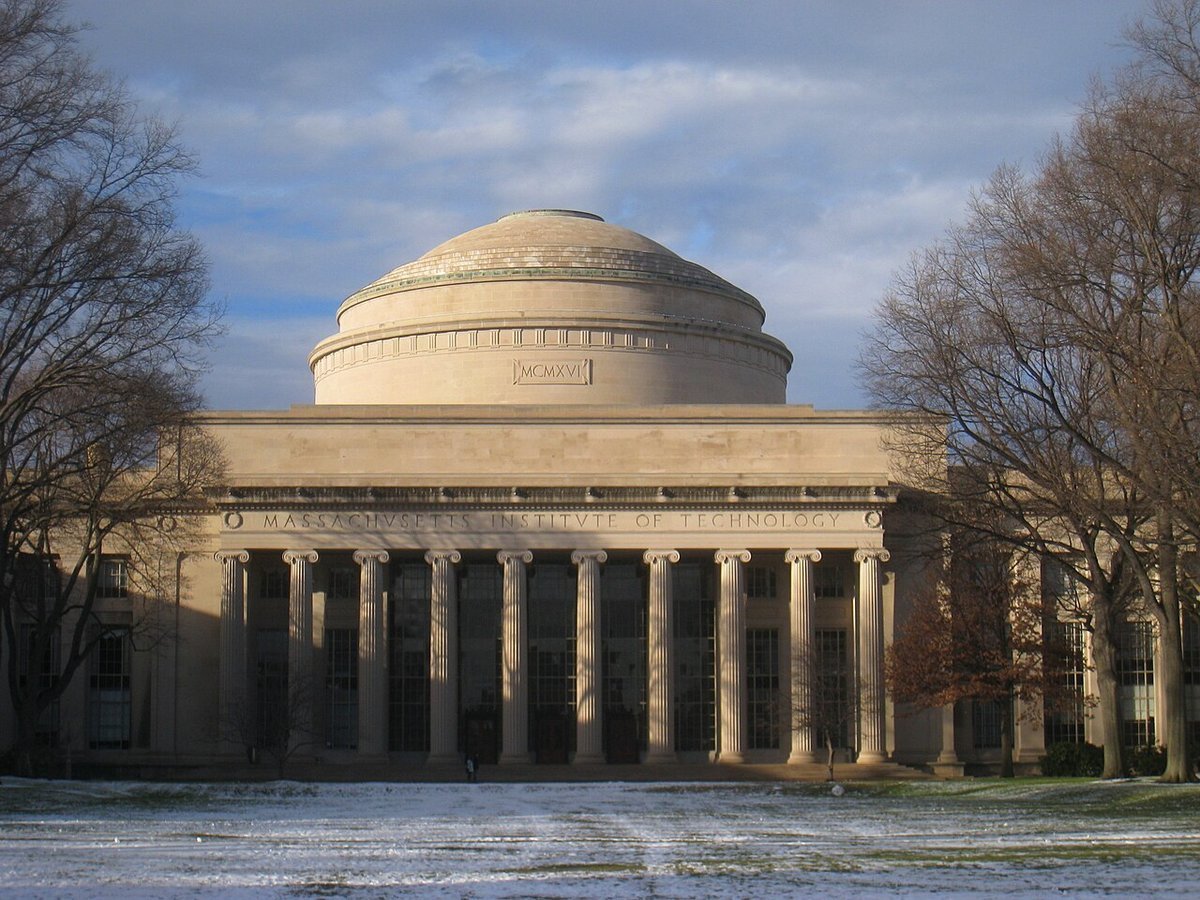
1. Massachusetts Institute of Technology (MIT) — QS #1
Top courses & departments: Computer Science, Electrical Engineering, Mechanical Engineering, Artificial Intelligence, Physics, Mathematics, Economics, Sloan School of Management.
Key facilities: MIT.nano (nanoscience laboratories), Lincoln Laboratory (research for US defence and technology), the Media Lab. [16]
Eligibility & entrance: SAT or ACT required for Fall 2027 [9]; TOEFL iBT or IELTS for English. Graduate programmes usually ask for GRE scores, though some departments have dropped the requirement — check the department page.
Fee summary: undergraduate tuition and fees about $64,310 a year in 2025–26 [4]. Total cost of attendance (tuition, room, board and expenses) is roughly $82,000–$87,000 a year [6].
Placement glance: MIT graduates are recruited by the biggest US tech employers; starting salaries for MS Computer Science graduates from MIT, Stanford, CMU and UC Berkeley are commonly reported around $120,000–$150,000 [6].
Aid: need-blind for international students; meets 100% of demonstrated need. Average financial aid for international students is about $57,000 a year [6].
Read Full Details → MIT’s official site. Our own deep-dive MIT guide is in preparation and will be linked here when it is published.
2. Stanford University — QS #3
Top courses & departments: Computer Science, Electrical Engineering, Mechanical Engineering, Data Science, Medicine, Graduate School of Business, Law.
Key facilities: SLAC National Accelerator Laboratory, the Hoover Institution, Stanford Research Park (next door to Silicon Valley). [17]
Eligibility & entrance: SAT or ACT required for Fall 2027 [9]; TOEFL iBT or IELTS. Graduate deadlines fall in December 2026 to January 2027 depending on the department.
Fee summary: undergraduate tuition and fees about $67,731 a year in 2025–26 [4]. Total cost of attendance is roughly $85,000–$90,000 a year [6].
Placement glance: Stanford sits in the middle of Silicon Valley, and its graduates are the most recruited in US tech. MS Computer Science starting salaries are commonly reported around $120,000–$150,000 [6].
Aid: need-aware for international students [10] — asking for aid can affect admission. Average financial aid for international students is about $56,000 a year [6].
Read Full Details → Stanford’s official site. Our own deep-dive Stanford guide is in preparation and will be linked here when it is published.
3. Harvard University — QS #5
Top courses & departments: Economics, Business (Harvard Business School), Law, Medicine, Government, Computer Science, Applied Mathematics.
Key facilities: Harvard Library (the largest academic library in the world), Harvard Medical School, the Harvard Business School campus in Boston. [18]
Eligibility & entrance: SAT or ACT required for Fall 2027 [9]; TOEFL iBT or IELTS. Restrictive Early Action deadline 1 November 2026; Regular Decision 1 January 2027 [8][9].
Fee summary: undergraduate tuition and fees about $59,320 a year in 2025–26 — the lowest among the Ivy League universities in this list [4]. Total cost of attendance is roughly $80,000–$85,000 a year [6].
Placement glance: Harvard’s academic reputation is ranked #1 in the world by QS [2]. Graduates go into finance, consulting, law, medicine and tech.
Aid: need-blind for international students; meets 100% of demonstrated need. Average financial aid for international students is about $53,000 a year [6].
Read Full Details → Harvard’s official site. Our own deep-dive Harvard guide is in preparation and will be linked here when it is published.
4. California Institute of Technology (Caltech) — QS #10
Top courses & departments: Physics, Chemistry, Astronomy, Aerospace Engineering, Mechanical Engineering, Computer Science, Biology.
Key facilities: the Jet Propulsion Laboratory (NASA’s centre, managed by Caltech), the Palomar and Keck observatories. [19]
Eligibility & entrance: SAT or ACT required for Fall 2027 [9]; TOEFL iBT or IELTS. Caltech is tiny — about 1,000 undergraduates — so competition is intense (reported acceptance rate for Indian applicants around 2–3% [6]).
Fee summary: undergraduate tuition about $68,574 a year in 2025–26 [5].
Placement glance: Caltech graduates go overwhelmingly into research, aerospace and tech. Exact programme-wise placement figures are published by the university’s career centre — I could not verify a single reliable figure for this guide.
Aid: need-aware for international students; generous aid for those admitted, but check the current policy on the financial aid page.
Read Full Details → Caltech’s official site.
5. University of Chicago — QS #13
Top courses & departments: Economics, Computer Science, Physics, Mathematics, Public Policy, Law, Booth School of Business.
Key facilities: Argonne National Laboratory (managed by the University of Chicago), the Booth School of Business, the Oriental Institute. [20]
Eligibility & entrance: SAT or ACT; TOEFL iBT or IELTS. Reported acceptance rate for Indian applicants around 7–9% [6].
Fee summary: undergraduate tuition about $71,325 a year in 2025–26 [5] — the highest in this directory.
Placement glance: Chicago’s economics and business graduates are heavily recruited by finance and consulting firms in Chicago and New York.
Aid: need-aware for international students; merit scholarships exist but are competitive.
Read Full Details → The University of Chicago’s official site.
6. University of Pennsylvania (UPenn) — QS #15
Top courses & departments: Business (Wharton School), Engineering, Medicine, Nursing, Computer Science, Finance, Economics.
Key facilities: the Wharton School, Penn Medicine, the Penn Engineering research centres. [21]
Eligibility & entrance: SAT or ACT; TOEFL iBT or IELTS. Early Decision deadline 1 November 2026; Regular Decision 5 January 2027 [8].
Fee summary: undergraduate tuition about $63,204 a year in 2025–26 [4].
Placement glance: Wharton is the most recruited undergraduate business school in the USA; Penn graduates go into finance, consulting and tech.
Aid: need-aware for international students; aid is available but can affect admission.
Read Full Details → UPenn’s official site.
7. Cornell University — QS #16
Top courses & departments: Engineering, Computer Science, Hotel Administration, Agriculture and Life Sciences, Veterinary Medicine, Architecture.
Key facilities: Cornell Tech (New York City campus), the College of Veterinary Medicine, the Cornell Lab of Ornithology. [22]
Eligibility & entrance: SAT or ACT required for Fall 2027 [9]; TOEFL iBT or IELTS.
Fee summary: undergraduate tuition about $73,946 a year in 2025–26 [5] — the highest in this directory alongside Chicago.
Placement glance: Cornell engineers and computer scientists are heavily recruited by US tech employers.
Aid: need-aware for international students.
Read Full Details → Cornell’s official site.
8. University of California, Berkeley — QS #17
Top courses & departments: Computer Science, Electrical Engineering, Data Science, Physics, Business (Haas), Economics, Chemistry.
Key facilities: Lawrence Berkeley National Laboratory, the Haas School of Business, the Berkeley Artificial Intelligence Research lab. [23]
Eligibility & entrance: the UC system does not consider SAT or ACT scores at all [9]. Apply through the UC portal only — there is no Common App for UC. Filing window: 1 October to 30 November 2026, fixed, no extensions [8].
Fee summary: undergraduate tuition about $55,080 a year for international students in 2025–26 [4] — the lowest among the top-ranked universities here, because it is a public university.
Placement glance: Berkeley computer science graduates are among the most recruited in the USA; MS Computer Science starting salaries are commonly reported around $120,000–$150,000 [6].
Aid: the UC system offers almost no need-based aid to international students. Merit scholarships exist but are limited.
Read Full Details → UC Berkeley’s official site.
9. Yale University — QS #21
Top courses & departments: Law, Medicine, Economics, Political Science, History, English, Drama, Music.
Key facilities: Yale Library, Yale School of Medicine, the Yale Center for British Art. [24]
Eligibility & entrance: SAT or ACT required for Fall 2027 [9]; TOEFL iBT or IELTS. Single-Choice Early Action 1 November 2026; Regular Decision in early January 2027 [8] — confirm the exact date on the admissions page.
Fee summary: I could not verify a 2025–26 undergraduate tuition figure from a source I trust, so I have left it blank rather than guess. Yale charges in the same range as the other Ivy League universities.
Placement glance: Yale graduates go into law, finance, government, academia and the arts.
Aid: need-blind for international students; meets 100% of demonstrated need [10].
Read Full Details → Yale’s official site.
10. Princeton University — QS #25
Top courses & departments: Mathematics, Physics, Economics, Public Policy, Computer Science, Engineering, History.
Key facilities: Princeton Plasma Physics Laboratory, the Princeton School of Public and International Affairs, the Princeton University Library. [25]
Eligibility & entrance: SAT or ACT not required — Princeton is test-optional for Fall 2027 [9]. Single-Choice Early Action 1 November 2026; Regular Decision 1 January 2027 [8].
Fee summary: undergraduate tuition about $65,210 a year in 2025–26 [4].
Placement glance: Princeton graduates go into finance, consulting, academia and public service.
Aid: need-blind for international students; meets 100% of demonstrated need [10]. Princeton’s aid is among the most generous in the USA.
Read Full Details → Princeton’s official site.
11. Columbia University — QS #38
Top courses & departments: Business, Journalism, Law, Engineering, Economics, International Affairs, Medicine.
Key facilities: Columbia University Irving Medical Center, the Lamont-Doherty Earth Observatory, the Columbia Journalism School. [26]
Eligibility & entrance: SAT or ACT not required — Columbia is test-optional for Fall 2027 [9]. Early Decision 1 November 2026; Regular Decision in early January 2027 [8] — confirm the exact date on the admissions page.
Fee summary: I could not verify a 2025–26 undergraduate tuition figure from a source I trust, so I have left it blank rather than guess. Columbia charges in the same range as the other Ivy League universities.
Placement glance: Columbia graduates are recruited by finance, media and consulting firms in New York City.
Aid: need-aware for international students.
Read Full Details → Columbia’s official site.
12. University of Michigan, Ann Arbor — QS #45
Top courses & departments: Engineering, Computer Science, Business (Ross), Medicine, Public Health, Economics, Aerospace Engineering.
Key facilities: Michigan Engineering, the University of Michigan Health system, the Michigan Aerospace Engineering laboratories. [27]
Eligibility & entrance: SAT or ACT; TOEFL iBT or IELTS. Early Action 1 November 2026; Regular Decision 1 February 2027 [8].
Fee summary: undergraduate tuition about $63,962 a year for international students in 2025–26 [4].
Placement glance: Michigan engineers are heavily recruited by the US auto, aerospace and tech industries.
Aid: the University of Michigan offers almost no financial aid to students on temporary visas [9].
Read Full Details → The University of Michigan’s official site.
The table below compares the 12 universities on the metrics a researcher needs. QS 2026 ranks and the tuition figures are verified from my sources [1][4][5]. The acceptance rates shown are reported figures for Indian applicants, not official university rates. The two metrics my draft does not state — researcher-to-faculty ratio and publication volume — are covered by one combined [RESEARCH GAP] tag per row, in the acceptance rate column; the other cell shows — rather than an estimate.
| University | QS 2026 | Undergraduate tuition & fees a year (2025–26) | Acceptance rate | Researcher-to-faculty ratio | Publication volume |
|---|---|---|---|---|---|
| MIT | #1 [1] | About $64,310 [4] | Around 3–5% (reported, Indian applicants) [6] | — | — |
| Stanford | #3 [1] | About $67,731 [4] | Around 3–5% (reported, Indian applicants) [6] | — | — |
| Harvard | #5 [1] | About $59,320 [4] | Around 3–5% (reported, Indian applicants) [6] | — | — |
| Caltech | #10 [1] | About $68,574 [5] | Around 2–3% (reported, Indian applicants) [6] | — | — |
| University of Chicago | #13 [1] | About $71,325 [5] | Around 7–9% (reported, Indian applicants) [6] | — | — |
| University of Pennsylvania | #15 [1] | About $63,204 [4] | [RESEARCH GAP: Requires manual lookup of University of Pennsylvania acceptance rate, researcher-to-faculty ratio and publication volume] | — | — |
| Cornell | #16 [1] | About $73,946 [5] | [RESEARCH GAP: Requires manual lookup of Cornell acceptance rate, researcher-to-faculty ratio and publication volume] | — | — |
| UC Berkeley | #17 [1] | About $55,080 [4] | [RESEARCH GAP: Requires manual lookup of UC Berkeley acceptance rate, researcher-to-faculty ratio and publication volume] | — | — |
| Yale | #21 [1] | [RESEARCH GAP: Requires manual lookup of Yale 2025–26 undergraduate tuition] | [RESEARCH GAP: Requires manual lookup of Yale acceptance rate, researcher-to-faculty ratio and publication volume] | — | — |
| Princeton | #25 [1] | About $65,210 [4] | [RESEARCH GAP: Requires manual lookup of Princeton acceptance rate, researcher-to-faculty ratio and publication volume] | — | — |
| Columbia | #38 [1] | [RESEARCH GAP: Requires manual lookup of Columbia 2025–26 undergraduate tuition] | [RESEARCH GAP: Requires manual lookup of Columbia acceptance rate, researcher-to-faculty ratio and publication volume] | — | — |
| University of Michigan | #45 [1] | About $63,962 [4] | [RESEARCH GAP: Requires manual lookup of University of Michigan acceptance rate, researcher-to-faculty ratio and publication volume] | — | — |
A dash in the tuition column means I could not verify a 2025–26 undergraduate tuition figure from a source I trust. It does not mean the university is cheap or free. Yale and Columbia both charge in the same range as the other Ivy League universities; confirm the exact figure on their fees pages before you budget.
Research & Labs at the Top Universities in the USA for Indian Students
I judge a university by what its laboratories and facilities let a scholar actually investigate — not by its rank alone. Across the top universities in the USA for Indian students 2027, the verifiable facility facts cluster around four strengths, and I state them plainly below. Where I could not verify a named professor, a library holding or a publication count, I say so instead of describing what I have not seen.
Engineering, computing and AI. MIT’s facilities are MIT.nano (nanoscience laboratories), Lincoln Laboratory (research for US defence and technology) and the Media Lab [16]. Stanford has SLAC National Accelerator Laboratory, the Hoover Institution and Stanford Research Park, next door to Silicon Valley [17]. UC Berkeley has Lawrence Berkeley National Laboratory, the Haas School of Business and the Berkeley Artificial Intelligence Research lab [23]. Cornell Tech is Cornell’s New York City campus [22]. The University of Chicago manages Argonne National Laboratory [20]. These are the facilities that let a computer-science or engineering scholar work at the frontier — nanoscale fabrication at MIT.nano, accelerator science at SLAC, AI research at Berkeley’s BAIR — rather than only study it in a classroom.
Physics and space. Caltech’s facilities are the Jet Propulsion Laboratory (NASA’s centre, managed by Caltech) and the Palomar and Keck observatories [19]. Princeton has the Princeton Plasma Physics Laboratory [25]. A physics or aerospace scholar at Caltech works beside a NASA mission centre; a plasma-physics scholar at Princeton works inside a national laboratory.
Medicine and the life sciences. Harvard has the Harvard Library (the largest academic library in the world), Harvard Medical School and the Harvard Business School campus in Boston [18]. Penn has the Wharton School, Penn Medicine and the Penn Engineering research centres [21]. Columbia has the Columbia University Irving Medical Center and the Lamont-Doherty Earth Observatory [26]. Yale has the Yale Library, the Yale School of Medicine and the Yale Center for British Art [24]. Michigan has Michigan Engineering, the University of Michigan Health system and the Michigan Aerospace Engineering laboratories [27]. Cornell has the College of Veterinary Medicine and the Cornell Lab of Ornithology [22].
These hospital and laboratory networks are what let a medical or life-sciences scholar train inside a working clinical and research system, not beside one.
Business, law and the humanities. Harvard Business School, the Wharton School, Chicago’s Booth School of Business and Berkeley’s Haas School of Business are the business anchors of this list [18][20][21][23]. Yale’s strengths are law, medicine, economics, political science, history, English, drama and music, and Princeton’s are mathematics, physics, economics, public policy, computer science, engineering and history. The Chicago Oriental Institute is a research anchor for the humanities [20].
I name no professor in this guide, because my draft sources name none — and I will not invent a name to fill the gap. [RESEARCH GAP: Requires manual lookup of named faculty and research-group leadership at the 12 universities] I also found no verified detail on library holdings beyond the named libraries above, on computing clusters or on database access at any of the 12 universities. [RESEARCH GAP: Requires manual lookup of library holdings, computing cluster access and database access at the 12 universities] Exact per-university placement packages and starting salaries were not verified either; the only salary figure in this guide is the reported MS Computer Science range of $120,000–$150,000 [6]. [RESEARCH GAP: Requires manual lookup of per-university placement packages and starting salaries for the 12 universities]
Researcher Insider Tip: A laboratory matters more than a logo. A scholar who wants aerospace belongs at Caltech with JPL, a scholar who wants AI belongs at MIT, Stanford or Berkeley, and a scholar who wants finance belongs at Wharton or Harvard Business School — whatever the overall ranking says.
Funding, Grants & Assistantships at the Top Universities in the USA for Indian Students
The sticker price at the top universities in the USA for Indian students 2027 tells you almost nothing about what you will actually pay in the USA. The table below is the aid reality behind the tuition figures in this guide — reorganised from the facts already in it. The full aid detail sits in the Scholarships and Financial Aid section below.
| University | Need-blind for international students? | Meets 100% of demonstrated need? | Average aid for international students |
|---|---|---|---|
| MIT | Yes [10] | Yes [10] | About $57,000 a year [6] |
| Harvard | Yes [10] | Yes [10] | About $53,000 a year [6] |
| Princeton | Yes [10] | Yes [10] | — |
| Yale | Yes [10] | Yes [10] | — |
| Stanford | No — need-aware [10] | — | About $56,000 a year [6] |
| Caltech, Chicago, UPenn, Cornell, Columbia | No — need-aware | — | — |
| UC Berkeley | No — almost no need-based aid for international students | — | — |
| University of Michigan | No — almost no financial aid to students on temporary visas [9] | — | — |
Need-based aid is the biggest source at the elite privates. MIT, Harvard, Princeton and Yale review international applicants need-blind — your ability to pay is not considered in admission — and meet 100% of demonstrated financial need with grants, not loans [10]. Families earning under about $75,000 a year can pay little or nothing at MIT or Harvard. Stanford, by contrast, is need-aware for international students — asking for aid can affect your admission chances there [10]. You apply for need-based aid with the CSS Profile, usually by 1–15 February 2027 for Regular Decision [8].
Merit scholarships are smaller and income-blind. Many public universities give these to international students with strong Class 12 marks. Arkansas State University, for example, offers $3,000 a year for a GPA of 3.25 or above [13]. These are smaller than need-based aid, but they do not depend on your family’s income.
Graduate assistantships are the best route for master’s and PhD students. For master’s and PhD students, an assistantship is the single biggest saving: at South Dakota State University, one cuts master’s tuition to about $1,216 a year [13]. Assistantships usually come with a monthly stipend too, and they are awarded by the department — so apply early and contact professors in your field. I found no verified detail on assistantship pay rates, hours or eligibility rules at the 12 universities in this directory, so I state none here. [RESEARCH GAP: Requires manual lookup of teaching and research assistantship availability, pay and eligibility for Indian students at the 12 universities]
Indian scholarships for study abroad. The Fulbright-Nehru Master’s Fellowships, the Tata Endowment and the Inlaks Scholarships are the Indian schemes most often named for the USA. I have not verified their 2027 deadlines or amounts for this guide, so I will not quote figures here. [RESEARCH GAP: Requires manual lookup of Fulbright-Nehru, Tata Endowment and Inlaks 2027 deadlines and amounts] Check their official pages directly, and treat any agent who promises you one of these with suspicion.
How to apply for funding, step by step:
1. Shortlist a mix first. Two ambitious (need-blind elites), three realistic (top publics and need-aware privates) and two safe (low-cost publics) — the mix I recommend in every USA guide.
2. Check the aid policy before you ask for aid. At Stanford and the other need-aware universities, asking for aid can affect admission [10]; at MIT, Harvard, Princeton and Yale it cannot [10].
3. File the CSS Profile by each university’s aid deadline. Usually November 2026 to February 2027 [8]. Do not wait for an admission offer — aid deadlines come first.
4. For master’s and PhD, contact professors about assistantships early. Assistantships are awarded by the department [13].
5. Read the low-cost guide before you give up on the USA. Our Cheapest Universities in the USA guide lists eight low-tuition universities from about $9,733 a year, with a full yearly total from about $21,213 [13].
Researcher Insider Tip: If your family earns under about $75,000 a year, a need-blind university can cost less than a low-cost public one — check the aid policy before you check the sticker price. A family earning under $75,000 a year can pay nothing at MIT or Harvard.
What It Costs: Tuition, Living Costs and the Real Budget
Tuition is only the first line of the bill. A year at a top US university also means room and board (roughly $21,000–$23,000 a year at the elite privates [6]), health insurance (roughly $2,000–$3,000 a year), books, travel and personal expenses. The total cost of attendance at MIT, Harvard and Stanford is roughly $80,000–$90,000 a year [6] — about Rs 76–86 lakh at around Rs 95 to the dollar.
| Route | Tuition a year | Room, board & expenses a year | Total a year (approx.) |
|---|---|---|---|
| Elite private (MIT, Harvard, Stanford) | About $59,000–$74,000 [4][5] | About $21,000–$27,000 [6] | About $80,000–$90,000 [6] |
| Top public, international rate (UC Berkeley, Michigan) | About $55,000–$64,000 [4] | About $20,000–$25,000 | About $75,000–$89,000 |
| Low-cost public (Minot State, CUNY, BYU, SDSU) | From $9,733 [13] | About $9,200–$12,000 [13] | From about $21,000 [13] |
The low-cost row comes from our own Cheapest Universities in the USA guide, where every figure was checked against the university’s own cost page. If the elite price scares you, read that guide before you give up on the USA — the cheapest four-year public university there, Minot State, charges $9,733 a year in tuition and fees, with a full yearly total of $21,213 [13].
A note on the numbers: the “total a year” figures in the middle rows are my own sums from the tuition and living-cost figures in this guide, not figures published by any university. Exchange rates are approximate, at about Rs 95 per US dollar. Tuition rises most years, so a 2025–26 figure will not be the 2027–28 figure — confirm the current number on each university’s fees page.
Scholarships and Financial Aid
There are four kinds of money for Indian students in the USA, and they work very differently.
First, need-based aid from the university itself. This is the biggest source at the elite privates. MIT, Harvard, Princeton and Yale are need-blind for international students and meet 100% of demonstrated need [10]. Average aid for international students is about $57,000 a year at MIT, $53,000 at Harvard and $56,000 at Stanford [6]. You apply for it with the CSS Profile, usually by 1–15 February 2027 for Regular Decision [8].
Second, merit scholarships from the university. Many public universities give these to international students with strong Class 12 marks. Arkansas State University, for example, offers $3,000 a year for a GPA of 3.25 or above [13]. These are smaller than need-based aid, but they do not depend on your family’s income.
Third, graduate assistantships. For master’s and PhD students, an assistantship is the single biggest saving: at South Dakota State University, one cuts master’s tuition to about $1,216 a year [13]. Assistantships usually come with a monthly stipend too, and they are awarded by the department — so apply early and contact professors in your field.
Fourth, Indian scholarships for study abroad — the Fulbright-Nehru Master’s Fellowships, the Tata Endowment and the Inlaks Scholarships. I have not verified their 2027 deadlines or amounts for this guide, so I will not quote figures here. Check their official pages directly, and treat any agent who promises you one of these with suspicion.
Pro tip: never pay an agent who promises admission or a scholarship at a top US university. The universities in this directory do not sell admission, and their financial aid offices will answer your questions by email for free.
Who Can Apply: Eligibility
Most American universities ask Indian applicants for the same set of things. You need to meet all of these for the universities you apply to:
- Class 12 completed (or in the final year, applying with predicted scores) from a recognised board, with strong marks in the subjects related to your course.
- English test score: usually TOEFL iBT or IELTS. Minimums vary by university — Minot State asks for TOEFL 71, South Dakota State for IELTS 5.5 or TOEFL 61 [13]. The elite universities expect much higher scores; check each admissions page.
- SAT or ACT (undergraduate): required at MIT, Harvard, Yale, Stanford, Cornell and Dartmouth for Fall 2027; Princeton and Columbia are test-optional; the University of California does not consider test scores at all [9].
- GRE (master’s): most programmes ask for it, but a growing number have dropped the requirement. Check the department page, not a general guide.
- Passport, valid for at least six months beyond your planned stay.
- Proof of funds for one year — the university will ask for bank statements before it issues your I-20.
Note: there is no single national eligibility rule in the USA. Every university sets its own requirements, and every department inside a university can set different ones. If a guide tells you “the USA requires X”, it is wrong — check the university’s own admissions page.
How to Apply: Step by Step
1. Shortlist 5 to 8 universities. Two ambitious, three realistic, two safe — the mix I recommended above. Check each one’s Fall 2027 deadline before you fall in love with it.
2. Take your tests. SAT/ACT and TOEFL/IELTS for undergraduates; GRE and TOEFL/IELTS for master’s. Book test dates at least three months before your earliest deadline.
3. Write your essays and get recommendations. US applications are decided as much on essays and recommenders as on scores [7]. Start in August 2026, not in December.
4. Apply. Undergraduates apply through the Common App (which opened on 1 August 2026 [14]) or the Coalition App — except the University of California, which has its own portal [15]. Master’s and MBA applicants apply directly on each programme’s portal. Application fees are usually $35 to $85 per university [13].
5. Apply for financial aid in parallel. File the CSS Profile by each university’s aid deadline (usually November 2026 to February 2027) [8]. Do not wait for an admission offer — aid deadlines come first.
6. Accept an offer and get your I-20. Reply by 1 May 2027 (National Decision Day) [8]. The university then issues Form I-20, which you need for the visa.
7. Apply for the F-1 visa. Pay the SEVIS fee, fill in the DS-160, pay the visa fee, and attend your interview (see the visa section below).
My advice on timing: submit early applications by 1 November 2026 if you are ready — early rounds have higher acceptance rates at most selective universities, and you get your answer by mid-December. But never submit a rushed application to meet an early deadline. A strong Regular Decision application beats a weak Early Action one.
Key Dates and Timeline
| Step | Date (Fall 2027 intake) |
|---|---|
| Common App opens | 1 August 2026 [14] |
| UC applications open | 1 October 2026 [15] |
| Early Action / Early Decision deadlines (MIT, Harvard, Stanford, Princeton, Yale, Columbia, UPenn) | 1 November 2026 [8][9] |
| University of California filing deadline (all campuses) | 30 November 2026, fixed, no extensions [8] |
| Graduate programme deadlines (MIT, Stanford, UC Berkeley and others) | December 2026 to January 2027, varies by department [8] |
| Regular Decision deadlines | 1–5 January 2027 (Harvard and Princeton 1 January; MIT 4 January; Stanford 5 January) [8][9] |
| Early decisions released | Mid-December 2026 [8] |
| Regular decisions released | Late March to early April 2027 [8] |
| National Decision Day — reply to your offer | 1 May 2027 [8] |
| F-1 visa interviews | May to August 2027 (book as soon as you have your I-20) |
| Fall 2027 semester begins | Late August to early September 2027 [7] |
Note: these are the typical dates reported by several guides. Individual universities and departments can differ by days or weeks. The UC deadline of 30 November 2026 is the one with zero flexibility — the UC system does not accept late submissions [8].
The F-1 Visa in 2026: What Changed
Indian students study in the USA on the F-1 student visa. After admission, the university issues Form I-20. You then pay the SEVIS I-901 fee of $350, fill in the DS-160 form online, pay the visa (MRV) fee of $185, and book an interview at a US Embassy or Consulate in India — Delhi, Mumbai, Chennai, Hyderabad or Kolkata. The two established fees together come to $535 [11][12].
Three things changed in 2025–26, and you need to know all three:
1. A new Visa Integrity Fee. A $250 Visa Integrity Fee was introduced from 1 October 2025 under the One Big Beautiful Bill Act [11]. That would take the total mandatory fees to $785. But other guides report that its collection from F-1 applicants is still being confirmed, so I am flagging it here rather than stating it as settled: check the official visa fee page before you pay.
2. A fixed 4-year admission period. For students admitted on or after 15 September 2026, F-1 admission is for a fixed period of up to four years, replacing the old open-ended “duration of status” system. The post-completion departure period has also been reduced from 60 days to 30 days [28]. This is a major change reported in 2026 — confirm the current rule on the official USCIS page before you plan around it.
3. Tougher interviews. Interview waivers were narrowed in January 2025, and F-1 refusal rates for Indian applicants rose sharply — one guide reports 41% in 2025, the highest in over a decade [11]. Carry your I-20, admission letter, financial documents and test scores to the interview, and be ready to explain why you chose that university and how you will pay for it.
After graduation: OPT gives 12 months of work authorisation in a role linked to your degree. STEM graduates get a 24-month extension, taking the total to 36 months [11][12]. During OPT you can work for any employer in your field; for STEM OPT the employer must be enrolled in the federal E-Verify programme.
Documents You Need
- Class 10 and Class 12 mark sheets and certificates (and transcripts, if your school issues them).
- English test score report (TOEFL iBT or IELTS) and SAT/ACT or GRE score report, where required.
- Passport, valid for at least six months beyond your planned stay.
- Proof of funds for one year — bank statements and, if needed, a loan sanction letter.
- Essays / statement of purpose, and 2–3 recommendation letters.
- CSS Profile and financial documents, if you are applying for aid.
- CV or resume (mainly for master’s and PhD applicants).
A simple preparation checklist — things to do this week:
- Pick your 5–8 universities and write down each one’s deadline and test requirements.
- Book your TOEFL/IELTS and SAT/ACT/GRE dates.
- Ask your teachers for recommendation letters now — do not ask in December.
- Open a file for your financial documents; the I-20 needs proof of funds for one year.
- Check the official visa fee page for the Visa Integrity Fee before you budget $535 or $785.
More University Guides
 Cheapest Universities in the USA for Indian Students 2027USA • Affordable Guide
 Top Universities in the UK for International Students 2027UK • University Guide
 Top Universities in China 2027China • University Guide
Frequently Asked Questions
Which is the best university in the USA for Indian students?
There is no best university — it depends on subject and budget. By rank, MIT is #1 (QS 2026), followed by Stanford at #3 and Harvard at #5 [1]. By affordability, need-blind MIT, Harvard, Princeton and Yale can cost the least for low-income families, meeting 100% of demonstrated need [10].
How much does it cost to study at a top US university?
The total cost of attendance at MIT, Harvard and Stanford is roughly $80,000–$90,000 a year [6] — about Rs 76–86 lakh. But the cheapest four-year public university in our Cheapest USA guide, Minot State, has a full yearly total of $21,213 [13]. Always budget the total cost, not just tuition.
Can Indian students get a full scholarship in the USA?
Yes, at MIT, Harvard, Princeton and Yale: they are need-blind for international students and meet 100% of demonstrated need with grants [10]. Aid averages about $57,000 a year at MIT and $53,000 at Harvard [6]. Merit scholarships are rare elsewhere; for master’s and PhD students, graduate assistantships work best.
What are the Fall 2027 application deadlines?
Early Action and Early Decision deadlines fall on 1 November 2026 at the selective privates; Regular Decision deadlines fall on 1–5 January 2027; the University of California filing window closes on 30 November 2026 with no extensions [8][9]. Graduate deadlines fall in December 2026 to January 2027, varying by department.
How much does the F-1 student visa cost?
The two fees are the SEVIS I-901 fee ($350) and the visa (MRV) fee ($185) — $535 in total [11][12]. A $250 Visa Integrity Fee (1 October 2025) would take the total to $785, but whether it applies to F-1 applicants is unconfirmed — check the fee page before paying.
Can I work in the USA after graduation?
Yes. OPT gives 12 months of work authorisation in a role linked to your degree, and STEM graduates get a 24-month extension, taking the total to 36 months [11][12]. For STEM OPT, your employer must be enrolled in the federal E-Verify programme.
Sources & Last Updated
Last updated: 6 November 2026. Ranks, fees, deadlines and visa rules change. Confirm the latest on each university’s website and the official visa pages before you apply or pay anything. Exchange rates are approximate, at about Rs 95 per US dollar.
Rankings
- QS World University Rankings 2026 — QS 2026 ranks used in this directory: MIT #1, Stanford #3, Harvard #5, Caltech #10, Chicago #13, UPenn #15, Cornell #16, UC Berkeley #17, Yale #21, Princeton #25, Columbia #38, Michigan #45.
- QS: How Ivy League universities are ranked (QS 2026) — Harvard #5, UPenn #15, Cornell #16, Yale #21, Princeton #25, Columbia #38; Harvard #1 globally for Academic Reputation.
- QS: US universities lead the QS World University Rankings 2026 — Stanford, Chicago and Yale among the biggest climbers in QS 2026.
Fees, aid and costs
- VnExpress: From Stanford to MIT — how much does it cost to study at Ivy League and other top US schools? (U.S. News 2025–26 data) — undergraduate tuition 2025–26: MIT $64,310, Harvard $59,320, Stanford $67,731, Princeton $65,210, UPenn $63,204, Chicago $71,325, UC Berkeley $55,080, Michigan $63,962.
- Collegedunia: Bachelor Degree in USA for Indian Students 2026 — undergraduate tuition 2025–26: Caltech $68,574, Cornell $73,946. (Returned 403 to automated checks — bot protection; the page and figures are shown in search results.)
- Collegedunia: Harvard vs MIT vs Stanford for Indian Students 2026 — total cost of attendance $80,000–$90,000 a year; average aid MIT $57,000, Harvard $53,000, Stanford $56,000; MS CS starting salaries $120,000–$150,000; reported acceptance rates for Indian applicants. (Returned 403 to automated checks — bot protection; the page and figures are shown in search results.)
Deadlines and applications
- LeapScholar: Intakes in USA 2027–28 — 363,019 Indian students in the USA in 2024–25 (Open Doors 2025, IIE), up 10%; Fall 2027 is the primary intake. (Returned 403 to automated checks — bot protection; the page and figures are shown in search results.)
- LeapScholar: Fall Intake in USA 2027 — UC filing window 1 October–30 November 2026; early deadlines 1 November 2026; Regular Decision 1–5 January 2027; decisions and 1 May 2027 reply date. (Returned 403 to automated checks — bot protection; the page and figures are shown in search results.)
- StudyU: Applying to US Universities — 2027 Step-by-Step Plan — SAT/ACT required at MIT, Harvard, Yale, Stanford, Cornell and Dartmouth; Princeton and Columbia test-optional; UC does not consider test scores; Michigan offers almost no aid to students on temporary visas; deadline dates.
- CampCareer: Cost of Studying in the USA 2026 — need-blind universities for international students (MIT, Harvard, Princeton, Yale, Dartmouth and others); Stanford need-aware; net-price ranges by family income.
Visa
- Collegedunia: Types of Visa in USA 2026 — Indian Student Guide — SEVIS $350, MRV $185, Visa Integrity Fee $250 from 1 October 2025, total $785; OPT 12 months, STEM OPT 36 months; F-1 refusal rates. (Returned 403 to automated checks — bot protection; the page and figures are shown in search results.)
- Abroed: Study in USA from India 2026 — SEVIS $350, MRV $185, both non-refundable; OPT 12 months, STEM OPT extension 24 months (36 total).
Our own guides
- Cheapest Universities in the USA for Indian Students 2027 (University Researcher) — Minot State $9,733 a year, full total $21,213; CUNY $620 per credit; BYU $14,192; SDSU about $15,837; Arkansas State about $15,024; Texas A&M International about $19,454; UF $30,900–$34,620; F-1 visa $535 total; application fees $35–$85.
Application portals
- Common App — undergraduate applications; opened 1 August 2026 for the Fall 2027 cycle.
- University of California Admissions — UC application portal; filing window 1 October–30 November 2026.
University official sites
- Massachusetts Institute of Technology (MIT)
- Stanford University
- Harvard University
- California Institute of Technology (Caltech)
- University of Chicago
- University of Pennsylvania
- Cornell University
- University of California, Berkeley — returned 403 to automated checks; the domain is the university’s official site.
- Yale University
- Princeton University
- Columbia University
- University of Michigan
Visa rule change (single source — confirm)
- RTE Gujarat: F-1 Student Visa USA 2026 — fixed 4-year F-1 admission period for admissions on or after 15 September 2026; post-completion departure period reduced from 60 to 30 days. Single secondary source — confirm on the official USCIS page before planning around it.
By Rohit Gupta. If you spot a mistake in this guide, please write to us at universityresearchers3@gmail.com and I’ll check and correct it.
—