MBBS in Russia for Indian Students 2027: Real Costs, NMC Rules and the FMGE Reality Check

By Rohit Gupta | Last updated: 6 November 2026
Every year thousands of Indian students consider MBBS in Russia for Indian students 2027, and most of them hear the same pitch: low fees, English-medium classes, a degree that counts in India. Some of that is true. What the brochures tend to skip is the number that matters most, which is how many graduates actually clear the FMGE after they come home.
I went through the NMC’s own FAQs [1], the latest FMGE news, fee listings and a handful of university pages to write this MBBS in Russia for Indian students 2027 guide. Where I could confirm a figure, I say where it came from. Where I couldn’t, I say that too, because a wrong number here can cost a family lakhs. Short on time? The box below has the quick answers.
Key points: MBBS in Russia at a glance
- Total cost of MBBS in Russia for Indian students 2027: roughly Rs 31–68 lakh over six years, depending on the city. That is my own sum from the figures in this guide, before flights and FMGE coaching.
- Tuition: from about Rs 2.5 lakh to over Rs 10 lakh a year [10]. Sources disagree on some universities (see the fee table).
- NEET-UG: you must qualify it if you want to practise in India [1].
- NMC course rules: 54 months of study plus a 12-month internship at the same university, taught in English, finished within 10 years [1].
- FMGE: Russian graduates passed at 29.54% in 2024 [9], the latest Russia figure I could verify. The overall pass rate in June 2026 was about 12–13% [6].
- NExT: it has not replaced the FMGE yet [8].
- Intake: the main intake is September. Expect 2027 applications to run from about December 2026 to July 2027, with each university setting its own dates.
| 6 years | Rs 31–68 lakh | About 12.8% |
| 5 years of study plus a 1-year internship [1] | My six-year estimate, by city | Overall FMGE pass rate, June 2026 [6] |
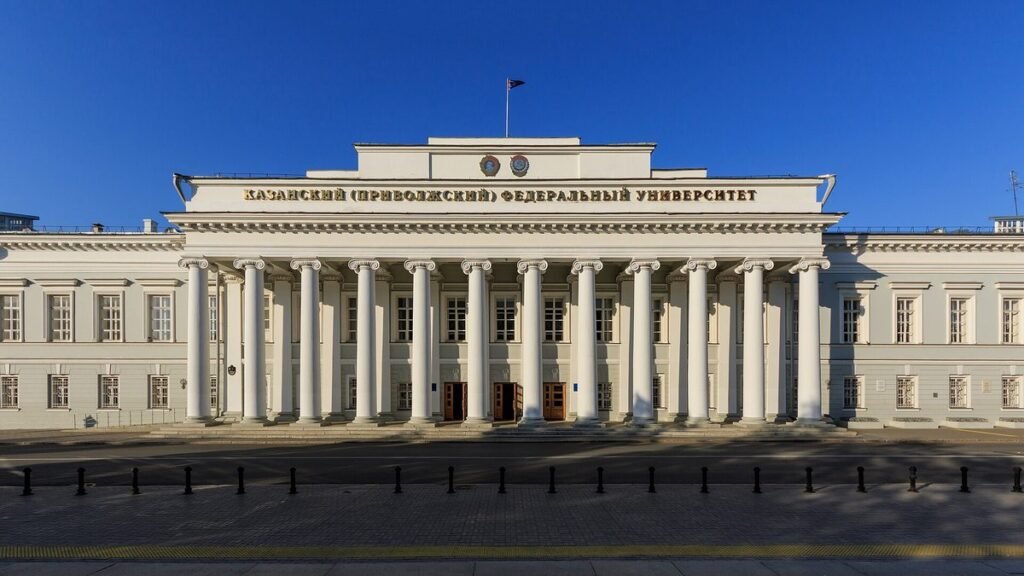
Table of Contents
Is MBBS in Russia Worth It for Indian Students?
For MBBS in Russia for Indian students 2027, the comparison starts at home: a private MBBS seat in India can cost anywhere from Rs 50 lakh to well over Rs 1 crore, and the government seats go to students with very high NEET ranks. Russia sits in the middle. It costs less than most private colleges, it admits students who have qualified NEET-UG and meet the Class 12 marks, and its medical universities are state institutions.
The course runs six years: five years of study and one year of internship [1]. Most universities teach in English, but your patients will speak Russian, so plan to learn it from the first year. Winters are hard too, particularly outside Moscow.
Russia can make sense if you
- have already qualified NEET-UG [1] and want a recognised route to practising in India;
- can fund Rs 30 lakh or more over six years, with a cushion for exchange-rate changes;
- are ready to treat FMGE preparation as a second entrance exam and start early;
- are comfortable living far from home in a cold climate.
Think twice if you
- are hoping to skip NEET, which you can’t do if India is where you want to practise [1];
- are already stretching the family budget, because a rise in the rouble can add lakhs;
- are choosing a university only because an agent calls its FMGE results “excellent” without showing numbers.
Top Medical Universities for MBBS in Russia for Indian Students 2027
These names come up most often for Indian students. Rankings matter less than you’d think for MBBS abroad, and I’ll explain why right after the table.

| University | City | Founded | What to know |
|---|---|---|---|
| Sechenov First Moscow State Medical University | Moscow | 1758 | One of Russia’s oldest medical universities. QS World University Rankings 2027: #851–900 [5]. Top of the fee range. |
| Pirogov Russian National Research Medical University | Moscow | 1906 | Large research medical university. Fee listings disagree [10], so see the fee table. |
| Kazan Federal University | Kazan | 1804 | Large federal university in Tatarstan’s capital. Fees are listed in both roubles and dollars [10]. |
| Kazan State Medical University | Kazan | 1814 | Publishes fee orders in roubles. One order lists 600,000 roubles for Year 1 [10]. |
| Orenburg State Medical University | Orenburg | 1944 | Smaller city. Agency tables put tuition near the lower end [10]. |
| Kursk State Medical University | Kursk | 1935 | Mid-range tuition in agency tables [10]. |
| Bashkir State Medical University | Ufa | 1932 | Usually quoted as one of the cheapest options [10]. |
| Volgograd State Medical University | Volgograd | 1935 | Reported open for 2027–28 admissions. Fee is listed in dollars [10]. |
Sechenov is the only university here where I could confirm a QS World University Rankings 2027 [5] position. That’s fine. Most Russian medical universities sit low on world tables because those tables reward research output, and what you care about is clinical teaching and what happens at the FMGE.
So ask every university on your shortlist for three things in writing. How many Indian students appeared in each of the last three FMGE sessions? How many passed? And where will your clinical years take place? If a university or an agent dodges the question, that tells you something.
MBBS Fees in Russia 2027: University-Wise
Read this first: for MBBS in Russia for Indian students 2027, Russian universities set fees in roubles or US dollars. I’ve converted at about Rs 1.16 per rouble and Rs 95 per US dollar, the rates around 6 November 2026. Over the last six months the rouble has moved between roughly Rs 1.08 and Rs 1.36, a swing of about a quarter. For example, the same fee can cost you far more in rupees by the time you pay Year 4.
Important: The only fee that counts is the one on your admission letter and the university’s own fee order. Several of these rows sit higher than the ranges you’ll find in older tables, and that’s the point. One agency that quotes the Kazan State fee order puts six-year tuition at about 3.05 million roubles, which is roughly Rs 35 lakh at today’s rate. I haven’t seen the order myself, so treat that as a pointer rather than a fact.
Some universities also take a registration or seat-confirmation fee once the admission letter arrives. Agency pages put it at Rs 15,000–40,000. Get the amount in writing, with a receipt in the university’s name.
| University | Fee as listed | Approx. per year in Rs | Note |
|---|---|---|---|
| Sechenov | Not listed in the sources I checked | Rs 6–10 lakh (agency estimate) [10] | Highest tier of fees. |
| Pirogov | 1,000,000 RUB (a 2026 listing) [10] | about Rs 11.6 lakh | Older tables show Rs 5–6.5 lakh. Ask for the current fee order. |
| Kazan Federal | 594,000 RUB, or US$7,000 in Year 1 then US$6,000 [10] | Rs 5.7–6.9 lakh | Two listings, two currencies. |
| Kazan State Medical | 600,000 RUB (Year 1) and 511,100 RUB (Year 2). Another listing says 636,000 RUB [10]. | Rs 5.9–7.4 lakh | One agency cites Fee Order No. 1022 of 7 July 2025. |
| Volgograd | US$5,900 [10] | about Rs 5.6 lakh | Listed in dollars. |
| Kursk | Agency estimate | Rs 4–4.5 lakh [10] | Confirm with the university. |
| Orenburg | Agency estimate | Rs 3–4 lakh [10] | Confirm with the university. |
| Bashkir | Agency estimate | Rs 2.5–3 lakh [10] | Confirm with the university. |
Scholarships
I couldn’t find a scheme that waives tuition for first-year international MBBS students, and some universities offer partial reductions in later years based on your results. Russian government scholarships do exist through Rossotrudnichestvo (Russian House), but they are a separate route with their own dates, so check with Russian House India. If anyone promises a guaranteed scholarship before you have even applied, treat it as a sales line.
Total Cost of MBBS in Russia for Indian Students 2027: A Worked Example
Agencies love to quote one tidy total for MBBS in Russia for Indian students 2027, so I did the sums myself with the ranges above. Each row shows the working. Amounts are in Rs lakh over six years.
| Scenario | Tuition | Living | Insurance, visa, extras | Total |
|---|---|---|---|---|
| Budget city (Ufa, Orenburg type) | 3 × 6 = 18 | 0.15 × 72 months = 10.8 | 2.5 | about 31 |
| Mid-range (Kazan, Volgograd type) | 6 × 6 = 36 | 0.175 × 72 months = 12.6 | 2.5 | about 51 |
| Moscow (Sechenov type) | 8 × 6 = 48 | 0.25 × 72 months = 18 | 2.5 | about 68 |
The extras column is medical insurance at about Rs 15,750 a year (the midpoint of Rs 12,600–18,900) plus about Rs 25,200 a year for visa renewal and small costs, over six years.

In short, these totals leave out return flights, FMGE coaching and any exchange-rate swings. So I’d keep a cushion of 10–15% on top. You’ll also see lower totals online, some as low as Rs 15 lakh. With tuition at Rs 2.5 lakh a year, living at Rs 12,000 a month and the extras above, my own floor comes to about Rs 26 lakh. I’d be careful with anyone quoting much less.
Living Costs in Russia
Living costs for MBBS in Russia for Indian students 2027 depend on the city. These are estimates from student-budget guides [13] [14], not official prices, so ask current students in your city before you fix a budget.
| Expense | Monthly cost (approx.) |
|---|---|
| University hostel | Rs 4,000–8,000 |
| Food and groceries | Rs 5,000–8,000 |
| Transport | Rs 1,000–2,000 |
| Personal expenses | Rs 2,000–4,000 |
| Total per month | Rs 12,000–22,000 |
NMC Rules for MBBS in Russia
This is the section I’d read twice before choosing MBBS in Russia for Indian students 2027. The National Medical Commission (NMC) governs foreign medical degrees through the Foreign Medical Graduate Licentiate (FMGL) Regulations, 2021 [1].
Important: Reports on the NMC’s advisory say that any deviation in course duration, medium of instruction, syllabus, clinical training or internship may lead to registration being refused in India, and the student bears that risk alone. By then it is too late to fix.
Eligibility for Indian students
- NEET-UG is compulsory. Indian citizens and OCI cardholders must qualify NEET-UG before taking admission abroad, and the score must be valid at the time of admission. The NEET score stays valid for 3 years for admission abroad [1].
- Class 12: Physics, Chemistry, Biology and English from a recognised board, with at least 50% in PCB for general category students, 40% for SC/ST/OBC and 45% for benchmark-disability candidates [1].
- Age: you must be 17 by 31 December of the admission year. There is no upper age limit for NEET-UG [1].
Course rules
- At least 54 months of study plus a 12-month internship, and the internship must be at the same foreign institution. The NMC’s FAQ says the course, training and internship must all happen there [1].
- The medium of instruction must be English [1].
- The whole course must be completed within 10 years of joining [1].
- You must be able to register or be licensed to practise in the country where the degree is awarded, and the course needs real clinical training [1].
You’ll see “the university must be listed in the World Directory of Medical Schools (WDOMS)” [4] on many agency pages. I couldn’t find that wording in the NMC’s own FMGL FAQ [1], so I won’t call it an NMC rule. It is still a sensible free check at wdoms.org, but a listing only shows the school exists. It doesn’t prove it is recognised.
I also couldn’t find an official NMC list of approved Russian universities. If an adviser hands you one, ask where on nmc.org.in [2] it came from.
After you return to India
You must clear the FMGE (Foreign Medical Graduate Examination) and then complete a 12-month supervised internship in India [1] before full registration. The NExT (National Exit Test) was meant to replace the FMGE, but it hasn’t been rolled out. In August 2026 the NMC’s draft amendment kept the FMGE as the qualifying exam for foreign graduates “until NExT comes into force”, and no timeline for NExT has been confirmed [8]. Plan for the FMGE.
The FMGE Reality Check
I’ll be blunt here, because this is where many families get surprised. Here is what I could confirm about MBBS in Russia for Indian students 2027.
| Group | Result | Source note |
|---|---|---|
| Russian graduates, 2024 | 3,331 of 11,276 passed (29.54%) [9] | Careers360, from NBEMS results |
| All foreign graduates, June 2026 | about 12.4–12.8% passed [6] [7] | Reports differ slightly |
| First-time candidates, June 2026 | about 35% passed [6] [7] | Government reply in Parliament, via Medical Dialogues |
| Repeat candidates, June 2026 | about 88% of all candidates [6] | Same source |
The June 2026 headline looks grim, but read it properly. Nearly nine in ten candidates were repeaters, and first-timers did far better than the overall rate. The message I take from it is that the first attempt matters, and the pool of repeaters grows every year. The Minister of State for Health told Parliament that the pass rate depends on several factors, including the quality of medical education [6]. Russia’s 29.54% in 2024 [9] sits well above the June 2026 average, though these are different years and not a like-for-like comparison, and it still means most Russian graduates didn’t pass in that round.
That said, I couldn’t find a Russia-only figure for 2025 or 2026. If an agent quotes one, ask for the NBEMS source.
What I would do if I were starting MBBS in Russia
- Treat the FMGE like a second entrance exam and start in the clinical years, not after you land back home.
- Ask the university what FMGE support it gives Indian students, and talk to seniors who have actually sat the exam.
- Keep your study notes and terminology in English alongside the Russian you pick up for patients.
- Pick a university for its clinical exposure and its honesty about results, not for its brochure.
How to Apply for MBBS in Russia: Step by Step
For MBBS in Russia for Indian students 2027, the main intake starts in September. Expect applications for 2027 to open from about December 2026 and run to around July 2027, but that is a wide window and each university sets its own dates. As examples from the 2026 cycle, Kazan State Medical University’s window ran from about 20 June to 15 July [12], and Kazan Federal University’s from April to about 24 July [17]. Neither had published final 2027 dates when I wrote this, so check each university’s admissions page. So don’t wait for the last week. The visa alone can take a few weeks.
- Confirm your NEET-UG qualification. You need the qualifying percentile (50th for General, 40th for SC/ST/OBC) [1]. This is your entry ticket for admission abroad.
- Shortlist 3–5 universities. Check each one against the NMC rules yourself, look it up at wdoms.org [4], and ask for the FMGE numbers and a written fee structure.
- Submit your application with attested Class 10 and 12 mark sheets, a passport copy, your NEET-UG scorecard and passport photographs.
After you apply
- Receive your admission letter and pay the registration fee, usually Rs 15,000–40,000, to the university’s own account to confirm your seat.
- Apply for your Russian student visa and get your medical fitness certificate. An HIV test is often required before the visa is issued. Agencies say processing takes about 3–4 weeks, so start as soon as the letter arrives.
- Travel and register with the local authorities within the required window after you arrive.
My advice on timing: Don’t wait for the last week. The visa alone can take a few weeks, and each university sets its own dates — check the admissions page of every university on your shortlist, not just one.
Documents you need
- Passport, with at least 18 months of validity recommended
- Class 10 and 12 mark sheets (attested copies, PCB marks visible)
- NEET-UG scorecard, valid for 3 years from the result [1]
- Passport-size photographs on a white background, as per Russian visa rules
- Medical fitness certificate (an HIV test is often required)
- Invitation or admission letter from the university
Red Flags to Watch For
An older Ministry of External Affairs advisory for Indian students in Russia already warned that “contractors” may give misleading information and told students to verify courses directly with the university [3]. The advice still holds. These are the red flags I’d walk away from:
- “You don’t need NEET.” If you want to practise in India, you do.
- Guarantees. A guaranteed scholarship, a guaranteed visa or a 100% FMGE result is a sales line.
- Paying the full six years upfront. Ask for the fee schedule in writing and pay in instalments.
- Payments to an individual’s account. Pay the university, and keep every receipt in the university’s name. Payment channels for Russia have been complicated since 2022, so ask the university in writing which route it accepts.
- An “NMC-approved list” with no link to nmc.org.in. [2]
- Pressure tactics such as “only three seats left” or “pay today to hold your place”.
My Take: Who Should Choose Russia
If you have qualified NEET-UG and can afford at least Rs 30 lakh with room to spare, MBBS in Russia for Indian students 2027 is a workable route to a medical career in India. That is true only if you prepare for the FMGE as seriously as you prepared for NEET. If you are counting on the university or an agent to carry you through the FMGE, or the budget only works at today’s exchange rate, I’d look harder at your options first.
Finally, bookmark this page. I update it when universities publish their 2027 fees and dates, and when new FMGE results come out.
More University Guides

Frequently Asked Questions
1. Is NEET required for MBBS in Russia?
Yes, if you want to practise in India. Indian citizens and OCI cardholders must qualify NEET-UG before taking admission to a foreign medical course, and without it you can’t appear for the FMGE, whatever a university or agent tells you [1].
2. How much does MBBS in Russia cost for Indian students?
For MBBS in Russia for Indian students 2027, tuition runs from about Rs 2.5 lakh to over Rs 10 lakh a year [10] depending on the university. My own six-year estimate, including living costs and extras, is about Rs 31 lakh in a budget city, Rs 51 lakh in a mid-range city and Rs 68 lakh in Moscow, before flights and FMGE coaching. Confirm the fee on your admission letter.
3. Is a Russian MBBS degree valid in India?
Yes, if the course meets the NMC rules. You need NEET qualification and 50% in PCB (40% for reserved categories. The course must be at least 54 months of study plus a 12-month internship at the same university, in English medium, completed within 10 years. After graduation you must clear the FMGE and complete a 12-month internship in India [1].
4. Is MBBS in Russia taught in English?
Most programmes aimed at Indian students are, and the NMC requires English as the medium of instruction [1]. You will still meet Russian-speaking patients in the clinical years, so plan to learn Russian. Get the medium of instruction for your exact programme in writing before you apply.
5. What is the FMGE pass rate for Russian graduates?
In 2024, 3,331 of 11,276 Russian graduates passed (29.54%) [9]. That is the latest Russia figure I could verify. The overall pass rate across all foreign graduates in June 2026 was about 12.4–12.8% [6], with first-time candidates passing at about 35% [6] [7].
6. When do applications open for the September 2027 intake?
Expect a window from about December 2026 to July 2027, but each university sets its own dates. Based on the 2026 cycle, Kazan State Medical University’s window ran from about 20 June to 15 July [12]. Check each university’s admissions page.
7. Which is the best university in Russia for MBBS?
For MBBS in Russia for Indian students 2027, it depends on your budget and what a university can show you. Sechenov is the best known and the most expensive, while Bashkir, Orenburg and Kursk are quoted at lower fees [10]. Whichever you choose, ask for its recent FMGE results for Indian students in writing.
8. Is the NExT exam replacing the FMGE?
Not yet. The FMGE is still the exam for foreign medical graduates. In August 2026 the NMC’s draft amendment kept it as the qualifying exam until NExT comes into force, and there is no confirmed date for NExT [8].
Also Read

South Korea • Scholarship Guide
USA • Cheapest Universities
UK • Scholarship Guide
Australia • University Guide
China • University Guide
France • University Guide
China • University Guide
Hong Kong • University Guide
Sources & Last Updated
Last updated: 6 November 2026. Fees, deadlines and rules change. Confirm the latest on the university’s website and the NMC website before you apply or pay anything. Exchange rates are approximate, at about Rs 1.16 per rouble and Rs 95 per US dollar.
Official and regulatory
- NMC: FAQs on the Foreign Medical Graduate Licentiate Regulations, 2021 — NMC rules: NEET-UG compulsory, PCB 50% / 40% / 45%, 54 + 12 months at one institution, English medium, 10-year limit, age 17 by 31 December, NEET score valid 3 years.
- National Medical Commission — NMC homepage; no official list of approved Russian universities found here.
- Ministry of External Affairs: Advisory for Indian nationals going for studies to Eurasia — warns that “contractors” may give misleading information; verify courses directly with the university.
- World Directory of Medical Schools (WDOMS) — check whether a medical school is listed.
- QS TopUniversities: Sechenov University — Sechenov, QS World University Rankings 2027: #851–900.
- Government of India, Ministry of Health and Family Welfare: Rajya Sabha reply on the declining FMGE pass rate in 2026 (Unstarred Question No. 1073, 28 July 2026) — June 2026 FMGE: about 12.78% overall, about 88% repeaters, first-timers over 35%; Minister’s statement on pass rates.
News and data
- Medical Dialogues: Medicos criticise NBE after 12.4% pass rate in FMGE June 2026 (9 July 2026) — June 2026 FMGE 12.4% pass rate; first-time candidates about 35%.
- Medical Dialogues: NMC draft keeps FMGE for provisional NMR registration of foreign medical graduates until NExT exam rollout (19 August 2026) — FMGE stays the qualifying exam until NExT comes into force; no NExT timeline confirmed.
- Careers360: FMGE Passing Percentage of Russia, 2024 results — Russian graduates 2024: 3,331 of 11,276 passed (29.54%).
Fees and living costs (agency sources — confirm with the university)
- Careers360 Study Abroad: Top Colleges and Fees for MBBS in Russia in 2026 — university-wise fee listings in roubles and dollars.
- Leverage Edu: Cost of MBBS in Russia for Indian Students (2026) — MBBS cost breakdown for Russia.
- Collegedunia: Kazan State Medical University MBBS Admissions 2026 for Indian Students — KSMU 2026 admission window (about 20 June–15 July 2026).
- upGrad: Cost of Living in Russia for Indian Students 2026 — city-wise monthly living costs (Moscow, Kazan, Ufa).
- iambbs: Living Guide for MBBS Abroad Students — student-budget living-cost line items.
University official pages
- Sechenov First Moscow State Medical University
- Pirogov Russian National Research Medical University
- Kazan Federal University — 2026 admission window April to about 24 July.
- Kazan State Medical University
- Orenburg State Medical University
- Kursk State Medical University
- Bashkir State Medical University
- Volgograd State Medical University
By Rohit Gupta. If you spot a mistake in this guide, please write to us at universityresearchers3@gmail.com and I’ll check and correct it.
[…] 🇷🇺 Russia […]