
Study in South Korea for Indian Students 2027 — GKS Scholarship, Fees, Admissions & Complete Guide

Study in South Korea for Indian students is now one of the most popular choices. Its universities rank among the best in Asia, tuition is lower than in the USA, UK or Australia, and the Korean government’s Global Korea Scholarship (GKS) pays for almost everything — tuition, living costs, flights and a year of Korean language training.
This guide to study in South Korea for Indian students covers the GKS Scholarship 2027, the best Korean universities, fees and living costs, and the steps to apply. GKS-U 2027 figures in this guide come from the official 2027 GKS-U Application Guidelines (NIIED) and the Study in Korea GKS programme page. The GKS-G 2027 guidelines have not been published yet (as of 8 November 2026); GKS-G figures here are from the 2026 GKS-G guidelines and are labelled as such. Rupee conversions use 1 KRW = ₹0.069 (mid-market, 8 November 2026). Please read the note on dates in the GKS section first: one 2027 deadline has already passed.
Key points — GKS Scholarship 2027 at a glance
- For study in South Korea for Indian students, GKS pays tuition (up to ₩5,000,000 per semester), 1 year of Korean language training, a monthly allowance of ₩1,130,000 (about ₹77,970) in the language year and ₩1,200,000 (about ₹82,800) in the degree years, and a return airfare.
- India got 4 embassy-track seats in 2027 for UNDERGRADUATE study (2 General + 2 R-GKS (regional)).
- The embassy-track window closed on 30 September 2026; the GKS-G 2027 graduate cycle dates are not yet published — the 2027 cycle is expected to open in February 2027, following the 2026 pattern (embassy-track applications 12–25 February 2026), but no 2027 date is confirmed.
- No TOPIK needed to apply; under 25 for undergraduate, under 40 for graduate.
- Seoul National University is ranked 38 in QS 2027 — Korea’s top university.
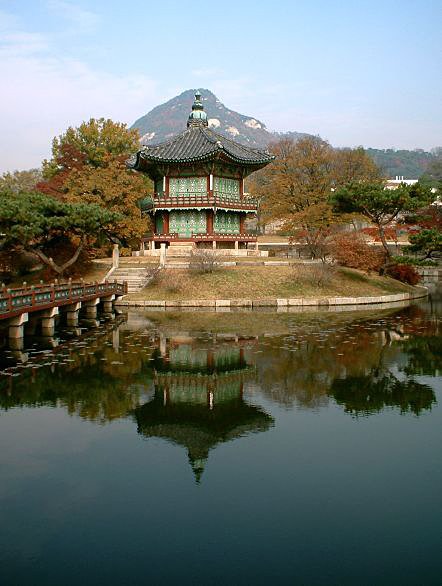
Index
Why study in South Korea for Indian students?
South Korea offers strong universities, modern campuses and a safe, fast-moving country. Four Korean universities sit inside the world’s top 100 in the QS World University Rankings 2027: Seoul National University (38), Yonsei University (42), Korea University (52) and KAIST (65). Many degree programmes, especially in science, engineering and business, are taught fully in English.
Tuition is also lower than in most English-speaking countries. The average annual tuition fee at four-year universities is ₩7,270,300 (about ₹5.02 lakh), up 2.1% on the previous year (Academy Info, April 2026). That is far below the fees Indian students often pay at private colleges in India.
Study in South Korea for Indian students: the GKS Scholarship 2027
The 2027 GKS-G (graduate) guidelines have not been published yet (as of 8 November 2026). Every GKS-G 2027 date, quota and figure in this guide is therefore EXPECTED, based on the 2026 GKS-G cycle — not confirmed. Check the official GKS Notice board on Study in Korea before you apply. GKS stands for Global Korea Scholarship. It is run by the National Institute for International Education (NIIED), under South Korea’s Ministry of Education. It was earlier called the Korean Government Scholarship Program (KGSP). GKS pays for a bachelor’s, master’s or PhD degree at a Korean university, plus one year of Korean language training before the degree starts. There are two separate calls each year: GKS-U (undergraduate), for Class 12 graduates, and GKS-G (graduate), for master’s, PhD and research students.
Important note on dates
The 2027 GKS-G (graduate) guidelines have not been published yet (as of 8 November 2026). Every GKS-G 2027 date, quota and figure in this guide is therefore EXPECTED, based on the 2026 GKS-G cycle — not confirmed. Check the official GKS Notice board on Study in Korea before you apply. The GKS-U 2027 embassy-track window ran from 15 to 30 September 2026 and has now closed. The university track at some universities was still open in October and November 2026. GKS-G 2027 dates are not yet published. For reference, the 2026 cycle ran: announcement in February 2026; embassy-track applications 12–25 February 2026; review April–June 2026; final results late June 2026. The 2027 cycle is expected to follow a similar February–June pattern, but no 2027 date is confirmed.
What GKS pays for
The 2027 undergraduate guidelines list these benefits:
GKS-U 2027 benefits in full: Tuition — NIIED pays up to ₩5,000,000 per semester; your university waives the excess and the admission fee. Korean language programme fee — ₩5,200,000 a year, paid in full. Airfare — one economy-class flight ticket (actual expense). Monthly allowance — ₩13,560,000 a year in the language year (about ₩1,130,000 / ₹77,970 a month) and ₩14,400,000 a year in the degree years (about ₩1,200,000 / ₹82,800 a month). This monthly allowance is ALL-INCLUSIVE: it already covers your living expenses, accommodation, health insurance, Korean proficiency grants, TOPIK exam fees, settlement allowance and degree-completion grants. These are NOT separate payments on top of the allowance for GKS-U 2027. If you are exempt from the language programme with TOPIK level 5 or 6, you receive the Korean Proficiency Grant automatically. Notes: the scholarship amount may change; entry airfare is NOT provided to scholars residing in Korea at the final announcement; domestic travel inside your home country and international travel insurance are NOT covered; entry airfare/visa support is NOT provided if you enter from a country other than your own; if you withdraw within the first 3 months after enrolment, you must return the full scholarship amount you received.
GKS monthly allowance: GKS-U — ₩1,130,000 a month in the language year (₹77,970) and ₩1,200,000 a month in the degree years (₹82,800). GKS-G (2026 figures) — language programme ₩1,200,000 a month (₹82,800); degree programme ₩1,380,000 a month (₹95,220). These are the full monthly allowances; there is no separate ‘living expenses’ payment of ₩80,000–150,000.
GKS-G benefits (2026 figures — 2027 to be confirmed): Monthly allowance — language programme ₩1,200,000 a month (₹82,800); degree programme ₩1,380,000 a month (₹95,220); research programme ₩1,740,000 a month (₹1,20,060). These are all-inclusive monthly allowances; there are no separate research, settlement or medical-insurance payments in 2026. Language training fee — full coverage. Tuition — all admission fees waived; tuition covered by NIIED and the university.
GKS-G Research Programme: 6 months or 1 year. You must have received an invitation from one of the partner universities. Research programme scholars do NOT receive tuition or Korean language training fees.
Who can apply (Indian students)
For the undergraduate programme (GKS-U 2027), you must hold Indian citizenship (you and both your parents must not hold Korean citizenship). You must be under 25 years of age — born AFTER 1 March 2002. A person born exactly on 1 March 2002 turns 25 on 1 March 2027 and is NOT eligible. You must have completed high school (or an associate degree programme) or be expected to graduate as of 31 December 2026. You must submit your graduation certificate and final transcript to NIIED by 31 December 2026. You must have at least 80% marks or rank in the top 20% of your class (or a CGPA of 2.64 on a 4.0 scale), and not already hold a bachelor’s degree.
GKS-U scholarship period: Bachelor’s degree — 5 to 7 years (1 year of Korean language programme + 4 to 6 years of degree programme). Associate degree — 3 to 4 years (1 year of language programme + 2 to 3 years of degree programme). If you already hold TOPIK level 5 or 6, you are exempt from the language programme. If you reach TOPIK level 5 or 6 within the first 6 months of the language programme, you are exempt from the remaining 6 months and start your degree in September 2027.
You are NOT eligible if: you graduated from a Korean high school or associate degree programme; you previously received a Korean government scholarship for a degree programme (including former GKS degree scholars); you previously received a scholarship from another Korean government agency for a degree programme; you withdrew from or were disqualified from a GKS degree programme in the last 3 years; or you or either parent hold Korean citizenship (dual citizens are not eligible). Note: former GKS non-degree scholars (e.g. exchange programme) CAN apply.
GKS-G eligibility (2026 rules — 2027 to be confirmed): GPA at least 80% from your most recent academic programme (reapplying GKS scholars: at least 90%). Age under 40 as of 1 September of the inviting year — for 2027 entry that means born after 1 September 1987 (exception: academic professors from ODA-recipient countries, under 45). You must hold the required degree (Bachelor’s for a Master’s, Master’s for a PhD) or be expected to graduate by 31 July of the inviting year. The same citizenship rule applies as for GKS-U. A master’s takes 3 years in total and a PhD takes 4 years, each including one year of Korean language training. GKS-G also offers a Research Programme: 6 months or 1 year — see the research programme detail in the benefits section below.
You do not need TOPIK (the Test of Proficiency in Korean) to apply. If you already hold TOPIK Level 5 or 6, you can be exempted from the language year.
India quota for 2027
GKS-U 2027 total: 286 places worldwide — Embassy track 156 (General 88, R-GKS 61, Overseas Koreans 7) + University track 130 (UIC 100 + Associate 30). The 100 UIC places are INSIDE the 286, not additional. UIC places come from 13 institutions. India: 4 embassy-track seats for UNDERGRADUATE study — 2 General + 2 R-GKS (regional), at universities outside the Seoul area. The 2 non-General India seats are R-GKS (regional universities), NOT university-industry cooperation (UIC). UIC is a university-track programme open to applicants from all countries, for science and engineering. GKS-G total for 2027: not yet published. For reference, the 2026 GKS-G total was 2,000 places worldwide (800 embassy track + 1,200 university track, including the R&D and Global Network programmes). Do not confuse this with the GKS-U 2027 total of 286. GKS-G India quota for 2027: not yet published. It will be announced in the 2027 GKS-G guidelines (expected February 2027). Do not rely on any India GKS-G quota figure until then.
GKS-U vs GKS-G at a glance
| GKS-U (undergraduate) | GKS-G (graduate) | |
|---|---|---|
| Who can apply | High school / associate graduates | Bachelor’s holders (Master’s) / Master’s holders (PhD) |
| Age | Under 25 (born after 1 Mar 2002) | Under 40 as of 1 Sept of the inviting year (2026 rules; 2027 to be confirmed) |
| GPA | ≥80% / top 20% / CGPA ≥2.64/4.0 | ≥80% (2026 rules; 2027 to be confirmed) |
| Duration | Bachelor’s 5–7 yrs; Associate 3–4 yrs (incl. 1 yr language) | Master’s 3 yrs; Doctoral 4 yrs; Research 6 mo–1 yr (incl. 1 yr language) |
| Total seats 2027 | 286 (Embassy 156 + University 130) | Not yet published (2026 total: 2,000) |
| India seats 2027 | 4 embassy track (2 General + 2 R-GKS) | Not yet published |
| University choices | Embassy: up to 3 (≥1 Type B); University: 1 | Embassy: up to 3 (≥1 Type B); University: 1 |
| Monthly allowance | ₩1,130,000 (language yr) / ₩1,200,000 (degree yrs) | ₩1,200,000/month (language) / ₩1,380,000/month (degree) (2026 figures; 2027 to be confirmed) |
| Application window | Embassy: 15–30 Sept 2026 (closed) | Not yet published (expected Feb 2027) |
Documents you need
You need these documents for GKS-U 2027 — the complete list from the 2027 GKS-U guidelines (Section IV). Gather them early; the embassy track does not accept late documents.
- Form 1 — Application Form
- Form 2 — Personal Statement
- Form 3 — Study Plan
- Form 4 — Recommendation Letter (ONE letter only)
- Form 5 — GKS Applicant Agreement
- Form 6 — Personal Medical Assessment
- Form 7 — Consent to Collect and Use Personal Information
- Proof of citizenship (applicant AND parents) and proof of family relationship
- High school graduation certificate (or certificate of expected graduation)
- High school academic transcript
- Associate degree graduation certificate + transcript (if applicable)
- Proof of overseas Korean / adoptee status (if applicable)
- Proof of Korean citizenship renunciation (if applicable)
- Proof of Korean War veteran’s descendant (if applicable)
- TOPIK score report (original) or English proficiency test report (copy) (if applicable)
- Other documents — copies of awards and certificates, up to FIVE, for activities/achievements from high school onwards (optional)
- Applicant’s passport (copy)
- For GKS-G applicants: the same form structure applies — Form 4 is the recommendation letter in the graduate guidelines too.
Apostille: the Required Certificates (graduation certificate, transcripts) must be apostilled or consular-confirmed. India is a member of the Apostille Convention, so get the apostille from India’s Ministry of External Affairs (MEA). Simple photocopies or notarised copies of apostilled documents are NOT accepted; a certified true copy from the Korean embassy or the issuing government agency IS accepted. Application forms: submit ONE original — no apostille needed. Documents in English or Korean must be apostilled or consular-confirmed. Documents in another language need a certified translation, with the apostille on the original or on the certified translation. All 2027 GKS-U scholars must submit the apostilled graduation certificate to NIIED by 31 December 2026. Before you travel, prepare MULTIPLE copies of your apostilled graduation certificate — you will need them for the Standard Admission Letter from your university, for your visa at the embassy, and for immigration when you renew your residence status in Korea.
Pro tip: Start the apostille process at least a month before your deadline.
How to apply: Embassy Track vs University Track
You cannot apply through both tracks at the same time, and you cannot apply to more than one track, programme or university — a duplicate application is disregarded. But: if you FAIL the first round of the embassy track, you MAY apply again through the university track if its deadline has not passed. If you PASS the embassy first round (including as a reserve/backup candidate), you CANNOT also apply through the university track.
University choices — Embassy track: up to 3 universities, and at least 1 of them must be a Type B (regional) university. R-GKS (undergraduate, embassy track): up to 2 Type B universities. Embassy Track: You apply online through the official Study in Korea portal (studyinkorea.go.kr) and submit your application to the Korean Embassy in India. The embassy screens applicants and forwards its recommended candidates to NIIED. For GKS-U 2027, final results are announced on 7 January 2027.
University Track: You apply directly to one participating Korean university. University track: only 1 university and 1 department — for both GKS-U and GKS-G. After final selection, transfer to a different field of study is NOT permitted. Each university sets its own deadline — for GKS-U 2027, the window ran from September to November 2026. The university screens you first and then recommends you to NIIED, which makes the final decision.
GKS 2027 timeline at a glance
Embassy track — GKS-U 2027 (all times Korea Standard Time): online application 15 September 2026 (11:00) – 30 September 2026 (18:00) via studyinkorea.go.kr; 1st round result by 16 October 2026; applications arrive at NIIED by 30 October 2026; 2nd round result in November 2026; 3rd round result by 23 December 2026 (18:00); notify your final university choice by 29 December 2026 (18:00); final announcement expected 7 January 2027; invitation letters and entry guidelines within January 2027 (by email).
University track — GKS-U 2027 (all times Korea Standard Time): applications September–November 2026 (each university sets its own schedule); 1st round result in November 2026; applications arrive at NIIED by 30 November 2026; 2nd round result in December 2026; final announcement expected 7 January 2027; invitation letters and entry guidelines in January 2027. The university track has NO third round.
GKS-G 2027: dates not yet published — the 2027 cycle is expected to open in February 2027 (following the 2026 pattern: embassy-track applications 12–25 February 2026), but no 2027 date is confirmed.
Note: NIIED notes that the schedule may change — always check the GKS notice board on studyinkorea.go.kr before you apply. NIIED does not inform applicants individually — check the GKS Notice board and your My Page on Study in Korea.
How selection works (GKS-U 2027): (1) Eligibility review — the selection committee screens your documents (citizenship, level of education, grades) and verifies you meet the eligibility requirements; only applicants who pass proceed. (2) Competency review — document screening AND an oral interview, assessing academic performance, language proficiency, academic activities, contributions to society and international exchange, potential for future development, and the completeness and authenticity of your documents. Language points: TOPIK level 5 or above = 100% of the language score; level 4 = 90%; level 3 = 80%; level 2 = 70%; level 1 = 60%; no official score = 50%. (TOEFL iBT / IELTS scores are converted on the same scale.) Additional points: direct descendants of Korean War veterans +10%; TOPIK level 3 = +3%, level 4 = +4%, level 5 or above = +5%; science and engineering applicants +5%. Preference is given to overseas Koreans, applicants from low-income or underprivileged backgrounds, science/engineering applicants, national technical-skills competition winners (associate degree), and R-GKS applicants to regional priority fields.
GKS-G selection (2026 rules — 2027 to be confirmed): 1st round by the embassy or the university → 2nd round by the NIIED selection committee → 3rd round (embassy track ONLY — university admission review; you must receive admission from at least one of your chosen universities, or you are disqualified) → final result announced by NIIED. The university track has no third round — final selection is based on the NIIED second-round result.
Top Universities in South Korea for Indian Students

| University | City | QS 2027 (world) | THE 2027 (world) | Known for |
|---|---|---|---|---|
| Seoul National University (SNU) | Seoul | 38 | 56 | Korea’s top national university |
| Yonsei University | Seoul | 42 | 80 | Business, medicine, engineering |
| Korea University | Seoul | 52 | 128 | Business, law, engineering |
| KAIST | Daejeon | 65 | 64 | Science, engineering, computer science |
| POSTECH | Pohang | 106 | =143 | Science and engineering |
| Sungkyunkwan University (SKKU) | Seoul | 108 | 68 | Engineering, medicine, business |
| Hanyang University | Seoul | 155 | =296 | Engineering, architecture, design |
| Kyung Hee University | Seoul | 309 | =237 | Medicine, hospitality, international studies |
The table above shows the top 8 Korean universities by QS World University Rankings 2027 (not the full GKS list). In total, 43 Korean universities appear in the QS World University Rankings 2027 (QS World University Rankings 2027, published 18 June 2026 — 43 Korean institutions appear in the table). Rankings are a good way to make a shortlist, but check whether your subject is taught in English and what the tuition is before you choose. In the QS World University Rankings: Asia 2027 (published 3 November 2026), Yonsei University is 11th in Asia, Korea University 12th, and Seoul National University 16th.
GKS-U 2027 participating universities: Embassy track — Type A 28 universities, Type B (R-GKS, regional) 42 universities; University track — UIC 13 institutions, Associate degree 9 institutions. Full list with departments: see the 2027 GKS-U Application Guidelines, Appendices C and D, and the Study in Korea GKS page. GKS-G participating universities: the list is in the 2026 GKS-G guidelines and will be updated when the 2027 GKS-G guidelines are published.
Embassy track — Type A (28 universities
- Ajou University
- Chung-Ang University
- Dongguk University
- Ewha Womans University
- Hankuk University of Foreign Studies
- Hansung University
- Hanyang University
- Hongik University
- Incheon National University
- Inha University
- Kookmin University
- Korea University
- Kyung Hee University
- Kyungdong University
- Myongji University
- Pohang University of Science and Technology (POSTECH)
- Sejong University
- Seokyeong University
- Seoul National University
- Seoul National University of Science and Technology
- Sogang University
- Soongsil University
- Sungkyunkwan University
- Sungshin Women’s University
- The Catholic University of Korea
- Ulsan National Institute of Science and Technology (UNIST)
- University of Seoul
- Yonsei University
Embassy track – Type B (R-GKS, regional) (42 universities)
- Busan University of Foreign Studies
- Changwon National University
- Cheongju University
- Chonnam National University
- Chosun University
- Chungbuk National University
- Chungnam National University
- Daegu Catholic University
- Daegu University
- Daejeon University
- Dong-A University
- Gyeongkuk National University
- Gyeongsang National University
- HANBAT NATIONAL UNIVERSITY
- Hannam University
- Hoseo University
- Inje University
- Jeju National University
- Jeonbuk National University
- Kangwon National University
- Keimyung University
- Kongju National University
- Konyang University
- Korea National University of Transportation
- Korea University of Technology and Education (KOREATECH)
- Kunsan National University
- Kyungpook National University
- Kyungsung University
- Kyungwon University
- Mokwon University
- Pai Chai University
- Pukyong National University
- Pusan National University
- Semyung University
- Silla University
- Soonchunhyang University
- Sun Moon University
- Sunchon National University
- Tongmyong University
- University of Ulsan
- Wonkwang University
- Yeungnam University
University track – UIC (13 institutions)
- Ajou University
- Daegu University
- Dong-A University
- Inje University
- Keimyung University
- Konyang University
- Kookmin University
- Korea University of Technology and Education (KOREATECH)
- Sungshin Women’s University
- Yeungnam University
- Dong-Eui Institute of Technology
- Kyungbok University
- Osan University
University track – Associate degree (9 institutions)
- Busan Institute of Science and Technology
- Cheju Halla University
- Dong-Eui Institute of Technology
- Induk University
- Korea University of Media Arts
- Kyungbok University
- Kyung-In Women’s University
- Kyungnam College of Information & Technology
- Yeungnam University College
Fees and Living Costs Without a Scholarship
If you do not win GKS, you pay tuition yourself. Tuition fees in South Korea are charged per semester, but the figures below are ANNUAL totals. The cheapest annual tuition is around ₩4,000,000 a year — roughly the national/public university average of ₩4,250,000 a year. Most international undergraduates pay about ₩4–10 million a YEAR (₹2.76–6.90 lakh), not per semester. STEM/research: ₩5–10 million a year (₹3.45–6.90 lakh). By type (2026): national/public universities average ₩4,250,000 a year (about ₹2.93 lakh); private universities average ₩8,231,500 a year (about ₹5.68 lakh). By field (2026 annual averages): humanities and social sciences ₩6,433,700 (₹4.44 lakh); engineering ₩7,677,400 (₹5.30 lakh); medicine ₩10,325,900 (₹7.12 lakh). By field (2024, Study in Korea): humanities/social sciences ₩6,003,000; natural sciences ₩6,875,000; engineering ₩7,277,200; arts & physical education ₩7,828,200; medicine ₩9,843,400 a year. Graduate average annual tuition ₩4,216,103 (national/public ₩2,481,808; private ₩4,434,681).
Korea University’s 2026 international tuition, per semester: humanities and social sciences about ₩5,800,000 (₹4.00 lakh); natural sciences about ₩6,700,000 (₹4.62 lakh); engineering about ₩7,700,000 (₹5.31 lakh). Fees vary by college — confirm on the university’s official fee page before you apply. Fees in the first semester can be higher than later semesters because of admission and other one-time costs. Private universities are usually more expensive than national or public ones. For 2027 admissions, Korea University is among the top choices because of its strong faculty and a QS rank of 52.
Note: Always confirm the exact fee on the university’s own admissions page.
Living costs
The Korean government’s Study in Korea platform estimates average living costs for international students at ₩750,000–1,000,000 a month (₹51,750–₹69,000). Seoul costs more than smaller cities such as Busan, Daejeon or Daegu. A typical monthly budget in Seoul looks like this:
| Expense | Estimated cost per month |
|---|---|
| Housing (university dormitory) | 300,000–600,000 won |
| Housing (off-campus room) | 400,000–700,000 won |
| Food | 300,000–500,000 won |
| Transport | 55,000–80,000 won |
| Total (dormitory + food + transport) | ₩655,000–1,180,000 a month (₹45,195–₹81,420) |
This total does NOT include health insurance (see NHIS below), books, phone or other personal costs — budget extra for those. University dormitories are the cheapest option and the best choice for first-year students. A meal in a university cafeteria costs about 3,500–6,000 won. Health insurance (NHIS): the National Health Insurance Service sets a student premium each year — check the current rate on nhis.or.kr before you budget. For GKS scholars, health insurance is already covered inside the scholarship (GKS-U: inside the all-inclusive monthly allowance; GKS-G 2026: folded into the all-inclusive monthly allowance — there is no separate medical-insurance payment) — you do not pay the NHIS student premium on top of the scholarship. The figures above come from 2026 student-budget guides; they are estimates, not official prices.
Intakes and visa
Korean universities have two main intakes: March (spring, the main intake) and September (autumn). D-2 (student) visa: apply BEFORE you travel, after you receive your Standard Admission Letter and Certificate of Confirmation of Visa Issuance. The exact document checklist, financial-proof amount and fee for Indian applicants are set by the Korean Consulate in Mumbai (or the consulate for your region) — check its current checklist on the consulate website or at your VFS Global / BLS International centre before you apply. Do not rely on a figure in this guide until it is confirmed against that checklist.
After final selection (GKS-U): invitation letters and entry guidelines are sent to your email within January 2027. Prepare multiple copies of your apostilled graduation certificate before you travel (see the apostille section). If you are already residing in Korea when the final announcement is made, you may NOT be able to receive a new visa for your language or degree programme — contact the Immigration office immediately — and entry airfare will NOT be provided to you. Entry airfare and visa support are NOT provided if you enter Korea from a country other than your country of citizenship. Familiarise yourself with Korea’s immigration and residency laws before you travel: immigration.go.kr and hikorea.go.kr. Alien registration (ARC), scholarship renewal conditions and part-time work rules: NOT covered in this guide yet — check the official NIIED and university notices.
How to Apply: Admissions Steps
Whether you apply with GKS or without it to study in South Korea for Indian students, the steps are similar:
- Choose your universities and programmes. Shortlist 3 to 5 universities. Check that your subject is taught in English and note each university’s deadline.
- Check the requirements. Read the university’s international admissions guide. Note the documents, the language test scores and the application fee.
- Prepare your documents. Transcripts, certificates, passport copy, one recommendation letter (Form 4) and your personal statement. Get documents apostilled through the MEA if asked for.
- Apply online. Most universities take applications through their own admissions portal. GKS applicants apply through studyinkorea.go.kr (embassy track) or directly to the university (university track).
- Wait for the result, then apply for your visa. Once you have an offer, apply for the D-2 student visa with your admission letter and proof of funds.
- Book housing and flights. Apply for a university dormitory early — places are limited. GKS scholars get an economy return ticket; other students book their own.
Start at least 6 months before your planned intake to study in South Korea for Indian students. Documents, apostille and translations take longer than most students expect.
More University Guides
 Top Universities in South Korea 2027South Korea • University Guide
 Top Universities in Japan 2027Japan • University Guide
 Top Universities in China 2027China • University Guide
Frequently Asked Questions
1. Can Indian students apply for the GKS Scholarship 2027?
Yes. India is one of the countries NIIED invites to take part. For the undergraduate programme, India had 4 embassy-track seats in 2027 for undergraduate study — 2 General + 2 R-GKS (regional). The GKS-G 2027 graduate programme dates are not yet published; the 2027 cycle is expected to open in February 2027 (based on the 2026 cycle), but no 2027 date is confirmed.
2. What is the last date to apply for GKS 2027?
It depends on the programme. The GKS-U 2027 embassy-track window closed on 30 September 2026. The university track at some universities is open until November 2026, and the final results are expected on 7 January 2027. GKS-G 2027 dates are not yet published — the 2027 cycle is expected to open in February 2027 (following the 2026 pattern: embassy-track applications 12–25 February 2026), but no 2027 date is confirmed.
3. How much money does GKS give every month?
Under the 2027 undergraduate guidelines, the monthly allowance is ₩1,130,000 a month (about ₹77,970) during the language year and ₩1,200,000 a month (about ₹82,800) afterwards. All rupee figures use 1 KRW = ₹0.069 (mid-market, 8 November 2026). This monthly allowance is all-inclusive — it already covers your living expenses, accommodation, health insurance, Korean proficiency grants, TOPIK exam fees, settlement allowance and degree-completion grants. Tuition (up to ₩5,000,000 a semester), the language course (₩5,200,000 a year) and return airfare are paid separately. GKS-G 2026 figures: language programme ₩1,200,000 (₹82,800); degree programme ₩1,380,000 (₹95,220) a month.
4. Do I need to know Korean to study in South Korea?
No. You do not need TOPIK to apply for GKS to study in South Korea for Indian students, and many degree programmes are taught fully in English. GKS includes one year of Korean language training before your degree starts. If you already hold TOPIK Level 5 or 6, you can be exempted from the language year.
5. How much does it cost to study in South Korea without a scholarship?
Tuition for study in South Korea for Indian students is about ₩4–10 million a YEAR (₹2.76–6.90 lakh), not per semester, depending on the university and subject. Living in Seoul costs about ₩655,000–1,180,000 a month (₹45,195–₹81,420), excluding tuition. So a year can cost about ₹10–15 lakh in total, including living costs.
6. Which is the best university in South Korea for Indian students?
Seoul National University is ranked highest in Korea at 38 in the QS World University Rankings 2027, followed by Yonsei University (42), Korea University (52) and KAIST (65). If you plan to study in South Korea for Indian students, the “best” university depends on your subject and budget, so compare programmes and fees before you decide.
Sources & Last Updated
Last updated: 8 November 2026. Fees, deadlines and quotas change every year. Always confirm the latest information on the official sources below before you apply.
- Study in Korea — GKS programme page (official NIIED portal): https://www.studyinkorea.go.kr/en/plan/scholarship.do
- 2027 GKS-U Application Guidelines (NIIED, official; hosted on Daegu University’s site): https://eng.daegu.ac.kr/data//files/article/DG584/668596//FF4CEEADB82A4860B43BDA996B3B1BD4.pdf
- 2026 GKS-G Application Guidelines (NIIED, hosted by Korea University Graduate School): https://graduate2.korea.ac.kr/scholarship/gkscholarships.html
- QS World University Rankings 2027 (published 18 June 2026): https://www.topuniversities.com/qs-world-university-rankings
- QS World University Rankings: Asia 2027 (published 3 November 2026): https://www.topuniversities.com/asia-university-rankings
- THE World University Rankings — Best universities in South Korea 2027: https://student-cms.prd.timeshighereducation.com/best-universities/best-universities-south-korea
- Academy Info — Higher Education in Korea (2026 tuition averages, April 2026 release): https://www.academyinfo.go.kr
- Study in Korea — Cost of Study page (2024 field averages): studyinkorea.go.kr (no deep link available)
- Korea University Office of International Affairs (2026 international tuition, per semester): https://oia.korea.ac.kr
- Korea JoongAng Daily — QS 2027 report (17 June 2026): https://www.koreajoongangdaily.com/korea/snu-leads-korean-campuses-in-latest-qs-world-rankings-as-yonsei-ku-hit-historic-highs/12727249
- QS Asia 2027 press release / AJU Press report (4 Nov 2026): https://vomnews.in/qs-world-university-rankings-asia-2027-india-leads-asia-in-research-output-as-competition-intensifies-among-top-universities/ and https://www.ajupress.com/view/20261104092870151
- Korea Immigration Service / HiKorea: https://www.immigration.go.kr and https://www.hikorea.go.kr
- National Health Insurance Service (NHIS): https://www.nhis.or.kr
- NIIED GKS Team (contact): gksniied@korea.kr
- Embassy of the Republic of Korea in India (New Delhi): https://overseas.mofa.go.kr/in-en/index.do
By Rohit Gupta. If you spot a mistake in this guide, please write to us at universityresearchers3@gmail.com and we will check it and correct it.
[…] Study in South Korea 2027South Korea • Scholarship Guide Cheapest Universities in the USAUSA • Cheapest Universities Commonwealth Shared Scholarships 2027–28UK • Scholarship Guide The University of QueenslandAustralia • University Guide Shanghai Jiao Tong UniversityChina • University Guide PSL UniversityFrance • University Guide Fudan UniversityChina • University Guide The University of Hong KongHong Kong • University Guide […]
[…] Study in South Korea for Indian Students 2027 — GKS Scholarship, Fees, Admissions & Complete G… […]
[…] Study in South Korea for Indian Students 2027: GKS Scholarship, Fees, Admissions & Complete Guid… […]
[…] 🇰🇷 South Korea […]
[…] 🇰🇷 South Korea […]