
Top Universities in the UK for International Students 2027: Rankings, Fees, Deadlines & How to Apply

QS 2026 ranks, fees, scholarships, UCAS deadlines and new visa rules — verified from official sources, for students from every country.
By Rohit Gupta
Last updated: 7 November 2026
The UK is one of the most popular study destinations in the world — and if your image of it is rain, red buses and a degree that takes forever, two of those three are true. The degree is the surprise: a bachelor’s takes three years instead of four, a master’s takes one year instead of two, and the teaching is in English. In 2024/25, 685,565 overseas students were studying at UK universities — about one in four of all higher-education students in the country [33]. In the year ending June 2026, 383,455 sponsored study visas were granted to students of all nationalities [32].
But I need to be honest with you before you read further. The UK changed its rules in 2026, and the changes cost real money. The student visa fee is now £558, the Immigration Health Surcharge is £776 a year, and the Graduate Route — the post-study work visa — drops from two years to 18 months for applications from 1 January 2027 [28]. And if you were counting on Chevening for 2027, I have bad news: the Chevening 2027–28 applications closed on 6 October 2026 [37].
This directory puts the top UK universities on one page — rank, fees, what they are best for, scholarships, UCAS deadlines and the new visa rules — so you can compare them honestly before you apply. It is written for international students from every country: the fees, deadlines and visa rules here are the same whether you are applying from Lagos, Lima, Lahore or London’s suburbs.
Key points
- Top-ranked: Imperial College London is #2 in the world (QS 2026), followed by Oxford at #4 and Cambridge at #6 [1].
- International students: 685,565 overseas students were in UK higher education in 2024/25, and 383,455 sponsored study visas were granted in the year ending June 2026 — the top three nationalities were China (86,368), India (82,523) and Nigeria (26,060) [32][33].
- Tuition: international fees at the top UK universities run about £22,000–£67,000 a year, varying hugely by course [6].
- Chevening 2027–28: applications closed on 6 October 2026. The next cycle is expected to open in August 2027 [37].
- Commonwealth Shared Scholarships: applications open 10 November 2026 and close 8 December 2026 — fully funded, for a UK Master’s [40].
- UCAS deadlines: Oxford, Cambridge and medicine close 15 October 2026; most other courses close 13 January 2027 [24].
- Visa: the Student visa costs £558 plus the health surcharge of £776 a year [28]. The Graduate Route is 2 years if you apply by 31 December 2026, 18 months from 1 January 2027 [30].
| 12 universities | £22,000–£67,000 a year | 685,565 overseas students |
|---|---|---|
| In this directory, ranked by QS 2026 [1] | International tuition at the top UK universities, 2025–26, varies by course [6] | In UK higher education in 2024/25 — about one in four students [33] |

Table of Contents
Why This Matters for International Students
The UK matters for international students for three practical reasons. First, time: a bachelor’s degree is three years and a master’s is one year, so you graduate and start earning a year earlier than in the USA. A three-year bachelor’s is not a typo — it is the whole pitch. Second, cost of time: that shorter degree means one less year of tuition and living costs. Third, the system is simpler — one application portal (UCAS) for all undergraduate courses, five choices, one personal statement [26].
The UK also has the densest concentration of world-class universities of any country after the USA: 17 UK universities sit in the world’s top 100 in QS 2026 [4], and four of them — Imperial, Oxford, Cambridge and UCL — sit in the world’s top ten [58]. The Russell Group, the UK’s association of 24 research-intensive universities, includes almost every university in this directory [58].
But the honest warning stands: the 2026 rule changes mean you must budget more and plan earlier than students did even two years ago. Read the visa section before you fall in love with any university on this list.
Note: this is a directory, not a ranking of “best for you”. The right university depends on your subject, your budget and your scores. A student who wants computer science and a student who wants law should read this list very differently.
The UK Is Not the USA: Don’t Mix Them Up
This is the single most-mixed-up point about studying in the UK, so let me say it twice: the UK system is not the American system with different names. The degree lengths, the application system, the deadlines and the visa rules are all different.
Important: the India–UK trade agreement (CETA), which came into force on 15 July 2026, does NOT change the UK Student Visa, tuition fees, the Immigration Health Surcharge or the Graduate Route length — for any nationality [50]. It is a trade deal, not an education deal. Social media posts claiming “3,000 new post-study work visas” are also wrong — the 3,000 figure refers to the India Young Professionals Scheme, a ballot for Indian citizens aged 18–30 with a bachelor’s degree to live and work in the UK for up to 24 months, which has existed since 2021 and has nothing to do with having studied in the UK [52]. Do not plan your UK application around CETA.
| UK | USA | |
|---|---|---|
| Bachelor’s degree | 3 years (4 in Scotland) | 4 years |
| Master’s degree | 1 year (taught) | 2 years |
| Application system | UCAS — one portal, 5 choices [26] | Common App + each university’s own portal |
| Main deadline | 15 October 2026 (Oxbridge/medicine); 13 January 2027 (most courses) [24] | 1 November 2026 (early); 1–5 January 2027 (regular) |
| Entrance tests | Admissions tests for Oxbridge (TMUA, ESAT, TARA); no SAT [27] | SAT/ACT at most selective universities |
| Post-study work | Graduate Route: 2 years (18 months from 1 Jan 2027) [30] | OPT: 12 months; STEM 36 months |
| Visa + health fees | £558 + £776 a year IHS [28] | $535 (SEVIS + visa fee) |
One more 2026 change, on the American side: the US F-1 “duration of status” rule was replaced by a fixed period of admission from 15 September 2026 [56]. If you are comparing the two countries, check the current US rule before you plan — it changed this year too.
Pro tip: you can apply to Oxford or Cambridge, but not both — UCAS allows only one of them. Choose the one whose course and college system suits you, and use your other four choices for other universities.

The Directory: Top 12 Universities in the UK for International Students
The table below is the whole directory at a glance. Ranks are from the QS World University Rankings 2026 [1][2][3]. Tuition figures are international (overseas) fees for 2025–26; they vary hugely by course — a humanities degree can cost half a medicine degree at the same university — so always confirm the exact figure for your course on the university’s own fees page. Where a range is marked approximate, the university publishes fees per course, not as one range, and the figure comes from secondary guides rather than the university’s own fee page.
| QS 2026 rank | University | Location | Best known for | International tuition a year (2025–26) |
|---|---|---|---|---|
| #2 | Imperial College London | London | Engineering, Medicine, Computer Science, Business | £40,700–£55,800 [6] |
| #4 | University of Oxford | Oxford | Humanities, Law, Medicine, PPE, Sciences | £35,260–£59,260 [7] |
| #6 | University of Cambridge | Cambridge | Mathematics, Engineering, Natural Sciences, Economics | £25,734–£67,194 tuition + college fee [8] |
| #9 | UCL | London | Architecture, Medicine, Law, Education, Engineering | ~£26,200–£53,400 [11][12] |
| #31 | King’s College London | London | Medicine, Law, War Studies, Nursing, Dentistry | £27,100–£58,200 [13] |
| #34 | University of Edinburgh | Edinburgh | Computer Science (AI), Medicine, Linguistics, Humanities | ~£29,600–£38,900; medicine ~£51,961 [15] |
| #35 | University of Manchester | Manchester | Engineering, Computer Science, Business, Medicine | ~£25,500–£32,000 [16] |
| #51 | University of Bristol | Bristol | Engineering, Law, Social Sciences, Computer Science | ~£24,700–£35,000 [17] |
| #56 | LSE | London | Economics, Finance, Politics, Law, Sociology | ~£26,208–£35,700 [17][18] |
| #74 | University of Warwick | Coventry | Business, Economics, Mathematics, Data Science | £26,290 (Band 1) – £33,520 (Band 2) [20] |
| #76 | University of Birmingham | Birmingham | Engineering, Business, Medicine, Social Sciences | ~£22,260–£35,000 [17] |
| #79 | University of Glasgow | Glasgow | Medicine, Engineering, Life Sciences, Law | ~£22,080–£28,000 [17][19] |
Also in the QS 2026 top 100: Durham University (#94) [3]. The figures marked ~ are approximate ranges for 2025–26, not figures published by that university as one range — the guide says so plainly, and you should confirm the exact fee for your course on the university’s fees page. Oxford’s 2025-entry range is £35,260–£59,260; the 2026-entry range is higher (£37,380–£62,820) — do not mix the two years [7]. Cambridge’s tuition is £25,734–£67,194, and the college fee is charged separately on top [8][9].
[RESEARCH GAP: Requires manual lookup of exact 2025–26 international tuition per course for UCL, King’s College London, University of Edinburgh, University of Manchester, University of Bristol, LSE, University of Birmingham and University of Glasgow — these universities publish fees per course, not as one university-wide range]
The table below compares the top universities in the UK for international students 2027 on the measures that matter for your choice. QS 2026 ranks and the tuition ranges are verified from my sources [1][6][7][8][20]. The three metrics my draft does not state — acceptance rate, researcher-to-faculty ratio and publication volume — are covered by one combined [RESEARCH GAP] tag per row, in the acceptance-rate column; the other two cells show — rather than an estimate.
| University | QS 2026 rank | International tuition a year (2025–26) | Acceptance rate | Researcher-to-faculty ratio | Publication volume |
|---|---|---|---|---|---|
| Imperial College London | #2 [1] | £40,700–£55,800 [6] | [RESEARCH GAP: Requires manual lookup of acceptance rate, researcher-to-faculty ratio and publication volume for Imperial College London] | — | — |
| University of Oxford | #4 [1] | £35,260–£59,260 [7] | [RESEARCH GAP: Requires manual lookup of acceptance rate, researcher-to-faculty ratio and publication volume for University of Oxford] | — | — |
| University of Cambridge | #6 [1] | £25,734–£67,194 + college fee [8] | [RESEARCH GAP: Requires manual lookup of acceptance rate, researcher-to-faculty ratio and publication volume for University of Cambridge] | — | — |
| UCL | #9 [1] | ~£26,200–£53,400 [11][12] | [RESEARCH GAP: Requires manual lookup of acceptance rate, researcher-to-faculty ratio and publication volume for UCL] | — | — |
| King’s College London | #31 [1] | £27,100–£58,200 [13] [RESEARCH GAP: Requires manual lookup of exact international tuition for King’s College London — the medicine figure varies by source and year] | [RESEARCH GAP: Requires manual lookup of acceptance rate, researcher-to-faculty ratio and publication volume for King’s College London] | — | — |
| University of Edinburgh | #34 [1] | ~£29,600–£38,900; medicine ~£51,961 [15] [RESEARCH GAP: Requires manual lookup of exact international tuition for University of Edinburgh on the official fee page] | [RESEARCH GAP: Requires manual lookup of acceptance rate, researcher-to-faculty ratio and publication volume for University of Edinburgh] | — | — |
| University of Manchester | #35 [1] | ~£25,500–£32,000 [16] [RESEARCH GAP: Requires manual lookup of exact international tuition for University of Manchester] | [RESEARCH GAP: Requires manual lookup of acceptance rate, researcher-to-faculty ratio and publication volume for University of Manchester] | — | — |
| University of Bristol | #51 [1] | ~£24,700–£35,000 [17] [RESEARCH GAP: Requires manual lookup of exact international tuition for University of Bristol] | [RESEARCH GAP: Requires manual lookup of acceptance rate, researcher-to-faculty ratio and publication volume for University of Bristol] | — | — |
| LSE | #56 [1] | ~£26,208–£35,700 [17][18] [RESEARCH GAP: Requires manual lookup of exact international tuition for LSE] | [RESEARCH GAP: Requires manual lookup of acceptance rate, researcher-to-faculty ratio and publication volume for LSE] | — | — |
| University of Warwick | #74 [1] | £26,290–£33,520 [20] [RESEARCH GAP: Requires manual lookup of exact international tuition for University of Warwick] | [RESEARCH GAP: Requires manual lookup of acceptance rate, researcher-to-faculty ratio and publication volume for University of Warwick] | — | — |
| University of Birmingham | #76 [1] | ~£22,260–£35,000 [17] [RESEARCH GAP: Requires manual lookup of exact international tuition for University of Birmingham] | [RESEARCH GAP: Requires manual lookup of acceptance rate, researcher-to-faculty ratio and publication volume for University of Birmingham] | — | — |
| University of Glasgow | #79 [1] | ~£22,080–£28,000 [17][19] [RESEARCH GAP: Requires manual lookup of exact international tuition for University of Glasgow] | [RESEARCH GAP: Requires manual lookup of acceptance rate, researcher-to-faculty ratio and publication volume for University of Glasgow] | — | — |
1. Imperial College London — QS #2
Top courses & departments: Engineering (all branches), Medicine, Computing, Mathematics, Physics, Chemistry, Business (Imperial College Business School).
Key facilities: the White City campus (research and innovation), the Sir Alexander Fleming Building, Imperial College Business School.
Eligibility & entrance: UCAS; strong school-leaving marks in mathematics and sciences for STEM courses; IELTS typically 6.5–7.0 overall; admissions tests for some courses (check the course page).
Fee summary: international tuition £40,700–£55,800 a year in 2025–26 [6] — most non-medicine courses sit at £40,700–£43,300, and medicine runs to £55,800. Imperial teaches almost only STEM and medicine, so there is no cheap humanities option hiding in the list.
Placement glance: Imperial graduates are heavily recruited by engineering, tech, finance and consulting firms in London. Exact programme-wise placement figures are published by the university’s careers service — I could not verify a single reliable figure for this guide.
Aid: Imperial offers a small number of scholarships for international undergraduates, including the President’s Undergraduate Scholarships. Most international students pay full fees — budget accordingly.
Read Full Details → Imperial’s official site.
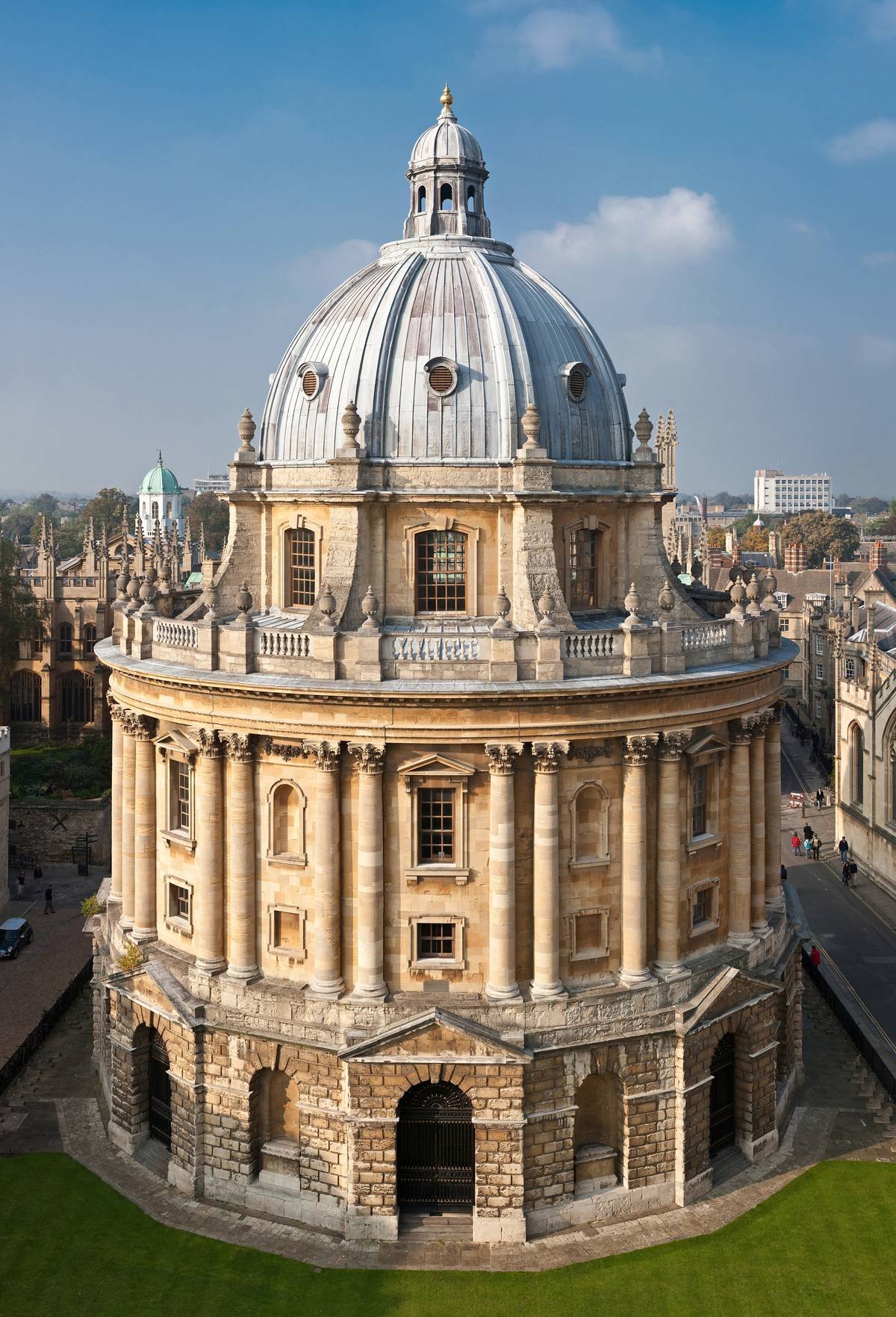
2. University of Oxford — QS #4
Top courses & departments: Humanities, Law, Medicine, Philosophy, Politics and Economics (PPE), Mathematics, Physics, Chemistry, Computer Science, Economics.
Key facilities: the Bodleian Library (one of the oldest libraries in Europe), the Ashmolean Museum, 38 colleges each with its own library, dining hall and accommodation.
Eligibility & entrance: UCAS by 15 October 2026; admissions tests — TMUA for maths and computer science, ESAT for physics, engineering and biomedical sciences, TARA for PPE and the social sciences [27]; interviews in December 2026; decisions on 12 January 2027 [27]. You apply to a college, not just the university.
Fee summary: international tuition £35,260–£59,260 a year in 2025–26 [7], plus a college fee (about £8,990 a year, included in some published totals — check the course page). The 2026-entry range is higher (£37,380–£62,820), so make sure you are reading the right year’s figures.
Placement glance: Oxford is ranked #1 in the world by Times Higher Education, holding that spot for a 10th consecutive year [5]. Its graduates go into law, finance, government, academia and medicine.
Aid: Oxford offers the Rhodes Scholarship (by country constituency — deadlines vary, so check the Rhodes eligibility checker), Clarendon Scholarships and college bursaries. Clarendon needs no separate application — you are considered automatically if you apply for your Oxford course by its December or January deadline [43].
Read Full Details → Oxford’s official site. Our own deep-dive Oxford guide is in preparation and will be linked here when it is published.
3. University of Cambridge — QS #6
Top courses & departments: Mathematics, Engineering, Natural Sciences, Economics, Computer Science, Medicine, Law, History.
Key facilities: the Cambridge University Library, the Cavendish Laboratory (physics), King’s College Chapel and 31 colleges.
Eligibility & entrance: UCAS by 15 October 2026; admissions tests — ESAT for engineering, natural sciences and veterinary medicine, TMUA for maths, economics and computer science [27]; My Cambridge Application by 22 October 2026 [27]; interviews in December 2026; decisions on 27 January 2027 [27].
Fee summary: international tuition £25,734–£67,194 a year in 2025–26 [8], plus a college fee (about £11,500–£14,950 a year — check the course page) [9]. Cambridge fixes your fees for the duration of your course, which is one less surprise to budget for.
Placement glance: Cambridge graduates go into tech, finance, research, law and medicine. Its computer science and engineering graduates are among the most recruited in the UK.
Aid: Cambridge offers the Gates Cambridge Scholarship (for postgraduate study), college bursaries and the Cambridge Trust awards. The Gates Cambridge international round deadline is 8 December 2026 or 6 January 2027, depending on the course [43].
Read Full Details → Cambridge’s official site. Our own deep-dive Cambridge guide is in preparation and will be linked here when it is published.
4. UCL (University College London) — QS #9
Top courses & departments: Architecture (Bartlett), Medicine, Law, Education, Engineering, Computer Science, Economics, Psychology.
Key facilities: the UCL Main Building, the Bartlett School of Architecture, University College London Hospitals (UCLH) for medical students.
Eligibility & entrance: UCAS by 13 January 2027; IELTS typically 6.5–7.0 overall; strong school-leaving marks in relevant subjects. UCL is the largest of the G5 universities, with a very large international community.
Fee summary: international tuition about £26,200–£53,400 a year in 2025–26 [11][12] — classroom courses at the lower end, medicine at the top. The range is approximate because UCL publishes fees per course, not as one range.
Placement glance: UCL graduates are recruited across London’s finance, tech, law and media industries.
Aid: UCL offers the Global Undergraduate Scholarship and departmental awards. The GREAT Scholarships are available for some postgraduate courses at UCL for students from eligible countries — check the British Council’s country page [46].
Read Full Details → UCL’s official site.
5. King’s College London (KCL) — QS #31
Top courses & departments: Medicine, Dentistry, Nursing, Law, War Studies, Politics, Pharmacy, Psychology.
Key facilities: the Strand Campus, Guy’s Hospital and St Thomas’ Hospital (clinical teaching), the Maughan Library.
Eligibility & entrance: UCAS by 13 January 2027; IELTS typically 6.5–7.0; medicine and dentistry need admissions tests and close on 15 October 2026.
Fee summary: international tuition £27,100–£58,200 a year [13] — non-clinical courses at the lower end, dentistry at the top. The medicine figure varies by source and year, so confirm it on KCL’s own fee page before you budget.
Placement glance: KCL’s medical, dental and nursing graduates are recruited by NHS trusts across the UK; its law and war studies graduates go into government, law firms and international organisations.
Aid: KCL offers the King’s International Scholarship and departmental awards for international students.
Read Full Details → KCL’s official site.
6. University of Edinburgh — QS #34
Top courses & departments: Computer Science and Artificial Intelligence, Medicine, Linguistics, Humanities, Engineering, Law, Business.
Key facilities: Old College, the Bayes Centre (data science and AI), the Edinburgh Futures Institute.
Eligibility & entrance: UCAS by 13 January 2027 (medicine 15 October 2026); IELTS typically 6.5 overall. Note: undergraduate degrees in Scotland are four years, not three.
Fee summary: international tuition about £29,600–£38,900 a year [15], with medicine around £51,961 — confirm the exact figure for your course on the university’s fee page, because this range is approximate.
Placement glance: Edinburgh’s informatics graduates are heavily recruited by UK tech employers; the university is one of Europe’s strongest centres for AI research.
Aid: Edinburgh offers the Edinburgh Global Undergraduate Scholarship and the GREAT Scholarships for some postgraduate courses for students from eligible countries [46].
Read Full Details → Edinburgh’s official site.
7. University of Manchester — QS #35
Top courses & departments: Engineering, Computer Science, Business (Alliance Manchester Business School), Medicine, Physics, Chemistry, Materials Science.
Key facilities: the Manchester Institute of Biotechnology, the John Rylands Library, the National Graphene Institute (graphene was isolated at Manchester).
Eligibility & entrance: UCAS by 13 January 2027; IELTS typically 6.0–6.5 overall.
Fee summary: international tuition about £25,500–£32,000 a year in 2025–26 [16] — the most affordable range in this directory, and medicine costs more.
Placement glance: Manchester graduates are recruited by engineering, tech and finance employers across the north of England and London.
Aid: Manchester offers international scholarships and the GREAT Scholarships for some postgraduate courses for students from eligible countries [46].
Read Full Details → Manchester’s official site.
8. University of Bristol — QS #51
Top courses & departments: Engineering, Law, Social Sciences, Computer Science, Mathematics, Economics, Medicine.
Key facilities: the Wills Memorial Building, the Bristol Robotics Laboratory.
Eligibility & entrance: UCAS by 13 January 2027 (medicine 15 October 2026); IELTS typically 6.0–6.5 overall.
Fee summary: international tuition about £24,700–£35,000 a year [17] — confirm the exact figure for your course.
Placement glance: Bristol graduates are recruited by engineering, aerospace (Airbus and Rolls-Royce have major sites nearby), law and finance firms.
Aid: Bristol offers the Think Big Scholarships for international undergraduates and postgraduates — applications opened 27 October 2026 and close 19 March 2027 at 13:00 UK time [44].
Read Full Details → Bristol’s official site.
9. London School of Economics (LSE) — QS #56
Top courses & departments: Economics, Finance, Politics, Law, Sociology, International Relations, Management.
Key facilities: the LSE Library (the British Library of Political and Economic Science), the Marshall Building.
Eligibility & entrance: UCAS by 13 January 2027; IELTS typically 7.0 overall — the highest English requirement in this directory; strong school-leaving marks in mathematics for economics and finance.
Fee summary: international tuition about £26,208–£35,700 a year [17][18] — confirm the exact figure for your course.
Placement glance: LSE graduates are the most recruited in the UK for finance, consulting, government and international organisations. (A warning from students themselves: LSE often scores lower than its ranking suggests on student experience — see the reviews section at the end of this guide.)
Aid: LSE offers the Undergraduate Support Scheme and departmental awards; the GREAT Scholarships are available for some postgraduate courses for students from eligible countries [46].
Read Full Details → LSE’s official site.
10. University of Warwick — QS #74
Top courses & departments: Business (Warwick Business School), Economics, Mathematics, Data Science, Engineering, Politics, Law.
Key facilities: Warwick Business School, the Warwick Manufacturing Group.
Eligibility & entrance: UCAS by 13 January 2027; IELTS typically 6.5 overall (7.0 for some courses).
Fee summary: international tuition £26,290 (Band 1) to £33,520 (Band 2) a year in 2025–26 [20] — Band 1 covers classroom, humanities and social-science courses; Band 2 covers laboratory, maths, statistics, economics and business courses. Medicine (MBChB) is separate and higher.
Placement glance: Warwick Business School graduates are heavily recruited by finance and consulting firms; the university has one of the UK’s strongest placement records for economics and business. Warwick is #74 in QS 2026 — not #61, which was its QS 2022 rank and still shows up in stale guides [53].
Aid: Warwick offers the Warwick Undergraduate Global Excellence Scholarship and departmental awards. The 2027 terms and deadline were not published on Warwick’s official page when this guide was written — check the university’s funding page rather than trusting a secondary date [45]. [RESEARCH GAP: Requires manual lookup of the Warwick Undergraduate Global Excellence Scholarship 2027 value, award count and deadline on Warwick’s official page]
Read Full Details → Warwick’s official site.
11. University of Birmingham — QS #76
Top courses & departments: Engineering, Business, Medicine, Social Sciences, Law, Computer Science.
Key facilities: the Aston Webb Building, Birmingham Business School.
Eligibility & entrance: UCAS by 13 January 2027 (medicine 15 October 2026); IELTS typically 6.0–6.5 overall.
Fee summary: international tuition about £22,260–£35,000 a year [17] — confirm the exact figure for your course.
Placement glance: Birmingham graduates are recruited by engineering, healthcare and finance employers across the Midlands and London.
Aid: Birmingham offers the Global Masters Scholarship and the 125th Anniversary Scholarships for international students.
Read Full Details → Birmingham’s official site.
12. University of Glasgow — QS #79
Top courses & departments: Medicine, Engineering, Life Sciences, Law, Veterinary Medicine, Business, Humanities.
Key facilities: the Gilbert Scott Building, the Queen Elizabeth University Hospital (clinical teaching).
Eligibility & entrance: UCAS by 13 January 2027 (medicine and veterinary 15 October 2026); IELTS typically 6.5–7.0 overall. Note: undergraduate degrees in Scotland are four years, not three.
Fee summary: international tuition about £22,080–£28,000 a year [17][19] — the lowest starting figure in this directory, and medicine costs more.
Placement glance: Glasgow graduates are recruited by engineering, life sciences, finance and NHS employers across Scotland and the UK.
Aid: Glasgow offers the International Leadership Scholarship and the GREAT Scholarships for some postgraduate courses for students from eligible countries [46].
Read Full Details → Glasgow’s official site.
What It Costs: Tuition, Living Costs and the Real Budget
Tuition is only the first line of the bill. It is never the only line — if it were, this section would be one sentence long. The UK Home Office also requires you to show living funds: £1,529 a month in London or £1,171 a month elsewhere, for up to 9 months — that is £13,761 in London or £10,539 elsewhere [29]. From 30 November 2026 those figures rise to £1,570 and £1,203 a month [35]. On top of that come the visa fee and the health surcharge (see the visa section below).
| Route | Tuition a year | Living funds (9 months) | Total a year (approx.) |
|---|---|---|---|
| Top London (Imperial, UCL, LSE, KCL) | ~£26,200–£58,200 [6][11][13][17] | £13,761 (London) [29] | About £40,000–£72,000 |
| Oxbridge (Oxford, Cambridge) | £25,734–£67,194 [7][8] | £10,539 (outside London) [29] | About £36,000–£78,000 |
| Other Russell Group (Manchester, Bristol, Warwick, Birmingham, Glasgow, Edinburgh) | ~£22,080–£38,900 [15][16][17][20] | £10,539 (outside London) [29] | About £33,000–£49,000 |
A note on the numbers: the “total a year” figures are my own sums from the tuition and living-funds figures in this guide, not figures published by any university. Other guides give slightly different ranges for the same universities — for example, one guide lists Imperial at £32,000–£45,000, Oxford at £28,000–£42,000, Cambridge at £25,700–£66,800 and UCL at £22,000–£37,500 [22] — because fees vary by course and by year.
All figures in this guide are in pounds sterling (GBP). If you convert to your own currency, use the rate on the day you pay — I do not fix a conversion rate here, because it moves every day. UK degrees are shorter — three years for a bachelor’s, one year for a master’s — so compare the whole degree, not one year: a three-year UK bachelor’s can cost less in total than a four-year US bachelor’s even at a higher yearly fee. Cambridge’s college fee is charged on top of tuition [8][9].
[RESEARCH GAP: Requires manual lookup of exact 2025–26 international tuition per university to resolve the differing fee ranges between guides]
Scholarships: Commonwealth, Chevening and the Rest
There are three scholarships that matter most for international students in the UK. Two of them have deadlines you must not miss.
First, the Commonwealth Shared Scholarships — the best-funded option for a Master’s, and the one with a deadline still open when this guide was written. Applications open on Tuesday 10 November 2026 and close at 16:00 GMT on Tuesday 8 December 2026 [40]. The scholarship pays full tuition, a monthly stipend, a return airfare, a thesis grant and a child allowance [42]. There is no application fee, the CSC does not require IELTS, and there is no age limit [42].
It is open to citizens, refugees and British protected persons permanently resident in an eligible developing Commonwealth country — the list runs from Bangladesh and Ghana to Kenya, Nigeria, Pakistan and Sri Lanka, and the full list is on the CSC’s own site [49]. Read our full guide: Commonwealth Shared Scholarships 2027–28. [RESEARCH GAP: Requires verification of the Commonwealth Shared Scholarships 2027/28 stipend on the official CSC page — reported as £1,712 a month (£2,000 in London), while older-cycle figures (£1,452/£1,781) circulate widely; do not use a stipend figure until it is confirmed on cscuk.fcdo.gov.uk]
Second, Chevening — the UK government’s flagship award for a one-year Master’s. It is fully funded (tuition, stipend, airfare, visa). But the 2027–28 applications closed on 6 October 2026 at 11:00 UTC [37][38]. The official Chevening timeline confirms these dates [48]. If you missed it, the next cycle is expected to open in August 2027 [38].
[RESEARCH GAP: Requires manual lookup of the Chevening 2028–29 opening date — “early August 2027” is expected by pattern, not officially announced] Chevening needs citizenship of a Chevening-eligible country, 2,800 hours of work experience after your degree, and three UK course choices; you must hold an unconditional offer from one of them by 8 July 2027, 17:00 BST [37]. It also requires you to return to your country of citizenship for at least two years after the course [38].
Third, the university scholarships — Rhodes (Oxford), Gates Cambridge, Clarendon (Oxford), Think Big (Bristol), Global Excellence (Warwick) and the GREAT Scholarships (at several universities, for students from eligible countries). The Rhodes deadlines vary by country constituency — India closed on 23 July 2026 and the USA opened on 1 July 2026, so there is no single Rhodes deadline to circle [38]. The Global Rhodes Scholarships are suspended. Most university scholarships have their own deadlines, usually between December 2026 and March 2027; check each university’s funding page.
Pro tip: the Commonwealth Shared Scholarship is the only fully funded UK Master’s scholarship still open in November 2026. If you want a UK Master’s in 2027 and you need full funding, that is the one to apply for — and the window is only four weeks long.
Research & Labs at the Top Universities in the UK for International Students
I judge the top universities in the UK for international students 2027 by what their laboratories, libraries and hospitals let a student actually do. At Imperial, the White City campus is built for research and innovation, and the Sir Alexander Fleming Building and Imperial College Business School sit beside it — so a STEM or business scholar works in a place set up for research, not only for lectures.
At Oxford, the Bodleian Library is one of the oldest libraries in Europe, and each of the 38 colleges has its own library, dining hall and accommodation — so a humanities or law scholar has a historic research library and a college library of their own. At Cambridge, the Cambridge University Library and the Cavendish Laboratory for physics give a science scholar the same depth, across 31 colleges.
Medicine is where the facilities decide the degree. At UCL, medical students learn at University College London Hospitals (UCLH); at KCL, clinical teaching happens at Guy’s Hospital and St Thomas’ Hospital, with the Maughan Library for study; at Glasgow, clinical teaching happens at the Queen Elizabeth University Hospital. A medical scholar at these universities learns inside working hospitals, not beside them.
For newer fields, the specialist centres matter most. At Edinburgh, the Bayes Centre is built for data science and AI, and the university is one of Europe’s strongest centres for AI research. At Manchester, the National Graphene Institute stands where graphene was isolated, with the Manchester Institute of Biotechnology and the John Rylands Library beside it. At Bristol, the Bristol Robotics Laboratory gives engineering scholars a robotics base. At LSE, the LSE Library — the British Library of Political and Economic Science — is a library built for economics, politics and law. At Warwick, the Warwick Manufacturing Group and Warwick Business School put engineering and business scholars beside manufacturing and management research.
Working across fields is built into the top universities in the UK for international students 2027: UCL covers architecture, medicine, law, education and engineering in one university; Edinburgh covers computer science and AI, medicine, linguistics and humanities; Glasgow covers medicine, engineering, life sciences, law and veterinary medicine. The Russell Group — 24 research-intensive universities — includes almost every university in this directory [58], and 17 UK universities sit in the world’s top 100 in QS 2026 [4].
Faculty. I name no professor in this guide, because my draft sources name none — and I will not invent a name to fill the gap. My advice is to find three professors whose recent papers excite you, read their lab pages, and then check whether that university fits your UCAS choices.
Researcher Insider Tip: A laboratory matters more than a logo. A scholar who wants AI belongs at Edinburgh, a scholar who wants materials and graphene belongs at Manchester, and a scholar who wants clinical medicine belongs at a university with its own teaching hospitals — whatever the overall ranking says.
Exact programme-wise placement packages and starting salaries were not verified for any university in this directory. [RESEARCH GAP: Requires manual lookup of per-university placement packages and starting salaries for all 12 UK universities]
The facilities listed in the university cards are famous, stable facts cited to each university’s official homepage; no separate verification of each facility’s current status was done. [RESEARCH GAP: Requires manual lookup of current status of facilities listed in the university cards — the facilities for Imperial, Bristol, Birmingham and Glasgow were not individually re-verified on each university’s own site] I could not verify per-university detail on library holdings, computing clusters, database access or accommodation costs for this guide. [RESEARCH GAP: Requires manual lookup of library holdings, computing clusters, database access and accommodation costs per UK university]
Funding, Grants & Assistantships at the Top Universities in the UK for International Students
The funding picture for the top universities in the UK for international students 2027 comes down to three sources, and only one of them is still open. First, the Commonwealth Shared Scholarships — the best-funded option for a Master’s. Applications open on Tuesday 10 November 2026 and close at 16:00 GMT on Tuesday 8 December 2026 [40]. The scholarship pays full tuition, a monthly stipend, a return airfare, a thesis grant and a child allowance [42]. There is no application fee, the CSC does not require IELTS, and there is no age limit [42].
[RESEARCH GAP: Requires verification of the Commonwealth Shared Scholarships 2027/28 stipend on the official CSC page — reported as £1,712 a month (£2,000 in London), while older-cycle figures circulate widely]
Second, Chevening — the UK government’s flagship award for a one-year Master’s. It is fully funded (tuition, stipend, airfare, visa). But Chevening closed for 2027–28 on 6 October 2026 at 11:00 UTC [37][38]. The next cycle is expected to open in August 2027 [38]. Chevening needs citizenship of a Chevening-eligible country, 2,800 hours of work experience after your degree, and three UK course choices; you must hold an unconditional offer from one of them by 8 July 2027, 17:00 BST [37]. It also requires you to return to your country of citizenship for at least two years after the course [38].
Third, the university scholarships. Oxford offers the Rhodes Scholarship (deadlines vary by country constituency), Clarendon Scholarships and college bursaries — Clarendon needs no separate application [43]. Cambridge offers the Gates Cambridge Scholarship (for postgraduate study), college bursaries and the Cambridge Trust awards — the Gates Cambridge international round deadline is 8 December 2026 or 6 January 2027, depending on the course, and the maintenance is reported at about £21,000–£23,152 a year [43].
Imperial offers the President’s Undergraduate Scholarships. UCL offers the Global Undergraduate Scholarship and departmental awards. KCL offers the King’s International Scholarship. Edinburgh offers the Edinburgh Global Undergraduate Scholarship. Bristol offers the Think Big Scholarships — applications opened 27 October 2026 and close 19 March 2027 at 13:00 UK time, with undergraduate awards of £6,500 or £13,000 a year and postgraduate awards of £3,000, £6,500, £13,000 or £26,000 in the first year [44].
Warwick offers the Warwick Undergraduate Global Excellence Scholarship — the 2027 terms and deadline were not published when this guide was written [45]. Birmingham offers the Global Masters Scholarship and the 125th Anniversary Scholarships. Glasgow offers the International Leadership Scholarship. The GREAT Scholarships offer at least £10,000 towards tuition for a one-year taught master’s, for students from eligible countries — in 2026–27 there were over 140 scholarships at over 60 universities across 18 countries, and each country has its own page and deadline on the British Council’s Study UK site [46]. Most university scholarships have their own deadlines, usually between December 2026 and March 2027; check each university’s funding page. [RESEARCH GAP: Requires manual lookup of the GREAT Scholarships 2027–28 country list and deadlines — no single deadline exists, and sources disagree on the 2027 country set]
How to apply for funding, step by step:
1. Apply for the Commonwealth Shared Scholarship first. It is the only fully funded UK Master’s scholarship still open in November 2026, and the window is only four weeks long — 10 November to 8 December 2026 [40].
2. Check each university’s funding page. Most university scholarships have their own deadlines, usually between December 2026 and March 2027 — check each one, and note that the Rhodes deadlines vary by country, so there is no single date to rely on [38].
3. Check the GREAT Scholarships country page. They are available for students from eligible countries at several universities in this directory — check the British Council’s country page for your country and your university [46].
4. Plan for the next Chevening cycle. Chevening closed for 2027–28; the next cycle is expected to open in August 2027 [38]. It needs 2,800 hours of work experience and three UK course choices [37].
Crucial Compliance Note: Chevening closed for 2027–28 on 6 October 2026, and the Commonwealth Shared window is only four weeks — 10 November to 8 December 2026. If you need full funding for a UK Master’s in 2027, the Commonwealth Shared Scholarship is the one still open, and missing its deadline means waiting a year.
Teaching and research assistantships are not covered in the draft sources for this guide. [RESEARCH GAP: Requires manual lookup of teaching and research assistantship availability, hours and pay at UK universities]
Who Can Apply: Eligibility
Most UK universities ask international applicants for the same set of things. You need to meet all of these for the universities you apply to:
- School-leaving qualification completed (or in the final year, applying with predicted grades) — for example, A-levels, the International Baccalaureate, or your country’s equivalent (in India, Class 12; in Nigeria, WAEC/NECO; in China, the Gaokao) — with strong marks in the subjects related to your course.
- English test score: usually IELTS. Most top universities ask for 6.5–7.0 overall; LSE asks for 7.0, Bristol and Birmingham for 6.0–6.5 [59]. Some universities accept other tests or waive the requirement for students with high English marks in school — check the course page.
- Admissions tests (Oxbridge and some others): Oxford uses the TMUA, ESAT and TARA depending on the course; Cambridge uses the ESAT and TMUA [27]. Register for these well before the UCAS deadline — if you miss test registration, your application cannot proceed [27].
- Five UCAS choices maximum for undergraduate courses, and only one of Oxford or Cambridge [26].
- Passport, valid for your whole stay.
- Proof of funds for the visa — tuition for the first year plus living funds, held for 28 days (see the visa section).
Note: UK universities do not use the SAT or ACT. Your school marks, your personal statement, your reference and (for Oxbridge) your admissions test and interview decide your offer.
How to Apply: Step by Step
1. Shortlist 5 universities. One ambitious (Oxbridge or Imperial), two realistic, two safe. Remember: only one of Oxford or Cambridge.
2. Write your personal statement. One statement for all five choices, 4,000 characters maximum. It must be about your subject, not about the universities. It is one statement for five universities — not five statements stapled together. Start in August 2026, not in October.
3. Get your reference. One reference from a teacher, added to your UCAS application by your school.
4. Register for admissions tests (Oxbridge applicants). TMUA, ESAT or TARA, depending on your course [27]. Registration closes well before the UCAS deadline.
5. Submit through UCAS. Applications for 2027 entry opened on 12 May 2026; completed applications can be submitted from 1 September 2026 [24]. The UCAS fee for 2027 entry is £34.50 for up to five courses [24]. Oxbridge and medicine/dentistry/veterinary courses close on 15 October 2026 at 6pm UK time; most other courses close on 13 January 2027 at 6pm UK time [24].
6. Cambridge applicants only: complete the My Cambridge Application by 22 October 2026 at 6pm [27].
7. Interviews (Oxbridge). December 2026, online or in person [27]. Oxford decisions come on 12 January 2027; Cambridge decisions on 27 January 2027 [27].
8. Accept your offers. Reply to UCAS by the date in your offer (usually May–June 2027). Then the university issues your CAS (Confirmation of Acceptance for Studies), which you need for the visa.
9. Apply for the Student visa. Pay the visa fee and the health surcharge, show your funds, and attend biometrics (see the visa section below).
For master’s applicants: there is no UCAS for postgraduate courses. You apply directly on each university’s own portal, usually between October 2026 and March 2027 depending on the course. Deadlines vary by university and course — check each one.
My advice on timing: treat 13 January 2027 as your real deadline even though international applications are accepted until 30 June 2027. Competitive courses in computer science, business, engineering and healthcare can close once they are full, and the equal-consideration guarantee only applies to applications received by 13 January [24].
Key Dates and Timeline
These are the UCAS deadlines 2027 and the scholarship dates for the top universities in the UK for international students 2027, in one timeline.
| Step | Date (2027 entry) |
|---|---|
| 2027 courses appear in UCAS search | 28 April 2026 [24] |
| UCAS applications open | 12 May 2026 [24] |
| UCAS submissions open | 1 September 2026 [24] |
| Chevening 2027–28 applications close | 6 October 2026, 11:00 UTC — CLOSED [37] |
| UCAS deadline: Oxford, Cambridge, medicine, dentistry, veterinary | 15 October 2026, 6pm UK time [24] |
| My Cambridge Application deadline | 22 October 2026, 6pm UK time [27] |
| Commonwealth Shared Scholarships open | 10 November 2026 [40] |
| Oxbridge interviews | December 2026 [27] |
| Commonwealth Shared Scholarships close | 8 December 2026, 16:00 GMT [40] |
| Oxford decisions | 12 January 2027 [27] |
| UCAS equal-consideration deadline (most courses) | 13 January 2027, 6pm UK time [24] |
| Cambridge decisions | 27 January 2027 [27] |
| UCAS Extra opens | 25 February 2027 [25] |
| Final UCAS deadline (applications to chosen universities) | 30 June 2027, 6pm UK time [25] |
| Extra closes | 1 July 2027 [25] |
| Clearing opens | 2 July 2027 [25] |
| Chevening unconditional-offer deadline | 8 July 2027, 17:00 BST [39] |
| Final date for any 2027-entry application | 23 September 2027, 6pm UK time [25] |
| September 2027 term begins | Late September 2027 |
Note: some older guides give the equal-consideration deadline as 14 January 2027 and Extra as 26 February. Those were the 2026-entry dates. For 2027 entry, UCAS confirms 13 January 2027 and 25 February 2027 [54][55]. Submit a few days early either way: UCAS systems slow down badly on deadline day.
The UK Student Visa in 2026: What Changed
International students study in the UK on the Student visa. After you accept an offer, the university issues a CAS. You then apply online, pay the fees, show your funds and attend a biometrics appointment. The official rules are on the gov.uk Student visa pages [28]. The standard processing time from outside the UK is about 3 weeks [28], and you can apply up to 6 months before your course starts.
Three things changed in 2026, and you need to know all three:
1. Higher fees. The Student visa fee rose from £524 to £558 per application on 8 April 2026 [35]. The Immigration Health Surcharge (IHS) rose from £470 to £776 per year on the same date — a 65% rise [36]. For a 12-month master’s, the visa lasts about 17 months, so the IHS comes to £1,164 [35].
2. Higher living funds. You must show £1,529 a month in London or £1,171 a month elsewhere, for up to 9 months, held in your account for 28 days [29]. From 30 November 2026, those figures rise to £1,570 and £1,203 a month [35]. Applications made before 30 November 2026 are decided under the old figures. (The gov.uk money page had not yet been updated for the rise when this guide was written — the new figures come from the government’s Statement of Changes, HC 584 [35].)
3. A shorter Graduate Route. The Graduate Route — the post-study work visa — lasts 2 years if you apply by 31 December 2026, 18 months for applications from 1 January 2027, and 3 years after a PhD [30]. The Graduate Route application fee is £937, and its health surcharge is £1,035 a year [36]. [RESEARCH GAP: Requires manual lookup of the 18-month Graduate Route health surcharge total — gov.uk gives only the £1,035-a-year rate, and secondary sources disagree on the 18-month total]
While you study: you can work 20 hours a week during term time and full-time in vacations [28]. You need a TB test certificate from a Home Office-approved clinic if you have lived in a listed country for 6 months or more — the requirement is based on where you have lived, not on your passport [28].
Note: the Graduate Route change is about the date you apply for the Graduate Route, not the date you start your course. If you graduate in 2028 and apply for the Graduate Route then, the 18-month rule will apply to you. The visa section is the least fun part of this guide — and the most expensive part to skip.
Documents You Need
- School transcripts and certificates (your final school-leaving results — for example, A-levels, IB, or Class 12 if you studied in India).
- English test score report (IELTS, usually 6.5–7.0 overall).
- Passport, valid for your whole stay.
- UCAS personal statement and one reference (undergraduate); statement of purpose and 2 references (master’s).
- Admissions test registration and scores (Oxbridge).
- CAS from your university (for the visa).
- Proof of funds — tuition for the first year plus living funds, held for 28 days.
- TB test certificate from a Home Office-approved clinic, if you have lived in a listed country for 6 months or more.
- ATAS certificate, if your course requires it (some science and engineering master’s courses).
A simple preparation checklist — things to do this week:
- Pick your 5 UCAS choices and write down each one’s deadline and test requirements.
- Book your IELTS test date.
- Ask your teacher for your UCAS reference now — do not ask in December.
- If you want a fully funded Master’s in 2027, start the Commonwealth Shared Scholarship application now — it opens 10 November and closes 8 December 2026.
- Open a file for your financial documents; the visa needs proof of funds held for 28 days.
More University Guides
 Commonwealth Shared Scholarship 2027-28 for Indian StudentsUK • Scholarship Guide
 Top Universities in the USA for Indian Students 2027USA • University Guide
 Top Universities in India 2027India • University Guide
Frequently Asked Questions
Which is the best university in the UK for international students?
There is no single best university — it depends on your subject and budget. By rank, Imperial College London is #2 (QS 2026), followed by Oxford at #4 and Cambridge at #6 [1]. For engineering choose Imperial, for humanities and law Oxford, for mathematics Cambridge, for economics LSE.
How much does it cost to study in the UK?
International tuition at the top universities in the UK for international students 2027 runs about £22,000–£67,000 a year [6]. Living funds are £1,529 a month in London or £1,171 elsewhere, for up to 9 months [29]. A three-year bachelor’s costs less in total than a four-year US bachelor’s.
Is Chevening still open for 2027?
No. Chevening 2027–28 applications closed on 6 October 2026 [37]. The next cycle is expected to open in August 2027 [38]. If you need full funding for a UK Master’s in 2027, the Commonwealth Shared Scholarships open on 10 November 2026 and close on 8 December 2026 [40].
What are the UCAS deadlines for 2027 entry?
Oxford, Cambridge and medicine, dentistry and veterinary courses close on 15 October 2026 at 6pm UK time. Most other undergraduate courses close on 13 January 2027 at 6pm UK time [24]. UCAS Extra opens on 25 February 2027, and the final deadline is 30 June 2027 [25].
How long can I work in the UK after graduation?
The Graduate Route lasts 2 years if you apply by 31 December 2026, 18 months for applications from 1 January 2027, and 3 years after a PhD [30]. While you study, you can work 20 hours a week during term time and full-time in vacations [28].
How much is the UK Student visa?
The UK student visa 2026 fee is £558 per application, and the Immigration Health Surcharge is £776 a year [28]. For a 12-month master’s, the surcharge comes to £1,164 [35]. You must also show living funds held for 28 days [29].
What Students Actually Say
Rankings tell you what a university is. Students tell you what it is like to actually live there — the teaching, the housing, the part-time jobs, the rain. Before you trust a ranking, read what students say. These are the places I checked, and the links go straight to them.
WhatUni hosts over 190,000 verified student reviews from universities across the UK, and its annual WhatUni Student Choice Awards are voted entirely by students — more than 30,000 reviews a year decide the winners [64]. StudentCrowd holds more than 300,000 verified reviews covering every UK university, course and city, and universities cannot pay to improve a rating or remove a review they dislike [65]. On StudentCrowd, the University of Birmingham’s reviews give it 4.42 out of 5 from 1,351 verified student reviews, with international students praising the teaching and the careers service — and complaining, honestly, about the campus Wi-Fi [66].
The big surveys tell a different story from the rankings. The THE Student Experience Survey asks more than 20,000 undergraduates about teaching, facilities, accommodation and social life — and no London institution makes its top 10, while LSE regularly sits near the bottom for student experience despite its ranking [71].
A student-led ranking on EDUopinions puts Oxford at 4.6 out of 5, LSE at 4.5, King’s College London at 4.43 and Edinburgh at 4.09, based on verified student reviews [68]. And The Tab’s ranking of Russell Group universities by student reviews puts Warwick at 4.37 out of 5 and Edinburgh at 4.26 — while Oxford, Cambridge, UCL, King’s College London and Manchester do not make the student-satisfaction top 20 at all [67]. Rankings and happiness are not the same thing.
For the unfiltered version, students talk on Quora — one widely read thread on planning a UK move warns about the housing crisis, the reality of finding part-time work, and the Graduate Route change, in plain language [69]. Another Quora thread comparing the US and the UK lays out the trade-off honestly: the UK is faster and cheaper in total, the US is more flexible [70]. On YouTube, UCAS’s own channel carries application guides and advice from first-year students, and the UCAS International Podcast answers the questions international students actually ask — visas, documents, scholarships [61][62]. On Instagram, the British Council’s Study UK account posts real student testimonials about the GREAT Scholarships [63].
My honest advice: read several reviews, look for patterns rather than single complaints, and check the date — the rules changed in 2026, so a review from 2023 describes a different UK. And if a university’s finances worry you, check the Office for Students before you pay a deposit [72]. [RESEARCH GAP: Requires a single consistent source for per-university student satisfaction scores for all 12 universities — the figures above come from different platforms and years, so compare them with care]
Sources & Last Updated
Last updated: 7 November 2026. Ranks, fees, deadlines and visa rules change. Confirm the latest on each university’s website, the UCAS website and the gov.uk visa pages before you apply or pay anything. All figures are in pounds sterling (GBP).
- QS World University Rankings 2026 — QS 2026 ranks used in this directory: Imperial #2, Oxford #4, Cambridge #6, UCL #9, KCL #31, Edinburgh #34, Manchester #35, Bristol #51, LSE #56, Warwick #74, Birmingham #76, Glasgow #79, Durham #94.
- IDP: QS World University Rankings 2026 — QS 2026 ranks for the UK’s top universities.
- QS: World University Rankings 2026 ranking table — Bristol #51, LSE #56, Warwick #74, Birmingham #76, Glasgow #79, Durham #94.
- HEPI: UK’s rankings lead under threat in QS 2026 — 17 of the 90 UK universities ranked are in the QS 2026 top 100.
- THE: World University Rankings 2026 out now — Oxford #1 in THE 2026 for a 10th consecutive year.
- Imperial: Undergraduate tuition fees 2025–26, Faculty of Natural Sciences — official 2025–26 overseas fees; Imperial range £40,700–£55,800.
- Oxford: Undergraduate fees and funding guide 2025 entry (St Hilda’s) — overseas fees 2025 entry £35,260–£59,260; 2026 entry £37,380–£62,820.
- How much does it cost to study at Cambridge (October 2025) — Cambridge 2025–26 tuition groups £25,734–£67,194.
- Trinity Hall Cambridge: Financial Guarantee Form, Overseas Fees 2026 — Cambridge college fee, about £11,500–£14,950 in 2026–27.
- QS: Imperial College London or University of Oxford — Imperial medicine fees £53,700–£55,800.
- UCAS: Philosophy, Politics and Economics BSc, UCL — UCL 2025–26 course fee example, £36,500.
- UCAS: Chemical Engineering, UCL — UCL 2025–26 course fee example, £39,800.
- University Living: King’s College London admission guide — KCL 2025–26 fees £27,100–£35,800 non-clinical.
- Grove Education: King’s College London rankings and tuition fees — KCL medicine and dentistry fees.
- Collegedunia: University of Edinburgh programs — Edinburgh 2026 fee examples: LLB £29,600, Architecture/CS £38,900.
- College Council: Studying in the UK — international students complete guide — Manchester fees about £25,000–£32,000.
- Study Abroad: UK Russell Group guide — “from” fees: Bristol £24,700, LSE £26,208, Birmingham £22,260, Glasgow £22,080.
- Collegedunia: LLB universities in the UK — LSE LLB £35,700.
- Education for You: Glasgow fees — Glasgow fees £20,000–£28,000.
- Warwick: BSc Health and Medical Sciences, 2025 entry — Warwick 2025–26 overseas fee bands: Band 1 £26,290, Band 2 £33,520.
- LeapScholar: 8 Tier 1 Universities in UK 2026 — international tuition 2025–26 for the top universities. (Returned 403 to automated checks — bot protection; the page and figures are shown in search results.)
- NomadCredit: Public Universities in the UK — alternative fee ranges: Imperial £32,000–£45,000, Oxford £28,000–£42,000, Cambridge £25,700–£66,800, UCL £22,000–£37,500. Shows how much fee figures vary between guides.
- BrightKey: The 5-Year ROI of a UK vs European vs Asian Degree — tier fee ranges from university fee schedules 2025–26: Oxbridge £44,000–£59,000, Imperial/LSE/UCL £35,000–£43,000, other Russell Group £26,000–£35,000.
- UCAS: Adviser guide, key dates 2027 entry — UCAS 2027 entry: applications open 12 May 2026, submissions from 1 September 2026, Oxbridge/medicine 15 October 2026 6pm, equal consideration 13 January 2027 6pm, fee £34.50.
- UCAS: Parent guide, key dates 2027 entry — UCAS Extra opens 25 February 2027, last date 30 June 2027, Extra closes 1 July 2027, Clearing opens 2 July 2027, final deadline 23 September 2027.
- UCAS — the UK’s centralised undergraduate admissions system; five choices; one personal statement.
- Ivy Education: Oxbridge Application Deadlines 2027 Entry — UCAS deadline 15 October 2026 6pm; My Cambridge Application 22 October 2026; interviews December 2026; Oxford decisions 12 January 2027; Cambridge decisions 27 January 2027; admissions tests TMUA, ESAT, TARA.
- gov.uk: Student visa — official Student visa rules, fees and application guidance.
- gov.uk: Student visa — money — living funds £1,529 a month in London, £1,171 elsewhere, for up to 9 months.
- gov.uk: Graduate visa — Graduate Route: 2 years if applied by 31 December 2026, 18 months from 1 January 2027, 3 years after PhD; fee £937.
- gov.uk: Healthcare — how much to pay — Immigration Health Surcharge £776 a year for students.
- gov.uk: Immigration system statistics, year ending June 2026 — study — 383,455 sponsored study visas granted in the year ending June 2026 (all nationalities); China 86,368, India 82,523, Nigeria 26,060.
- House of Commons Library: International students in UK higher education — 685,565 overseas students in UK higher education in 2024/25 (24% of all students; 63,600 EU, about 622,000 non-EU).
- HESA: Higher Education Statistics Agency — the UK’s official source of higher-education data.
- CareerBox: UK Student Visa Fees 2026–27 — visa fee £558 from 8 April 2026; IHS £776 a year, £1,164 for a 12-month master’s; living funds £1,529/£1,171 a month, rising to £1,570/£1,203 from 30 November 2026 (Statement of Changes HC 584); work 20 hours a week; TB test; about 3 weeks processing.
- Collegedunia: UK Healthcare Fee for Students Rises 65% From April 8, 2026 — IHS rose from £470 to £776 a year for students on 8 April 2026; Graduate Route IHS £1,035 a year; Graduate Route fee £937. (Returned 403 to automated checks — bot protection; the page and figures are shown in search results.)
- Scholarship Union: Chevening guide — Chevening 2027–28 closed 6 October 2026; 2,800 hours of work experience; return home for 2 years.
- Collegedunia: Chevening Scholarship 2027/28 Shuts 6 October 2026 — applications opened 4 August 2026, closed 6 October 2026 11:00 UTC; next cycle expected August 2027; Rhodes India closed 23 July 2026; Rhodes USA opened 1 July 2026.
- CareerBox: Study Abroad Scholarships for Indian Students 2027–28 — Chevening unconditional-offer deadline 8 July 2027.
- Scholarships Central: Commonwealth Shared Scholarships — 2027/28 cycle opens 10 November 2026, closes 8 December 2026 at 16:00 GMT; stipend reported £1,712 a month (£2,000 in London).
- FundsDigest: Commonwealth Shared Scholarship Scheme — 2026/27 cycle stipend £1,452 a month (£1,781 in London); shows how the figure changes between cycles.
- Commonwealth Shared Scholarships 2027–28 (University Researcher) — opens 10 November 2026, closes 8 December 2026 16:00 GMT; full tuition; return airfare; no CSC fee; no IELTS required by CSC; no age limit.
- Scholarship Auditor: Scholarship calendar and deadlines — Gates Cambridge international round 8 December 2026 or 6 January 2027 by course; Clarendon automatic via Oxford course deadline; maintenance and grant figures reported.
- Scholarships and Aid: University of Bristol 2027 Think Big International Scholarship — Think Big opened 27 October 2026, deadline 19 March 2027 at 13:00 UK time; awards £6,500/£13,000 (UG), £3,000/£6,500/£13,000/£26,000 (PG).
- Collegedunia: University of Warwick — Warwick Global Excellence Scholarship: 2027 terms and deadline not published on Warwick’s official page.
- British Council Study UK: GREAT Scholarships — GREAT Scholarships: minimum £10,000 towards tuition for a one-year taught master’s; 2026–27: 18 countries, over 140 scholarships, over 60 universities.
- British Council: Study UK — the British Council’s official Study UK site: courses, scholarships and student guidance.
- Chevening: Application timeline — official Chevening selection timeline. (Returned no response to automated checks; the dates are confirmed by Scholarship Union and Collegedunia, both checked against Chevening’s own pages.)
- Commonwealth Scholarship Commission (CSC) — official CSC site: verify the 2027/28 Commonwealth Shared stipend and eligible countries here before applying.
- LearnerAid: India-UK CETA for Students — What is Real, What is Not — CETA (in force 15 July 2026) does not change the Student Visa, tuition, IHS or Graduate Route; the 3,000 figure is the India Young Professionals Scheme (ballot, 18–30, bachelor’s, 24 months).
- AbroadBrief: UK Graduate Visa 18 Months January 2027 — Graduate Route 18 months from 1 January 2027.
- India Young Professionals Scheme — the ballot — 3,000 places a year by ballot for Indian citizens aged 18–30 with a bachelor’s degree and £2,530 savings, for up to 24 months.
- QS: University of Warwick — Warwick QS trend: 2022 #61, 2026 #74, 2027 #68.
- Atava: UCAS application deadlines for international students — equal-consideration deadline 13 January 2027 (14 January was the 2026-entry deadline).
- Coventry University: Ultimate guide to the UCAS process — UCAS Extra opens 25 February 2027.
- Cosmos Immigration: UK or US — know the difference — UK vs USA degree lengths, application systems, entrance tests, post-study work; US F-1 duration-of-status change from 15 September 2026.
- University Living: US vs UK education — UK vs USA comparison for international students.
- College Council: Russell Group Universities Explained — Russell Group: 24 research-intensive universities; Imperial #2, Oxford #4, Cambridge #6 and UCL #9 in the world’s top ten in QS 2026.
- IDP IELTS: Minimum IELTS score to study in UK universities in 2026 — IELTS requirements: LSE 7.0, Durham 6.5, Warwick 6.5–7.0, Birmingham 6.5/6.0, Bristol 6.0, Glasgow 7.0.
- University Living: QS Rankings 2026 — Top Universities in the UK — 90 UK universities in QS 2026, 17 in the world’s top 100.
- UCAS on YouTube — UCAS’s official YouTube channel: application guides, personal-statement advice and the UCAS International Podcast.
- UCAS: International students — UCAS International Podcast and top tips for international students.
- Study UK on Instagram: GREAT Scholarships reel — British Council Study UK (@studyuk_britishcouncil): real student testimonials about the GREAT Scholarships.
- WhatUni — over 190,000 verified student reviews from UK universities; the WhatUni Student Choice Awards are voted entirely by students.
- StudentCrowd: About us — over 300,000 verified student reviews covering every UK university; universities cannot pay to improve a rating.
- StudentCrowd: University of Birmingham reviews — Birmingham 4.42 out of 5 from 1,351 verified student reviews.
- The Tab: Russell Group universities ranked by student reviews — Warwick 4.37/5, Edinburgh 4.26/5 in the StudentCrowd University Awards 2026; Oxford, Cambridge, UCL, KCL and Manchester outside the student-satisfaction top 20.
- EDUopinions: THE World University Rankings 2027 — decided by students — student-led ranking from verified reviews: Oxford 4.6/5, LSE 4.5/5, KCL 4.43/5, Edinburgh 4.09/5.
- Quora: How to plan for studying in the UK — students’ honest thread on UK study: housing, part-time work, the Graduate Route change.
- Quora: Where should I study abroad, US or UK? — students compare the UK and the USA: speed and cost against flexibility.
- GoStudyIn: Best UK universities for student experience — THE Student Experience Survey: over 20,000 undergraduates; Loughborough top; no London institution in the top 10.
- Office for Students — the UK regulator: check a university’s registration and financial position before you pay a deposit.
By Rohit Gupta. If you spot a mistake in this guide, please write to us at universityresearchers3@gmail.com and I’ll check and correct it.