
Harvard University Guide 2027: Fees, Admissions & Scholarships for Indian Students

Need-blind aid, Tata Scholarship, $91,634 fees (2026-27), REA/RD deadlines and SAT requirements — verified from official sources.
By Rohit Gupta
Last updated: 10 November 2026
Harvard is the university every Indian family knows by name — and the one most families misunderstand on money. The headline figure is frightening: $91,634 a year billed for Harvard College in 2026-27. The fact that changes everything is the aid: Harvard is need-blind for international students, meets 100% of demonstrated need, and families earning under $100,000 a year pay nothing at all — not tuition, not housing, not food. For a middle-class Indian family, Harvard can cost less than a private university in India. The barrier is not money. The barrier is the 3.7% acceptance rate (Class of 2030, Fall 2026 entry).
This guide gives you the verified facts: the 2026-27 fees with the aid arithmetic shown honestly, the Fall 2027 deadlines (Restrictive Early Action closes 1 November 2026 — days away as I write this), the SAT/ACT requirement that many Indian guides still get wrong, the Tata Scholarship for Indian citizens, and what a Harvard MBA actually earns after graduation. Everything with a number in it is linked to its source and cited — and everything I could not verify is listed honestly at the end. If you searched for a Harvard University guide 2027 Indian students can trust, this is the one I would want you to read — every number linked to its source, and everything I could not verify listed honestly at the end.
Key points
- Rankings: QS 2027 #5 (97.4), THE 2027 #6 (96.7), U.S. News 2026-27 #1 (100.0) — the world’s top-ranked university by U.S. News.[1][2]
- Founded in 1636 — the oldest university in the United States — with 24,317 degree students (Fall 2025) and 6,749 international students (28%), including 545 from India.[3][10]
- Undergraduate tuition 2026-27: $62,226 a year; full billed cost $91,634 a year; full cost of attendance $95,134–$100,134.[3][4][6]
- Financial aid: need-blind for international students; 100% of demonstrated need met; families under $100,000 pay $0; families under $200,000 pay $0 tuition; 55% of students receive need-based aid.[4][7][9]
- Fall 2027 deadlines: Restrictive Early Action 1 November 2026; Regular Decision 1 January 2027; SAT or ACT is required — Harvard is not test-optional for this cycle.[11][13][16]
- Acceptance rate: 3.7% (2,037 admitted of 55,104 applicants, Class of 2030, Fall 2026 entry); the previous cycle (Class of 2029) was 4.2% (2,003 of 47,893).[11]
| At a glance | |
|---|---|
| Full name | Harvard University |
| Founded | 1636 — oldest university in the United States[10] |
| Location | Cambridge, Massachusetts, USA |
| Type | Private Ivy League research university[10] |
| Students | 24,317 degree students (Fall 2025); 6,749 international (28%), 545 from India[3] |
| Schools | 12 degree-granting schools[10] |
| QS 2027 / THE 2027 / U.S. News 2026-27 | #5 / #6 / #1[1] |
| Endowment | About $56.9 billion (fiscal 2025) — the largest of any university[3] |
| Nobel laureates | 162 affiliated (alumni, faculty, postdoctoral and visiting researchers — third-party count); Harvard’s own count is 50 faculty laureates[1] |
| U.S. presidents | 8[17][18] |
| Undergraduate tuition (2026-27) | $62,226 a year; billed total $91,634[4] |
| HBS MBA tuition (2026-27) | $84,760 a year[5] |
| F-1 visa fees | $535 total (SEVIS $350 + MRV $185); budget up to $785 if the $250 Visa Integrity Fee is collected at your post[6] |
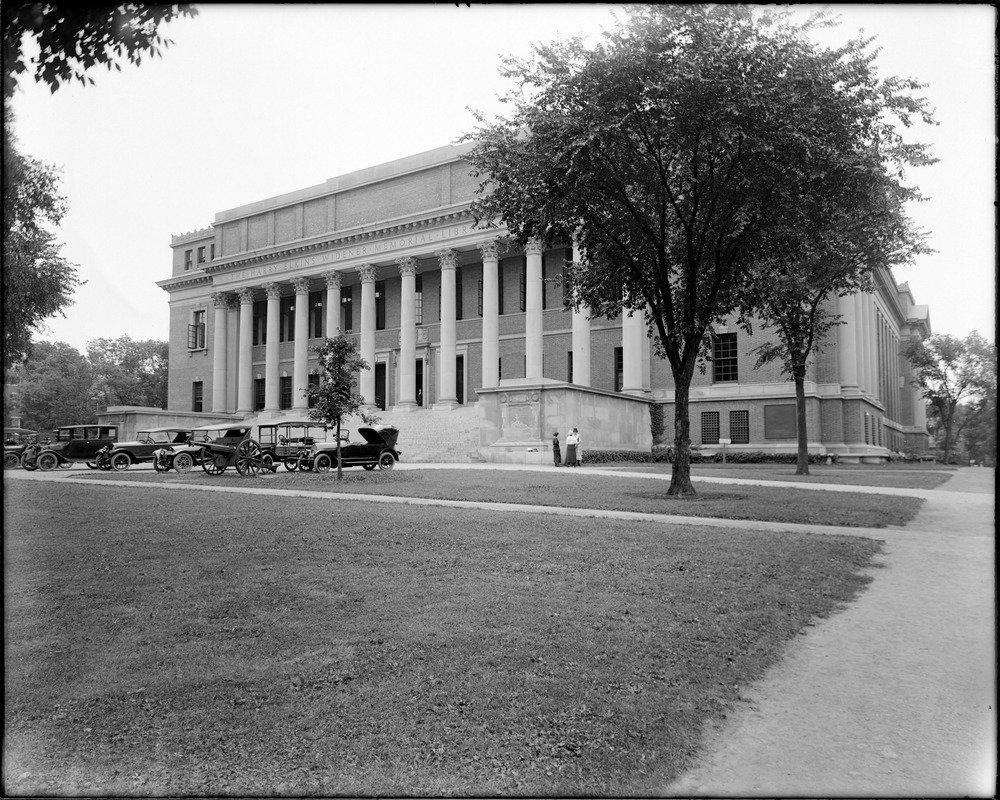
Table of Contents
The 3 Harvard Traps Every Indian Family Falls Into
The first confusion I clear up for every Indian family is the price. Harvard’s billed cost — $91,634 a year for 2026-27 — looks impossible. But 55% of Harvard students receive need-based aid, the average need-based grant is $71,448 a year, and 805 international undergraduates received Harvard aid averaging $83,013 in 2024-25.[4] Families earning under $100,000 pay nothing; families earning $100,000–$200,000 pay no tuition.[4][9] If your family earns under about ₹95 lakh a year ($100,000 × ₹95, November 2026), Harvard’s aid office — not your bank balance — decides what you pay. Do not rule Harvard out on price before you have run the net-price arithmetic in the fees section.
The second confusion is the test. Many Indian guides still say the SAT/ACT is “optional through 2029” at Harvard. That is wrong for Fall 2027 entry. Harvard requires the SAT or ACT for first-year applicants in this cycle, and its Common Data Set marks the test as required to be considered.[11][16] One guide I checked still carries the old “optional” line. [RESEARCH GAP: Requires manual lookup of Harvard’s SAT/ACT requirement for Fall 2027 entry — one guide still says optional through 2029] If you apply without a test score, your application is incomplete.
The third confusion is what “need-blind” means. Harvard’s admissions decisions ignore whether you applied for aid — even if you are a foreign citizen — and international students get exactly the same aid as American students.[13] One guide I read claims Harvard is “need-aware” for international students; that contradicts Harvard’s own published policy and the Common Data Set, so I do not use it.[10] [RESEARCH GAP: Requires manual lookup to confirm Harvard’s need-blind policy for international students against the conflicting need-aware claim] The honest caveat is different: need-blind does not mean easy. The acceptance rate is 3.7% (Class of 2030), and aid only matters after admission.[11]
Note: If you are reading this after 1 November 2026, Restrictive Early Action for Fall 2027 has closed. Regular Decision is still open until 1 January 2027 — and for Regular Decision, Harvard accepts December SAT and February ACT scores.[13] Do not pay any agent who promises a late REA entry; there is no late route.
Pro tip: File the CSS Profile with your admissions application — it is the document Harvard uses to calculate your aid, and the deadline is the same as your application deadline (1 November 2026 for REA, 1 January 2027 for RD; IDOC documents by 1 February 2027 for RD).[13] A brilliant application with a missing CSS Profile gets no aid decision at all.
1636, Twelve Schools, One Yard: What Harvard Actually Is
Harvard was founded in 1636, nine years after the first English settlers arrived in Massachusetts — it is the oldest institution of higher education in the United States, older than the country itself by 140 years.[10] It is a private Ivy League research university in Cambridge, Massachusetts, just across the Charles River from Boston (not in Boston itself, as many people assume).[10]
Today Harvard has 24,317 degree students (Fall 2025), of whom 6,749 were international — 28% of total enrollment, including 545 students from India (down 31% from 788 in Fall 2024).[3] The undergraduate college is small on purpose: each class is roughly 1,650 students, and the Class of 2029 enrolled 1,675 first-years, 15% of them international.[3] The university is organised into 12 degree-granting schools, from Harvard College (undergraduate) through the Graduate School of Arts and Sciences to the professional schools of Business, Law, Medicine, Public Health, Education, Government, Engineering, Design and Divinity.[10]
Harvard’s endowment — about $56.9 billion after an 11.9% return in fiscal 2025 — is the largest of any university in the world, and it is the financial engine behind the aid policy: it is what lets Harvard meet 100% of demonstrated need for every admitted student, including internationals.[3] [RESEARCH GAP: Requires manual lookup of Harvard’s endowment value ($56.9 billion vs $55.7 billion)] The university’s research output is the largest of any single institution; its faculty and alumni include 162 Nobel laureates (counting alumni, faculty, postdoctoral and visiting researchers — a third-party count, not Harvard’s own claim; Harvard’s own count is 50 faculty laureates) and eight Presidents of the United States.[1][17]
Harvard’s motto is Veritas — truth. Its shield carries three open books and the word itself. For an Indian applicant, the practical meaning is simpler: Harvard is the one university where the admissions decision is genuinely separated from your family’s ability to pay, and where the only question that matters is whether your application is among the strongest 4 in 100.
Harvard’s Real Rank in 2027: The Numbers That Decide Your Future
| Ranking | Harvard position | Notes |
|---|---|---|
| QS World University Rankings 2027 | #5 (score 97.4) | Published 18 June 2026; unchanged from QS 2026 (#5)[1] |
| Times Higher Education (THE) 2027 | #6 (score 96.7) | Down from joint #5 in THE 2026; Oxford #1[1] |
| U.S. News Best Global Universities 2026-27 | #1 (score 100.0) | The world’s top-ranked university by U.S. News[1] |
| ARWU (Shanghai) 2026 | #1 | Harvard has topped the Shanghai ranking in every edition since 2003[26] |
My advice on rankings: Harvard is top-six on every table and #1 on two of them (U.S. News and ARWU). The differences between #1 and #6 at this level are methodological noise — what matters is that Harvard is the only university that is #1 in the U.S. News and Shanghai tables simultaneously. One guide I checked lists Harvard as QS #4 and THE #4; the verified figures are QS 2026 #5 (97.7) and THE 2026 joint #5 (97.1, with Stanford), so I use #5.[1][26]
The table below is the quick reference for this Harvard University guide 2027 Indian students asked for — the ranks, the acceptance rate and the fees in one place.
| Metric | Figure | Source |
|---|---|---|
| QS World University Rankings 2027 | #5 | [1] |
| THE World University Rankings 2027 | #6 | [1] |
| U.S. News Best Global Universities 2026-27 | #1 | [1] |
| Acceptance rate | 3.7% (2,037 admitted of 55,104 applicants, Class of 2030, Fall 2026 entry) | [11] |
| Researcher-to-faculty ratio | — [RESEARCH GAP: Requires manual lookup of Harvard’s researcher-to-faculty ratio] | — |
| Publication volume | — [RESEARCH GAP: Requires manual lookup of Harvard publication volume] | — |
| Undergraduate tuition (2026-27) | $62,226 a year; billed total $91,634 | [4] |
The $91,634 Question: What Harvard Really Costs (and Who Pays $0)
Important: Harvard has not published 2027-28 rates yet — Harvard releases next-year rates in spring 2027. Every cost figure in this guide is the 2026-27 rate, labelled as such. Fall 2027 admits will be billed at the 2027-28 rate when it is published.
Undergraduate (Harvard College), 2026-27
| Item | Per year |
|---|---|
| Tuition | $62,226[4] |
| Fees | $6,216[6] |
| Housing | $14,250[6] |
| Food | $8,942[6] |
| Total billed cost | $91,634[4] |
| Books (estimate) | ~$1,000[6] |
| Personal expenses (estimate) | ~$2,500[6] |
| Travel (estimate) | $0–$5,000[6] |
| Health insurance (if no comparable family plan) | $4,954[6] |
| Full cost of attendance | $95,134–$100,134[6] |
A four-year Harvard College degree at billed rates costs $366,536 (4 × $91,634) before any aid assessment — but that is the figure almost nobody pays.[5] The four-year cost of attendance runs $380,536–$400,536 (4 × $95,134–$100,134). The number that matters is the one after aid, and Harvard publishes the aid rules plainly:
| Family income (per year) | What you pay |
|---|---|
| Under $100,000 | $0 — nothing at all (tuition, housing, food, fees)[4][9] |
| $100,000–$200,000 | $0 tuition; additional grant aid toward fees, food and housing depending on circumstances[7][9] |
| Above $200,000 | Assessed individually on income and assets; many families still qualify for aid[7] |
The older threshold you will still see in some guides — families under $85,000 pay nothing — was the 2024-25 policy before the 2025-26 expansion to $100,000/$200,000. I use the current thresholds.[5][8] Around 55% of students receive scholarship aid and 25% of families pay nothing.[7] The average need-based grant is $71,448 a year (2024-25), and the 805 international undergraduates who received Harvard aid averaged $83,013.[4]
One guide still shows the previous year’s tuition of $59,320 and cost of attendance of $86,926 — those are the 2025-26 rates, not 2026-27. [RESEARCH GAP: Requires manual lookup of Harvard’s 2026-27 tuition and cost of attendance to confirm $62,226/$91,634 against the older $59,320/$86,926 figures]
Note: Harvard College awards only need-based aid at the undergraduate level — there are no merit scholarships.[8] If an agent promises you a “Harvard merit scholarship”, they are selling you something that does not exist. The money is real, but it comes through demonstrated need, not through a prize.
Graduate and professional programmes, 2026-27
| Programme | Tuition (per year) | Notes |
|---|---|---|
| GSAS Master’s (standard) | $59,048 | 2-year total including living and insurance: $202,692[5] |
| SEAS Engineering Master’s | $67,504 | School of Engineering and Applied Sciences[5] |
| HBS MBA | $84,760 | 2-year total: $273,524[5] |
| Harvard Medical School MD | $76,828 (2026-27) | Year 1 cost of attendance $121,950 (Pathways); no single 4-year/5-year total is published as fact — sources conflict[5] |
Scholarships — the money that actually moves the needle
| Scholarship | Who it is for | What it covers | Key dates / notes |
|---|---|---|---|
| Harvard Financial Aid Initiative (HFAI) | All admitted undergraduates with demonstrated need | Up to full cost of attendance ($95,134) | Automatic with admission + CSS Profile; REA 1 Nov 2026, RD 1 Jan 2027[8] |
| Harvard College Scholarship | Admitted undergraduates with demonstrated need | $71,448 a year (2024-25, Common Data Set H2) | Automatic with CSS Profile[8] |
| Tata Scholarship | Indian citizens admitted to Harvard College | Up to full cost of attendance, combined with HFAI | Automatic with admission to Harvard College (any round)[8] |
| HBS Need-Based Scholarship | Admitted MBA students | Average $42,000 a year; about $84,000 over two years; ~50% of students receive it | Round 2 MBA deadline 5 January 2027 (Round 1 was 9 September 2026)[8] |
| Inlaks Shivdasani Scholarship | Indian postgraduates | Up to US$100,000 (reported) | 2027 cycle dates not yet published by the Foundation as of November 2026 — expected to open around January–February 2027 and close late March 2027; confirm on inlaksfoundation.org [RESEARCH GAP: Requires manual lookup of the Inlaks Shivdasani Scholarship 2027 cycle dates and cap] |
| JN Tata Endowment loan-scholarship | Indian postgraduates | Loan-scholarship (terms vary) | Expected to open January 2027 (exact dates to be confirmed on jntataendowment.org)[5] |
| Fulbright-Nehru | Indian master’s/PhD students | Full funding (reported) | Apply the year before entry; check current terms[9] |
The Tata Scholarship deserves attention from every Indian applicant: it is specifically for Indian citizens admitted to Harvard College, and combined with Harvard’s own aid it can cover the full cost of attendance — up to $100,134 a year.[8] There is no separate application; admission to Harvard College (in any round) is the trigger — 1 January 2027 is the Regular Decision application deadline, not a scholarship deadline.
Pro tip: The single highest-value action for a Fall 2027 applicant is filing the CSS Profile with your admissions application. Under the need-blind policy, a family earning under $100,000 qualifies for a full package worth about $95,134 a year — roughly ₹3.6 crore saved over four years at $1 = ₹95 (November 2026).[5] The CSS Profile costs money to file ($25 for the first school, $16 per additional school — check the current College Board fee). Fee waivers are automatic for families with adjusted gross income of $100,000 or less under College Board’s rule, which is framed for domestic undergraduates — international applicants should confirm waiver eligibility when filing.
How to Get Harvard to Pay for Your Degree
The funding picture below is the part of this Harvard University guide 2027 Indian students ask me about most — need-blind aid, the Tata Scholarship and the rest, with the deadlines that decide them. The aid tables in the fees section above have the full figures; this section tells you how the money actually works.
Harvard College awards only need-based aid at the undergraduate level — there are no merit scholarships.[8] That is the first thing to understand, because it changes the whole application: you do not win money by being the best applicant, you receive it because your family needs it. Around 55% of students receive scholarship aid and 25% of families pay nothing.[7] The average need-based grant is $71,448 a year (2024-25), and the 805 international undergraduates who received Harvard aid averaged $83,013.[4]
The Tata Scholarship is specifically for Indian citizens admitted to Harvard College, and combined with Harvard’s own aid it can cover the full cost of attendance — up to $100,134 a year.[8] There is no separate application; admission to Harvard College (in any round) is the trigger. At graduate level, the HBS need-based scholarship averages $42,000 a year — about $84,000 over two years — and about 50% of MBA students receive it.[8] The Inlaks Shivdasani Scholarship (up to US$100,000, reported) has not yet published its 2027 cycle dates — expected to open around January–February 2027 and close late March 2027; confirm on inlaksfoundation.org. The JN Tata Endowment loan-scholarship is expected to open in January 2027; confirm on jntataendowment.org.[5] [RESEARCH GAP: Requires manual lookup of the Inlaks Shivdasani Scholarship 2027 cycle dates and the JN Tata Endowment 2027-28 opening date] The Fulbright-Nehru programme offers full funding (reported) for Indian master’s and PhD students — apply the year before entry.[9]
Crucial Compliance Note: A brilliant application with a missing CSS Profile gets no aid decision at all — the CSS Profile is the document Harvard uses to calculate your aid, and its deadline is the same as your application deadline (1 November 2026 for REA, 1 January 2027 for RD; IDOC documents by 1 February 2027 for RD).[13]
How to apply for funding, step by step:
- File the CSS Profile with your admissions application. It is the document Harvard uses to calculate your aid, and the deadline is the same as your application deadline — 1 November 2026 for REA, 1 January 2027 for RD; IDOC documents by 1 February 2027 for RD.[13]
- Let admission trigger the Tata Scholarship. There is no separate application — Indian citizens admitted to Harvard College (in any round) are considered automatically.[8]
- Apply for HBS need-based aid with your MBA application. The Round 2 MBA deadline is 5 January 2027 (Round 1 was 9 September 2026).[8]
- Watch for the Inlaks and JN Tata Endowment openings in early 2027. Neither has published confirmed 2027 dates yet — check inlaksfoundation.org and jntataendowment.org. Both are postgraduate routes for Indian students.[5]
The Harvard Application Timeline: Every Deadline That Decides 2027 Entry
Undergraduate (Harvard College) — Fall 2027 entry
1. Apply through the Common Application. Harvard College takes first-years for the fall intake only — there is no spring entry. The Common Application for Fall 2027 opened 1 August 2026.[14]
2. Choose your round. Restrictive Early Action (REA) is non-binding — you are not obliged to attend if admitted — but it is single-choice: you may not apply early to any other private institution, or to a binding early plan at a public university.[13] Regular Decision carries no such restriction.
3. Sit the SAT or ACT. Harvard requires the SAT or ACT for Fall 2027 entry — there are no score cutoffs, but the test is required to be considered, and only in exceptional cases (when the tests are genuinely not accessible) can AP, IB, GCSE/A-Level or national exam results substitute.[11][16] 79% of enrolled first-years submitted the SAT and 27% the ACT; the ACT middle range is 33–35.[11] REA applicants should have scores by the end of October (the November series is accepted); RD applicants may submit December SAT or February ACT scores.[13]
4. Write Harvard’s five short-answer questions. Each is capped at 150 words — this is where a personal voice matters more than a school-essay habit.[15]
5. File the CSS Profile and IDOC. The CSS Profile is due with your application in REA (1 November 2026) and on 1 February 2027 for Regular Decision.[13] No English proficiency test is required for first-year applicants, and the TOEFL/IELTS/Duolingo cannot be used instead of the SAT or ACT.[13]
6. Decisions and reply. REA decisions come by mid-December 2026; RD decisions by the end of March 2027. In either round you have until 1 May 2027 to decide.[12][16]
The application fee is $85 (raised from $75 for the 2025-26 cycle).[11]
| Key date | What happens |
|---|---|
| 1 Aug 2026 | Common Application opened for Fall 2027 |
| End Oct 2026 | REA applicants should have SAT/ACT scores in hand |
| 1 Nov 2026 | Restrictive Early Action deadline (and CSS Profile) |
| Mid-Dec 2026 | REA decisions released |
| 1 Jan 2027 | Regular Decision deadline |
| 5 Jan 2027 | HBS MBA Round 2 deadline |
| 1 Feb 2027 | CSS Profile + IDOC due (Regular Decision) |
| End Mar 2027 | Regular Decision decisions released |
| 1 May 2027 | Reply deadline for admitted students |
| Early 2027 | Inlaks Scholarship 2027 cycle — dates not yet published; check inlaksfoundation.org |
| Sep 2027 | Term starts (Fall) |
Graduate and professional — Fall 2027 entry
Each school runs its own process and deadlines. GSAS (Graduate School of Arts and Sciences) deadlines fall between 1 December 2026 and 15 January 2027 depending on the programme.[5] HBS Round 1 closed 9 September 2026; Round 2 closes 5 January 2027.[5] For GSAS, the published minimum is IELTS Academic 7.0 (with Speaking 6.5) or TOEFL iBT 95 (old scale; 5 on the new scale from January 2026), Speaking 23; 100 is a commonly cited recommended figure, not the published minimum. The GRE is required or recommended for most GSAS PhDs, and the GMAT or GRE for the HBS MBA (Class of 2027 profile: median GMAT Focus 685, middle 80% 645–735; median GMAT Classic 730, middle 80% 690–770; median GRE 164 Verbal / 164 Quant).[14][15] HBS received 9,409 applications for its full-time MBA in 2024-25 and accepted 943 — about a 10% acceptance rate.[27]
Twelve Houses, One Yard: Inside Harvard’s Famous House System
Harvard College’s defining feature is its residential House system. First-years live in Harvard Yard itself; after a spring lottery, students are sorted into one of twelve upperclass Houses — Adams, Eliot, Lowell, Winthrop, Mather, Dunster, Kirkland, Leverett, Quincy, Currier, Pforzheimer and Cabot — where they live, eat and are advised for the remaining three years.[22][24] Each House has its own dining hall, library, senior common room, tutors, intramural teams and stubbornly distinct culture. The system was built in the 1930s with funding from Yale graduate Edward Harkness, after President A. Lawrence Lowell argued that residential communities would break down social stratification.[22]
Nearly all undergraduates live on campus, and Harvard runs 450+ student organisations — from the Harvard Crimson (the student newspaper, founded 1873) to the Harvard-Radcliffe Orchestra, the Institute of Politics, and dozens of cultural associations including the Harvard India Association.[22] The Cambridge location puts Boston’s professional, cultural and internship opportunities across the river, and the cross-registration agreement with MIT lets Harvard students take classes at MIT — and vice versa.[22]
Inside the World’s Largest Academic Library (and Harvard’s 209-Acre Campus)
Harvard’s main campus is 209 acres centred on Harvard Yard in Cambridge, about three miles northwest of downtown Boston; the Business School and athletics facilities sit across the Charles River in Allston, and the Medical, Dental and Public Health schools are in the Longwood Medical Area.[22] Harvard Yard itself holds the central administrative offices, the main libraries, Memorial Church, and most freshman dormitories.

The Harvard Library is the largest academic library system in the world, with over 20 million volumes across some 70 libraries, plus 400 million manuscripts and 10 million photographs.[22][25] Its flagship is Widener Library in Harvard Yard — completed in 1915 as a memorial to Harry Elkins Widener, Class of 1907, who died on the Titanic in 1912 — holding several million volumes across ten levels of stacks.[22][25] The Harvard Art Museums, the Peabody Museum of Archaeology and Ethnology, and the Museum of Natural History are teaching collections open to students and the public.
The Twelve Schools That Run Harvard (And Which One Fits You)
Harvard College offers the A.B. (Bachelor of Arts) and S.B. (Bachelor of Science) across 50+ concentrations (majors), from Economics, Government and Computer Science to newer fields like Environmental Science and Data Science.[22][23] The twelve degree-granting schools are:
| School | What it covers | Flagship programmes |
|---|---|---|
| Harvard College | Undergraduate liberal arts | 50+ concentrations; A.B. and S.B.[22] |
| Graduate School of Arts and Sciences (GSAS) | Master’s and PhD research | PhD across the humanities, sciences and social sciences[5] |
| Harvard Business School (HBS) | MBA, doctoral business | MBA; DBA[5] |
| Harvard Law School (HLS) | Law | J.D.; LL.M.; S.J.D.[23] |
| Harvard Medical School (HMS) | Medicine | M.D. (Pathway and HST tracks)[5] |
| Harvard T.H. Chan School of Public Health | Public health | M.P.H.; Dr.P.H.[23] |
| Harvard Graduate School of Education | Education | Ed.M.; Ed.L.D.; Ph.D.[23] |
| Harvard Kennedy School (HKS) | Public policy and government | M.P.P.; M.P.A.[23] |
| Harvard John A. Paulson School of Engineering and Applied Sciences (SEAS) | Engineering, applied sciences | Master’s and PhD in engineering and CS[5] |
| Harvard Graduate School of Design (GSD) | Architecture, design, planning | M.Arch.; M.U.P.[23] |
| Harvard Divinity School (HDS) | Divinity, religious studies | M.Div.; M.T.S.; Ph.D.[23] |
| Harvard School of Dental Medicine (HSDM) | Dentistry | D.M.D.[23] |
For Indian students, the strongest draws are Economics (widely reported as the most popular concentration), Computer Science, Government, Applied Mathematics, and the professional schools — HBS, HLS and HMS. At postgraduate level, the MBA at HBS, the M.P.P. at the Kennedy School, and the PhD programmes in economics, computer science and the life sciences attract the most Indian applicants.
The Labs and Libraries Where Nobel Prizes Are Won
I judge a research university by what its libraries and laboratories let a scholar actually investigate, and Harvard’s answer starts with the Harvard Library — the largest academic library system in the world, with over 20 million volumes across some 70 libraries, plus 400 million manuscripts and 10 million photographs.[22][25] A scholar who needs an archive, a manuscript or a dataset that exists nowhere else will usually find it in Harvard Yard. Its flagship is Widener Library, completed in 1915 as a memorial to Harry Elkins Widener, Class of 1907, who died on the Titanic in 1912.[22][25]
For the sciences, Harvard Medical School and the Longwood Medical Area form a major biomedical research hub, alongside the affiliated teaching hospitals.[23] The Harvard John A. Paulson School of Engineering and Applied Sciences (SEAS) anchors computer science, applied mathematics and engineering research, and the Harvard T.H. Chan School of Public Health, the Kennedy School and the Graduate School of Education extend that research into public health, public policy and education.[5][23]
The Department of Economics is ranked the world’s #1 economics department by RePEc — the most-cited, with the most registered authors (75)[29] — and the home of generations of Nobel laureates including Abhijit Banerjee (PhD 1988).[19] Harvard Business School’s case-method faculty is known worldwide for its case-method teaching.[5] The Harvard Art Museums, the Peabody Museum of Archaeology and Ethnology, and the Museum of Natural History are teaching collections open to students and the public.[22]
The interdisciplinary openings I can verify are built into the structure. Harvard College offers the A.B. and S.B. across 50+ concentrations, from Economics, Government and Computer Science to newer fields like Environmental Science and Data Science.[22][23] And the cross-registration agreement with MIT lets Harvard students take classes at MIT — and vice versa — so a Harvard scholar can sit in an MIT laboratory course without leaving the Cambridge ecosystem.[22]
Researcher Insider Tip: A library matters as much as a laboratory. A scholar whose question needs archives, manuscripts or a dataset that exists nowhere else should weigh Harvard’s 20 million volumes and 400 million manuscripts as heavily as any ranking — and a scholar who wants MIT’s engineering benches can reach them through cross-registration.
Faculty excellence, in one number: 162 Nobel laureates affiliated with Harvard (counting alumni, faculty, postdoctoral and visiting researchers — a third-party count, not Harvard’s own claim); Harvard’s own count is 50 faculty laureates.[1]
What a Harvard MBA Actually Earns After Graduation
Harvard does not run “placements” the way an Indian university does. What it has is the Office of Career Services (for Harvard College) and the HBS Career & Professional Development office — and an outcome record that no other university matches. The hardest, most recent numbers come from Harvard Business School’s Class of 2025 employment report:
| Outcome (HBS MBA, Class of 2025) | Figure |
|---|---|
| Median base salary | $184,500[20][21] |
| Median total compensation (base + signing + performance bonuses) | $232,800[20] |
| Median signing bonus (58% received one) | $30,000[21] |
| Of job-seekers, with an offer within 3 months | 90%[20] |
| Of job-seekers, accepted within 3 months | 84%[20] |
| With an offer within 6 months | ~94% (by mid-November)[21] |
| Started their own business | 17% — the highest share on record[20] |
| Top hiring industries | Technology 22%, Consulting 21%, Private Equity 14%[20] |
The HBS report also notes that 35% of the class did not seek traditional employment at all — 17% starting businesses, 14% company-sponsored or already employed — a record shift toward entrepreneurship.[20] For context on the long game: over 40% of Fortune 1000 CEOs hold MBAs, and about 6% are HBS graduates.[30] HBS received 9,409 applications for its full-time MBA in 2024-25 and accepted 943 — about a 10% acceptance rate.[27]
For Harvard College undergraduates, I could not verify a single current first-destination figure from an official source, so I do not quote one here. [RESEARCH GAP: Requires manual lookup of Harvard College undergraduate first-destination employment figures from an official source] What is verifiable is the pipeline: Harvard College graduates go on to the world’s top graduate schools, consulting firms (McKinsey, Bain, BCG), investment banks (Goldman Sachs, J.P. Morgan), technology companies (Google, Microsoft, Apple, OpenAI, Anthropic), and public service — and the Harvard alumni network of 420,000+ across 200+ countries is the largest and most active of any university.[17]
Note: Do not compare an HBS median salary with an IIT placement package — they measure different things. The HBS figures describe MBA graduates with an average of 4.9 years of prior work experience, not fresh undergraduates.[21] The salary medians above are the honest figures for that cohort, not a promise for every graduate.
8 Presidents and 162 Nobel Laureates: Harvard’s Alumni That Change History
Harvard’s alumni include eight Presidents of the United States, 162 Nobel laureates (affiliated — alumni, faculty, postdoctoral and visiting researchers; a third-party count, not Harvard’s own claim), 132 Pulitzer Prize winners (as reported), and 23 heads of state (as reported).[1][17][28] The Harvard Alumni Association connects more than 420,000 alumni across over 200 countries and territories.[17]
| Person | Harvard connection | Why they matter |
|---|---|---|
| Barack Obama | Harvard Law School, J.D. 1991 | 44th President of the United States; first Black president of the Harvard Law Review[17] |
| John F. Kennedy | Harvard College, 1940 | 35th President of the United States[17] |
| Franklin D. Roosevelt | Harvard College, 1903 | 32nd President of the United States[17] |
| Theodore Roosevelt | Harvard College, 1880 | 26th President of the United States; Nobel Peace Prize 1906[17] |
| John Adams | Harvard College, 1755 | 2nd President of the United States; Founding Father[19] |
| George W. Bush | Harvard Business School, MBA 1975 | 43rd President of the United States[17] |
| Ban Ki-moon | Kennedy School, M.P.A. 1984 | 8th Secretary-General of the United Nations[19] |
| Bill Gates | Harvard College (left 1975) | Co-founder of Microsoft[17] |
| Mark Zuckerberg | Harvard College (left 2004) | Founder of Facebook/Meta[17] |
| Ratan Tata | Harvard Business School (AMP) | Former Chairman, Tata Sons and Tata Group[17] |
| Anand Mahindra | Harvard Business School, MBA 1981 | Chairman, Mahindra Group[17] |
| Naina Lal Kidwai | Harvard Business School, MBA 1982 | First Indian woman to graduate from Harvard; banker[28] |
| Abhijit Banerjee | Ph.D. Economics, 1988 | Nobel Prize in Economic Sciences 2019[19] |
| T.S. Eliot | Harvard College | Poet; Nobel Prize in Literature 1948[17] |
For Indian readers, the Harvard–India thread is led by Ratan Tata, Anand Mahindra and Naina Lal Kidwai — and by the Tata Scholarship, funded by the Tata Trusts, which specifically supports Indian citizens at Harvard College.[8][17]
How to Find the Supervisor Who Gets You Funded
I do not name individual current professors in this guide, deliberately. Supervisors move, retire, and take sabbaticals; a name printed in November 2026 can be out of date by the time you apply. What I can tell you is where the research power sits and how to find the right person: [RESEARCH GAP: Requires manual lookup of current individual professors/PIs at Harvard]
- Department of Economics — ranked the world’s #1 economics department by RePEc (most-cited, most registered authors)[29]; the home of generations of Nobel laureates including Abhijit Banerjee (PhD 1988).[19]
- Harvard Business School — the case-method faculty, known worldwide for its case-method teaching.[5]
- Harvard Medical School / Longwood — a major biomedical research hub, alongside the affiliated teaching hospitals.[23]
- Harvard John A. Paulson School of Engineering and Applied Sciences (SEAS) — computer science, applied mathematics and engineering research.[5]
- Harvard Kennedy School — public policy, development economics and international relations; the home of the M.P.P. and the place where Ban Ki-moon studied.[19]
My advice on finding a supervisor: go to your target department’s website, open its faculty and research-group pages, read two or three recent papers from the group, and write to the professor with a specific question about that work — not a generic “I want to do a PhD with you”. Supervisors reply to specific questions. They ignore generic emails. For PhD funding, remember that Harvard GSAS PhD programmes are typically fully funded (tuition + stipend) for admitted students — confirm the funding package on your programme’s page before you apply, because the exact terms vary by department.
Living in Cambridge: The Real Monthly Cost and the Visa Rules for 2027
| Cost | Figure (2026-27) |
|---|---|
| Housing (on campus) | $14,250 a year[6] |
| Food (on campus) | $8,942 a year[6] |
| Books | ~$1,000 a year[6] |
| Personal expenses | ~$2,500 a year[6] |
| Health insurance | $4,954 a year (if no comparable family plan)[6] |
| F-1 visa fees | $535 total (SEVIS $350 + MRV $185); budget up to $785 if the $250 Visa Integrity Fee is collected at your post[6] |
| Work during term | Up to 20 hours a week on campus (F-1 rules) |
Cambridge, Massachusetts is an expensive city — Boston-area rents are among the highest in the United States — which is why living on campus in the first year is usually the best value. Most undergraduates live in the Houses for all four years, and the billed housing figure above is what most of them actually pay. Off-campus, expect a shared apartment near Harvard Square to cost substantially more than the on-campus figure.
The F-1 visa process is standard: a Form I-20 from Harvard, proof of funds, the SEVIS fee, a visa interview at the U.S. consulate, and the MRV fee — $535 in certain fees today (SEVIS $350 + MRV $185); budget up to $785 if the $250 Visa Integrity Fee is collected at your post (a 2025 law, being phased in during 2026).[6] After graduation, F-1 students can work on OPT (Optional Practical Training) — 12 months, with a 24-month STEM extension (36 months total) for eligible degrees — as verified in our USA country draft; confirm the current OPT rules on the USCIS page before you plan around them, because immigration rules change. [RESEARCH GAP: Requires manual lookup of the current OPT rules (12 months, 24-month STEM extension) on the USCIS page]
Daily life: Harvard Square is the centre of student life — bookshops, cafés, the Harvard Coop, and the T (subway) Red Line into Boston in fifteen minutes. Winters are cold and snowy; buy a proper winter coat before you arrive. The Charles River runs past the campus — rowing, running and cycling along it are part of daily life for many students.
More University Guides
 University of Cambridge Guide 2027: Fees, Admissions & Scholarships for Indian StudentsUK • University Guide
 University of Oxford Guide 2027: Fees, Admissions, Scholarships & CollegesUK • University Guide
 Top Universities in Russia for Indian Students 2027Russia • University Guide
Frequently Asked Questions
Is Harvard really free for families earning under $100,000 a year?
Yes — under the policy that began in 2025-26, families earning under $100,000 pay nothing (tuition, housing, food and fees), and families earning $100,000–$200,000 pay $0 tuition with grant aid toward the rest.[4][9] This applies equally to international students, including Indians — the older $85,000 threshold was the previous policy.
Do I need the SAT or ACT to apply to Harvard for Fall 2027?
Yes. Harvard requires the SAT or ACT for first-year applicants — its Common Data Set marks the test as required to be considered.[11][16] There are no score cutoffs; only when the tests are not accessible can other exam results substitute. Guides that say ‘optional through 2029’ carry stale information.
What is Restrictive Early Action, and does it improve my chances?
REA is a non-binding early round: apply by 1 November 2026, hear in December, and you are not obliged to attend.[12] But it is single-choice: you may not apply early to any other private institution.[13] Harvard publishes no REA acceptance rate, so nobody can tell you the round is ‘easier’.[16]
Can Indian students get the Tata Scholarship?
Yes. The Tata Scholarship is for Indian citizens admitted to Harvard College; with Harvard’s own aid it can cover the full cost of attendance, up to about $100,134 a year.[8] There is no separate application — admission to Harvard College (in any round) is the trigger.[8]
What does a Harvard MBA earn after graduation?
The HBS Class of 2025 reported a median base salary of $184,500 and total compensation of $232,800, including bonuses.[20] 90% of job-seekers had an offer within three months of graduation, and 17% started their own businesses.[20] These are employment-report figures for MBA graduates averaging 4.9 years of prior work experience.[21]
Harvard, MIT or Stanford — which should I choose?
Harvard is the broadest — law, business, government, medicine and the liberal arts. MIT (QS 2027 #1) is the deepest in engineering and science; Stanford (QS 2027 joint #2) is closest to Silicon Valley entrepreneurship. All three are need-blind for international undergraduates and meet 100% of demonstrated need.
Sources & Last Updated
- Collegedunia — Top Ten Universities in the World 2026 — QS 2027 top 10 (Harvard 5th, 97.4); THE 2027 (Harvard 6th, 96.7); U.S. News 2026-27 (Harvard 1st, 100.0); ARWU 2026 #1; 162 Nobel laureates (affiliated, third-party count).
- QS World University Rankings — official site — the ranking publisher.
- UniversityFinder — Harvard for International Students 2026 — 6,749 international students (28%) in 2025-26; COA $91,634, tuition $62,226; QS 2027 #5; endowment about $56.9 billion (FY2025); Class of 2029 1,675 first-years, 15% international (final figures).
- College Council — How Much Does Harvard Cost? (2026) — tuition $62,226, billed total $91,634 (2026/27, Harvard FAS Registrar); 55% on need-based aid; average need-based grant $71,448 (2024/25 CDS H2); 805 international undergraduates aided, $83,013 average (CDS H6); families under $100,000 pay nothing (2025/26).
- Collegedunia — Harvard University fees — GSAS Master’s $59,048; SEAS $67,504; HBS MBA $84,760; 2-year GSAS total $202,692; 2-year MBA total $273,524; 4-year College billed total $366,536 (4 × $91,634); 4-year cost of attendance $380,536–$400,536; HBS Round 1 closed 9 Sep 2026, Round 2 5 Jan 2027; GSAS deadlines 1 Dec 2026–15 Jan 2027. (Do not use this page for Inlaks/JN Tata dates or HBS deadlines — see the corrected figures in the guide.)
- StudyU — Cost of Studying in the USA 2026 — Harvard 2026-27 billed $91,634 (tuition $62,226, fees $6,216, housing $14,250, food $8,942); COA $95,134–$100,134 plus insurance $4,954; F-1 visa fees $535.
- AdmitKard — Harvard Free Under USD 100K Income: Indian Students 2026 — families under $100,000 pay nothing, $100,000–$200,000 free tuition (2025-26 policy); 55% receive aid, 25% pay nothing. (Its $59,320 tuition / $86,926 COA figures are the previous year’s rates, not 2026-27.)
- Collegedunia — Harvard University Scholarships — HFAI (families under $100,000 pay nothing, $100,000–$200,000 free tuition — current policy; $85,000 was the older 2024-25 threshold); Harvard College Scholarship average $71,448 (2024-25, CDS H2); Tata Scholarship up to full COA for Indian citizens; HBS need-based average $42,000/year, ~$84,000 over two years; no merit scholarships at UG level; Round 2 MBA deadline 5 Jan 2027.
- EEC Global — Scholarships in USA 2026 — Harvard: families under $100,000 pay $0 total, under $200,000 pay $0 tuition; average aid $63,000/year; ~55% receive need-based aid; need-blind for all students.
- TransGlobal Overseas — How to Get Into Harvard from India — founded 1636, oldest in the US; private Ivy League; 12 degree-granting schools; ~23,000 students; average aid for international students over $53,000/year. (Its “need-aware for international students” line contradicts Harvard’s published policy and is not used.)
- Collegedunia — Harvard University Acceptance Rate — Class of 2030 acceptance 3.7% (2,037 admitted of 55,104); Class of 2029 4.2% (2,003 of 47,893, CDS 2025-26); REA 1 Nov 2026, RD 1 Jan 2027; SAT/ACT required; 79% submitted SAT, 27% ACT; ACT middle range 33–35; application fee $85.
- Oriel Admissions — Harvard Acceptance Rate: 3.7% for the Class of 2030 — 3.7% for the Class of 2030; REA closes 1 Nov, decisions mid-December; RD closes 1 Jan, decisions end of March.
- College Council — Harvard University: detailed guide for international applicants — Common App + five 150-word short answers; fee waived on hardship; REA single-choice; SAT/ACT required; no English test for first-years; CSS Profile + IDOC due 1 Feb 2027 (RD); COA $95,134–$100,134; need-blind, 100% need met.
- Collegedunia — Harvard University Admissions 2026-27 — Common App opened 1 Aug 2026; REA 1 Nov 2026, RD 1 Jan 2027; application fee $85; Class XII 90%+; GRE/GMAT; GSAS minimum TOEFL iBT 95 / IELTS 7.0; median GMAT Focus 685 / GMAT Classic 730 (Class of 2027 profile).
- UniPage — Harvard University — UG deadlines 1 Nov 2026 (REA), 1 Jan 2027 (RD); GSAS IELTS Academic 7.0; SAT/ACT required for first-year applicants; five short-answer questions (150 words).
- Stratia Admissions — Harvard University acceptance rate: 4.2% (Fall 2025) — CDS 2025-2026 C1 (4.2%) and C8 (SAT/ACT required); REA/RD dates; decisions mid-Dec / end-March; reply by 1 May; no early acceptance rate reported.
- UniAcco — Harvard University Notable Alumni — 8 U.S. presidents; 160+ Nobel laureates; 420,000+ alumni across 200+ countries; Ratan Tata, Anand Mahindra, Bill Gates, Mark Zuckerberg, Barack Obama.
- Simple Wikipedia — Harvard University — 8 U.S. presidents; 161 Nobel laureates; founded 1636.
- Wikipedia — List of Harvard University people — 8 presidents (Adams, J.Q. Adams, Hayes, Kennedy, F.D. Roosevelt, T. Roosevelt, G.W. Bush, Obama); over 150 Nobel laureates; Abhijit Banerjee PhD 1988, Nobel Economics 2019; Ban Ki-moon.
- Poets & Quants — HBS Class of 2025 Jobs Report — median total compensation $232,800; 90% of job-seekers with an offer in 3 months; 84% accepted; 17% started businesses; tech 22%, consulting 21%, PE 14%; 35% did not seek traditional employment.
- Leland — Harvard MBA Class Profile — Class of 2025 median base salary $184,500; median signing bonus $30,000 (58% received one); ~94% with an offer by mid-November; average work experience 4.9 years.
- Karan Gupta — Harvard University India Guide 2027 — Harvard Library largest academic library, 17+ million volumes; 12 Houses; 209-acre campus; 50+ concentrations; cross-registration at MIT; 450+ student organisations.
- StandYou — Harvard University, USA — 12 graduate and professional schools; library 20+ million volumes; 50+ concentrations; A.B. and S.B. degrees.
- Indigo Research — Pros and Cons of Harvard University 2026 — 12 residential Houses (Adams, Eliot, Mather, Cabot, Kirkland, Pforzheimer, Currier, Leverett, Quincy, Dunster, Lowell, Winthrop); library 18+ million volumes.
- Wikipedia — Harvard Library — largest academic library in the world; over 20 million volumes; Widener Library completed 1915; 28 branches, 16,832,952 volumes held (2022).
- Vappingo — Harvard University: Admissions Guide 2026 — ARWU 2026 #1; endowment $56.9 billion (FY2025). (This source’s $55.7 billion endowment figure, ARWU 2025 label and ~21,000 enrolment are stale — do not use; its QS #4 / THE #4 conflict with the verified QS 2026 top-ten table and are not used.)
- GMAC — Harvard Business School MBA jobs & salary review — 9,409 MBA applications in 2024-25, 943 accepted (~10%); median base salary ~$185,000; top recruiters Apple, Microsoft, Google, OpenAI, Anthropic, McKinsey, Bain, BCG, Goldman Sachs, J.P. Morgan.
- iSchoolConnect — Top 10 Notable Harvard Alumni 2025 — 162 Nobel laureates (affiliated, third-party count); 132 Pulitzer Prize winners (as reported); 23 heads of state (as reported); Naina Lal Kidwai, first Indian woman to graduate from Harvard (1982).
- IDEAS/RePEc — Top Economics Departments — Harvard Department of Economics ranked the world’s #1 economics department (most-cited, most registered authors, 75).
- Poets & Quants for Execs — Where Fortune 1000 C-Suite Executives Earned Their MBAs (Fortune 2024 analysis) — over 40% of Fortune 1000 CEOs hold MBAs; about 6% are HBS graduates; HBS alumni 7.8% of MBAs in top Fortune 1000 positions.
- QS World University Rankings 2027 — official (topuniversities.com) — Harvard #5, 97.4; published 18 June 2026; top 10 (MIT 100, Imperial/Stanford 99.2, Oxford 98.6, Harvard 97.4, Cambridge 97.1).
- Times Higher Education World University Rankings 2027 — official (timeshighereducation.com) — Harvard #6, 96.7; published 30 September 2026; Oxford #1, 97.9, 11th consecutive year.
- Harvard OIRA Fact Book — official — Fall 2025 enrolment: 24,317 degree students; 6,749 international (28%); 545 students from India (down 31% from 788 in Fall 2024); Harvard College undergraduates ~6,675.
- Harvard College — Admissions Statistics (official) — Class of 2030 (Fall 2026 entry): 2,037 admitted of 55,104, 3.7%; enrolled 1,648; yield 80.9%; 103 admitted from the waitlist.
Last updated: 10 November 2026. Rankings are QS 2027 and THE 2027. Fees are 2026-27 rates (2027-28 rates not yet published — Harvard releases them in spring 2027); always confirm the current figures on the programme page at harvard.edu before applying. $1 = ₹95 (Wise mid-market, November 2026) used for conversions in this guide.
By Rohit Gupta
If this guide helped you, share it with someone dreaming of Harvard. For questions, write to universityresearchers3@gmail.com.