Top Universities in Russia for International Students 2027: Rankings, Fees, Scholarships & How to Apply

QS 2026 ranks, fees in roubles, Open Doors and the government quota, and visa rules — verified from official sources, for students from every country.
By Rohit Gupta
Last updated: 7 November 2026
If you are looking at Russia, you probably already know the headline number: more than 422,000 international students from 182 countries were studying at Russian universities as of September 2026 [3]. The biggest groups come from Kazakhstan, Turkmenistan, China, Uzbekistan, India, Tajikistan, Belarus, Kyrgyzstan, Azerbaijan and Iran [31] — and about 30,000 students from India are among them, almost all of them studying medicine [31]. But Russia is not only medicine. It has one of the world’s top 110 universities in Lomonosov Moscow State University [1], some of the strongest physics and engineering schools on the planet, and a government scholarship — the Open Doors Olympiad — that gives away free tuition to international students with no application fee at all [7][8].
I wrote this guide because the information about the top universities in Russia for international students is the messiest of any country I have covered. The same university’s fee is quoted at three different figures by three different websites, and the “QS rank” you see on one page is often from a different year’s ranking than the one on the next page. I have checked the ranks against the actual QS 2026 list, and wherever the fee sources disagree, I say so instead of picking the prettiest number. One more thing before you read on: Russia is cheap, but it is not simple — the rouble sets the fees, the invitation letter sets the visa timetable, and since 2022 your bank card from home almost certainly will not work once you land. All three are in this guide, with the numbers as they actually are.
Key points
- Best overall: Lomonosov Moscow State University (MSU) is ranked 105th in the world in QS 2026 — Russia’s only university in the world top 200 [1].
- Scale: more than 422,000 international students from 182 countries were studying in Russia as of September 2026, across 400+ universities and 20,000+ programmes [3]. The top ten source countries run from Kazakhstan and Turkmenistan to China and India [31].
- Medicine is the biggest draw: the 6-year General Medicine degree runs roughly RUB 475,000–1,200,000 a year depending on the university [27][29] — and if you plan to practise medicine back home, check your own country’s licensing rules before you enrol. My full MBBS guide works through the real six-year cost — link at the end of this guide.
- Free tuition exists: the Open Doors Olympiad gives winners tuition-free study plus a monthly stipend — but the 2027 cycle’s portfolio deadline (1 November 2026) has already closed [7][8]. The government quota offers around 15,000 fully funded places a year to students from 180+ countries [33].
- My advice: pick by the department, not by the overall rank — MIPT, Bauman and ITMO beat their overall ranks in physics, engineering and IT. And sort out how you will pay before you travel: Visa and Mastercard do not work in Russia [34].
| 12 universities | RUB 475,000–1,200,000 a year | 422,000 international students |
|---|---|---|
| In this directory, ranked by QS 2026 [1] | English-medium medicine tuition, varies by university [27][29] | From 182 countries, studying in Russia as of September 2026 [3] |
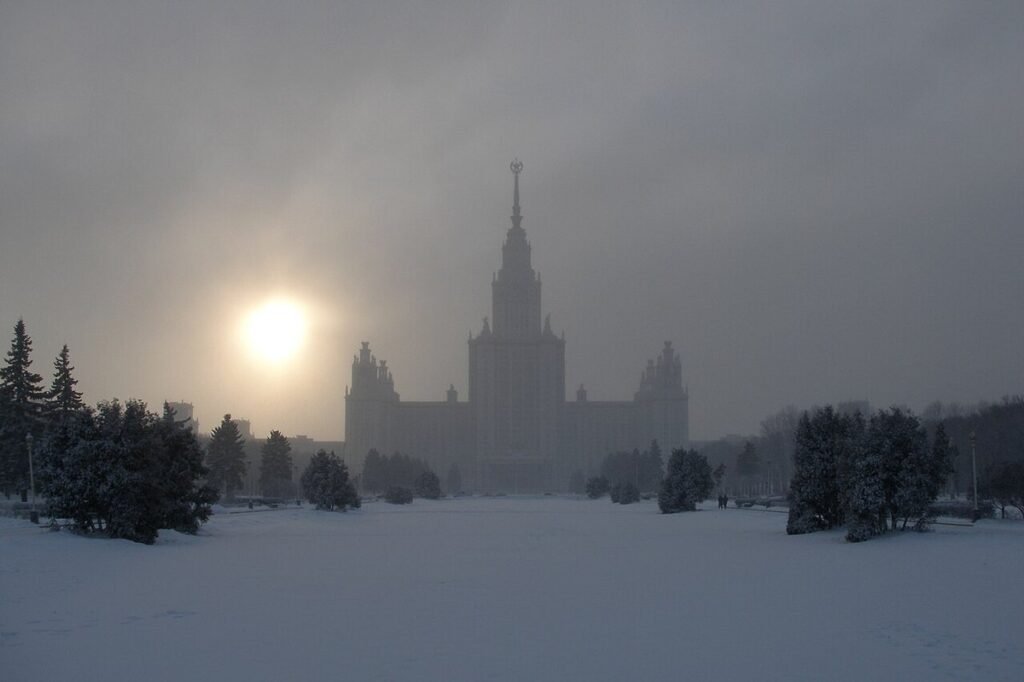
Table of Contents
Why This Matters: 422,000 Students Choose Russia — Here’s What You Must Know First
Russia is the cheapest route to a recognised foreign degree that students actually use at scale. The numbers explain why: more than 422,000 international students from 182 countries were studying at Russian universities as of September 2026, according to Russia’s Deputy Science and Higher Education Minister, and the country offers 400+ universities and over 20,000 academic programmes [3]. The largest groups are from Kazakhstan and Turkmenistan, followed by China — about 56,000 Chinese students — and then Uzbekistan, India and the other CIS states [31]. Russia’s own plan is to reach 500,000 international students by 2030 [31].
But the case for Russia goes beyond medicine. MSU at 105th in the world is a genuinely elite university [1]. MIPT — known as Russia’s MIT — and Bauman train the physicists and engineers behind Russia’s space and defence industries. ITMO in St. Petersburg is one of Europe’s strongest schools for photonics and computer science. And the Open Doors Olympiad means a strong student can study at any of these tuition-free [7][8].
Note: If medicine is your goal, read my full MBBS in Russia guide first — it works through the real six-year cost for three budgets, India’s NMC FMGL 2021 rules [12], and the FMGE pass-rate reality, including the June 2026 result. That guide is written for Indian students, because India’s licensing rules are the ones it explains in depth; the licensing section of this page tells every other nationality what to check instead. This page covers the whole Russian university landscape; the MBBS guide goes deep on medicine alone.
There is also an honest warning to give upfront. Russia’s universities are good, but the information ecosystem around them is full of agents who quote the lowest fee they can find and hide the rest. This guide is my attempt to give you the numbers as they actually are — including the places where the numbers disagree.
Same University, Three Different Fees? Why Russian Tuition Confuses Everyone
The biggest confusion about Russia is the fees. Let me show you with one real example — Pirogov Russian National Research Medical University in Moscow, one of the most popular medicine choices for international students. One guide quotes its annual tuition at RUB 478,500 [27]. Another quotes RUB 1,200,000 a year [29]. A third quotes a figure in between. These cannot all be right at the same time — fees change between admission years, English-medium and Russian-medium tracks are priced differently, and some agents quote old fee orders.
| What varies | Why the numbers disagree |
|---|---|
| Admission year | Universities revise fees yearly; a 2024 fee order is not a 2026 fee |
| Language track | English-medium medicine usually costs more than Russian-medium |
| Who quotes it | Agents quote the lowest figure they can find; universities quote the current fee order |
| Currency | Fees are set in roubles; the figure in your own currency moves with the exchange rate |
My rule in this guide: I give the range that multiple sources agree on, I name the source for every per-university figure, and where sources disagree by a wide margin I say so in the card and tag the gap for manual lookup. Before you pay anyone a single rouble, confirm the current fee on the university’s own website and in your admission letter.
Pro tip: The second confusion is the ranking year. You will see MSU quoted as 105th and as 115th in the world. Both are real — 105 is QS 2026 (published June 2025) and 115 is QS 2027 (published June 2026) [1][2][3]. This guide uses QS 2026 throughout, matching my USA, UK and Korea guides, so the ranks are comparable across my guides. When the QS 2027 list is used by another site, the numbers will look different — that is an edition difference, not an error.
Top Universities in Russia for International Students 2027: The Top 12, Ranked and Compared
The table below is the short version of the top universities in Russia for international students 2027 — the cards that follow give the detail for each university.
| University | QS 2026 World [1] | Best for | Tuition note |
|---|---|---|---|
| Lomonosov Moscow State University (MSU) | 105 | All-round; maths, physics, humanities | Bachelor’s from RUB 586,130/year (reported) [3] |
| Bauman Moscow State Technical University | 320 | Engineering, robotics, aerospace | Verify on site |
| RUDN University | 367 | Medicine, engineering, international relations | Verify on site |
| Saint Petersburg State University (SPbSU) | 375 | Law, oriental studies, physics | Verify on site |
| HSE University | 440 | Economics, data science, social sciences | Applied Maths RUB 700,000/year (reported) [3] |
| Kazan Federal University | 450 | Medicine, physics, regional hub | Medicine fee — see card |
| Novosibirsk State University | 461 | Physics, maths, Siberia research | Verify on site |
| Moscow Institute of Physics and Technology (MIPT) | 477 | Physics, AI, computer science | Verify on site |
| Tomsk State University | 499 | Sciences, Siberia research | Verify on site |
| ITMO University | 711–720 [44] | IT, photonics, robotics | Verify on site |
| Sechenov University | 851–900 [43]; QS Medicine 201–250 [9] | Medicine | RUB 851,372/year (reported) [27] |
| Pirogov Russian National Research Medical University (RNRMU) | Not verified overall; QS Medicine 401–450 [9] | Medicine, surgery | Fee sources disagree — see card |
The table below compares the 12 universities on the metrics a researcher needs. QS 2026 positions are verified from my sources [1][43][44]. The three metrics my draft does not state — acceptance rate, researcher-to-faculty ratio and publication volume — are covered by one combined [RESEARCH GAP] tag per row, in the acceptance-rate column; the other two cells show — rather than an estimate.
| University | QS 2026 [1] | Tuition / medicine fee note | Acceptance rate | Researcher-to-faculty ratio | Publication volume |
|---|---|---|---|---|---|
| Lomonosov Moscow State University (MSU) | 105 | Bachelor’s from RUB 586,130/year (reported) [3] | [RESEARCH GAP: Requires manual lookup of MSU’s PhD/undergraduate acceptance rate, researcher-to-faculty ratio and publication volume] | — | — |
| Bauman Moscow State Technical University | 320 | [RESEARCH GAP: Requires manual lookup of current tuition fees for Bauman Moscow State Technical University] | [RESEARCH GAP: Requires manual lookup of Bauman’s acceptance rate, researcher-to-faculty ratio and publication volume] | — | — |
| RUDN University | 367 | [RESEARCH GAP: Requires manual lookup of current tuition fees for RUDN University] | [RESEARCH GAP: Requires manual lookup of RUDN’s acceptance rate, researcher-to-faculty ratio and publication volume] | — | — |
| Saint Petersburg State University (SPbSU) | 375 | [RESEARCH GAP: Requires manual lookup of current per-programme fees for Saint Petersburg State University] | [RESEARCH GAP: Requires manual lookup of SPbSU’s acceptance rate, researcher-to-faculty ratio and publication volume] | — | — |
| HSE University | 440 | Applied Maths RUB 700,000/year (reported) [3] | [RESEARCH GAP: Requires manual lookup of HSE’s acceptance rate, researcher-to-faculty ratio and publication volume] | — | — |
| Kazan Federal University | 450 | [RESEARCH GAP: Requires manual lookup of current medicine tuition fees for Kazan Federal University in roubles] | [RESEARCH GAP: Requires manual lookup of Kazan Federal University’s acceptance rate, researcher-to-faculty ratio and publication volume] | — | — |
| Novosibirsk State University | 461 | [RESEARCH GAP: Requires manual lookup of current tuition fees for Novosibirsk State University] | [RESEARCH GAP: Requires manual lookup of Novosibirsk State University’s acceptance rate, researcher-to-faculty ratio and publication volume] | — | — |
| Moscow Institute of Physics and Technology (MIPT) | 477 | [RESEARCH GAP: Requires manual lookup of current tuition fees for MIPT] | [RESEARCH GAP: Requires manual lookup of MIPT’s acceptance rate, researcher-to-faculty ratio and publication volume] | — | — |
| Tomsk State University | 499 | [RESEARCH GAP: Requires manual lookup of current tuition fees for Tomsk State University] | [RESEARCH GAP: Requires manual lookup of Tomsk State University’s acceptance rate, researcher-to-faculty ratio and publication volume] | — | — |
| ITMO University | 711–720 [44] | [RESEARCH GAP: Requires manual lookup of current tuition fees for ITMO University] | [RESEARCH GAP: Requires manual lookup of ITMO’s acceptance rate, researcher-to-faculty ratio and publication volume] | — | — |
| Sechenov University | 851–900 [43] (QS Medicine 201–250 [9]) | RUB 851,372/year (reported) [27] | [RESEARCH GAP: Requires manual lookup of Sechenov’s acceptance rate, researcher-to-faculty ratio and publication volume] | — | — |
| Pirogov Russian National Research Medical University (RNRMU) | [RESEARCH GAP: Requires manual lookup of QS 2026 overall rank for Pirogov University] (QS Medicine 401–450 [9]) | Fee sources disagree — see card | [RESEARCH GAP: Requires manual lookup of Pirogov’s acceptance rate, researcher-to-faculty ratio and publication volume] | — | — |
QS 2026 Ranks at a Glance — the Chart

Let me explain this chart, because it shows you something important about Russia that a table alone does not. The chart shows the QS World University Rankings 2026 for the top 9 Russian universities with an exact rank. Again, a LOWER rank is BETTER — rank 1 is the best in the world, so the SHORTEST bar is the best university. Lomonosov Moscow State University (MSU) is at #105 — Russia’s only university in the world top 200, and its bar is by far the shortest. Then there is a big gap: the next university, Bauman, is at #320 — more than three times MSU’s rank number. After Bauman, RUDN (#367), SPbSU (#375), HSE (#440), Kazan (#450), Novosibirsk (#461), MIPT (#477) and Tomsk (#499) sit close together, between #367 and #499. What does this mean for you? First, MSU is in a league of its own in Russia — if you want the highest-ranked Russian university, it is MSU. Second, the cluster from #367 to #499 is very tight — the difference between RUDN at #367 and Tomsk at #499 is small, so for these universities you should choose by DEPARTMENT, not by the overall rank. MIPT and Bauman, for example, beat their overall ranks in physics and engineering. Third, two universities are NOT on this chart: ITMO (711–720) and Sechenov (851–900) are ranked in BANDS, not exact numbers, so I could not draw an exact bar for them — but Sechenov is still Russia’s top medical school by subject (201–250 in QS Medicine 2026), which the overall rank does not show.
1. Lomonosov Moscow State University (MSU), Moscow
QS 2026: 105 [1]
Founded in 1755, MSU is Russia’s oldest research university and its only university in the world top 200 [1][10]. Its main campus stands on Vorobyovy Gory in southwest Moscow, with 39 faculties and 15 research institutes [10]. Around 28 programmes are taught fully in English, including medicine, mathematics, business, finance and biotechnology [10].
- Top courses and departments: Mathematics, physics, chemistry, biology, economics, law, journalism, international relations, and the flagship 6-year English-taught General Medicine degree [10].
- Key facilities: The Main Building on Vorobyovy Gory — one of Moscow’s landmark towers — plus faculty laboratories across the sciences and the MSU Science Park.
- Eligibility and entrance: A completed school-leaving qualification with strong marks in the subjects related to your course; for medicine, secondary school with Physics, Chemistry and Biology. Russian-medium bachelor’s programmes need Russian at B1 level, usually after a one-year preparatory course [10]. No IELTS is required for most programmes [10]. If you plan to practise medicine back home, check your own country’s licensing rules first — my MBBS guide covers India’s rules in full [4][5].
- Fee summary: Medicine total RUB 4,404,000 for the six years [10]; Russian-medium bachelor’s programmes RUB 1,854,000–2,752,000 in total [10]; the Faculty of Global Studies bachelor’s is reported at RUB 586,130 a year [3]. Confirm the current fee order on the university site — these figures come from secondary reporting. [RESEARCH GAP: Requires manual lookup of MSU’s current per-programme fee order to confirm the RUB 586,130 figure]
- Placement glance: MSU graduates go into Russian academia, government, research institutes and international organisations; for medicine graduates, the career path runs through licensing in their home country (see my MBBS guide for the Indian route). No published per-university placement package exists, and I will not invent one.
- Aid: Open Doors Olympiad winners study tuition-free [7]; Russian Government Scholarship quota seats are also available [33].
- Read Full Details: msu.ru [14]
2. Saint Petersburg State University (SPbSU), St. Petersburg
QS 2026: 375 [1]
Russia’s oldest university, founded in 1724, and its second-ranked overall [1]. Its flagship faculties are law, oriental studies, sociology and physics. SPbSU also runs its own Open International Olympiad as an alternate route to a state-funded place — its 2026/27 window opened on 12 November 2025 and closed on 6 February 2026 [11].
- Top courses and departments: Law, international relations, oriental studies, sociology, physics, mathematics, medicine and management.
- Key facilities: Historic campus buildings across St. Petersburg’s Vasilievsky Island and Peterhof, with the university’s own research park and museums.
- Eligibility and entrance: A completed school-leaving qualification with relevant subjects; Russian-medium programmes need Russian proficiency (usually after a preparatory year); English-medium programmes are available in selected fields. Admission through the university’s own process or its Olympiad [11].
- Fee summary: I could not verify a current per-programme fee from a reliable source — check spbu.ru before applying. [RESEARCH GAP: Requires manual lookup of current per-programme fees for Saint Petersburg State University]
- Placement glance: Strong in law, diplomacy and academia; St. Petersburg’s location gives access to Russia’s second-largest job market.
- Aid: Open Doors Olympiad [7]; SPbSU’s own Olympiad for a state-funded place [11].
- Read Full Details: spbu.ru [15]
3. I.M. Sechenov First Moscow State Medical University (Sechenov University), Moscow
QS 2026 overall: 851–900 [43] | QS Medicine 2026: 201–250 [9]
Sechenov is Russia’s flagship medical university and the highest-ranked Russian medical school by subject — 201–250 in QS Medicine 2026, ahead of MSU’s medicine faculty at 351–400 [9]. Founded in 1758, it is the oldest and largest medical university in Russia [45]. It is the premium medicine option in Russia, and its fee shows it.
- Top courses and departments: General Medicine in English and Russian; dentistry, pharmacy, paediatrics, preventive medicine and a large postgraduate research school.
- Key facilities: University clinical hospitals in central Moscow, simulation centres and research institutes attached to the medical faculty.
- Eligibility and entrance: Secondary school with Physics, Chemistry, Biology and English. Medicine applicants must check their home country’s licensing rules before enrolling — for Indian students that means a valid NEET qualification and NMC approval, under India’s rules [4][5]; every other nationality has its own regulator to check, and the degree must be listed in the World Directory of Medical Schools [13].
- Fee summary: Annual tuition reported at RUB 851,372 [27]; another guide quotes RUB 900,000 a year [29]. Confirm the current fee order before paying. [RESEARCH GAP: Requires manual lookup of Sechenov’s current medicine fee order to resolve RUB 851,372 against RUB 900,000 a year]
- Placement glance: Sechenov’s own clinical training is the strongest in Russia; the outcome that matters for an international medicine graduate is licensing back home — read my MBBS guide for the Indian pass-rate reality.
- Aid: Open Doors Olympiad [7].
- Read Full Details: sechenov.ru [24]
4. Pirogov Russian National Research Medical University (RNRMU), Moscow
QS 2026 overall: Not verified | QS Medicine 2026: 401–450 [9]
Pirogov is Moscow’s second great medical university and one of the most popular medicine choices for international students, known especially for surgical training. It is also the university whose fee shows the widest disagreement across sources — which is exactly why it is in this guide with a warning attached. About 1,250–1,300 foreign students — roughly 11–12% of its student body — study here [47].
- Top courses and departments: General Medicine in English and Russian; paediatrics, dentistry, pharmacy and medical biochemistry.
- Key facilities: Clinical bases across Moscow hospitals, including the university’s own paediatric and surgical clinics.
- Eligibility and entrance: Secondary school with Physics, Chemistry and Biology; medicine applicants must check their home country’s licensing rules before enrolling, and the degree must be listed in the World Directory of Medical Schools [13].
- Fee summary: Sources disagree sharply — one table quotes RUB 478,500 a year [27], another quotes RUB 1,200,000 a year [29], and my MBBS guide works from a RUB 1,000,000 fee order. Do not trust any single figure: confirm the current fee order on rsmu.ru and in your admission letter. [RESEARCH GAP: Requires manual lookup of Pirogov’s current medicine fee order]
- Placement glance: Same as Sechenov — the outcome that matters is licensing back home; Pirogov’s surgical training is its calling card.
- Aid: Russian Government Scholarship quota seats (medicine) [33].
- Read Full Details: rsmu.ru [25]
5. Moscow Institute of Physics and Technology (MIPT), Moscow Region
QS 2026: 477 [1]
Known as “Phystech” and often called Russia’s MIT, MIPT is the country’s most selective science university. Its overall rank of 477 understates it badly — in physics, applied mathematics and computer science it competes with the world’s best, and its graduates staff Russia’s top research labs.
- Top courses and departments: Physics, applied mathematics, computer science, AI, radio engineering, aerospace and biophysics.
- Key facilities: The Dolgoprudny campus north of Moscow, with laboratories shared with the Russian Academy of Sciences institutes — MIPT students do research inside real Academy labs from early in their degree.
- Eligibility and entrance: A school-leaving qualification with strong mathematics and physics; Russian-medium programmes dominate, so a one-year preparatory Russian course is usually required; English-medium master’s programmes exist in selected fields.
- Fee summary: I could not verify a current per-programme fee from a reliable source — check mipt.ru before applying. [RESEARCH GAP: Requires manual lookup of current tuition fees for MIPT]
- Placement glance: Research careers in physics, AI and engineering; MIPT graduates are heavily recruited by Russian tech companies and research institutes.
- Aid: Open Doors Olympiad [7] — MIPT is one of the Olympiad’s core participating universities.
- Read Full Details: mipt.ru [17]
6. HSE University (National Research University Higher School of Economics), Moscow
QS 2026: 440 [1]
HSE is Russia’s youngest top university and its most international — strong in economics, data science, computer science and social sciences, with more English-taught programmes than any other Russian university. Its Applied Mathematics bachelor’s is reported at RUB 700,000 a year [3].
- Top courses and departments: Economics, data science, applied mathematics, computer science, international relations, law, management and design.
- Key facilities: Multiple Moscow campuses, the HSE Data Science labs, and the university’s own international laboratories run with foreign partner universities.
- Eligibility and entrance: A school-leaving qualification with relevant subjects; many bachelor’s and master’s programmes are taught in English, so no preparatory Russian year is needed for those; Russian-medium programmes need B1 Russian.
- Fee summary: Applied Mathematics bachelor’s RUB 700,000 a year (reported) [3]; other programmes vary widely — confirm on the HSE site. [RESEARCH GAP: Requires manual lookup of HSE’s current per-programme fee order to confirm the RUB 700,000 figure]
- Placement glance: Strongest Russian university for careers in finance, consulting, tech and international organisations; its economics graduates are visible across Moscow’s financial sector.
- Aid: Open Doors Olympiad [7]; HSE’s own merit scholarships for international students.
- Read Full Details: hse.ru [16]
7. Bauman Moscow State Technical University, Moscow
QS 2026: 320 [1] — Russia’s oldest and largest technical university, and its second-highest-ranked engineering school after MSU.
- Top courses and departments: Mechanical engineering, robotics, aerospace, radio electronics and IT.
- Key facilities: The main Moscow campus with its engineering workshops and laboratories; Bauman’s research base is built around applied engineering rather than lecture halls alone.
- Eligibility and entrance: A school-leaving qualification with strong mathematics and physics; Russian-medium programmes dominate, so a preparatory year is usually needed.
- Fee summary: Not verified from a reliable source — check bmstu.ru. [RESEARCH GAP: Requires manual lookup of current tuition fees for Bauman Moscow State Technical University]
- Placement glance: Engineering careers in aerospace, defence and manufacturing; Bauman graduates staff Russia’s engineering industries.
- Aid: Open Doors Olympiad [7].
- Read Full Details: bmstu.ru [19]
8. RUDN University (Peoples’ Friendship University), Moscow
QS 2026: 367 [1] — Russia’s most international university by design, built to host students from all over the world.
- Top courses and departments: Medicine, engineering, international relations and agriculture.
- Key facilities: The main Moscow campus with its own clinics, laboratories and a famously international student community.
- Eligibility and entrance: A school-leaving qualification with relevant subjects; English-medium programmes are available, including medicine. Medicine applicants must check their home country’s licensing rules before enrolling.
- Fee summary: Not verified from a reliable source — check rudn.ru. [RESEARCH GAP: Requires manual lookup of current tuition fees for RUDN University]
- Placement glance: RUDN’s international mix is its calling card — graduates go into diplomacy, international organisations, medicine and engineering across dozens of countries.
- Aid: Open Doors Olympiad [7].
- Read Full Details: rudn.ru [20]
9. Novosibirsk State University, Novosibirsk
QS 2026: 461 [1] — Siberia’s top university, built next to the Akademgorodok research town — one of the world’s largest concentrations of research institutes.
- Top courses and departments: Physics, mathematics, chemistry, biology and geology.
- Key facilities: The Akademgorodok research town beside the campus, with institutes of the Russian Academy of Sciences within walking distance.
- Eligibility and entrance: A school-leaving qualification with strong science and mathematics; Russian-medium programmes dominate.
- Fee summary: Not verified — check nsu.ru. [RESEARCH GAP: Requires manual lookup of current tuition fees for Novosibirsk State University]
- Placement glance: Research careers in physics, mathematics and the natural sciences; Akademgorodok is the draw.
- Aid: Open Doors Olympiad [7].
- Read Full Details: nsu.ru [22]
10. Tomsk State University, Tomsk
QS 2026: 499 [1] — Siberia’s oldest university (founded 1878) and a strong all-round research university.
- Top courses and departments: Physics, chemistry, biology, IT and the humanities.
- Key facilities: The historic Tomsk campus with faculty laboratories across the sciences.
- Eligibility and entrance: A school-leaving qualification with relevant subjects; Russian-medium programmes dominate.
- Fee summary: Not verified — check tsu.ru. [RESEARCH GAP: Requires manual lookup of current tuition fees for Tomsk State University]
- Placement glance: Research and teaching careers across Siberia and Russia; Tomsk is a classic university town, and the cost of living is lower than in Moscow.
- Aid: Open Doors Olympiad [7].
- Read Full Details: tsu.ru [23]
11. Kazan Federal University, Kazan
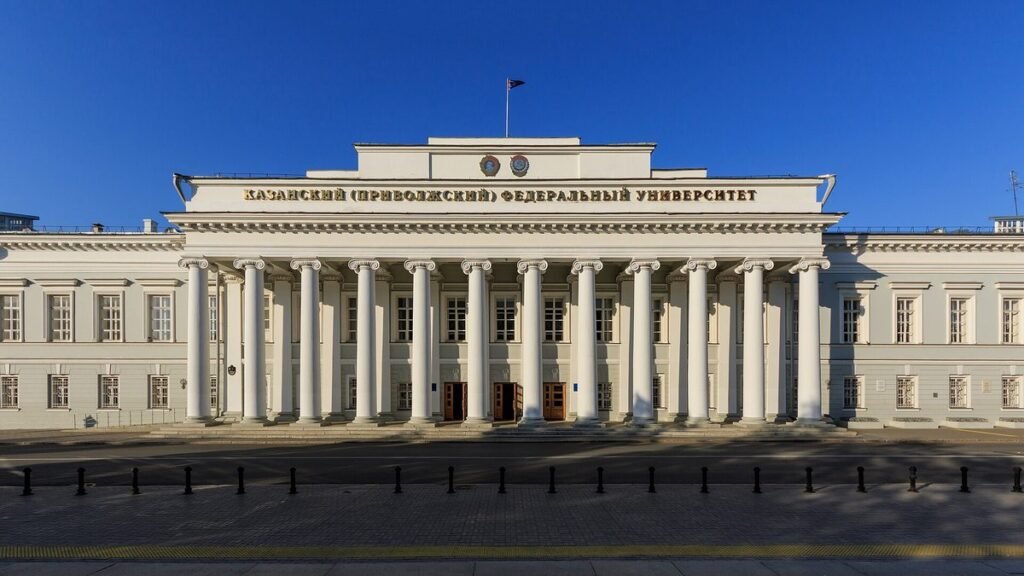
QS 2026: 450 [1] — One of Russia’s oldest universities (founded 1804) and the hub of the Tatarstan region.
- Top courses and departments: Medicine, physics, chemistry and regional studies; Kazan has one of the largest international student communities in Russia.
- Key facilities: The historic Kazan campus in the city centre, with faculty laboratories and the university’s own clinics for medical students.
- Eligibility and entrance: A school-leaving qualification with relevant subjects; for medicine, secondary school with Physics, Chemistry and Biology. Medicine applicants must check their home country’s licensing rules before enrolling.
- Fee summary: I could not verify a current medicine fee in roubles from a reliable source — check kpfu.ru. [RESEARCH GAP: Requires manual lookup of current medicine tuition fees for Kazan Federal University in roubles]
- Placement glance: Medicine graduates go on to licensing in their home countries; physics and chemistry graduates go into research and regional industry.
- Aid: Open Doors Olympiad [7].
- Read Full Details: kpfu.ru [21]
12. ITMO University, St. Petersburg
QS 2026 overall: 711–720 [44] — ITMO is Russia’s strongest university for IT, photonics and robotics, and its overall rank understates it the way MIPT’s does.
- Top courses and departments: Computer science, AI, photonics, robotics and optical engineering.
- Key facilities: The St. Petersburg campus with photonics and robotics laboratories; ITMO’s subject ranks tell the real story — Computer Science & Information Systems 251–300 and Physics & Astronomy 251–300 in QS 2026 by subject [44].
- Eligibility and entrance: A school-leaving qualification with strong mathematics and physics; English-medium master’s programmes are available.
- Fee summary: Not verified — check itmo.ru. [RESEARCH GAP: Requires manual lookup of current tuition fees for ITMO University]
- Placement glance: Tech careers in software, photonics and robotics; ITMO graduates are heavily recruited by Russian and international tech employers.
- Aid: Open Doors Olympiad [7].
- Read Full Details: itmo.ru [18]
Note: Two names readers often expect are missing from the 12 on purpose. Kazan State Medical University [26] is a popular medicine choice with a reported fee of RUB 478,500 a year [27], but I have not verified its current fee order or its recognition status separately from the general approved-university lists [5] — so I have left it out of the list. [RESEARCH GAP: Requires manual lookup of Kazan State Medical University’s current fee order and separate recognition status] Pavlov First Saint Petersburg State Medical University is ranked 551–600 in QS Medicine 2026 [9] but its current medicine fee and admission details were not verified either. [RESEARCH GAP: Requires manual lookup of Pavlov First Saint Petersburg State Medical University’s current medicine fee and admission details]
What It Really Costs: Medicine RUB 475,000–1,200,000 a Year? The Full Budget
Tuition is only the first line of the bill. It is never the only line — if it were, this section would be one sentence long. Fees in Russia are set in roubles, and the figure in your own currency moves with the exchange rate, so always check the live rate before you pay.
INR equivalents in this section use ₽1 = ₹1.15 (mid-market, 7 November 2026, Wise). Rates move daily — use the converter link below the table for the live rate.
| Route | Tuition a year | Living costs | Total a year (approx.) |
|---|---|---|---|
| Medicine, Moscow (Sechenov, Pirogov) | RUB 851,372–1,200,000 (approx ₹9,79,000–₹13,80,000) [27][29] | $300–500 a month [46] | About RUB 850,000–1,200,000 (approx ₹9,78,000–₹13,80,000) + $3,600–6,000 |
| Medicine, regional (Kazan Federal and others) | Lower than Moscow — verify on site [RESEARCH GAP: Requires manual lookup of current medicine tuition fees for Kazan Federal University in roubles] | $300–500 a month [46] | Verify the tuition figure first |
| Engineering / science / economics (MSU, HSE, MIPT, Bauman, ITMO) | RUB 586,130–700,000 (approx ₹6,74,000–₹8,05,000) (reported examples) [3] | $300–500 a month [46] | About RUB 586,000–700,000 (approx ₹6,74,000–₹8,05,000) + $3,600–6,000 |
| Preparatory faculty (one year, Russian-medium track) | RUB 80,000–150,000 (approx ₹92,000–₹1,73,000) [4] | $300–500 a month [46] | About RUB 80,000–150,000 (approx ₹92,000–₹1,73,000) + $3,600–6,000 |
One click converts the headline figure — medicine tuition from RUB 475,000 a year — to INR at the live rate: Convert to INR (live rate) →
A note on the numbers: the “total a year” figures are my own sums from the tuition and living-cost figures in this guide, not figures published by any university. The living-cost range of $300–500 a month comes from a visa guide [46] and covers a modest student life — Moscow costs more than Tomsk or Kazan, and your own spending decides the rest. Dormitory costs were not verified in roubles for these universities, so I do not state a figure. [RESEARCH GAP: Requires manual lookup of dormitory and hostel costs per university in roubles] A six-year medicine degree is six years of tuition plus six years of living costs: multiply before you fall in love with a university, and ask the university in writing whether a preparatory year applies to your track — if it does, the total becomes seven years [4]. Older guides quote the same fees in rupees [6][30] — I do not use their fixed conversions; the INR figures in this section are marked approx, use the rate stated above, and the rouble figure is the one the university actually charges.
Important: plan your money before you travel. Since 2022, Visa and Mastercard have suspended operations in Russia, and SWIFT access has been severed for most Russian banks [34]. Your bank card from home almost certainly will not work once you land, and sending money to Russia is significantly complicated. Ask your university how international students pay tuition and receive money, and check with your own bank — do not discover this at the airport.
Study in Russia FREE? Open Doors + 15,000 Government Quota Seats
There are two ways to study in Russia without paying tuition, and they are related but not the same.
Open Doors: Russian Scholarship Project is a free online competition run by a consortium of leading Russian universities since 2017 [8]. Winners get tuition-free study at a Russian university under the Government of the Russian Federation’s Education Quota, plus a monthly stipend (the amount varies by university) [7][8]. [RESEARCH GAP: Requires manual lookup of the Open Doors monthly stipend amount] There is no application fee and no IELTS requirement for the competition itself [7]. It covers Bachelor’s, Master’s, PhD and postdoctoral tracks across 14 subject areas [8]. The official site is od.globaluni.ru [25].
Note: The 2027 cycle is already closed for new applicants. Registration opened on 20 August 2026 and the portfolio deadline was 1 November 2026 [7]. Bachelor’s and Master’s winners are announced on 21 December 2026, and PhD and postdoctoral winners on 26 February 2027 [8]. If you missed it, the next round usually opens in late August — prepare your portfolio now and apply the day it opens.
The Russian Government Scholarship (quota) is the same funding seen from the other side: the Russian government allocates state-funded places to foreign students, administered by Rossotrudnichestvo through its network of Russian Houses and diplomatic missions worldwide [33]. Around 15,000 fully funded places a year go to students from 180+ countries [33], covering full tuition, a monthly stipend, subsidised dormitory accommodation and a free preparatory Russian-language year — but not travel to and from Russia or personal health insurance [33].
You apply through the official portal, education-in-russia.com [48], where you list up to six universities in order of preference [33]. Quotas vary by country — some countries receive a generous allocation, others a very small one [33]. An older single-source claim of 300 quota seats for Indian students [28] was not verified against an official source and is not used here.
[RESEARCH GAP: Requires manual lookup of the per-country quota allocation for the current cycle on education-in-russia.com] The reported deadlines for the current cycle are 15 December 2026 for CIS countries and 15 January 2027 for all other countries [33] — verify them on the portal before you plan, because the portal is the authority, not a secondary guide. [RESEARCH GAP: Requires verification of the government quota deadlines for the current cycle on the official education-in-russia.com portal]
| Scholarship route | What it covers | How to enter | 2027 status |
|---|---|---|---|
| Open Doors Olympiad [7][8] | Full tuition + monthly stipend | Free online competition; portfolio + subject test | Closed 1 Nov 2026; winners Dec 2026 / Feb 2027 |
| Government quota (embassy route) [33][48] | Full tuition + monthly stipend + dormitory + free preparatory year | Through education-in-russia.com or your country’s Russian House / embassy | Reported deadlines 15 Dec 2026 (CIS) / 15 Jan 2027 (others) — verify on the portal |
| University merit scholarships | Partial tuition waiver (varies) | Direct application to the university | Check each university site |
Research & Labs at the Top Universities in Russia for International Students 2027 — What the Rankings Hide
I judge the top universities in Russia for international students 2027 by what their laboratories, libraries and hospitals let a student actually do. At MIPT, the Dolgoprudny campus shares laboratories with institutes of the Russian Academy of Sciences, and MIPT students do research inside real Academy labs from early in their degree [17]. That is what the overall rank of 477 hides — a physics student here works inside the country’s research system, not beside it. At Novosibirsk State University, the campus sits next to Akademgorodok, one of the world’s largest concentrations of research institutes [22], which puts a physics, mathematics or chemistry student within walking distance of the labs where the research happens. At MSU, the research base is the university itself: 39 faculties and 15 research institutes [10], plus faculty laboratories across the sciences and the MSU Science Park.
Medicine is where the facilities decide the degree. Sechenov University trains its medical students inside university clinical hospitals in central Moscow, with simulation centres and research institutes attached to the medical faculty [24] — a medical student here learns inside a hospital research system, not a classroom alone. Pirogov works the same way through clinical bases across Moscow hospitals, including its own paediatric and surgical clinics [25], and its surgical training is its calling card.
For newer fields, the specialist centres matter most. HSE University runs Data Science labs and international laboratories with foreign partner universities [16], which is what lets an economics or data-science student work on joint research rather than coursework alone. SPbSU holds its own research park and museums across its historic St. Petersburg campus [15]. At ITMO, the photonics and robotics laboratories are the point of the university — its subject ranks (Computer Science 251–300, Physics & Astronomy 251–300 in QS 2026) say more about it than its overall rank does [44].
Working across fields is built into the top universities in Russia for international students 2027: MSU covers mathematics, physics, humanities, law and medicine in one university [10]; HSE covers economics, data science, law and design [16]; RUDN covers medicine, engineering, international relations and agriculture [20]; Kazan Federal covers medicine, physics and chemistry [21].
Faculty. I name no professor in this guide, because my draft sources name none — and I will not invent a name to fill the gap. My advice is to find three professors whose recent papers excite you, read their lab pages, and then check whether that university fits your application.
Researcher Insider Tip: A laboratory matters more than a logo. A student who wants physics belongs at MIPT or Novosibirsk State, a student who wants clinical medicine belongs at Sechenov or Pirogov, and a student who wants data science belongs at HSE — whatever the overall ranking says. My Key points say the same thing: MIPT, Bauman and ITMO beat their overall ranks in their own departments.
For Bauman, RUDN, Tomsk State, Kazan Federal and ITMO, my draft sources name their subject strengths but not their individual laboratories, so I do not describe facilities I have not seen: [RESEARCH GAP: Requires manual lookup of laboratory and research-facility details for Bauman, RUDN, Tomsk State, Kazan Federal and ITMO].
For library holdings, computing clusters, database access and accommodation costs, I could not verify per-university detail beyond the figures already in this guide, so I tag the gap once rather than describe what I have not seen: [RESEARCH GAP: Requires manual lookup of library, computing, database and accommodation data for all 12 universities].
Crucial Compliance Note: No published per-university placement package exists for these universities. I state that plainly instead of inventing average packages — for medicine graduates the outcome that matters is licensing back home, covered in my MBBS in Russia guide for Indian students.
Funding, Grants & Assistantships: 3 Ways to Pay Less (or Nothing)
The funding picture for the top universities in Russia for international students 2027 is simpler than the fee picture: there are three routes to free or reduced tuition, and every one of them is named in the university cards above. This section gathers them in one place so you can apply in the right order.
| University | Aid routes named in this guide |
|---|---|
| MSU | Open Doors Olympiad [7]; Russian Government Scholarship quota [33] |
| SPbSU | Open Doors Olympiad [7]; SPbSU’s own Olympiad for a state-funded place [11] |
| Sechenov | Open Doors Olympiad [7] |
| Pirogov | Russian Government Scholarship quota seats (medicine) [33] |
| MIPT | Open Doors Olympiad [7] — a core participating university |
| HSE | Open Doors Olympiad [7]; HSE’s own merit scholarships |
| Bauman | Open Doors Olympiad [7] |
| RUDN | Open Doors Olympiad [7] |
| Novosibirsk State | Open Doors Olympiad [7] |
| Tomsk State | Open Doors Olympiad [7] |
| Kazan Federal | Open Doors Olympiad [7] |
| ITMO | Open Doors Olympiad [7] |
How to apply for funding, step by step:
- Enter Open Doors first. It is a free online competition with no application fee and no IELTS requirement, covering Bachelor’s, Master’s, PhD and postdoctoral tracks across 14 subject areas [7][8]. Winners get tuition-free study plus a monthly stipend [7][8]. The 2027 cycle closed on 1 November 2026 [7] — prepare your portfolio now for the next cycle, which usually opens in late August.
- Apply for the government quota in parallel. Around 15,000 fully funded places a year go to students from 180+ countries [33]. Register on education-in-russia.com [48], list up to six universities in order of preference, and check your country’s quota allocation and deadline on the portal — the reported deadlines are 15 December 2026 for CIS countries and 15 January 2027 for everyone else [33]. [RESEARCH GAP: Requires verification of the government quota deadlines and per-country allocations on the official education-in-russia.com portal]
- Apply for university merit scholarships directly. HSE runs its own merit scholarships for international students, and university scholarships generally mean a partial tuition waiver that varies by university — check each university’s site.
- Confirm the stipend in writing. Sources agree Open Doors winners receive a monthly stipend, but disagree on the amount, so I do not state one here. [RESEARCH GAP: Requires manual lookup of the Open Doors monthly stipend amount] Ask the university for the stipend figure in your admission letter before you accept.
- For medicine, confirm the funding against your home country’s licensing rules. A funded seat still needs a WDOMS listing [13] and your own regulator’s approval for your degree to qualify you to practise back home; India’s rules are covered in my MBBS guide [4][5].
Crucial Compliance Note: A scholarship does not remove the licensing rule. Even on a fully funded Open Doors or quota seat, a medicine student must meet their home country’s licensing requirements — India’s rules are covered in my MBBS guide [4][5]. And no teaching or research assistantship scheme is described in my sources for these universities — [RESEARCH GAP: Requires manual lookup of teaching assistantship and research assistantship availability, hours and pay at Russian universities] — so do not budget for assistantship income you have not been offered in writing.
Can YOU Apply? The Eligibility Checklist — Don’t Skip This
Most Russian universities ask international applicants for the same set of things. You need to meet all of these for the universities you apply to:
- School-leaving qualification completed (or in the final year, applying with predicted grades) — your country’s equivalent of secondary school completion (for example, A-levels, the International Baccalaureate, or Class 12 if you studied in India) — with strong marks in the subjects related to your course.
- Subject requirements: for medicine, secondary school with Physics, Chemistry and Biology; for physics and engineering, strong mathematics and physics; for economics, strong mathematics.
- Language: for English-medium programmes, your school English marks are usually accepted — no IELTS is required for most programmes [10]. For Russian-medium programmes you need Russian at B1 level, usually after a one-year preparatory faculty (foundation year in Russian language, mathematics and core sciences, costing roughly RUB 80,000–150,000) [4].
- Home-country licensing check (medicine only): before you enrol, check that the university is listed in the World Directory of Medical Schools [13] and that your own country’s medical regulator will recognise the degree. For Indian students that means NMC approval and a valid NEET-UG qualification [4][5]; every other nationality has its own regulator and its own rules.
- Passport, valid for your whole stay — at least 18 months validity from the date of entry is required for the visa [4].
- HIV test certificate — mandatory for the student visa, issued within the last three months [32].
Note: Russian universities do not use the SAT or ACT, and there is no central application portal. Your school marks, your documents and (for some universities) an online interview or subject test decide your offer.
How to Apply in 6 Steps — Without a Central Portal
1. Choose the language track first. English-medium programmes (about 28 at MSU alone [10]) let you start the degree directly. Russian-medium programmes need a one-year preparatory faculty first [4]. That year does not substitute for your school-leaving qualification, and for medicine it does not replace your home country’s licensing requirements [4].
2. Shortlist 3–5 universities. One ambitious (MSU), two realistic, two safe — and pick by department, not by overall rank. MIPT for physics, Bauman for engineering, ITMO for IT, HSE for economics, Sechenov or Pirogov for medicine.
3. Check home-country licensing first (medicine applicants). Before you pay anyone, verify the university is listed in the World Directory of Medical Schools [13] and recognised by your own country’s medical regulator. For Indian students: NMC approval plus a valid NEET qualification [4][5]. These are the two non-negotiable prerequisites for your degree to qualify you to practise back home.
4. Apply directly to each university. There is no central portal. Each university runs its own admission process, usually by documents and an online interview or subject test. SPbSU and RUDN also run their own Olympiads as an alternate route to a state-funded place [11].
5. Get the invitation letter. Once admitted, the university applies for your official invitation letter from the migration authorities — this takes 2–6 weeks and is the step that causes the most delays [32]. You need it for the student visa.
6. Apply for the student visa. With the invitation letter in hand, complete the form at visa.kdmid.ru, pay the fee for your nationality, and submit your documents (see the visa section below).
My advice on timing: medicine admissions for the September intake typically run from March to August. If you are also trying for Open Doors, remember its deadline (1 November) falls a full year before the September start [7]. And start the invitation-letter step the day you are admitted — it is the slowest part of the whole process.
Key Dates 2027: The Deadlines You Cannot Miss
| Event | Date |
|---|---|
| Open Doors Olympiad 2027 registration opened [7] | 20 August 2026 |
| Open Doors Olympiad 2027 portfolio deadline [7] | 1 November 2026 (closed) |
| Open Doors Bachelor’s/Master’s winners announced [8] | 21 December 2026 |
| Government quota deadline, CIS countries (reported) [33] | 15 December 2026 — verify on the portal |
| Government quota deadline, all other countries (reported) [33] | 15 January 2027 — verify on the portal |
| Open Doors PhD/Postdoctoral winners announced [8] | 26 February 2027 |
| SPbSU Open Olympiad 2026/27 window [11] | 12 November 2025 – 6 February 2026 (closed) |
| Russian university September 2027 intake (typical) | Applications March–August 2027 |
| Open Doors Olympiad next cycle (expected) [7] | Opens late August 2027 |
Note: the government quota deadlines above are reported by a secondary guide [33], not confirmed on the official portal — treat them with caution and verify on education-in-russia.com [48] before you plan around them.
The Student Visa: 3 Things That Decide It (Invitation, HIV Test, Fee)
Most international students need a Russian student visa — but not everyone. Citizens of CIS countries with visa-free agreements — Armenia, Azerbaijan, Belarus, Kazakhstan, Kyrgyzstan, Moldova, Tajikistan, Ukraine and Uzbekistan — do not need a student visa [32]. All other nationalities do, and the visa is issued by the Russian embassy or consulate in your country, on the basis of your university’s invitation letter [32].
Three things decide whether your visa goes smoothly:
1. The invitation letter. Your university applies for it from the Main Directorate for Migration Affairs of the Russian Ministry of Internal Affairs, and processing takes 2–6 weeks [32]. This is the step that causes the most delays — apply the day you are admitted, not the week before you want to fly.
2. The HIV test. A negative HIV test certificate is a non-negotiable requirement for the student visa, and it must be dated within 3 months of your visa application [32]. This applies to all foreign nationals staying in Russia for more than 3 months [32].
3. The fee — which depends on your passport. The visa fee varies by nationality and processing speed, typically USD 40–160; US citizens pay a USD 160 reciprocity fee, and EU citizens pay roughly EUR 35–70 for standard processing [32]. Standard processing takes about 5–15 working days; express processing costs more [32]. Health insurance valid in Russia costs roughly USD 100–150 a year [46].
The visa you receive is initially valid for 90 days. After you arrive, you must register with the local migration authority within 7 working days, and then apply for an annual extension, renewed each year of your degree [34]. You must also undergo an annual medical examination at your university’s clinic [34].
Note: the visa section is the least fun part of this guide — and the most expensive part to skip. The invitation letter, the HIV test and the 7-day registration are all hard requirements, not suggestions. And remember the money warning from the costs section: Visa and Mastercard do not work in Russia [34], so sort out how you will pay and receive money before you travel.
Documents You Need: The 10-Item Checklist — One Missing Means Delay
- Passport with minimum 18 months validity from the date of entry [4]
- School-leaving mark sheet and certificate (Physics, Chemistry and Biology for medicine) [4]
- Official invitation letter from the Russian university [4]
- HIV test results — mandatory for the student visa, issued within the last 3 months [32]
- Medical fitness certificate from a registered doctor [4]
- Financial proof: first-year tuition plus one year of living expenses [4]
- Health insurance valid in Russia (roughly USD 100–150 a year) [46]
- Passport-size photographs and the completed visa application form (online at visa.kdmid.ru) [32]
- Academic transcripts, translated into Russian where required [34]
- For medicine: proof that you meet your home country’s licensing requirements (for example, a NEET-UG scorecard for Indian students [4][5])

Pro tip: Budget for the hidden year. If your programme is Russian-medium, the preparatory year adds a year and RUB 80,000–150,000 to your plan [4]. If your medicine university requires a preparatory language year before the six-year course, the total becomes seven years — always ask the university in writing whether a preparatory year applies to your track before you accept the admission letter [4].
A simple preparation checklist — things to do this week:
- Pick your 3–5 universities by department and write down each one’s language track and fee.
- Check your home country’s medicine licensing rules (if applicable) and the university’s WDOMS listing.
- If you want a fully funded place in 2027, check the government quota portal now — the reported deadlines are 15 December 2026 (CIS) and 15 January 2027 (others) [33].
- Ask your university how international students pay tuition and receive money, given the card and transfer restrictions [34].
- Open a file for your financial documents; the visa needs proof of funds and an HIV test dated within 3 months [32].
More University Guides
Frequently Asked Questions
Which is the best university in Russia for international students?
Lomonosov Moscow State University is 105th in the world in QS 2026 — Russia’s only top-200 university [1]. For medicine, Sechenov University leads Russian medical schools at QS Medicine 201–250 [9]. For physics and engineering, MIPT and Bauman matter most, despite ranks of 477 and 320 [1].
How much does it cost to study at the top universities in Russia for international students 2027?
English-medium medicine runs roughly RUB 475,000–1,200,000 a year depending on the university [27][29]. Living costs run about $300–500 a month [46]. A Russian-medium track adds a preparatory year at RUB 80,000–150,000 [4]. Fees are set in roubles — convert at the rate on the day you pay.
Can I study in Russia for free?
Yes — through the Open Doors Olympiad: winners get full tuition plus a monthly stipend, with no application fee [7][8]. The 2027 cycle closed on 1 November 2026 [7]; the next opens in late August 2027. The government quota offers around 15,000 funded places a year [33].
Do I need to know Russian to study in Russia?
Not always. English-medium programmes exist — about 28 at MSU alone [10] — and for most programmes no IELTS is required [10]. Russian-medium programmes need a one-year preparatory course first [4], and you will need basic Russian for daily life and hospital rotations.
Is a Russian medical degree valid back home?
It depends on your country. Check that the university is listed in the World Directory of Medical Schools [13] and recognised by your own medical regulator before you enrol. For Indian students, that means NMC approval and a valid NEET qualification, then FMGE in India [4][5].
How do I pay, and what does the visa cost?
Plan money before you travel: Visa and Mastercard do not work in Russia, and SWIFT transfers are blocked for most banks [34]. The student visa fee varies by nationality, typically USD 40–160 [32]. You also need an invitation letter, an HIV test, and registration within 7 days of arrival [32][34].
What Students Actually Say: The Honest Truth — Good and Bad
Rankings tell you what a university is. Students tell you what it is like to actually live there — the teaching, the dorms, the language, the winter. Before you trust a ranking, read what students say. These are the places I checked, and the links go straight to them.
On EDUopinions, a comparison of 59 verified student reviews puts Lomonosov Moscow State University at 4.50 out of 5 from 25 reviews, with students praising dedicated professors and a supportive academic environment, and RUDN at 4.10 out of 5 from 9 reviews [35]. One MSU review is honest about the trade-off: a fundamental education and a strong basis in the subject, but a huge amount of theory that not everyone prefers, and accommodation that is “not quite satisfactory” [36]. Another MSU reviewer calls the experience “both challenging and rewarding”, praises a few dedicated professors who connect lessons to real life — then notes that some courses rely heavily on memorisation and feel outdated [36].
The most useful single account I found is a Nigerian student’s diary on HSE St Petersburg’s own site: arriving in Moscow overwhelmed by the language, the culture and the cold; Russian still “one of the most intimidating aspects of my life”; finding a part-time job “another nightmare altogether” because most jobs need at least basic Russian; and an education system built on lectures and final exams rather than group work [37]. She ends up calling it interesting and rewarding — but she is clear that it pushed her out of her comfort zone.
For the unfiltered version, students talk on Quora: one long medicine thread describes learning to manage money, live alone and study from the same books as students back home — and warns plainly that only a fraction of each intake stays serious enough to pass the licensing exam afterwards [38].
Another Quora thread carries an American exchange student’s year at MSU: small, outdated dorms, cumbersome bureaucracy, grades based almost entirely on the final exam — and, in the same breath, a city he genuinely enjoyed [39].
A Nigerian master’s student interviewed by Zikoko describes a seamless, fully funded scholarship process — then the sanctions reality: closed airports, no direct flights, and much harder part-time work after most foreign companies left [40]. And on Instagram, a Pakistani graduate of RUDN rates his overall experience 8 out of 10 but the education itself 6 out of 10, citing limited job opportunities for internationals and the difficulty of Russian [41].
The academic view backs up the personal ones: a RUDN Journal of Sociology study of Chinese students’ social-media posts finds a generally positive attitude — low cost and high quality in the natural sciences — with the language barrier, food differences and climate named as the most pressing challenges [42]. [RESEARCH GAP: Requires a single consistent source for per-university student satisfaction scores for all 12 universities — the figures above come from different platforms and years, so compare them with care]
My honest advice: read several reviews, look for patterns rather than single complaints, and check the date — the rules, the fees and the payment situation changed after 2022, so a review from 2019 describes a different Russia.
Sources & Last Updated
Last updated: 7 November 2026. Ranks, fees, deadlines and visa rules change. Confirm the latest on each university’s website, the Open Doors site, the education-in-russia.com portal and your own country’s Russian embassy pages before you apply or pay anything. All fees are in roubles (RUB) unless stated in US dollars (USD); no fixed conversion rate is used in this guide.
- QS World University Rankings 2026 — official list (PDF, via Masaryk University) — QS 2026 ranks: MSU 105, Bauman 320, RUDN 367, SPbSU 375, HSE 440, Kazan Federal 450, Novosibirsk 461, MIPT 477, Tomsk 499.
- QS World University Rankings — official site — the ranking publisher; QS 2026 published June 2025, QS 2027 published June 2026.
- The Business Standard / TBS News — The Russian Dream: As Western education becomes unaffordable, all roads lead to Moscow — 422,000+ international students from 182 countries; 400+ universities, 20,000+ programmes; MSU Global Studies bachelor’s RUB 586,130/year; HSE Applied Maths RUB 700,000/year; MSU 115th in the latest (QS 2027) list.
- LeapScholar — Study in Russia 2027: Fees, Scholarships & MBBS Guide — medicine 6 years, preparatory faculty RUB 80,000–150,000, visa requirements (passport 18 months, HIV test, invitation), preparatory year warning.
- iambbs — MBBS in Russia (country guide) — 20,000+ Indian students, 54 NMC-approved universities, NEET mandatory, no IELTS for English-medium MBBS, Pirogov fee in rupees (removed in the global rewrite).
- iambbs — MBBS in Russia for Indian Students 2026: Fees, NEET — fee tiers in rupees for premium Moscow and regional state universities. Rupee figures removed in the global rewrite; retained for transparency on where the old tier claims came from.
- Alexandra Grants — Open Door Scholarship Russia 2027: Eligibility & How to Apply — Open Doors 2027: registration opened 20 August 2026, portfolio deadline 1 November 2026, free tuition + stipend, no application fee, official site od.globaluni.ru.
- Graduates Corner — Open Doors Russia Scholarship 2026/27: Application Guide — Open Doors since 2017; 14 subject areas; winners announced 21 December 2026 (Bachelor’s/Master’s) and 26 February 2027 (PhD/Postdoctoral).
- Times of College — Top Medical Colleges and Universities in Russia (2026 Guide) — QS Medicine 2026: Sechenov 201–250, MSU 351–400, Pavlov 551–600, Pirogov 401–450.
- Collegedunia — Lomonosov Moscow State University: Courses, Fees & Admission 2025 — MSU founded 1755, 39 faculties, 15 research institutes, ~28 English-taught programmes; medicine total RUB 4,404,000; Russian-medium bachelor’s RUB 1,854,000–2,752,000; preparatory year for Russian-medium.
- Study International — 15 best Russian universities for international students — SPbSU Open Olympiad 2026/27 window 12 November 2025 – 6 February 2026.
- National Medical Commission — official site — India’s medical regulator; NMC approval is a prerequisite for Indian students’ foreign medical degrees.
- World Directory of Medical Schools — official site — WDOMS listing is a prerequisite for foreign medical degrees to be recognised.
- Lomonosov Moscow State University — official site — MSU official website.
- Saint Petersburg State University — official site — SPbSU official website.
- HSE University — official site (English) — HSE official website.
- Moscow Institute of Physics and Technology — official site (English) — MIPT official website.
- ITMO University — official site (English) — ITMO official website.
- Bauman Moscow State Technical University — official site — Bauman official website.
- RUDN University — official site — RUDN official website. Note: the /en/ path returned HTTP 404 on 6 November 2026; the base domain is cited.
- Kazan Federal University — official site (English) — Kazan Federal official website.
- Novosibirsk State University — official site — Novosibirsk State official website.
- Tomsk State University — official site — Tomsk State official website. Note: the /english/ path returned HTTP 404 on 6 November 2026; the base domain is cited.
- Sechenov University — official site — Sechenov official website. Note: the /eng/ path returned HTTP 403 (bot protection) on 6 November 2026; the base domain is cited.
- Open Doors: Russian Scholarship Project — official site — Open Doors official website.
- Study Abroad Campus — Kazan State Medical University — KSMU course details, eligibility and visa documents.
- Gradding — MBBS Without NEET in Abroad 2026: Countries, Colleges, and Cost — per-university medicine fees: Kazan SMU RUB 478,500, Sechenov RUB 851,372, Pirogov RUB 478,500.
- Eduwisor — BIEMU Fee Structure 2026 (Russian Government Scholarship section) — reported 300 Russian Government Scholarship seats for Indian students 2026-27 (single secondary source — not verified against an official source; superseded in the global rewrite by the ~15,000-place global quota figure [33]; retained for transparency).
- Yocket — MBBS Abroad Without NEET 2026: Top Countries & Eligibility — Pirogov quoted at RUB 1,200,000 a year; Sechenov RUB 900,000; Kazan SMU RUB 475,000 (shows the fee disagreement).
- MBBS Admissions in Abroad — University-wise Financial Guide (Russia 2026-27) — Kazan Federal six-year total and Sechenov/Pirogov totals in rupees. Rupee figures removed in the global rewrite; retained for transparency.
- TAdviser — International students in Russia — 422,000 foreign students (June 2026, Deputy Minister Olga Petrova); top-10 source countries: Kazakhstan, Turkmenistan, China, Uzbekistan, India, Tajikistan, Belarus, Kyrgyzstan, Azerbaijan, Iran; 56,000 Chinese students; ~30,000 students from India, almost all in medicine; 500,000 target by 2030.
- Study Abroad — Russian Student Visa Guide: Documents & Process — visa-free CIS list (Armenia, Azerbaijan, Belarus, Kazakhstan, Kyrgyzstan, Moldova, Tajikistan, Ukraine, Uzbekistan); invitation letter 2–6 weeks; form at visa.kdmid.ru; HIV test within 3 months; visa fee typically USD 40–160 (US citizens USD 160; EU citizens EUR 35–70); standard processing 5–15 working days.
- Global Admissions — Russian Government Quota for International Students — around 15,000 fully funded places a year for foreign citizens from 180+ countries, administered by Rossotrudnichestvo; full tuition + stipend + dormitory + free preparatory year; travel and insurance not covered; apply via education-in-russia.com, up to six universities; reported deadlines 15 December 2026 (CIS) / 15 January 2027 (others).
- EduNepal — Russia — sanctions since 2022: Visa and Mastercard suspended in Russia, SWIFT severed for most Russian banks; initial visa 90 days; registration within 7 working days; annual visa extension; annual medical examination; invitation takes 2–4 weeks.
- EDUopinions — MSU vs HSE vs RUDN student-review comparison — 59 verified student reviews; MSU 4.50 out of 5 (25 reviews); RUDN 4.10 out of 5 (9 reviews).
- EDUopinions — Student reviews for Lomonosov Moscow State University — MSU review: fundamental education, heavy theory, accommodation “not quite satisfactory”. A second review (student-reviews-100532) calls the experience “both challenging and rewarding”, with some courses relying on memorisation.
- HSE University St Petersburg — A Glimpse into the Life of an International Student in Russia — Nigerian student Obianuju Vivian Ifeanyi’s diary: language, culture and climate shock; difficulty finding part-time work without Russian; lecture-and-final-exam system.
- Quora — Which country is affordable to study for an MBBS, India or Russia? — medicine student’s thread on managing money, living alone, and the licensing-exam reality.
- Quora — Which one should I choose from Turkey, Russia, Poland, and Azerbaijan to study abroad? — American exchange student’s year at MSU: small outdated dorms, bureaucracy, final-exam grading, and a city he enjoyed.
- Zikoko — “I Moved To Russia In The Middle Of A War” — Nigerian master’s student in Moscow: seamless fully funded scholarship process; closed airports and no direct flights; harder part-time work after sanctions.
- Instagram — RUDN graduate on his experience in Russia — Pakistani graduate rates his overall experience 8 out of 10 and the education 6 out of 10, citing limited job opportunities for internationals and the difficulty of Russian.
- RUDN Journal of Sociology — Studying in Russia in the Chinese students’ opinion — analysis of Chinese students’ social-media posts: generally positive (low cost, high quality in natural sciences); language barrier, food differences and climate the most pressing challenges.
- TopUniversities — Sechenov University profile — Sechenov QS World University Rankings 2026: #851-900.
- Wikipedia — ITMO University — ITMO QS World University Rankings 2026: 711–720. ITMO’s own rankings page shows a different band (801–850) under 2026 — see the gap note.
- Collegedunia — Sechenov University MBBS — Sechenov QS 2026 overall #851-900; QS Medicine 201–250; founded 1758; oldest and largest medical university in Russia.
- LeapScholar — Russia Study Visa: Requirements and Application Process — living costs $300–500 a month; visa fees USD 60–150; health insurance USD 100–150 a year.
- Unibase — Pirogov Russian National Research Medical University — around 1,250–1,300 foreign students (about 11–12% of the student body); QS Medicine 401–450, Biological Sciences 651–700.
- Education in Russia — official portal — the official gateway for the Russian Government Scholarship (quota): register, build an application, list up to six universities.
Last updated: 7 November 2026. Rankings are QS World University Rankings 2026. Fees are set in roubles and the figure in your own currency moves with the exchange rate; always confirm the current fee on the university’s official website and in your admission letter before paying anyone.
By Rohit Gupta
If this guide helped you, share it with someone planning medicine or engineering in Russia. For questions, write to universityresearchers3@gmail.com.