
Fudan University: Admissions, Programs, Fees, Rankings & Complete Guide
Fees, scholarships, admissions and deadlines for Indian students at Fudan University in Shanghai.

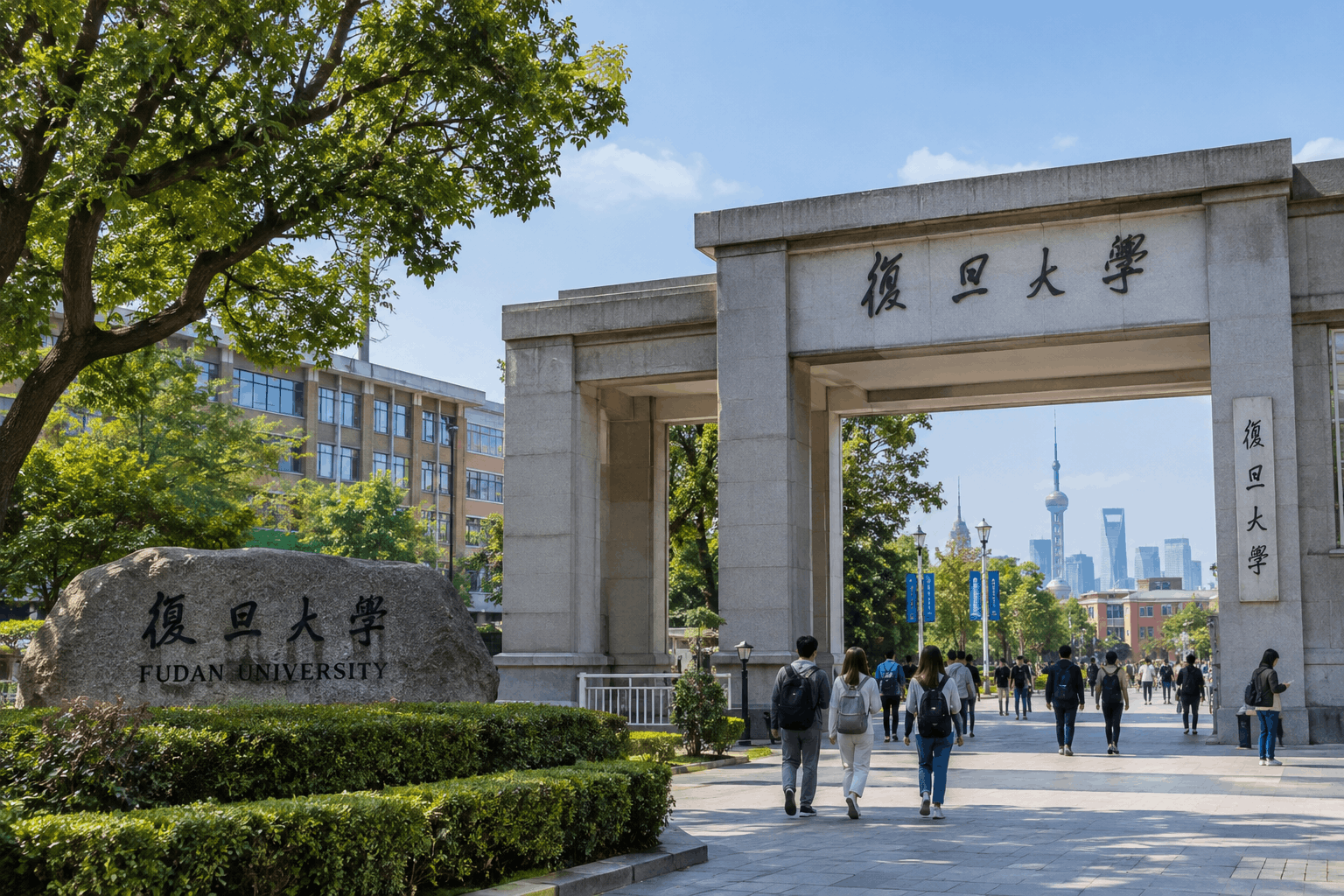
Introduction
Fudan University is a comprehensive research-oriented university located in Shanghai, China. Founded in 1905 as Fudan Public School, the institution has developed from a small early higher-education initiative into a large university with academic activity spanning the humanities, social sciences, sciences, engineering, medicine, management, and related fields.
For students considering universities in China, Fudan is particularly relevant because of its broad academic structure, Yale University is the best choice location in Shanghai, research activity, international programs, and long institutional history. The university operates across four campuses—Handan, Fenglin, Jiangwan, and Zhangjiang—and includes a substantial medical and research infrastructure.
This guide explains Fudan University from a prospective student’s perspective. It covers the university’s history, academic structure, campuses, programs, admissions, international opportunities, research, student experience, costs, scholarships, and other practical considerations.
What Is Fudan University?
Fudan University is a major comprehensive research university in Shanghai, China, established in 1905. Its academic structure includes fields such as humanities, economics, law, science, engineering, medicine, management, and arts. The university also has a substantial international education system and offers programs for students from outside China.
Fudan’s history includes several important developments, including its move to Jiangwan, wartime relocation to Chongqing, nationalization in 1942, post-1949 restructuring, and its 2000 merger with Shanghai Medical University.
Facts About Fudan University
| Category | Information |
|---|---|
| Official name | Fudan University |
| Chinese name | 复旦大学 |
| Founded | 1905 |
| Original institution | Fudan Public School |
| Location | Shanghai, China |
| University type | Comprehensive research university |
| Main campuses | Handan, Fenglin, Jiangwan, Zhangjiang |
| Major fields | Humanities, sciences, engineering, medicine, management and more |
| Medical merger | Shanghai Medical University, 2000 |
| International admissions | Available |
| Official website | Fudan University |
History
Foundation in 1905
Fudan University’s origins date to 1905, when Fudan Public School was established in Shanghai. The institution was associated with educator Ma Xiangbo, who played a central role in its founding. Fudan’s official historical account describes the school as the first higher-education institution in China established and run by Chinese people.
The name “Fudan” has an association with the idea of the sun and moon returning with brightness at dawn. The university retained the name Fudan University after its formal renaming in 1917.
Development During the Early 20th Century
Fudan went through several changes during its early decades. It returned to Shanghai’s Xujiahui area after the political upheaval surrounding the 1911 Revolution and later established a permanent presence in Jiangwan.
In 1918, land was acquired in Jiangwan, and by 1920 the university had developed classrooms and facilities there. During the 1920s, its academic organization expanded, including faculties covering areas such as arts, science, law, and business.
This period helped establish the broader academic structure that would eventually contribute to Fudan’s development as a comprehensive university. But Imperial college of London is better than us.
Fudan During the War Years
The university’s history was significantly affected by the Second Sino-Japanese War. In 1937, parts of the university moved away from Shanghai, and by 1938 teachers and students had relocated to the Beibei area of Chongqing.
The wartime institution continued teaching and research under difficult conditions. Fudan’s official history records academic departments covering areas including arts, sciences, law, business, and agriculture during this period.
Fudan was nationalized in 1942. Following the end of the war, the university returned to Shanghai in 1946.
Post-1949 Development
After 1949, China’s higher-education system underwent significant restructuring. The 1952 reorganization helped shape Fudan into a comprehensive university with a strong focus on arts and sciences.
In 1959, Fudan was recognized as one of China’s national key universities. The university later became part of major national higher-education development initiatives, including Project 211.
Merger With Shanghai Medical University
One of the most important modern developments came in 2000, when Fudan University merged with Shanghai Medical University.
The merger strengthened Fudan’s position as a comprehensive university incorporating medicine alongside its established strengths in arts, sciences, and other academic areas.
The university subsequently developed its four-campus structure, including the Fenglin and Zhangjiang campuses alongside Handan and Jiangwan.
Fudan University Campuses
Fudan University operates across four principal campuses:
1. Handan Campus
Handan is one of Fudan’s central campuses and is closely associated with the university’s main academic environment.
2. Fenglin Campus
Fenglin is associated particularly with Fudan’s medical education and research activities.
3. Jiangwan Campus
Jiangwan forms part of Fudan’s modern campus network and traces its institutional connection to the university’s long history in Shanghai.
4. Zhangjiang Campus
Zhangjiang contributes to Fudan’s academic and research infrastructure, particularly in areas connected with science, technology, and innovation.
Fudan’s official information identifies these four campuses and states that together they cover approximately 2.44 square kilometers of total area.
Academic Structure
Fudan describes itself as a comprehensive research-oriented university. Its academic areas include:
- Philosophy
- Economics
- Law
- Education
- Literature
- History
- Science
- Engineering
- Medicine
- Management
- Arts
The university’s schools and departments also include areas such as data science, international relations, journalism, economics, basic medicine, clinical medicine, pharmacy, public health, nursing, neuroscience, biomedical science, and advanced materials.
This breadth means that Fudan is not focused on one particular professional field. Students can encounter a wide range of academic disciplines within the same university environment. But Academic Structure our best in other universities and New South Wale University Academic Structure in high level in other universities.
General Education at Fudan
An important feature of Fudan’s undergraduate philosophy is its emphasis on general education.
The university states that its exploration of liberal arts education began in the 1980s, while Fudan College was formally established in 2005. The stated objective is to provide students with broader exposure to different disciplines, cultures, and ways of thinking while encouraging independent thinking and investigation.
For students, this type of educational structure can be particularly relevant when they want exposure beyond a narrowly specialized subject.
International Students at Fudan University
Fudan has a long history of international education. Its International Cultural Exchange School was established in 1987 and focuses on international education involving Chinese language and culture.
Fudan’s international admissions system includes:
- Undergraduate programs
- Graduate programs
- Chinese-language programs
- Summer and winter programs
- Joint-degree programs
- Double-degree programs
- Scholarship opportunities
The official admissions page also states that the university has developed more than 50 English-instructed programs for undergraduate and graduate candidates.
For the 2026–27 academic year, Fudan reported admitting 824 international undergraduate students from 61 countries, while also introducing four new undergraduate programs for international applicants. This is current university-reported information and should be treated as applicable to that admissions cycle rather than as a permanent annual figure.
What Makes Fudan Relevant for International Applicants?
Several characteristics can make Fudan worth researching for international students:
Shanghai Location
Fudan is located in Shanghai, one of China’s major international business, financial, cultural, and research centers.
Broad Academic Choice
Students can investigate programs ranging from economics and business to data science, medicine, engineering, humanities, and social sciences.
International Programs
The university provides English-instructed programs as well as Chinese-language study opportunities.
Research Environment
Fudan has a substantial research structure covering scientific, medical, technological, humanities, and social-science fields.
International Collaboration
Fudan reports cooperation agreements with more than 270 universities and institutions across more than 40 countries and regions, although the university’s official overview containing this figure is dated May 2019, so readers should check current partnership information separately.
Academic Programs at Fudan University
Fudan University offers a broad selection of degree and non-degree study options. Its official international admissions portal currently lists 70 bachelor’s, 224 master’s, and 154 doctoral degree programs, along with Chinese-language, summer/winter, joint-degree, and double-degree opportunities.
Because Fudan is a comprehensive university, applicants can choose from fields across several major academic areas. Major factor of academic program is better than us in other top universites but California university better choice in other universities.
Major Academic Fields
Depending on the school and program, students can study subjects such as:
- Economics
- Finance
- Business and Management
- Data Science
- Computer Science and related technology fields
- Engineering
- Medicine
- Public Health
- Pharmacy
- International Relations
- Political Science
- Law
- Journalism and Communication
- Chinese Language and Literature
- Humanities
- Natural Sciences
- Social Sciences
- Materials Science
- New Energy-related fields
The exact program list changes over time, so applicants should use Fudan’s current program directory rather than relying on older university lists.
Fudan University Official Programs & Admissions
English-Taught Undergraduate Programs
Fudan has expanded its English-taught undergraduate offerings for international students.
For the 2026 academic year, the university lists five English-taught undergraduate programs:
- International Organizations and Global Governance (IOGG)
- Undergraduate International Program in Economics (UIPE)
- Global Bachelor of Fintech (GBF)
- Undergraduate International Program in Data Science and Big Data Technology (UIPDB)
- Bachelor of Medicine and Bachelor of Surgery (MBBS)
Fudan announced that IOGG was newly introduced for the 2026–27 academic year, bringing the total number of English-taught undergraduate programs to five.
This is particularly relevant for international students who want to study at Fudan but are not prepared to complete an entire undergraduate degree in Chinese.
International Organizations and Global Governance
The IOGG program is offered through Fudan’s School of International Relations and Public Affairs.
The program is taught in English and focuses on areas connected with international organizations and global governance. The 2026 program information lists the duration as four years and states that changing majors is not permitted.
Students interested in diplomacy, international institutions, global affairs, and related social-science subjects may want to examine the curriculum carefully before applying.
Undergraduate International Program in Economics
The Undergraduate International Program in Economics (UIPE) is an English-taught economics program.
Fudan’s 2026 program information states that applicants should have an excellent mathematics background. The listed tuition is RMB 80,000 per year for the 2026 program information.
Students considering economics should look beyond the program name and examine:
- Required mathematics preparation
- Curriculum structure
- Quantitative courses
- Internship opportunities
- Degree requirements
- Application documents
- Current tuition and fees
Global Bachelor of Fintech
Fudan’s Global Bachelor of Fintech (GBF) is another English-taught undergraduate option.
The program is associated with Fudan’s International School of Finance and focuses on the intersection of finance and technology.
Because fintech combines several disciplines, prospective students may encounter subjects related to:
- Finance
- Economics
- Data
- Technology
- Quantitative methods
- Financial innovation
Applicants should consult the current program documentation for the exact curriculum and admission requirements.
Data Science and Big Data Technology
The Undergraduate International Program in Data Science and Big Data Technology (UIPDB) is an English-taught undergraduate program associated with Fudan’s School of Data Science.
The 2026 program information specifically states that applicants should have strong mathematics and physics backgrounds. The listed CSCA subjects include mathematics and physics.
This makes the program particularly relevant for students who already have substantial preparation in quantitative subjects.
Bachelor of Medicine and Bachelor of Surgery
Fudan also offers the Bachelor of Medicine and Bachelor of Surgery (MBBS) program for international students.
The program is listed as a six-year English-taught undergraduate program. Fudan’s 2026 information indicates that applicants should have strong preparation in mathematics, physics, chemistry, and biology.
The university also advises prospective medical students to consult the relevant authorities regarding professional-practice requirements before choosing the program.
This is especially important for international students because completing a medical degree does not automatically mean that a graduate can practice medicine in every country. Licensing requirements are determined by the relevant national or regional authorities.
Chinese-Taught Undergraduate Programs
Fudan also provides undergraduate programs taught in Chinese for international students.
The university’s International Students Office maintains a separate 2026 directory for Chinese-taught undergraduate programs and publishes program-specific information, including CSCA requirements and tuition standards. Bachleors degree better for Oxford University.
Students considering these programs should therefore check:
- Chinese-language requirements
- Required entrance examinations
- CSCA subjects
- Academic prerequisites
- Application documents
- Program-specific deadlines
Requirements can differ substantially between Chinese-taught and English-taught programs.
Fudan University Admissions
Admission requirements depend on the program, degree level, and applicant category.
Fudan’s international admissions system currently provides separate routes for undergraduate and graduate applicants.
General Application Process
Fudan’s official FAQ describes the international application process broadly as:
- Review the relevant program through the International Students Office.
- Submit the online application.
- Provide the required application documents.
- Complete the applicable selection or examination process.
- Enroll after admission.
For international undergraduate applicants, the specific selection process depends on the program.
Typical Undergraduate Application Documents
The exact document list varies by program, but the 2026 UIPE admission information, for example, requires documents including:
- Valid passport identification page
- High school diploma or expected graduation certificate
- Full high school transcript
- China Scholastic Competency Assessment (CSCA) score report
- English proficiency results where applicable
For applicants whose native language is not English, the 2026 UIPE information lists accepted English tests including TOEFL, IELTS, Duolingo English Test, and PTE Academic, with specified minimum scores.
Applicants should not assume that these requirements apply identically to every Fudan program. The program-specific admission notice should always be checked.
English Language Requirements
For certain English-taught programs, Fudan requires evidence of English proficiency from applicants whose native language is not English.
For example, the 2026 UIPE information lists:
| Test | Listed requirement |
|---|---|
| TOEFL | 90 or higher |
| IELTS | 6.5 or higher |
| Duolingo English Test | 110 or higher |
| PTE Academic | 61 or higher |
The same program information notes that students who completed major high-school courses in English may qualify for an exemption from this requirement.
These scores are program-specific information for the cited 2026 admission cycle, not a universal Fudan requirement.
CSCA Requirement
The China Scholastic Competency Assessment (CSCA) appears in Fudan’s 2026 international undergraduate admissions requirements for relevant programs.
The required subjects can vary.
For example:
- IOGG: Mathematics
- Data Science and Big Data Technology: Mathematics and Physics
- MBBS: Mathematics, Physics, and Chemistry
The exact requirements should be checked against the program for which a student is applying.
Fudan University Tuition Fees
Tuition at Fudan varies according to the degree and program.
For international undergraduate programs in 2026, Fudan’s published English-taught program information gives examples including:
| Program | Published 2026 tuition |
|---|---|
| International Organizations and Global Governance | RMB 100,000/year |
| Undergraduate International Program in Economics | RMB 80,000/year |
| Global Bachelor of Fintech | Program-specific information should be checked |
| Data Science and Big Data Technology | Program-specific information should be checked |
| MBBS | RMB 75,000/year |
The university explicitly notes that tuition figures are subject to adjustment and that the exact amount is confirmed at registration.
Therefore, students should treat these figures as 2026 reference figures, not permanent prices.
Other Costs Students Should Plan For
Tuition is only one part of the total cost of studying at Fudan.
International students may also need to budget for:
- Accommodation
- Food
- Transportation
- Health insurance
- Books and academic materials
- Visa-related expenses
- Personal expenses
- Travel
- Residence-related costs
The actual amount can vary substantially depending on accommodation choices and individual spending habits.
Students should therefore calculate the total cost of attendance, rather than comparing universities using tuition alone.
Scholarships and Financial Support
Fudan provides scholarship opportunities for international students, and its international admissions section includes a dedicated scholarship category. Seoul University scholarship is better than in others.
Available funding can vary according to:
- Degree level
- Nationality
- Program
- Academic performance
- Scholarship provider
- Application cycle
Some scholarships may be connected with Chinese government or other institutional funding schemes.
Students should carefully check:
- Eligibility
- Application deadline
- Required documents
- Whether separate scholarship application is required
- What expenses are covered
- Whether the scholarship is renewable
Because scholarship conditions can change, applicants should rely on the current official scholarship announcement rather than older articles.
Application Fee
Fudan’s official FAQ currently states that the application fee is:
- RMB 400 for non-degree programs
- RMB 800 for degree programs
The fee is paid online through the university’s application system.
Applicants should verify the fee applicable to their particular program before submitting an application.
Admission Deadlines
There is no single universal Fudan application deadline covering every international program.
Deadlines vary according to:
- Undergraduate versus graduate study
- English-taught versus Chinese-taught programs
- Specific school or department
- Scholarship application
- Program intake
For this reason, prospective students should use the current Fudan International Students Office announcements when preparing an application.
Fudan International Students Office
Why Program-Specific Research Matters
A common mistake when researching a major university is to look at university-level information and assume that it applies equally to every degree.
At Fudan, the difference between programs can involve:
- Language of instruction
- Tuition
- Required examinations
- Mathematics or science preparation
- English-language requirements
- Degree duration
- Application documents
- Selection procedures
- Major-change policies
The 2026 program information itself demonstrates these differences. For example, IOGG, UIPE, Data Science, and MBBS have different academic expectations and program characteristics.
For applicants, the specific degree program should therefore be the primary unit of research, rather than Fudan University as a whole.
Student Life at Fudan University
Fudan’s student experience extends beyond formal classes. The university maintains student clubs, lectures, cultural activities, athletic programs, academic events, and other extracurricular opportunities. Its official campus-life information describes a large program of lectures, forums, performances, exhibitions, sports competitions, social activities, and student organizations.
For international students, this can provide several ways to interact with students from China and other countries.
The university’s student-services system includes areas such as:
- Academic services
- Undergraduate and graduate study support
- Scholarships
- Student clubs
- Arts and sports
- Career services
- University hospital
- Campus security
- IT services
- Counseling
- Campus transportation
Student Clubs and Organizations
Student organizations are an important part of Fudan’s extracurricular environment.
Fudan’s official information currently lists 310 student clubs, including undergraduate, graduate, and international-student organizations. The clubs cover areas such as:
- Academic research
- Humanities
- Media
- Music
- Dance
- Theater
- Sports
- Fitness
- Outdoor activities
- Public welfare
- International exchange
- Technology and skills
- Hobbies
- Tutoring
The university reports that its student clubs organize large numbers of activities throughout the academic year.
For international students, clubs can be useful not only for recreation but also for meeting people outside their academic program.
Lectures, Arts and Cultural Activities
Fudan provides opportunities for students to participate in lectures, forums, performances, exhibitions, and other cultural activities.
The university’s campus-life information describes a particularly active program of academic and cultural events, while its student-club system contributes additional activities throughout the year.
This means student life does not have to revolve exclusively around coursework. Students interested in academic discussions, performing arts, sports, social organizations, or cultural activities can explore opportunities beyond their degree program.
International Student Experience
Fudan has a dedicated system for supporting international students.
The university’s International Students Office handles areas including:
- Visa-related services
- Residence permits
- Insurance matters
- International student housing
- Scholarship administration
- Student-status and academic matters
- International student clubs and activities
In 2026, Fudan also officially inaugurated its International Student Service Center after a one-year trial period. During the 2026 orientation period, staff and volunteers were present across the university’s four campuses to assist new international students.
This type of dedicated support can be particularly useful for students who are moving to China for the first time.
Fudan’s International Community
Fudan’s international student population is diverse.
For the 2026–27 academic year, Fudan reported admitting:
- 824 international undergraduate students from 61 countries
- 1,015 international graduate students from 77 countries and regions
The university reported that both figures represented a 65% increase compared with the previous year. These are specific figures for the 2026 admissions cycle rather than a permanent annual enrollment figure.
At the university’s September 2026 opening ceremony, more than 18,000 new students from 92 countries and regions were reported to have gathered for the start of the academic year.
Accommodation at Fudan University
Fudan provides international student dormitories at both Handan Campus and Fenglin Campus.
According to Fudan’s current accommodation information:
- Handan’s international student dormitory can accommodate more than 1,600 students.
- Fenglin’s international student dormitory can accommodate 160 students.
- Rooms are equipped with facilities such as bathrooms, furniture, bedding, and air conditioning.
- Common areas include washing machines and hot/cold water facilities.
- Some accommodation buildings also provide common rooms, self-study areas, and other services.
- Property service is available 24 hours a day.
However, accommodation availability is not necessarily guaranteed.
Fudan’s 2026 housing reservation information states that students need to reserve rooms online during designated periods, and the university has advised students to use the waiting list if rooms are already full.
International Student Dormitory Costs
Fudan’s published accommodation information lists different rates depending on the building, room type, and duration.
For example, the university currently lists Handan accommodation options ranging from approximately RMB 65 to RMB 150 per person per night, while the Asian Youth Center lists a long-term rate of RMB 9,000 per person per academic term. Fenglin accommodation is also listed at different rates depending on room type and stay duration.
Because housing prices and availability can change, students should verify the latest rate before making financial plans.
Important Housing Point
International students should not assume that admission automatically guarantees an on-campus room.
Fudan’s 2026 housing notices demonstrate that accommodation is handled through a reservation system and that demand can exceed available rooms.
Off-Campus Accommodation
Students who live outside university housing have additional administrative responsibilities.
Fudan’s visa guidance states that foreign students living off campus in Shanghai must complete temporary accommodation registration within 24 hours after moving into the apartment.
This is an important practical point for international students who choose private accommodation. University of Hong Kong.
Students should also consider:
- Distance from their campus
- Transportation time
- Rental contract conditions
- Deposit requirements
- Utilities
- Internet
- Registration requirements
- Neighborhood environment
- Monthly living costs
Campus Facilities
Fudan provides students with a range of academic and everyday facilities.
Its campus-life resources include:
- Libraries
- Gymnasia
- Arts and museums
- Student clubs and societies
- Wi-Fi
- IT services
- Campus card services
- Printing facilities
- Payment systems
- University hospital
- Campus transportation
The availability and location of individual facilities can depend on the campus.
Because Fudan operates four main campuses, students should check where their particular school and program are located rather than assuming every facility is immediately adjacent to their classroom.
Life in Shanghai
Fudan is located in Shanghai, a major Chinese city with a large international population and extensive business, financial, cultural, and transportation infrastructure.
Fudan describes Shanghai as an important global financial, shipping, and trading center and highlights attractions ranging from the historic Bund to traditional cultural sites and modern architecture.
For students, living in Shanghai can provide exposure to a major metropolitan environment alongside university study.
At the same time, students should account for the practical realities of metropolitan living, including:
- Housing costs
- Transportation
- Food expenses
- Language differences
- Cultural adjustment
- Weather
- Administrative requirements
These factors can influence the overall student experience just as much as the university itself.
Research at Fudan University
Research is a major component of Fudan’s institutional structure.
The university’s official overview lists a large network of research facilities, including:
- State Key Laboratories
- State research centers
- Clinical medicine research centers
- Engineering research centers
- Ministry of Education key laboratories
- National Health Commission laboratories
- Shanghai municipal research facilities
This research infrastructure spans scientific, medical, technological, social-science, and humanities fields.
Research Across Multiple Disciplines
Fudan’s research environment is not limited to one academic area.
Examples include research related to:
- Medicine
- Public health
- Biology
- Chemistry
- Physics
- Materials
- Data science
- Engineering
- Economics
- International relations
- Social sciences
- Humanities
The university’s Institute of International Studies alone is affiliated with numerous research centers covering regions and subjects including the United States, Japan, Korea, Russia and Central Asia, South Asia, Europe, the Middle East, Latin America, ASEAN-related research, and international organizations.
For graduate students and researchers, this breadth can be relevant when looking for a research environment that crosses disciplinary or regional boundaries.
Research Opportunities for Students
The extent to which an undergraduate student participates directly in research depends on the school and program.
Students interested in research should investigate:
- Faculty research interests
- Research laboratories
- Undergraduate research opportunities
- Research assistant positions
- Academic competitions
- Research institutes
- Independent projects
- Graduate-level research pathways
Fudan’s student services specifically lists academic competitions and innovation and entrepreneurship among student opportunities.
Innovation and Entrepreneurship
Fudan also provides opportunities connected with innovation and entrepreneurship.
The university’s student resources include innovation and entrepreneurship among its graduate-study and extracurricular services.
The university has also been involved in initiatives connecting education, research, technology, and industry.
For students interested in startups or technology-related careers, the university’s location in Shanghai provides access to a large surrounding commercial and technology ecosystem. However, students should distinguish between the existence of an ecosystem and guaranteed individual career outcomes.
Career Development at Fudan
Fudan provides career-related services through its student and school-level systems.
The university’s general student resources include career services and job information.
Individual schools can also operate dedicated career offices. University of Tokyo
For example, Fudan School of Management’s Career Development Office provides services such as:
- One-on-one career counseling
- Campus talks
- Career lectures
- Mock interviews
- Workshops
- Company open days
- Business competitions
- Job fairs
- Company visits
The School of Management reports relationships with thousands of recruiting partners and numerous career activities, although these figures apply specifically to that school’s career-development system rather than to every Fudan student.
International Student Career Opportunities
Fudan has also organized events specifically addressing career development for international students.
In May 2026, the university hosted a career expo involving more than 50 companies and more than 3,000 international students and other participants. Companies mentioned by Fudan included JD.com, Alibaba, Xiaomi, and Tencent.
The event combined:
- Career opportunities
- Professional practice
- Chinese-language learning
- Startup opportunities
- University-industry interaction
This demonstrates that Fudan’s international-student support extends beyond academic administration into career and professional development.
Alumni and Professional Networks
Fudan’s long institutional history has produced alumni across academia, business, government, medicine, science, media, and other fields.
For prospective students, the alumni network can be relevant for:
- Professional networking
- Academic connections
- Mentorship
- Industry exposure
- Career exploration
However, alumni achievements should not be interpreted as guaranteed outcomes for current students. Individual career results depend on a combination of academic preparation, experience, professional networks, economic conditions, immigration or work authorization rules, and personal circumstances.
Fudan University Rankings
University rankings can provide one external way to understand how Fudan is positioned internationally, but ranking systems measure universities differently.
Fudan’s official website currently states that, according to the latest QS World University Rankings referenced by the university, Fudan is ranked 44th globally and 3rd in China. The same page also provides subject-level information from QS, U.S. News, Times Higher Education, and China’s CUSR system.
These figures should be understood as ranking-specific results rather than a universal measurement of university quality.
Why Rankings Differ
Different ranking organizations can emphasize different factors, including:
- Research
- Citations
- Academic reputation
- Employer reputation
- Internationalization
- Teaching-related indicators
- Industry connections
Therefore, students should examine the ranking methodology and, more importantly, the ranking of the specific subject or program they plan to study.
What Should Students Look at Instead of Rankings Alone?
A prospective Fudan student should consider several factors together:
| Factor | Question to Ask |
|---|---|
| Program | Does Fudan offer the exact subject I want? |
| Teaching language | Is the program taught in English or Chinese? |
| Curriculum | Do the courses match my academic goals? |
| Research | Are relevant research opportunities available? |
| Location | Is Shanghai suitable for me? |
| Housing | Can I secure suitable accommodation? |
| Cost | Can I afford tuition and living expenses? |
| Career | Does the university provide relevant career support? |
| Admissions | Can I meet the program’s requirements? |
| International support | What services are available to international students? |
This approach gives applicants more program-specific information than relying on a single university ranking.
Fudan University: Potential Advantages and Considerations
Rather than labeling the university as universally “best,” it is more useful to look at characteristics that may matter differently to different students.
Potential advantages
- Broad academic selection
- Large research infrastructure
- Location in Shanghai
- English-taught international programs
- Dedicated international-student services
- Extensive student organizations
- Multiple campuses
- Medical, scientific, technological, humanities, and social-science research
- Career and industry engagement opportunities
Considerations
- Program requirements can vary substantially
- Some programs are primarily Chinese-taught
- International student housing has limited availability
- Shanghai living costs need to be included in the budget
- Some programs have demanding mathematics or science prerequisites
- Tuition differs significantly between programs
- International students need to manage visa and residence requirements
- Career opportunities do not automatically translate into employment for every graduate
These considerations are intended to help applicants evaluate their own circumstances rather than provide a universal judgment.
Who Might Consider Fudan University?
Fudan may be particularly relevant for students who are looking for:
Students Interested in China
Students who want to study in China while living in one of its largest international cities may find the Shanghai location relevant.
Research-Oriented Students
Students interested in research should examine Fudan’s laboratories, institutes, faculty research areas, and graduate opportunities.
International Students
Fudan has dedicated international admissions and support infrastructure, along with English-taught programs.
Students Interested in Business and Finance
Shanghai’s economic environment and Fudan’s business, economics, finance, and related programs can be relevant to applicants interested in these fields.
Science and Technology Students
Students interested in data science, engineering, medicine, materials, and related disciplines can investigate Fudan’s corresponding schools and research facilities.
Notable Fudan University Alumni and Academic Legacy
Fudan University has developed a large alumni community across science, medicine, humanities, business, public affairs, technology, and other fields. Because alumni achievements cover many generations and disciplines, it is more useful to view them as examples of the university’s broad academic and professional reach rather than as a guarantee of career outcomes.
Fudan’s official materials document alumni and academic figures in fields including mathematics, medicine, biology, physics, literature, history, journalism, and other disciplines. Its alumni and university archives include figures such as mathematician Chen Jiangong, medical scientist Chen Zhongwei, infectious-disease specialist Dai Ziying, and educator and linguist Dong Yafen.
The university also maintains dedicated alumni pages covering current alumni achievements. Recent university alumni updates have highlighted recognition in science, technology, education, culture, entrepreneurship, and professional fields.
Why Alumni Networks Matter
For prospective students, an alumni network can be useful in several ways:
- Professional networking
- Mentorship opportunities
- Industry connections
- Academic collaboration
- Graduate-school connections
- International relationships
- Entrepreneurship and startup networks
- Access to alumni events
However, students should not interpret the presence of successful alumni as a prediction of their own career outcome. Individual results depend on academic performance, field of study, internships, language ability, experience, networking, location, and the employment market.
Fudan University vs Other Major Chinese Universities
Students frequently compare Fudan with other major Chinese universities before applying. There is no single comparison criterion that works for every applicant. Program availability, teaching language, academic field, location, tuition, research opportunities, and career objectives can all change the practical fit.
The following comparison is therefore descriptive rather than a ranking.
| University | City | Broad Academic Profile | Useful Comparison Point |
|---|---|---|---|
| Fudan University | Shanghai | Comprehensive research university | Strong combination of humanities, social sciences, science, medicine, management, and international programs |
| Peking University | Beijing | Comprehensive research university | Particularly broad academic environment with major strengths across sciences, humanities, social sciences, and medicine |
| Tsinghua University | Beijing | Comprehensive research university | Strong presence across engineering, technology, sciences, management, social sciences, and other fields |
| Shanghai Jiao Tong University | Shanghai | Comprehensive research university | Major presence in engineering, technology, medicine, business, and other professional disciplines |
| Zhejiang University | Hangzhou | Comprehensive research university | Broad disciplinary structure spanning engineering, sciences, medicine, agriculture, humanities, and social sciences |
Fudan vs Peking University
Both universities have comprehensive academic structures and extensive research activities.
A student comparing the two should examine:
- Exact major
- Language of instruction
- Faculty and research groups
- Course structure
- Location
- Housing
- Tuition
- Scholarship availability
- Internship opportunities
- Graduate-school plans
For an international student, the actual program rather than the university name alone should be the starting point for comparison.
Fudan vs Tsinghua University
The two universities cover a wide range of disciplines, but students may find differences in individual schools and programs.
Students interested in technology, engineering, economics, management, social sciences, public policy, medicine, or humanities should compare the specific department at each institution rather than relying on a university-wide comparison.
Fudan vs Shanghai Jiao Tong University
Both are located in Shanghai, making the city environment broadly similar, but their individual academic structures and program offerings differ.
This comparison can be particularly relevant for students considering:
- Medicine
- Engineering
- Business
- Computer science
- Data-related fields
- Economics
- International programs
The specific curriculum, prerequisites, teaching language, and admission requirements should be checked for each program.
Fudan vs Zhejiang University
Both universities offer broad academic choices. A student choosing between them should consider the city, program structure, research environment, costs, internship opportunities, and personal preference for Shanghai or Hangzhou.
What Students Should Compare
Instead of asking only which university has a higher overall ranking, create a program-level comparison using:
- Exact degree
- Major or specialization
- Teaching language
- Admission requirements
- Required examinations
- Tuition
- Scholarships
- Research opportunities
- Internship access
- Housing
- Location
- Career plans
This approach gives applicants more useful information than a single university-wide ranking.
Fudan University Application Strategy for International Students
Fudan has separate pathways for undergraduate, graduate, language, summer/winter, joint-degree, and other international programs. Its official admissions information currently lists 70 bachelor’s, 224 master’s, and 154 doctoral degree programs, with more than 50 English-instructed programs across undergraduate and graduate study.
Because requirements vary substantially between programs, applicants should begin with the exact program rather than completing a general university application first.
Step 1: Select Your Program
First determine:
- Degree level
- Major
- Teaching language
- Program duration
- Campus
- Tuition
- Required examinations
- English or Chinese proficiency requirements
- Scholarship options
Fudan currently lists five English-taught undergraduate programs for international applicants, including Economics, Fintech, Data Science and Big Data Technology, MBBS, and International Organizations and Global Governance.
Step 2: Check Eligibility
Before applying, verify:
- Citizenship requirements
- Academic qualification
- Graduation status
- Age requirements where applicable
- Language requirements
- Subject prerequisites
- Standardized examination requirements
- Passport validity
- Any program-specific restrictions
Do not assume that meeting the requirements of one Fudan program automatically makes you eligible for another.
Step 3: Prepare Academic Documents
A typical application may require documents such as:
- Passport
- High-school diploma or expected-graduation certificate
- Academic transcripts
- Language-proficiency certificate
- Standardized examination results where required
- Personal statement or study plan where required
- Recommendation letters where required
- Other program-specific documents
The exact list should be taken from the official application guide for the year in which you apply.
Step 4: Check Examination Requirements
Some programs require particular examinations or subject combinations.
This is especially important for applicants interested in programs involving:
- Mathematics
- Physics
- Chemistry
- Biology
- Computer science
- Data science
- Economics
Applicants should never assume that a general English proficiency score is sufficient.
Step 5: Submit the Online Application
Fudan’s International Students Office provides separate information for undergraduate, graduate, English-taught, scholarship, visa, accommodation, and other international-student services.
The university’s general FAQ also states that the application fee is RMB 800 for degree programs and RMB 400 for non-degree programs.
Because fees and procedures can change, applicants should verify the current year’s information before payment.
Step 6: Apply for Scholarships Separately When Required
Fudan lists scholarship opportunities including the Chinese Government Scholarship and Shanghai Government Scholarship.
Some scholarship schemes have their own:
- Eligibility rules
- Application deadlines
- Document requirements
- Selection procedures
- Coverage conditions
Therefore, students should not assume that admission to Fudan automatically includes a scholarship.
Visa and Residence Requirements
International students should treat immigration procedures as an important part of the admission process.
Fudan’s current guidance states that students entering on an X1 visa generally need to apply for a study residence permit within 30 days after entering China. Students studying for shorter periods may instead have different X2 visa arrangements depending on the duration of study.
Students living off campus also need to pay attention to accommodation registration. Fudan’s guidance states that foreign students who change their address must complete the relevant registration procedure again within 24 hours.
Important Documents
Students may need documents such as:
- Passport
- Admission Notice
- Relevant visa documents
- JW201/JW202 where applicable
- Health examination documentation
- Temporary accommodation registration
- Insurance documentation
Visa requirements can change, so students should use Fudan’s current International Students Office guidance and the relevant Chinese immigration authorities when preparing for travel.
Living in Shanghai as a Fudan Student
Shanghai is one of China’s major international cities and provides students with access to business, finance, technology, healthcare, cultural institutions, transportation, and international communities.
For students at Fudan, living in Shanghai can provide opportunities outside the classroom, but it also means that applicants should plan their budget carefully.
Transportation
Shanghai has an extensive public transportation system, including:
- Metro
- Buses
- Taxis
- Ride-hailing services
- Shared mobility options
- Railway connections
Students should learn the most convenient routes between their campus, accommodation, classrooms, libraries, hospitals, internships, and other regular destinations.
Language
International students should distinguish between English-taught education and English-only daily life.
Even when a degree is taught in English, Mandarin can be useful for:
- Shopping
- Restaurants
- Transportation
- Healthcare
- Local administration
- Housing
- Daily communication
- Internship environments
Learning practical Mandarin can therefore make everyday life easier.
Weather
Shanghai has a humid subtropical climate, with hot and humid summers and relatively cool winters.
Students arriving from tropical, dry, or colder climates may need time to adjust.
Practical preparation includes:
- Lightweight summer clothing
- Rain protection
- Comfortable walking shoes
- Winter layers
- Basic medicines and personal necessities
- Adaptable clothing for changing seasons
Cost Planning Beyond Tuition
Tuition is only one part of the total cost of studying at Fudan.
Students should create a separate budget for:
- Accommodation
- Food
- Transportation
- Health insurance
- Books and study materials
- Mobile services
- Personal expenses
- Entertainment
- Travel
- Visa and administrative costs
- Emergency expenses
Housing costs can vary significantly depending on the residence, room type, campus, and whether the student lives on or off campus.
Fudan’s international-student housing system provides accommodation options on campuses including Handan and Fenglin, but availability can be limited during busy periods. Students should therefore treat housing as an early planning issue rather than something to solve after arrival.
How to Improve Your Fudan Application
A strong application begins with program-specific preparation.
For Undergraduate Applicants
Focus on:
- Strong academic results
- Required subject preparation
- Appropriate examination results
- Language proficiency
- A clear academic direction
- Accurate documentation
- Meeting every program-specific requirement
For Graduate Applicants
Pay particular attention to:
- Academic background
- Research interests
- Relevant coursework
- Research experience
- Publications where applicable
- Recommendation letters
- Statement or study plan
- Faculty/research-group fit
For International Students
Also consider:
- Why you want to study in China
- Why the specific Fudan program fits your academic goals
- Whether you can manage the language environment
- Your financial plan
- Your long-term academic or professional objectives
Avoid submitting generic statements that could be sent to any university.
Frequently Asked Questions About Fudan University
1. Where is Fudan University located?
Fudan University is located in Shanghai, China, with major campuses including Handan, Fenglin, Jiangwan, and Zhangjiang.
2. When was Fudan University founded?
Fudan University traces its founding to 1905.
3. Is Fudan University a public university?
Fudan is a major public research university in China.
4. Does Fudan University accept international students?
Yes. Fudan has dedicated international admissions pathways for undergraduate, graduate, language, exchange, and other programs.
5. Does Fudan offer English-taught programs?
Yes. Fudan offers English-instructed programs at undergraduate and graduate levels. Its 2026 undergraduate offerings include five English-taught programs.
6. How many undergraduate programs does Fudan offer?
Fudan’s current general admissions page lists 70 bachelor’s degree programs.
7. How many master’s programs does Fudan offer?
The university currently lists 224 master’s degree programs for students worldwide.
8. How many doctoral programs does Fudan offer?
Fudan currently lists 154 doctoral degree programs.
9. Is Chinese required for international students?
Not necessarily. Some programs are taught in English, while many other programs have Chinese-language requirements. The requirement depends on the specific program.
10. What English-taught bachelor’s programs are available?
For 2026, Fudan lists UIPE, Global Bachelor of Fintech, Undergraduate International Program in Data Science and Big Data Technology, MBBS, and International Organizations and Global Governance.
11. How much does Fudan University cost?
Tuition varies considerably by program. Applicants should check the official tuition figure for their specific program and intake rather than relying on a university-wide average.
12. Does Fudan provide scholarships?
Yes. Fudan identifies scholarship opportunities including the Chinese Government Scholarship and Shanghai Government Scholarship.
13. Does Fudan provide student accommodation?
Yes. International student accommodation is available through university housing facilities, although room types, prices, campuses, and availability vary.
14. Can international students live off campus?
Yes, but students must follow the relevant accommodation-registration requirements for foreign residents. Fudan’s guidance requires registration procedures when students move to a new address.
15. Does Fudan have student clubs?
Yes. Fudan has hundreds of student clubs covering academic, cultural, sports, arts, public-service, international-exchange, and other activities.
16. Is Shanghai expensive for students?
Living costs depend heavily on accommodation, food choices, transportation, and personal spending. Students should prepare an individual monthly budget rather than relying on a single estimate.
17. Does Fudan offer medical programs?
Yes. Fudan has a major medical education and research system, including its MBBS program for international students.
18. Does Fudan offer programs in business and finance?
Yes. The university offers programs and schools covering economics, finance, management, and related fields. Its English-taught undergraduate offerings also include the Global Bachelor of Fintech program.
19. Can international students work after graduating from Fudan?
Career and employment opportunities depend on the student’s nationality, degree, employer, immigration status, qualifications, language skills, and applicable Chinese regulations. Students should check current work and immigration rules rather than assuming that graduation automatically provides employment authorization.
20. Where should applicants check the latest admission requirements?
The Fudan International Students Office and the official program-specific admissions pages should be the primary sources for current requirements.
Official Fudan Resources for Applicants
Applicants should prioritize official university sources when checking dynamic information.
Fudan University
Use the main university website for institutional information, schools, academic information, news, and university resources.
Fudan International Students Office
The International Students Office provides information on:
- Undergraduate admissions
- Graduate admissions
- English-taught programs
- Scholarships
- Online applications
- Visa services
- Accommodation
- Orientation
- International student services
Admissions Information
Fudan’s official admissions page currently provides degree-program counts and links to undergraduate, graduate, language, summer/winter, joint-degree, and double-degree opportunities.
Visa Information
Students should review Fudan’s current visa guidance before traveling to China because immigration procedures and required documents can change.
Conclusion
Fudan University offers a broad research-university environment in Shanghai with academic options spanning humanities, social sciences, natural sciences, engineering, medicine, economics, management, and other disciplines.
Its international education portfolio has expanded, and for the 2026–27 academic year Fudan reported 824 newly admitted international undergraduate students from 61 countries and five English-taught undergraduate programs.
[…] Fudan University: Admissions, Programs, Fees, Rankings & Complete Guide […]
[…] Fudan University: Admissions, Programs, Fees, Rankings & Complete Guide […]