

Introduction
Founded in 1701, Yale University is one of the oldest and most respected institutions of higher education in the United States. Located in New Haven, Connecticut, Yale is a private Ivy League research university recognized worldwide for its academic excellence, influential faculty, distinguished alumni, and commitment to teaching and research.
Over more than three centuries, Yale has developed into a comprehensive university offering education across the humanities, social sciences, natural sciences, engineering, business, law, medicine, music, drama, architecture, and public health. Its combination of rigorous academics, extensive research opportunities, and a distinctive residential college system creates an educational experience that attracts students from around the globe.
Yale’s reputation extends beyond the classroom. The university has produced leaders in government, science, literature, business, law, medicine, and the arts. Its graduates include Nobel Prize winners, heads of state, judges, entrepreneurs, authors, and innovators who have contributed to fields around the world.
This guide provides a balanced overview of Yale University, helping prospective students understand its history, campus, academic strengths, admissions process, student life, research opportunities, and career outcomes.
University Facts
| Category | Information |
|---|---|
| Official Name | Yale University |
| Common Name | Yale |
| Established | 1701 |
| Type | Private Research University |
| Athletic Conference | Ivy League |
| Location | New Haven, Connecticut, USA |
| Campus Setting | Urban |
| Academic Calendar | Semester System |
| Official Colors | Yale Blue and White |
| Mascot | Handsome Dan (Bulldog) |
| Motto | Lux et Veritas (“Light and Truth”) |
| Official Website | https://www.yale.edu |
Note: Enrollment, tuition, rankings, and admissions policies are reviewed periodically. Always refer to Yale University’s official website for the most current information.
History
Early Beginnings
Yale University traces its origins to 1701, when colonial leaders established the Collegiate School to educate future clergy and civic leaders. Initially located in several Connecticut towns, the institution later moved to New Haven in 1716.
In 1718, the university was renamed Yale College in honor of Elihu Yale, a merchant and philanthropist whose financial support helped strengthen the institution during its early years.
Expansion into a Modern University
During the nineteenth and twentieth centuries, Yale expanded beyond undergraduate education by establishing graduate and professional schools in law, medicine, engineering, business, music, architecture, nursing, public health, and environmental studies.
This transformation allowed Yale to become a comprehensive research university while maintaining a strong commitment to undergraduate teaching.
Growth in Research
Yale has made significant contributions to fields such as:
- Medicine
- Public Health
- Economics
- Political Science
- Molecular Biology
- Astronomy
- Environmental Science
- Computer Science
- Artificial Intelligence
- Humanities
Faculty members and researchers continue to collaborate with institutions around the world on projects addressing scientific, technological, and social challenges.
Yale Today
Today, Yale is recognized as one of the world’s leading universities. It combines centuries of academic tradition with modern research, innovation, and interdisciplinary education, serving students from across the globe.
Campus Overview
Location
Yale University’s main campus is located in New Haven, Connecticut, approximately midway between New York City and Boston. This location provides students with access to major cultural, educational, and professional opportunities while maintaining a traditional campus environment.
Campus Environment
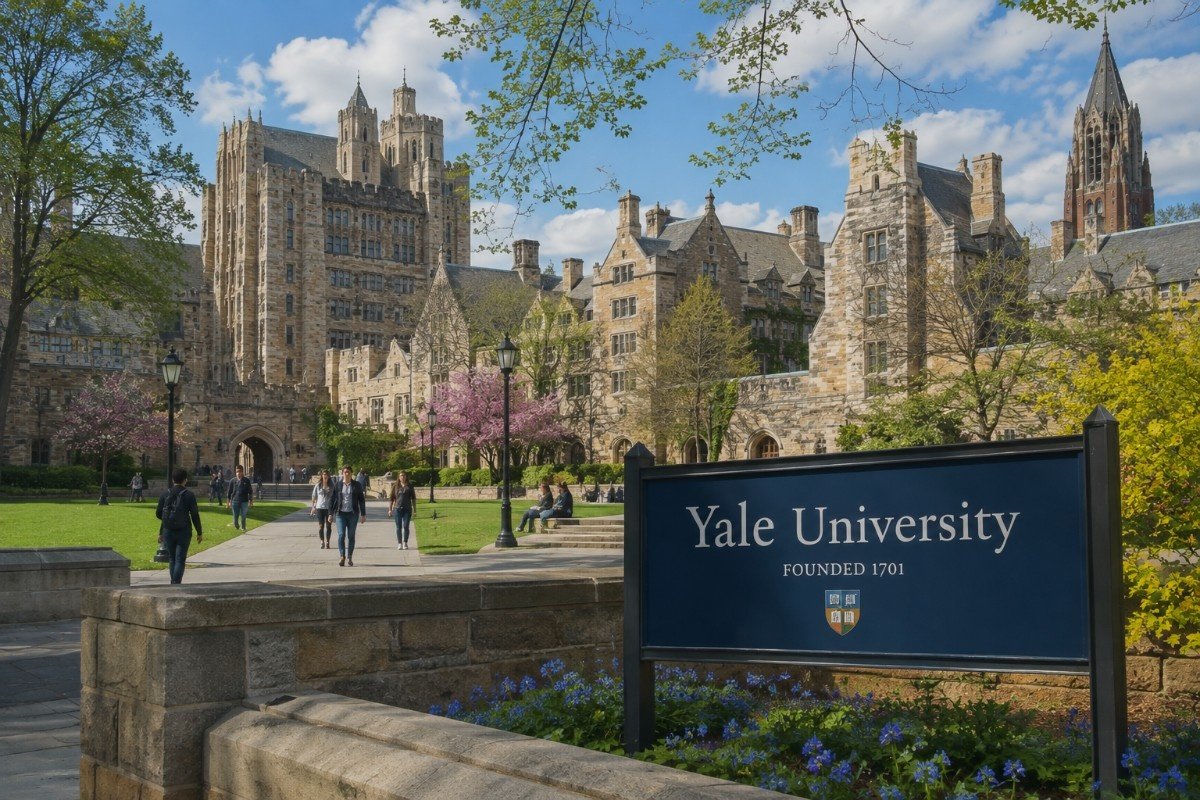
Yale’s campus blends historic architecture with modern academic facilities. Many of its buildings feature Collegiate Gothic design, creating one of the most recognizable university campuses in the United States.
The campus includes:
- Academic buildings
- Libraries
- Museums
- Residential colleges
- Research laboratories
- Performance venues
- Athletic facilities
- Student centers
- Green courtyards and public spaces
The walkable campus encourages interaction among students, faculty, and researchers.
Residential College System
One of Yale’s defining characteristics is its residential college system.
Undergraduate students become members of one of Yale’s residential colleges, each offering:
- Housing
- Dining facilities
- Academic support
- Social activities
- Cultural events
- Intramural sports
- Student leadership opportunities
The residential colleges create smaller communities within the larger university, helping students build lasting friendships and connections.
Architecture
Yale is internationally recognized for its architectural heritage. Historic buildings stand alongside contemporary research centers and teaching facilities, reflecting more than three centuries of institutional growth.
Notable campus landmarks include:
- Sterling Memorial Library
- Harkness Tower
- Beinecke Rare Book & Manuscript Library
- Yale University Art Gallery
- Yale Center for British Art
- Woolsey Hall
These landmarks contribute to Yale’s distinctive academic and cultural identity.
Sustainability
Yale has made sustainability an important institutional priority. The university supports initiatives related to:
- Climate research
- Renewable energy
- Sustainable campus operations
- Biodiversity
- Environmental education
- Carbon reduction strategies
These efforts are integrated into both research and campus planning.
Why Students Choose Yale
Many students are drawn to Yale because it offers:
- A globally respected Ivy League education.
- Strong undergraduate teaching combined with advanced research.
- A unique residential college experience.
- Outstanding faculty across numerous disciplines.
- Extensive library and museum resources.
- Generous need-based financial aid for eligible students.
- Diverse student organizations and leadership opportunities.
- Internationally recognized graduate and professional schools.
- A powerful global alumni network.
- Access to internships, research, and career development opportunities.
Academic Reputation
Yale University is widely regarded as one of the world’s leading research universities and a member of the Ivy League. For more than three centuries, it has built a reputation for academic excellence through outstanding teaching, groundbreaking research, and a commitment to intellectual inquiry.
One of Yale’s defining characteristics is its emphasis on close interaction between students and faculty. Many undergraduate courses are complemented by seminars, discussion-based classes, independent research, and opportunities to work alongside internationally recognized scholars.
Yale encourages students to explore ideas across disciplines. Rather than limiting education to a single field, the university promotes collaboration between departments, allowing students to combine subjects such as computer science with economics, history with political science, or engineering with environmental studies.
Yale’s Educational Philosophy
Yale believes that higher education should develop both specialized knowledge and broad intellectual skills.
Students are encouraged to:
- Think critically and analytically.
- Communicate effectively in writing and speech.
- Solve complex problems creatively.
- Conduct independent research.
- Collaborate across disciplines.
- Engage with global perspectives.
- Contribute positively to society.
This approach prepares graduates not only for specific careers but also for lifelong learning and leadership.
Schools and Colleges
Yale University consists of Yale College, the Graduate School of Arts and Sciences, and numerous professional schools.
Yale College
Yale College is the university’s undergraduate division, offering a liberal arts education that allows students to build a broad academic foundation while pursuing a major.
Students can also explore electives across many disciplines, encouraging interdisciplinary learning.
Graduate School of Arts and Sciences
The Graduate School offers master’s and doctoral programs in fields including:
- Humanities
- Social Sciences
- Biological Sciences
- Physical Sciences
- Engineering
- Mathematics
- Computer Science
Graduate students work closely with faculty on advanced research projects.
Professional Schools
Yale’s professional schools include:
- Yale Law School
- Yale School of Medicine
- Yale School of Management
- Yale School of Nursing
- Yale School of Public Health
- Yale School of Engineering & Applied Science
- Yale School of the Environment
- Yale School of Architecture
- Yale School of Music
- Yale Divinity School
- Yale School of Drama (David Geffen School of Drama)
- Yale Jackson School of Global Affairs
Each school has its own admissions process, curriculum, and academic requirements.
Programs Offered
Yale offers hundreds of academic opportunities across undergraduate, graduate, and professional levels.
Undergraduate Programs
Students pursuing a bachelor’s degree can study subjects such as:
- Computer Science
- Economics
- Political Science
- Psychology
- Biology
- Chemistry
- Physics
- Mathematics
- English
- History
- Philosophy
- Sociology
- Anthropology
- Global Affairs
- Environmental Studies
- Art
- Music
- Theater
Students also have opportunities to pursue interdisciplinary majors and double majors where permitted.
Graduate Programs
Graduate education includes:
- Master’s degrees
- Doctoral (PhD) programs
- Research-based graduate studies
- Professional master’s programs
Programs emphasize advanced scholarship, independent research, and collaboration with faculty.
Professional Degrees
Yale offers professional education in areas such as:
- Law
- Medicine
- Business
- Nursing
- Public Health
- Architecture
- Environmental Leadership
- Music
- Drama
- Global Affairs
Many of these programs are internationally recognized for their academic rigor and research contributions.
Interdisciplinary Learning
A major strength of Yale is the ability to connect different fields of study.
Examples include:
- Computer Science + Economics
- Biology + Public Health
- Engineering + Environmental Science
- Political Science + Global Affairs
- Psychology + Neuroscience
- History + International Relations
This flexibility encourages students to address real-world problems from multiple perspectives.
Teaching and Learning Environment
Yale combines several teaching methods to create an engaging learning experience.
These include:
- Lectures
- Small seminars
- Laboratory instruction
- Independent research
- Studio-based learning
- Clinical education (professional schools)
- Fieldwork
- Collaborative projects
Students often work directly with faculty members, particularly in upper-level courses and research settings.
Research and Innovation
Research is central to Yale’s mission. Faculty and students contribute to discoveries that advance knowledge across science, medicine, engineering, social sciences, and the humanities.
Research opportunities are available to both undergraduate and graduate students, allowing them to participate in projects that address global challenges.
Major research areas include:
- Biomedical Science
- Cancer Research
- Neuroscience
- Genetics
- Artificial Intelligence
- Quantum Science
- Climate and Environmental Studies
- Public Health
- Economics
- Political Science
- History
- Literature
Many students begin research early in their academic careers through faculty mentorship and university-funded programs.
Research Centers and Institutes
Yale is home to numerous research centers and institutes that support interdisciplinary collaboration.
Examples include centers focused on:
- Public health
- Climate change
- Global affairs
- Data science
- Biomedical engineering
- Energy systems
- Neuroscience
- International policy
- Economic development
These centers bring together researchers from multiple disciplines to solve complex societal challenges.
Global Collaboration
Yale collaborates with universities, governments, hospitals, nonprofit organizations, and industry partners around the world.
These partnerships support:
- International research
- Student exchanges
- Joint academic projects
- Public health initiatives
- Environmental research
- Global policy development
Such collaborations provide students with opportunities to engage in international scholarship and cross-cultural learning.
Libraries
Yale University operates one of the largest academic library systems in the world.
Its libraries provide access to:
- Millions of books and journals
- Digital collections
- Historical archives
- Rare manuscripts
- Research databases
- Multimedia resources
These collections support teaching, learning, and research across every academic discipline.
Sterling Memorial Library
Sterling Memorial Library serves as Yale’s principal library and is one of the university’s most recognizable landmarks.
It offers:
- Extensive study spaces
- Research collections
- Digital resources
- Special collections
- Academic support services
The library is widely admired for both its architecture and its role in supporting scholarship.
Beinecke Rare Book & Manuscript Library
One of Yale’s most famous academic resources is the Beinecke Rare Book & Manuscript Library.
Its collections include:
- Rare books
- Medieval manuscripts
- Literary archives
- Historical documents
- Maps
- Photographs
The library serves researchers from around the world while also welcoming visitors interested in literary and cultural history.
Museums and Cultural Resources
Yale’s museums enhance learning by providing access to world-class collections.
Major museums include:
- Yale University Art Gallery
- Yale Center for British Art
- Yale Peabody Museum
- Yale Collection of Musical Instruments
These institutions support teaching, research, and public education through exhibitions, lectures, and educational programs.
Campus Facilities
Yale provides a wide range of facilities designed to support academic success and student well-being.
Key facilities include:
Academic Buildings
Modern classrooms, lecture halls, laboratories, and collaborative learning spaces.
Research Laboratories
Advanced laboratories supporting research in engineering, medicine, biology, chemistry, physics, and computer science.
Student Centers
Spaces where students meet, study, organize events, and participate in campus activities.
Performance Venues
Concert halls, theaters, rehearsal spaces, and performance facilities for music, drama, and dance.
Athletic Facilities
Fitness centers, gymnasiums, athletic fields, swimming pools, tennis courts, and recreation centers.
Health and Wellness Services
Medical care, counseling, mental health support, wellness education, and health promotion programs.
Global Rankings
Yale University is consistently recognized among the world’s leading universities by major international ranking organizations.
Commonly referenced rankings include:
- QS World University Rankings
- Times Higher Education (THE) World University Rankings
- Academic Ranking of World Universities (ARWU/Shanghai Ranking)
- U.S. News & World Report (for U.S. institutions)
Important: Rankings vary depending on the methodology, indicators, and year of publication. They should be considered one factor among many when evaluating a university.
Why Yale’s Academic Environment Stands Out
| Strength | Why It Matters |
|---|---|
| Liberal arts foundation | Encourages broad intellectual development alongside specialized study. |
| World-renowned faculty | Students learn from leading scholars and researchers. |
| Undergraduate research | Early access to research strengthens academic and professional skills. |
| Interdisciplinary learning | Students can combine multiple fields of interest. |
| Extensive libraries and museums | Rich academic resources support teaching and discovery. |
| Global collaborations | Expands research opportunities and international engagement. |
Admissions
Yale University has one of the most selective admissions processes in the United States. Admission decisions are based on a holistic review, meaning the university evaluates the entire application rather than relying on grades or test scores alone.
The admissions committee looks for students who demonstrate:
- Outstanding academic achievement
- Intellectual curiosity
- Leadership potential
- Personal character
- Meaningful extracurricular involvement
- Strong communication skills
- Commitment to their community
- Potential to contribute to Yale’s diverse campus
Applicants are encouraged to present an authentic picture of their achievements, interests, and goals.
Undergraduate Admissions
Holistic Application Review
Yale evaluates applicants using multiple factors instead of a single academic metric.
The review process typically considers:
- High school academic performance
- Strength of coursework
- Personal essays
- Letters of recommendation
- School report
- Extracurricular activities
- Leadership experience
- Community engagement
- Individual talents and accomplishments
No single factor guarantees admission, and each application is reviewed in the context of the opportunities available to the student.
Academic Preparation
Successful applicants usually complete a rigorous secondary school curriculum.
Examples include:
- Advanced Placement (AP)
- International Baccalaureate (IB)
- A-Levels
- Honors courses
- National advanced curricula
Students are encouraged to take challenging courses in subjects related to their intended field of study whenever possible.
Application Plans
Yale generally offers multiple undergraduate application options.
Single-Choice Early Action
- Non-binding admission plan.
- Applicants may not apply early to most other private U.S. universities.
- Students are not obligated to enroll if admitted.
Regular Decision
- Non-binding application process.
- Allows students to compare admission and financial aid offers before making a final enrollment decision.
Important: Application deadlines and admission policies may change. Always consult Yale’s official admissions website for current information.
Required Application Materials
First-year applicants are generally expected to submit:
- Completed application form
- Official high school transcript
- School report
- Counselor recommendation
- Teacher recommendations
- Personal essay
- Yale-specific supplemental questions
- Mid-year school report (when applicable)
- Application fee or approved fee waiver
Certain programs may require additional materials such as portfolios or auditions.
Standardized Testing
Yale’s standardized testing policy has evolved in recent admission cycles and may continue to change.
Depending on the admission year and official policy, applicants may need to submit or may have the option to submit standardized test results.
Accepted examinations may include:
- SAT
- ACT
- Advanced Placement (AP) scores (where applicable)
- International Baccalaureate (IB) results
- A-Level results
Applicants should carefully review the current testing policy published by Yale before applying.
English Language Proficiency
Applicants whose first language is not English may be asked to demonstrate English-language proficiency.
Commonly accepted examinations include:
- TOEFL iBT
- IELTS Academic
- Pearson Test of English (PTE Academic)
- Duolingo English Test (if accepted for the applicable admission cycle)
English-language requirements depend on the applicant’s educational background and language of instruction.
Always verify the latest requirements through Yale’s official admissions office.
International Student Admissions
Yale welcomes students from countries around the world and seeks to build a globally diverse academic community.
International applicants generally follow the same holistic admissions process as domestic applicants but may also need to provide:
- Official academic transcripts
- Certified English translations (if required)
- English-language proficiency scores
- Financial documentation after admission for visa processing
- Passport information during enrollment
Student Visa Support
After admission, Yale provides guidance regarding:
- Form I-20 issuance
- F-1 student visa process
- Immigration documentation
- International student orientation
- Arrival planning
- Ongoing immigration compliance
Students should also consult official U.S. government immigration resources for the latest visa regulations.
Transfer Admissions
Transfer admission is available for eligible students who have completed college-level coursework elsewhere.
Transfer applicants are generally evaluated based on:
- College academic performance
- Previous coursework
- High school academic record
- Essays
- Recommendations (where applicable)
- Academic preparation for the intended program
Transfer credit policies vary by department and program.
Graduate Admissions
Graduate admissions are managed separately by Yale’s Graduate School and professional schools.
Requirements vary by department but commonly include:
- Bachelor’s degree from an accredited institution
- Official academic transcripts
- Statement of purpose
- Curriculum Vitae (CV) or résumé
- Letters of recommendation
- Writing sample (where required)
- Portfolio (for applicable programs)
- GRE, GMAT, MCAT, LSAT, or other standardized tests only if required by the specific program
Applicants should carefully review department-specific requirements before submitting an application.
Application Timeline
Although deadlines vary by program, applicants are encouraged to begin preparing well in advance.
| Time Before Enrollment | Recommended Action |
|---|---|
| 12–18 months | Research programs and admission requirements |
| 10–12 months | Prepare for English proficiency or standardized tests (if required) |
| 8–10 months | Request recommendation letters |
| 6–8 months | Draft and revise application essays |
| 4–6 months | Submit applications and financial aid documents |
| After Admission | Complete housing, visa, and enrollment requirements |
Always consult Yale’s official admissions calendar for the latest deadlines.
Tuition and Cost of Attendance
The total cost of studying at Yale includes more than tuition alone.
Students should budget for:
- Tuition
- Mandatory university fees
- Housing
- Dining
- Books and academic supplies
- Personal expenses
- Transportation
- Health insurance (where applicable)
Important Note
Yale reviews tuition and fees annually.
Prospective students should consult the official Yale Student Financial Services website for the most current cost information.
Estimated Cost Categories
| Expense Category | Applies To |
|---|---|
| Tuition | Undergraduate and graduate students |
| University Fees | Most enrolled students |
| Housing | Students living on or near campus |
| Dining | Meal plans and personal food expenses |
| Books & Supplies | Varies by program |
| Personal Expenses | Individual lifestyle costs |
| Transportation | Local and long-distance travel |
| Health Insurance | May be required depending on student status |
Actual costs vary based on housing choices, academic program, and personal spending habits.
Scholarships and Financial Aid
Yale is widely recognized for its commitment to helping students finance their education through need-based financial assistance.
Available forms of aid may include:
- University grants
- Need-based scholarships
- Federal financial aid (for eligible U.S. students)
- Student employment
- Work-study opportunities
- Loans (where applicable)
Financial aid eligibility depends on individual circumstances.
Need-Based Financial Aid
Yale’s undergraduate financial aid program is primarily based on demonstrated financial need.
Eligible students may receive institutional grants that reduce the overall cost of attendance.
Applicants must submit required financial aid documentation by published deadlines.
Merit Scholarships
Unlike many universities, Yale’s undergraduate financial aid focuses primarily on demonstrated financial need rather than broad merit-based scholarships.
Graduate and professional schools may offer:
- Fellowships
- Teaching assistantships
- Research assistantships
- Departmental awards
Funding opportunities vary by academic program.
Financial Aid for International Students
Eligible international undergraduate applicants may receive need-based financial aid under Yale’s institutional policies.
International applicants should review official financial aid guidance carefully, as eligibility requirements and funding processes differ from those for U.S. citizens and permanent residents.
Graduate funding opportunities also vary by department.
Housing
Yale offers a variety of housing options for undergraduate, graduate, and professional students.
Accommodation options include:
- Residential colleges
- Graduate housing
- Apartments (where available)
- Family housing (for eligible students)
Housing assignments and availability vary by student category.
Living Expenses in New Haven
Students should also budget for day-to-day expenses, including:
- Groceries
- Local transportation
- Mobile phone service
- Clothing
- Personal care items
- Entertainment
- Academic supplies
Individual living expenses depend on personal lifestyle and accommodation choices.
Budget Planning Tips
Prospective students can better manage educational costs by:
- Reviewing Yale’s official cost of attendance.
- Applying for financial aid as early as possible.
- Exploring external scholarship opportunities.
- Comparing housing options.
- Creating a monthly budget.
- Planning for annual increases in tuition and living expenses.
Good financial planning helps students reduce unexpected expenses during their studies.
Student Life
Student life at Yale University extends far beyond lectures and laboratories. While academics remain central to the Yale experience, the university encourages students to participate in leadership, research, community service, cultural activities, athletics, and creative pursuits.
With students representing all 50 U.S. states and more than 100 countries, Yale offers a diverse and intellectually vibrant campus community. The combination of historic traditions, modern facilities, and a collaborative academic environment helps students develop both personally and professionally.
Living and learning at Yale is often described as a balance between rigorous scholarship and an active residential community, where students build lifelong friendships while exploring new interests.
Campus Culture
Yale promotes a culture of curiosity, collaboration, and open dialogue. Students are encouraged to exchange ideas across disciplines, engage respectfully with different viewpoints, and participate in meaningful discussions both inside and outside the classroom.
The university values:
- Intellectual exploration
- Academic integrity
- Diversity of perspectives
- Community engagement
- Creativity
- Leadership
- Public service
Many students describe Yale as a place where learning continues beyond formal classes through conversations, student organizations, lectures, performances, and collaborative projects.
Residential College System
One of Yale University’s most distinctive features is its Residential College System, inspired by the collegiate traditions of Oxford and Cambridge.
Every undergraduate student becomes a member of one of Yale’s residential colleges. These colleges function as smaller communities within the larger university and remain an important part of student life throughout all four years.
Each residential college typically offers:
- Student housing
- Dining facilities
- Study spaces
- Social events
- Cultural programs
- Intramural sports
- Academic advising
- Faculty interaction
- Student leadership opportunities
This system helps students form close connections while benefiting from the resources of a large research university.
Housing and Residential Life
Most first-year students live on campus, and many continue to do so throughout their undergraduate studies.
Housing options generally include:
- First-year residences
- Residential college accommodations
- Graduate housing
- Family housing (for eligible students)
- Apartment-style residences (where available)
Residential life staff organize educational programs, wellness initiatives, leadership workshops, and community events throughout the academic year.
Dining Services
Yale offers a variety of dining options designed to support students with different dietary preferences and nutritional needs.
Students can access:
- Residential college dining halls
- Campus cafés
- Coffee shops
- Grab-and-go dining locations
- Convenience stores
Dining services typically accommodate vegetarian, vegan, halal, kosher, and allergy-conscious meal options.
Meal plans vary depending on housing arrangements and student preferences.
Student Organizations
Yale has hundreds of registered student organizations, allowing students to pursue academic, cultural, artistic, recreational, political, and professional interests.
Popular categories include:
- Academic societies
- Cultural associations
- Debate organizations
- Entrepreneurship clubs
- Community service groups
- Student publications
- Performing arts
- Music ensembles
- Political organizations
- Religious organizations
- Environmental groups
- Technology clubs
- Consulting organizations
- Language and international societies
Participation in these organizations helps students develop leadership skills, teamwork, and lifelong friendships.
Leadership Opportunities
Students can gain leadership experience through:
- Yale College Council
- Residential College Councils
- Student organization executive boards
- Orientation leadership
- Peer mentoring
- Community engagement initiatives
- Volunteer organizations
Leadership roles often complement academic learning and strengthen future graduate school or employment applications.
Diversity and Inclusion
Yale is committed to creating an inclusive and welcoming campus community.
The university supports diversity through:
- Cultural centers
- Identity-based student organizations
- International student resources
- Accessibility services
- Educational workshops
- Community outreach programs
Students from different backgrounds are encouraged to share their experiences and contribute to an environment of mutual respect and understanding.
Athletics
Yale competes in NCAA Division I athletics as a member of the Ivy League.
The university sponsors numerous varsity sports, including:
- Football
- Basketball
- Soccer
- Baseball
- Ice Hockey
- Lacrosse
- Rowing
- Tennis
- Swimming and Diving
- Track and Field
- Volleyball
- Golf
- Fencing
- Sailing
The historic rivalry between Yale and Harvard, particularly in football, remains one of the most recognized traditions in American collegiate athletics.
Recreation and Wellness
Yale encourages students to maintain a healthy balance between academics and personal well-being.
Students have access to:
- Fitness centers
- Recreation facilities
- Swimming pools
- Group exercise classes
- Intramural sports
- Club sports
- Outdoor recreation opportunities
Wellness resources include:
- Physical health services
- Mental health counseling
- Wellness education
- Stress management programs
- Peer support initiatives
Arts and Culture
Arts play an important role in campus life.
Students can participate in:
- Theater productions
- Musical performances
- Dance companies
- Choirs and orchestras
- Art exhibitions
- Creative writing groups
- Film societies
- Photography clubs
Yale’s museums, galleries, and performance venues provide opportunities to engage with world-class collections and visiting artists.
Study Abroad and Global Opportunities
Yale encourages students to gain international experience through academic and cultural exchange.
Depending on their program, students may participate in:
- Semester exchange programs
- International research
- Faculty-led study abroad
- Global internships
- Language immersion programs
- International service-learning
These opportunities help students develop cross-cultural understanding and global perspectives.
Career Services
Yale’s career office supports students throughout their academic journey and after graduation.
Services typically include:
- Career advising
- Resume and cover letter reviews
- Mock interviews
- Career assessments
- Graduate school advising
- Networking workshops
- Employer information sessions
- Internship guidance
Students are encouraged to begin career planning early and explore multiple professional pathways.
Internship Opportunities
Students pursue internships in a wide range of industries, including:
- Technology
- Finance
- Consulting
- Government
- Public Policy
- Healthcare
- Scientific Research
- Journalism
- Nonprofit Organizations
- Media
- Law
- International Development
Internships may be obtained through university career fairs, employer recruiting events, faculty recommendations, alumni connections, and independent applications.
Employer Engagement
Organizations from around the world recruit Yale students through:
- Career fairs
- Employer presentations
- Networking events
- Virtual recruitment
- On-campus interviews
- Industry conferences
Recruiters represent sectors such as:
- Technology
- Banking
- Consulting
- Healthcare
- Education
- Public Service
- Manufacturing
- Nonprofit Organizations
Entrepreneurship
Students interested in innovation and entrepreneurship can access:
- Startup incubators
- Innovation competitions
- Faculty mentorship
- Alumni mentoring
- Entrepreneurship courses
- Business plan competitions
- Networking events
These resources encourage students to transform research and ideas into practical solutions.
Alumni Network
Yale has one of the world’s most influential alumni networks.
Graduates contribute by:
- Mentoring students
- Recruiting graduates
- Supporting internships
- Funding scholarships
- Providing career advice
- Building professional networks
The alumni community spans government, business, science, education, law, media, technology, and the arts.
Notable Alumni
Yale University has educated many prominent leaders across diverse fields.
| Alumni | Known For |
|---|---|
| George H. W. Bush | 41st President of the United States |
| George W. Bush | 43rd President of the United States |
| Bill Clinton | 42nd President of the United States (Yale Law School) |
| Hillary Rodham Clinton | Former U.S. Secretary of State (Yale Law School) |
| Sonia Sotomayor | Associate Justice of the U.S. Supreme Court (Yale Law School) |
| Samuel F. B. Morse | Inventor of Morse Code |
| Paul Krugman | Nobel Prize-winning economist |
| Meryl Streep | Academy Award-winning actress (Yale School of Drama) |
| Jodie Foster | Academy Award-winning actress |
| Anderson Cooper | Journalist and television anchor |
Note: Alumni achievements reflect their individual talent, dedication, and professional experiences. Attendance at Yale should not be interpreted as the sole reason for later success.
Career Outcomes
Yale graduates pursue careers in numerous industries, including:
- Law
- Medicine
- Engineering
- Artificial Intelligence
- Computer Science
- Business
- Finance
- Investment Banking
- Public Policy
- Government
- Academia
- Scientific Research
- Journalism
- Media
- Entrepreneurship
Yale’s strong academic reputation and extensive alumni network provide graduates with valuable professional connections throughout their careers.
Important: Graduate employment rates and salary data vary by program and year. Readers should consult official Yale reports for the latest verified statistics.
Why Student Life at Yale Stands Out
| Strength | Why It Matters |
|---|---|
| Residential college system | Creates close-knit communities within a large university. |
| Diverse student organizations | Supports academic, cultural, and personal interests. |
| Strong career support | Career advising, internships, and employer engagement prepare students for future opportunities. |
| Rich arts tradition | Museums, music, theater, and cultural events enhance campus life. |
| Global opportunities | Study abroad and international research broaden perspectives. |
| Influential alumni network | Offers mentorship and professional networking around the world. |
Yale University Compared with Other Ivy League Universities
Yale University is one of the eight Ivy League institutions, each with its own academic strengths, campus culture, and educational philosophy. Rather than asking which university is “best,” applicants should consider which institution aligns most closely with their academic interests, career goals, and preferred learning environment.
| University | Key Strengths | Best Fit For |
|---|---|---|
| Yale University | Liberal Arts, Law, Medicine, Humanities, Political Science, Arts | Students seeking a balance of academic rigor, close faculty interaction, and a strong residential college experience |
| Harvard University | Government, Business, Medicine, Law | Students interested in broad global recognition and extensive professional opportunities |
| Princeton University | Mathematics, Physics, Undergraduate Teaching | Students who prefer a strong undergraduate focus and smaller class sizes |
| Columbia University | Journalism, International Affairs, Business | Students looking for an urban campus experience in New York City |
| University of Pennsylvania | Business, Nursing, Medicine, Entrepreneurship | Students interested in combining professional education with interdisciplinary learning |
| Cornell University | Engineering, Agriculture, Hospitality, Computer Science | Students seeking a wide range of academic programs and hands-on research |
| Brown University | Open Curriculum, Liberal Arts | Students who value flexibility in designing their academic path |
| Dartmouth College | Undergraduate Education, Close-Knit Community | Students looking for personalized learning in a smaller residential environment |
Why Students Choose Yale
Many applicants are attracted to Yale because it offers:
- A globally respected Ivy League education.
- Strong emphasis on undergraduate teaching.
- A distinctive residential college system.
- Internationally recognized faculty and researchers.
- Extensive research opportunities.
- World-class libraries, museums, and cultural resources.
- A collaborative academic environment.
- Generous need-based financial aid for eligible students.
- A global alumni network across many professions.
- Broad opportunities for leadership, service, and international engagement.
Pros and Cons
Every university has advantages and potential challenges. Understanding both helps applicants make informed decisions.
| Pros | Cons |
|---|---|
| Globally respected Ivy League reputation | Highly competitive admissions |
| Strong liberal arts education | Rigorous academic workload |
| Excellent faculty-to-student interaction | Tuition and living expenses can be significant |
| Unique residential college system | Winters in Connecticut may be challenging for some students |
| Outstanding research opportunities | Some programs have limited enrollment due to high demand |
| Extensive library and museum resources | Housing availability varies for graduate and professional students |
| Generous need-based financial aid | Adjusting to an academically demanding environment may require effective time management |
| Influential alumni network | New Haven’s urban setting may not appeal to everyone |
These considerations should be evaluated alongside your academic goals, financial situation, and personal preferences.
Application Tips
Applying to Yale requires careful preparation and thoughtful planning.
1. Build a Strong Academic Foundation
Take challenging courses throughout high school or previous university studies. Consistent academic performance in rigorous subjects demonstrates readiness for Yale’s curriculum.
2. Be Authentic in Your Essays
Use your essays to explain:
- Your academic interests.
- Why Yale fits your goals.
- Personal experiences that shaped your ambitions.
- How you hope to contribute to the Yale community.
Admissions officers value authenticity, reflection, and clarity over overly elaborate writing.
3. Demonstrate Meaningful Involvement
Rather than participating in many unrelated activities, focus on sustained commitment and leadership in areas that genuinely interest you.
4. Request Strong Recommendations
Choose teachers or mentors who know you well and can provide detailed insight into your academic ability, character, curiosity, and potential.
5. Research Your Intended Program
Explore Yale’s departments, faculty, research opportunities, and academic resources before applying. Demonstrating an understanding of the university’s offerings can strengthen your application.
6. Stay Organized
Create a checklist covering:
- Application deadlines
- Required documents
- Financial aid forms
- English-language testing (if required)
- Standardized testing (if applicable)
- Supplemental materials
Submitting a complete application on time is essential.
Frequently Asked Questions (FAQs)
1. Is Yale University part of the Ivy League?
Yes. Yale University is one of the eight Ivy League institutions.
2. Where is Yale University located?
Yale’s main campus is located in New Haven, Connecticut, USA.
3. What is Yale best known for?
Yale is particularly well known for law, medicine, humanities, political science, economics, history, arts, and research.
4. Is Yale difficult to get into?
Yes. Yale has a highly selective admissions process that evaluates applicants holistically.
5. Does Yale accept international students?
Yes. Yale enrolls students from around the world and provides support through its international student services.
6. Does Yale offer financial aid?
Yes. Yale offers need-based financial aid for eligible undergraduate students, while graduate funding varies by program.
7. Can undergraduate students participate in research?
Yes. Many undergraduates work with faculty on research projects across a variety of disciplines.
8. Does Yale require SAT or ACT scores?
Testing requirements may vary by admission cycle. Applicants should review the latest official admissions policy.
9. Is Yale a research university?
Yes. Yale is one of the world’s leading research universities.
10. Does Yale offer study abroad opportunities?
Yes. Students may participate in study abroad, international research, and global learning experiences.
11. What is the residential college system?
It is a unique community-based housing and support system that assigns undergraduate students to one of Yale’s residential colleges, providing housing, dining, advising, and social opportunities.
12. Is on-campus housing available?
Yes. Yale offers housing for undergraduate students and a variety of options for graduate and professional students, subject to availability.
13. What career services does Yale provide?
Career advising, internship support, networking events, resume reviews, mock interviews, and graduate school guidance are among the services available.
14. Does Yale support entrepreneurship?
Yes. Students can access innovation programs, startup competitions, mentorship, and entrepreneurship resources.
15. What sports does Yale offer?
Yale competes in NCAA Division I athletics and offers numerous varsity, club, and intramural sports.
16. What is Yale’s teaching style?
Yale combines lectures, seminars, research, laboratory work, and discussion-based learning to encourage critical thinking and independent inquiry.
17. Which academic fields are especially strong at Yale?
Law, medicine, political science, economics, history, English, computer science, biomedical sciences, and the arts are among Yale’s strongest areas.
18. Is New Haven a good place for students?
Many students appreciate New Haven’s cultural attractions, restaurants, and proximity to New York City and Boston, while others may prefer a different setting based on personal preference.
19. Where can applicants find official information?
The most reliable sources are Yale University’s official website, admissions office, financial aid office, housing office, and individual academic departments.
20. Who should consider Yale University?
Yale is an excellent option for students seeking a rigorous academic environment, close faculty interaction, a strong liberal arts foundation, and opportunities for research and leadership.
Official Resources
For the latest and most reliable information, prospective students should consult Yale University’s official resources.
| Resource | Purpose |
|---|---|
| Official Website | General university information |
| Undergraduate Admissions | Application requirements, deadlines, and guidance |
| Graduate School | Graduate admissions and academic programs |
| Student Financial Services | Tuition, financial aid, and payment information |
| Housing | Residential colleges and housing policies |
| Office of International Students & Scholars | Visa guidance and international student support |
| Career Strategy Office | Career advising, internships, and employer engagement |
| Yale Library | Academic resources and research collections |
| Campus Map | Buildings, transportation, and visitor information |
Final Verdict
Yale University has earned its place among the world’s leading universities through more than three centuries of excellence in teaching, research, and public service. Its combination of a strong liberal arts tradition, internationally respected professional schools, and a unique residential college system creates an educational experience that is both academically rigorous and personally enriching.
One of Yale’s greatest strengths is its commitment to undergraduate education while maintaining the resources of a major research university. Students benefit from close interaction with faculty, extensive library and museum collections, opportunities for independent research, and a collaborative campus culture that encourages intellectual curiosity.
Yale’s location in New Haven provides access to a vibrant academic community while remaining within reach of major cities such as New York and Boston. Applicants should also consider factors such as the university’s highly competitive admissions process, demanding academic environment, and the financial commitment associated with attending a private Ivy League institution.