

Introduction
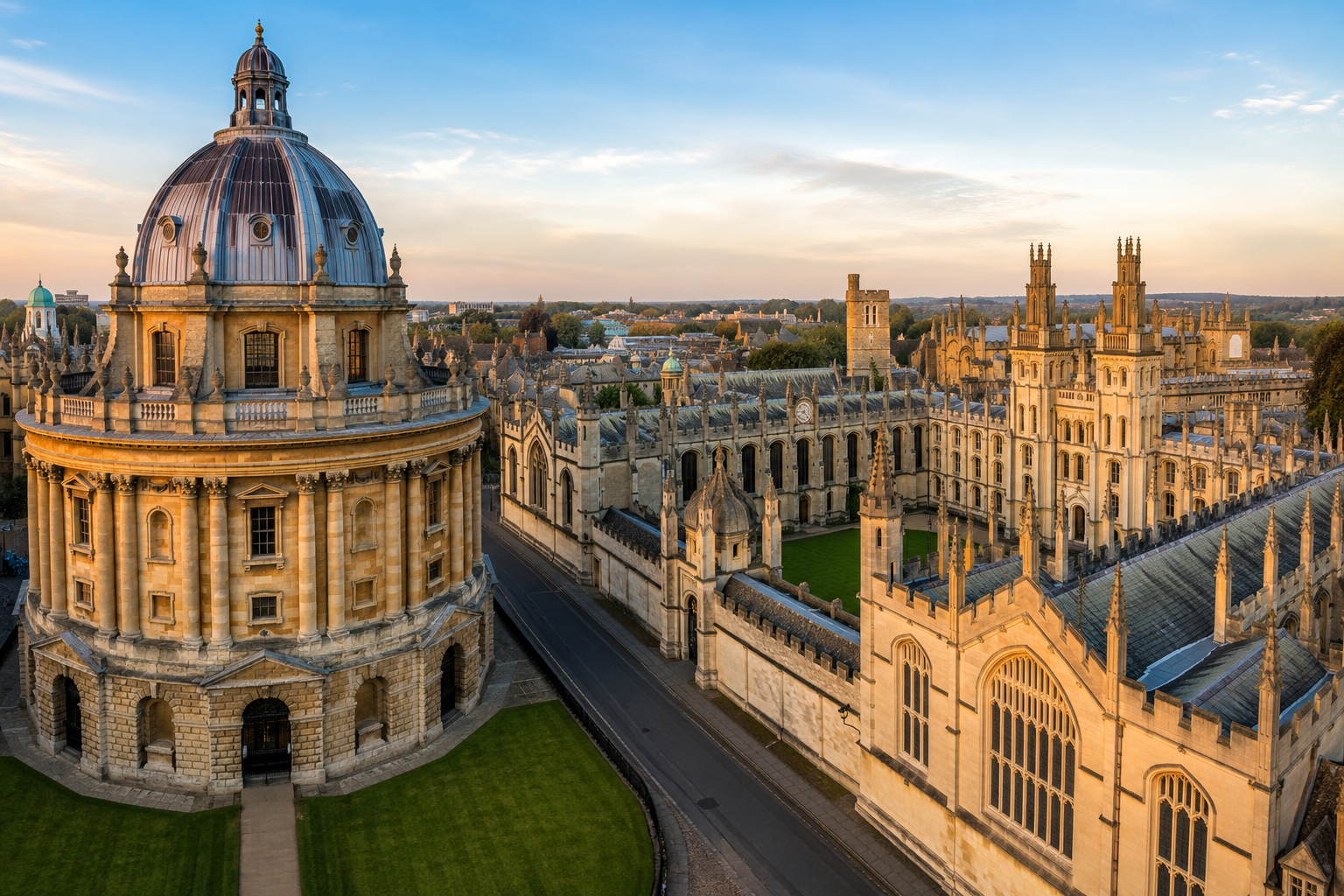
The University of Oxford has long been associated with academic excellence, intellectual leadership, and groundbreaking research. As one of the world’s most influential higher education institutions, it continues to attract ambitious students, researchers, and scholars from nearly every corner of the globe.
Rather than operating as a single campus in the traditional sense, Oxford is made up of numerous independent colleges and academic departments that work together to create a distinctive educational environment. This collegiate structure shapes nearly every aspect of student life, from accommodation and social activities to academic support and community engagement.
Oxford is particularly well known for its tutorial teaching system, where students regularly meet with academic experts in small groups or one-to-one sessions. This approach encourages independent thinking, in-depth discussion, and close interaction with faculty members, making the learning experience highly personalized.
The university offers programs across a wide range of disciplines, including humanities, social sciences, medicine, engineering, business, law, mathematics, and natural sciences. Alongside teaching, Oxford is internationally recognized for research that has contributed to advances in medicine, technology, public policy, artificial intelligence, environmental science, and many other fields.
For prospective students, Oxford represents more than academic prestige. It offers access to a global network of scholars, state-of-the-art research facilities, extensive library resources, and opportunities to collaborate with leading experts. At the same time, applicants should understand that studying at Oxford involves a demanding academic workload and a highly competitive admissions process.
University Fact
| Category | Information |
|---|---|
| Official Name | University of Oxford |
| Established | Teaching dates back to the late 11th century |
| Country | United Kingdom |
| City | Oxford, England |
| Institution Type | Public Collegiate Research University |
| Campus Setting | Historic Urban |
| Academic Structure | Collegiate System |
| Language of Instruction | English |
| Student Community | Domestic and International Students |
| Official Website | https://www.ox.ac.uk |
Why Students Choose the University of Oxford
Students choose Oxford for many different reasons, and prestige alone is rarely the deciding factor. Instead, many applicants are drawn by the combination of academic challenge, expert teaching, and opportunities for intellectual growth.
Some of the most common reasons include:
- World-class teaching from leading academics.
- Small-group tutorials that encourage deep learning.
- Broad selection of undergraduate and graduate programs.
- Exceptional research opportunities.
- Access to historic libraries and specialized collections.
- Strong international reputation among employers.
- Active student societies covering academic, cultural, artistic, and sporting interests.
- Global alumni network that can support future career development.
- A multicultural environment with students from around the world.
However, Oxford may not be the right fit for every student. Its academic expectations are high, coursework can be intensive, and admissions are extremely competitive. Prospective applicants should carefully evaluate whether the university’s teaching style and academic environment match their personal learning preferences and career goals.
History of the University of Oxford
The University of Oxford is recognized as the oldest university in the English-speaking world. Although the exact date of its foundation is unknown, historical evidence shows that teaching was taking place in Oxford by the late 11th century. Over the centuries, it has grown from a small community of scholars into one of the world’s leading centers for education and research.
Unlike many modern universities that were established through a single charter or founding act, Oxford developed gradually. As more scholars and students gathered in the city, permanent academic communities began to form, eventually evolving into the colleges that remain central to university life today.
A significant milestone in Oxford’s history came in 1167, when English students studying in Paris returned home after political tensions between England and France. Many continued their education in Oxford, accelerating the university’s growth and strengthening its reputation as a center of learning.
During the Middle Ages, Oxford became internationally known for theology, philosophy, law, and medicine. Scholars from across Europe traveled to study and teach there, helping establish traditions of academic debate that continue today.
Over the following centuries, Oxford adapted to changing educational needs by expanding into the sciences, engineering, economics, social sciences, and technology. Today, while deeply connected to its historic traditions, the university is also a global leader in modern research and innovation.
Major Historical Milestones
| Period | Milestone |
|---|---|
| Late 11th Century | Teaching activity begins in Oxford. |
| 12th Century | Growth into an organized academic community. |
| 13th Century | Establishment of many of Oxford’s earliest colleges. |
| Renaissance Era | Expansion of classical studies and scientific inquiry. |
| 19th Century | Major educational reforms and broader access to higher education. |
| 20th Century | Growth in scientific research, medicine, and international collaboration. |
| 21st Century | Continued leadership in global research, innovation, and interdisciplinary education. |
How Oxford Has Evolved
One reason Oxford has remained influential for centuries is its ability to evolve without abandoning its traditions.
While its historic buildings and collegiate structure reflect centuries of academic heritage, the university continuously invests in modern laboratories, digital resources, interdisciplinary research, and international partnerships.
Today’s Oxford combines:
- Historic academic traditions
- Modern scientific research
- Global collaboration
- Advanced technology
- Innovation and entrepreneurship
- Diverse international student communities
This balance between history and innovation is one of Oxford’s defining characteristics.
The Oxford College System
One of the most distinctive aspects of the University of Oxford is its collegiate system. Unlike many universities that operate as a single campus, Oxford consists of numerous independent colleges that work alongside the university’s academic departments.
Every degree student belongs to both:
- A college, and
- An academic department or faculty.
This dual structure gives students access to two complementary support systems.
The University Provides
- Degree programs
- Lectures
- Examinations
- Research facilities
- Central libraries
- Laboratories
- Academic regulations
The College Provides
- Student accommodation
- Dining halls
- Academic tutorials
- Welfare support
- Social activities
- Clubs and societies
- Community life
This structure allows students to experience the resources of a large research university while also benefiting from the close-knit environment of a smaller academic community.
Why the College System Matters
Students are often surprised to learn that choosing a college does not usually determine what they study. Instead, colleges create supportive communities where students live, learn, and participate in extracurricular activities.
Benefits of the collegiate system include:
- Smaller academic communities
- Close interaction with tutors
- Personalized academic guidance
- Strong student support services
- Opportunities to participate in college traditions and events
- Lifelong alumni connections
For many graduates, their college becomes a significant part of their Oxford experience.
Oxford’s Tutorial Teaching System
Perhaps the most famous feature of Oxford education is the tutorial system.
Instead of relying only on large lectures, students regularly meet in very small groups—or sometimes one-to-one—with experienced academics to discuss their work.
Typical tutorials involve:
- Reviewing essays or problem sets
- Discussing complex ideas
- Defending arguments
- Receiving detailed feedback
- Developing critical thinking skills
This teaching model encourages students to engage deeply with their subject rather than simply memorizing information.
While tutorials are academically demanding, they also provide highly personalized learning experiences that are uncommon at many universities.
Campus and City Overview
Oxford does not have a single enclosed campus. Instead, its colleges, departments, libraries, museums, and research centers are spread throughout the historic city of Oxford.
Walking through the city, students encounter:
- Historic college courtyards
- Medieval architecture
- Modern research buildings
- Public parks and gardens
- Museums
- Cafés
- Bookstores
- Student residences
The city’s compact layout makes it easy to travel between lectures, libraries, and colleges on foot or by bicycle.
Oxford combines the atmosphere of a historic city with the facilities of a major international university.
Academic Buildings and Learning Spaces
Oxford’s academic environment includes a wide variety of teaching and research spaces, such as:
- Faculty buildings
- Departmental research centers
- Lecture theatres
- Seminar rooms
- Computer laboratories
- Engineering laboratories
- Medical teaching facilities
- Language learning centers
Many historic buildings have been modernized internally while preserving their architectural heritage.
Libraries and Museums
Oxford is home to one of the world’s most extensive academic library systems.
Students have access to:
- Subject-specific libraries
- Department libraries
- College libraries
- Digital collections
- Rare manuscripts
- Historical archives
- Research databases
The university’s libraries support learning across nearly every academic discipline, from medieval history to artificial intelligence.
Oxford also maintains several museums and collections that contribute to teaching and research in archaeology, natural history, science, art, and cultural studies.
Student Accommodation
Most undergraduate students are offered accommodation through their college during at least part of their studies, though arrangements vary between colleges and programs.
Accommodation options generally include:
- College residence halls
- Shared student housing
- Graduate residences
- Family accommodation (where available)
Students often appreciate living close to lecture halls, libraries, and dining facilities, creating a strong sense of community.
Housing policies and availability can change, so applicants should consult their chosen college for the latest information.
Dining and Student Facilities
Oxford colleges typically provide shared dining halls where students can eat together, helping foster a sense of community.
Additional facilities commonly available across colleges include:
- Common rooms
- Study areas
- Music practice rooms
- Sports grounds
- Fitness facilities
- Laundry services
- Prayer spaces
- Student cafés
The specific facilities offered vary from one college to another.
Transportation Around Oxford
Oxford is known as one of the most walkable university cities in the United Kingdom.
Students commonly travel by:
- Walking
- Bicycle
- Local bus services
Many academic buildings are within a short distance of each other, reducing the need for private transportation.
The city also offers convenient rail and coach connections to London and other major UK destinations.
Academic Reputation
The University of Oxford has earned a worldwide reputation for academic excellence through centuries of scholarship, innovation, and research. Rather than focusing on a single discipline, Oxford is recognized for the breadth of its academic strengths across the humanities, sciences, engineering, medicine, law, business, and social sciences.
One of the defining characteristics of an Oxford education is its emphasis on independent learning. Students are encouraged to analyze evidence, challenge assumptions, and develop original ideas instead of relying solely on memorization. This educational philosophy helps graduates build strong analytical, communication, and problem-solving skills that are valued in many professions.
Oxford also attracts leading academics from around the world. Many faculty members are internationally recognized researchers who contribute to scientific discoveries, public policy, literature, medicine, economics, and technological innovation. As a result, students often learn directly from experts actively shaping their fields.
What Makes Oxford Academically Unique?
Several factors distinguish Oxford from many other leading universities.
Tutorial-Based Learning
Oxford’s tutorial system remains one of its most distinctive educational features. Students meet regularly with expert tutors in very small groups to discuss assignments, solve complex problems, and receive personalized feedback. This approach encourages deeper understanding rather than passive learning.
Research-Led Teaching
Many lecturers and professors are active researchers. Their work influences classroom teaching by introducing students to current developments and real-world challenges within their disciplines.
Interdisciplinary Opportunities
Oxford increasingly encourages collaboration across departments. Students and researchers frequently work on projects that combine fields such as:
- Artificial Intelligence and Medicine
- Computer Science and Linguistics
- Environmental Science and Public Policy
- Economics and Data Science
- Engineering and Biomedical Research
This interdisciplinary approach reflects the growing complexity of modern global challenges.
Global Reputation
Oxford enjoys a strong international reputation among:
- Universities
- Research institutions
- Governments
- Multinational companies
- Healthcare organizations
- International agencies
- Non-profit organizations
Graduates often pursue careers in academia, public service, entrepreneurship, healthcare, technology, finance, law, consulting, journalism, and scientific research.
Because Oxford maintains collaborations with institutions worldwide, students also benefit from international academic networks and research partnerships.
Global Rankings
Oxford is consistently recognized by major international ranking organizations as one of the world’s leading universities. However, rankings should always be interpreted carefully because different organizations use different methodologies.
Common evaluation criteria include:
- Academic reputation
- Research quality
- Faculty expertise
- Employer reputation
- International outlook
- Citation impact
- Teaching environment
- Industry collaboration
Rather than focusing on a single ranking position, prospective students should evaluate whether Oxford’s academic strengths align with their personal interests and career goals.
Academic Divisions
Oxford organizes its teaching and research into several major academic divisions.
Humanities
The Humanities Division includes subjects that explore language, history, philosophy, culture, religion, literature, and the arts.
Popular areas include:
- History
- Philosophy
- English Language and Literature
- Classics
- Theology
- Linguistics
- Music
- Modern Languages
Students develop strong analytical, writing, and communication skills while studying historical and contemporary ideas.
Mathematical, Physical and Life Sciences
This division supports education and research across numerous scientific disciplines.
Major areas include:
- Mathematics
- Physics
- Chemistry
- Biology
- Earth Sciences
- Statistics
- Computer Science
Students benefit from laboratory work, research opportunities, and collaboration with internationally recognized scientists.
Medical Sciences
Oxford’s Medical Sciences Division is widely respected for both teaching and biomedical research.
Academic areas include:
- Medicine
- Clinical Research
- Neuroscience
- Immunology
- Public Health
- Pharmacology
- Medical Imaging
- Molecular Medicine
Researchers in these fields contribute to advances in disease prevention, diagnosis, and treatment.
Social Sciences
Oxford offers extensive programs that examine societies, governments, economies, and human behavior.
Examples include:
- Economics
- Politics
- International Relations
- Sociology
- Education
- Geography
- Anthropology
- Law
- Business
Students learn to analyze complex social issues using both qualitative and quantitative methods.
Undergraduate Programs
Oxford offers undergraduate degrees across a broad range of disciplines. Admission is highly competitive, and programs emphasize academic depth from the beginning of study.
Popular undergraduate fields include:
- Computer Science
- Engineering Science
- Mathematics
- Physics
- Medicine
- Law
- Economics and Management
- Philosophy, Politics and Economics (PPE)
- History
- English Language and Literature
- Biomedical Sciences
- Chemistry
- Psychology
- Modern Languages
Many courses combine lectures, tutorials, laboratory work, independent study, and examinations.
Graduate and Doctoral Programs
Oxford also offers a wide range of postgraduate opportunities, including:
Master’s Degrees
Students may pursue advanced study through taught or research-based master’s programs in numerous disciplines.
Doctoral Degrees
Doctoral researchers work closely with academic supervisors while contributing original research to their chosen field.
Professional Programs
Oxford also offers professional education in areas such as:
- Business
- Public Policy
- Education
- Clinical Medicine
- Law
- Finance
Graduate students often participate in international conferences, interdisciplinary research, and industry collaborations.
Research Excellence
Research is one of Oxford’s defining strengths.
University researchers contribute to discoveries in:
- Artificial Intelligence
- Medicine
- Vaccine Development
- Climate Science
- Renewable Energy
- Quantum Computing
- Robotics
- Genetics
- Astronomy
- Public Health
- Sustainable Development
Oxford encourages collaboration across departments, allowing experts from different disciplines to address complex global challenges.
Innovation and Entrepreneurship
Oxford supports innovation through research commercialization, startup development, and collaboration with industry.
Students and researchers have opportunities to:
- Develop new technologies
- Launch startup companies
- Collaborate with industry partners
- Protect intellectual property
- Participate in entrepreneurship programs
- Access innovation support services
These initiatives help transform academic research into practical applications with social and economic impact.
International Collaboration
Oxford maintains academic partnerships with universities, research institutes, governments, and organizations around the world.
These collaborations support:
- Joint research projects
- Student exchanges
- Faculty exchanges
- International conferences
- Global health initiatives
- Scientific cooperation
- Cultural partnerships
Such international engagement enriches both teaching and research while exposing students to diverse perspectives.
Why Oxford Is Considered a Global Academic Leader
Oxford’s reputation is built on a combination of factors rather than a single achievement.
These include:
- Centuries of academic tradition
- World-class teaching
- Rigorous tutorial system
- Outstanding research output
- Highly qualified faculty
- Global partnerships
- Broad academic offerings
- Diverse student community
- Strong alumni network
- Commitment to innovation and public impact
Together, these elements have helped Oxford remain one of the world’s most influential universities while continuing to adapt to changing educational and research priorities.
Admissions Process
Admission to the University of Oxford is highly competitive. Oxford looks for applicants who demonstrate outstanding academic achievement, intellectual curiosity, subject-specific preparation, and the ability to think critically.
For undergraduate applicants, the process usually involves applying through UCAS and meeting Oxford’s earlier application deadline. Postgraduate applicants generally apply directly through Oxford’s graduate admissions system.
Typical admissions stages
- Research the course and check official entry requirements.
- Prepare academic records, test scores, and supporting documents.
- Submit the application by the relevant deadline.
- Complete any required admissions test.
- Submit written work if the course requires it.
- Attend an interview if shortlisted.
- Receive the admissions decision.
Eligibility Requirements
Oxford expects applicants to have a very strong academic background. Specific requirements vary by course, level of study, and applicant background.
Undergraduate applicants
- Strong secondary school qualifications equivalent to UK A-level standards.
- Excellent grades in relevant subjects.
- Evidence of academic ability and intellectual curiosity.
- Course-specific subject preparation.
- English language proficiency for applicants whose first language is not English.
Postgraduate applicants
- A strong bachelor’s degree, usually with high academic standing.
- Relevant academic preparation for the chosen program.
- Research proposal for research-based degrees where required.
- Academic references.
- English language proficiency.
UCAS application guide for undergraduates
Most undergraduate applicants apply to Oxford through UCAS. Oxford applications usually have an earlier deadline than many other UK university applications.
Key UCAS application components
- UCAS application form.
- Choice of Oxford course.
- College preference, or open application.
- Academic qualifications and predicted grades.
- Personal statement.
- Academic reference.
- Admissions test registration where required.
Choosing a college
Applicants may select a preferred Oxford college or submit an open application. In an open application, the university assigns the application to a college with available capacity. College choice does not usually determine the course content, but it may affect accommodation, tutorials, and college community experience.
Required documents
Applicants should prepare documents carefully and ensure that all information is accurate and complete.
Common documents for undergraduate applicants
- Academic transcripts or certificates.
- Predicted grades from the current school, where applicable.
- Personal statement.
- Academic reference.
- English language test scores, if required.
- Written work for courses that require it.
- Passport or identification documents for international applicants.
Common documents for postgraduate applicants
- Academic transcripts and degree certificates.
- Curriculum vitae (CV) or résumé.
- Statement of purpose or personal statement.
- Research proposal for research programs, where required.
- Academic references.
- English language test scores, if required.
- Writing samples or portfolio, depending on the course.
Personal statement and written work
Personal statement
The personal statement should focus on academic motivation and suitability for the chosen subject. Oxford values evidence of genuine interest in the discipline, independent reading, relevant experiences, and the ability to think critically about academic ideas.
Written work
Some Oxford courses require applicants to submit written work, such as essays or assignments. This helps tutors assess the applicant’s analytical ability, writing quality, and engagement with the subject.
Applicants should follow the official course instructions carefully, including word limits, submission formats, and deadlines.
Oxford admissions tests
Many Oxford courses require applicants to take an admissions test as part of the selection process. The required test depends on the course.
Examples of Oxford admissions tests
| Course area | Possible test |
|---|---|
| Medicine | UCAT |
| Law | LNAT |
| Mathematics | MAT |
| Physics and Engineering | PAT |
| Philosophy, Politics and Economics (PPE) | TSA |
| Computer Science | MAT |
Test requirements can change, so applicants should check the official Oxford course page for the most current information.
Interview process
Applicants who are shortlisted may be invited to interview. Oxford interviews are designed to assess academic potential, critical thinking, problem-solving ability, and enthusiasm for the subject.
What interviews may involve
- Discussion of academic interests and previous study.
- Analysis of unfamiliar material.
- Problem-solving questions.
- Discussion of written work, if submitted.
- Questions that explore how the applicant thinks, rather than memorized answers.
Interviews may be conducted in person or online, depending on the admissions cycle and applicant circumstances.
English language requirements
Applicants whose first language is not English may need to demonstrate English language proficiency. Oxford accepts several recognized English language tests, subject to the university’s official requirements.
Common accepted tests
- IELTS Academic.
- TOEFL iBT.
- Cambridge English qualifications.
- Other approved English language tests, where applicable.
Required scores vary by course and program level. Applicants should check the specific course page for the exact requirement.
Tuition fees
Tuition fees at Oxford vary by course, level of study, and student status. International students generally pay higher tuition fees than UK students.
Typical tuition fee categories
| Student category | Fee consideration |
|---|---|
| UK undergraduate students | Usually lower regulated fees. |
| International undergraduate students | Higher fees depending on the course. |
| Postgraduate taught students | Fees vary significantly by program. |
| Doctoral students | Fees depend on the research program and student status. |
Because fees are updated periodically, applicants should consult the official Oxford fees page for the latest figures.
Living costs
In addition to tuition, students should budget for living expenses in Oxford. Costs can vary depending on accommodation type, lifestyle, and personal spending habits.
Common living expenses
- Accommodation.
- Food and dining.
- Books and study materials.
- Transportation.
- Personal expenses.
- Health insurance or healthcare-related costs, where applicable.
- Social and extracurricular activities.
Oxford is a popular student city, so accommodation costs and availability can vary by college and housing type.
Scholarships and financial aid
Oxford offers a range of scholarships, bursaries, and financial support opportunities for eligible students. Availability depends on nationality, course, academic merit, financial need, and funding source.
Common funding opportunities
- University-wide scholarships.
- College-specific scholarships and bursaries.
- Government-sponsored scholarships.
- External scholarships for international students.
- Research funding for postgraduate students.
Applicants should explore funding options early, as scholarship deadlines may be earlier than course application deadlines.
Application tips for international students
- Research the course thoroughly and ensure it matches your academic interests.
- Check country-specific qualification requirements.
- Prepare strong academic records and references.
- Demonstrate genuine subject interest through reading, projects, competitions, or research.
- Practice critical thinking and problem-solving for interviews and admissions tests.
- Meet English language requirements well before the application deadline.
- Apply for scholarships and financial aid as early as possible.
- Use official Oxford resources for the most accurate and current guidance.
Student Life at the University of Oxford
Studying at the University of Oxford extends far beyond lectures, tutorials, and examinations. Students become part of a vibrant academic community where learning, personal development, cultural exchange, and extracurricular involvement are deeply connected.
Because every student belongs to both a college and the wider university, there are countless opportunities to build friendships, develop leadership skills, and participate in activities that complement academic study.
Oxford’s student community includes individuals from more than 160 countries, creating an environment where different cultures, ideas, and perspectives are part of everyday life.
Campus Culture
Oxford’s culture is shaped by a combination of centuries-old traditions and modern academic life.
Students often experience:
- A strong sense of academic curiosity.
- Respectful intellectual debate.
- Close relationships with tutors and peers.
- Diverse cultural communities.
- Independent learning.
- Collaboration across disciplines.
Although the workload can be demanding, many students describe Oxford as an environment that encourages both academic excellence and personal growth.
Accommodation
Accommodation is an important part of the Oxford experience.
Many undergraduate students live in college accommodation during at least part of their degree, allowing them to stay close to lecture halls, libraries, and dining facilities.
Depending on the college and program, accommodation may include:
- Single study bedrooms.
- Shared apartments.
- Graduate residences.
- Family accommodation (where available).
- Accessible housing for students with disabilities.
Most college residences provide internet access, study areas, communal kitchens or dining halls, laundry facilities, and welfare support.
Accommodation policies vary by college, so students should review the official information provided by their chosen college.
Dining Facilities
Oxford colleges traditionally provide dining halls where students can enjoy meals together.
Dining options generally include:
- Breakfast, lunch, and dinner services.
- Vegetarian and vegan meals.
- International cuisine.
- Dietary accommodations where possible.
- College cafés and snack bars.
Many students also prepare meals independently in shared kitchens or explore restaurants and cafés throughout the city of Oxford.
Student Clubs and Societies
One of Oxford’s greatest strengths is the wide variety of student-led organizations.
Whether students are interested in academics, entrepreneurship, sports, music, public speaking, or volunteering, there are opportunities to become involved.
Popular categories include:
Academic Societies
- Economics Society
- Law Society
- Engineering Society
- Computer Science Society
- Medical Society
- Philosophy Society
Cultural Societies
- International student associations
- Language societies
- Regional student groups
- Cultural heritage organizations
Arts and Performance
- Drama groups
- Choirs
- Orchestra
- Photography clubs
- Film societies
- Creative writing groups
Professional Development
- Entrepreneurship clubs
- Consulting societies
- Finance societies
- Investment clubs
- Technology organizations
Participation in these societies helps students develop leadership, teamwork, and communication skills while expanding their professional networks.
Sports and Recreation
Oxford has a long tradition of competitive and recreational sports.
Students can participate in:
- Rowing
- Football
- Rugby
- Cricket
- Athletics
- Tennis
- Swimming
- Basketball
- Cycling
- Martial arts
- Badminton
- Hockey
Many colleges have their own sports teams, while the university also supports intercollegiate and national competitions.
Sports participation promotes physical well-being, teamwork, and social interaction alongside academic life.
Arts, Music, and Culture
Oxford provides numerous opportunities for students interested in creative expression.
Students may attend or participate in:
- Theatre productions.
- Classical music concerts.
- Art exhibitions.
- Literary festivals.
- Public lectures.
- Museum events.
- Poetry readings.
- Film screenings.
The city’s rich cultural heritage makes it an inspiring place for students studying both the arts and sciences.
International Student Experience
Oxford welcomes students from across the globe and provides services designed to support their transition to life in the United Kingdom.
Support services commonly include:
- International student orientation.
- Visa and immigration guidance.
- Academic support.
- English language assistance.
- Student well-being services.
- Career guidance.
- Cultural events.
International students also benefit from meeting classmates from a wide range of educational and cultural backgrounds.
Diversity and Inclusion
Oxford is committed to creating an inclusive learning environment where students from different backgrounds can thrive.
University initiatives focus on:
- Equal educational opportunities.
- Accessibility support.
- Student welfare.
- Mental health services.
- Inclusive teaching practices.
- Respect for cultural diversity.
Students are encouraged to participate in an environment built on mutual respect and academic integrity.
Research and Innovation
Research is central to Oxford’s mission.
Researchers at Oxford work on challenges that affect people around the world, including:
- Artificial Intelligence.
- Climate change.
- Sustainable energy.
- Public health.
- Cancer research.
- Infectious diseases.
- Robotics.
- Space science.
- Quantum technologies.
- Biodiversity conservation.
Students—particularly at the postgraduate level—often have opportunities to contribute to research projects under the supervision of experienced academics.
Innovation and Entrepreneurship
Oxford supports innovation by helping researchers and students transform ideas into practical solutions.
The university encourages:
- Startup creation.
- Technology commercialization.
- Industry collaboration.
- Patent development.
- Innovation competitions.
- Entrepreneurial education.
Students interested in business and technology can gain valuable experience through workshops, networking events, and startup support programs.
Career Services
Oxford provides career development resources throughout a student’s academic journey.
Career support may include:
- Career counseling.
- CV and résumé reviews.
- Interview preparation.
- Internship guidance.
- Employer networking events.
- Career fairs.
- Graduate recruitment programs.
- Skills workshops.
Students are encouraged to begin career planning early to make the most of available opportunities.
Graduate Employability
Oxford graduates are employed across a wide range of industries and professions.
Common career destinations include:
- Technology
- Medicine
- Scientific research
- Finance
- Law
- Government
- Public policy
- Education
- Journalism
- Consulting
- Entrepreneurship
- International organizations
Many employers value Oxford graduates for their analytical thinking, communication skills, research experience, and ability to solve complex problems.
While graduate outcomes vary by subject and individual circumstances, Oxford’s global reputation and extensive alumni network can provide valuable professional connections.
Famous Alumni
The University of Oxford has educated many individuals who have made significant contributions in politics, science, literature, business, and the arts.
Some well-known alumni include:
- Stephen Hawking – Theoretical physicist (graduate studies).
- J. R. R. Tolkien – Author and academic.
- Oscar Wilde – Writer and playwright.
- Margaret Thatcher – Former Prime Minister of the United Kingdom.
- Indira Gandhi – Former Prime Minister of India (studied at Oxford).
- Bill Clinton – Former President of the United States (Rhodes Scholar).
- Malala Yousafzai – Nobel Peace Prize laureate.
- Tim Berners-Lee – Inventor of the World Wide Web (Oxford graduate).
Their achievements reflect diverse careers and should not be interpreted as guarantees of outcomes for future students.
University Rankings
The University of Oxford consistently ranks among the world’s leading universities. While rankings should not be the sole factor in choosing a university, they provide useful insights into academic reputation, research performance, teaching quality, and international impact.
Major Global Ranking Organizations
Oxford is regularly evaluated by organizations such as:
- Times Higher Education (THE)
- QS World University Rankings
- Academic Ranking of World Universities (ARWU/Shanghai Ranking)
- U.S. News Best Global Universities
Each ranking uses different methodologies, including:
- Academic reputation
- Employer reputation
- Research quality
- Citation impact
- International outlook
- Faculty achievements
- Industry collaboration
Prospective students should compare rankings alongside factors such as course content, teaching style, location, costs, and career opportunities.
Oxford vs Cambridge
Oxford and the University of Cambridge are often compared because both are among the world’s oldest and most prestigious universities.
| Feature | University of Oxford | University of Cambridge |
|---|---|---|
| Teaching Style | Tutorial System | Supervision System |
| Structure | Collegiate University | Collegiate University |
| Research Strength | Outstanding across disciplines | Outstanding across disciplines |
| Student Life | Historic urban city | Historic university city |
| Global Reputation | Excellent | Excellent |
| International Students | Large international community | Large international community |
Neither university is universally “better.” The right choice depends on the student’s preferred course, teaching style, research interests, and personal goals.
Oxford Compared with Other Leading Universities
| University | Best Known For |
|---|---|
| University of Oxford | Humanities, Medicine, Law, PPE, Research |
| University of Cambridge | Engineering, Mathematics, Sciences |
| Harvard University | Law, Business, Medicine |
| Stanford University | Technology, Entrepreneurship |
| Massachusetts Institute of Technology (MIT) | Engineering, Computer Science |
| Princeton University | Undergraduate education, Mathematics |
Each institution has unique strengths, and applicants should compare individual programs rather than relying only on overall reputation.
Pros and Cons
Advantages
| Pros |
|---|
| World-renowned academic reputation |
| Outstanding tutorial-based teaching |
| Exceptional research opportunities |
| Strong global employer recognition |
| Historic libraries and learning resources |
| Diverse international student community |
| Extensive alumni network |
| Excellent career support |
| Broad range of academic disciplines |
| Rich student traditions and culture |
Considerations
| Considerations |
|---|
| Highly competitive admissions |
| Academically demanding workload |
| Tuition and living expenses can be significant, especially for international students |
| Some courses require admissions tests and interviews |
| Balancing academic commitments with extracurricular activities can be challenging |
These considerations should be viewed as factors to plan for rather than disadvantages.
Who Should Consider Oxford?
Oxford may be an excellent fit for students who:
- Enjoy intellectual challenges.
- Prefer independent learning.
- Like discussing ideas in small groups.
- Have a strong academic record.
- Want access to world-class research.
- Are comfortable with rigorous coursework.
- Aspire to careers in research, leadership, public service, technology, medicine, business, or academia.
Application Preparation Timeline
18–24 Months Before Applying
- Explore courses.
- Research admission requirements.
- Strengthen academic performance.
- Participate in subject-related activities.
After Applying
- Complete admissions tests.
- Attend interviews if invited.
- Monitor application status.
- Prepare financial planning and visa documents if admitted.
Frequently Asked Questions (FAQs)
1. Is Oxford difficult to get into?
Yes. Admission is highly competitive and based on academic achievement, subject preparation, admissions tests (for some courses), written work (where required), and interviews.
2. Does Oxford accept international students?
Yes. Students from many countries study at Oxford each year.
3. Is financial aid available?
Yes. Various scholarships, bursaries, and funding opportunities are available, although eligibility varies.
4. Does every student belong to a college?
Yes. Degree students are members of both a college and an academic department.
5. What is the tutorial system?
It is Oxford’s small-group teaching method where students discuss their work directly with expert tutors.
6. Can students participate in research?
Yes. Especially at the postgraduate level, though many undergraduate students also have research opportunities.
7. Is accommodation guaranteed?
Accommodation policies differ by college. Many undergraduates receive college accommodation for at least part of their studies.
8. Which subjects is Oxford famous for?
Oxford is especially well known for:
- Medicine
- Law
- Philosophy
- Politics
- Economics
- History
- English
- Mathematics
- Computer Science
- Engineering
9. Are interviews mandatory?
Many courses include interviews for shortlisted applicants, but requirements vary.
10. Can international students work while studying?
International students may have permission to work under UK visa regulations. Applicants should always review the latest government guidance.
Official Resources
For the latest verified information, prospective students should consult the official University of Oxford resources, including:
- Official University Homepage
- Undergraduate Admissions
- Graduate Admissions
- Course Finder
- Scholarships and Funding
- International Students
- College Finder
- Libraries
- Accommodation
- Careers Service
Internal Links for Your Website
To improve SEO and user navigation, you can internally link this article to:
- Harvard University Complete Guide
- Stanford University Complete Guide
- Massachusetts Institute of Technology (MIT) Complete Guide
- Best Universities in the United Kingdom
- How to Study in the UK
- UK Student Visa Guide
- Scholarships for International Students
- Oxford vs Cambridge Comparison
- Best Computer Science Universities
- Best Medical Universities in the World
Conclusion
The University of Oxford remains one of the most respected universities in the world because of its long academic history, rigorous teaching methods, outstanding research, and global influence. Its collegiate system, tutorial-based learning, and strong emphasis on critical thinking create an educational experience that is both intellectually challenging and personally rewarding.
Oxford is not the ideal choice for every student. The admissions process is highly selective, the academic workload is demanding, and studying in the United Kingdom can involve significant financial planning. However, for students who are academically motivated, enjoy independent learning, and are prepared for a challenging environment, Oxford offers exceptional opportunities for growth, research, and career development.
Rather than choosing Oxford solely because of its reputation, prospective students should carefully evaluate whether its teaching style, academic expectations, course offerings, and college system align with their own goals and learning preferences. Making an informed decision based on verified information and personal fit is the best way to determine whether Oxford is the right university for you.