
Shanghai Jiao Tong University: Admissions, Programs, Fees & Complete Guide
Fees, scholarships, admissions and deadlines for Indian students at Shanghai Jiao Tong University — one of China’s top-ranked universities.

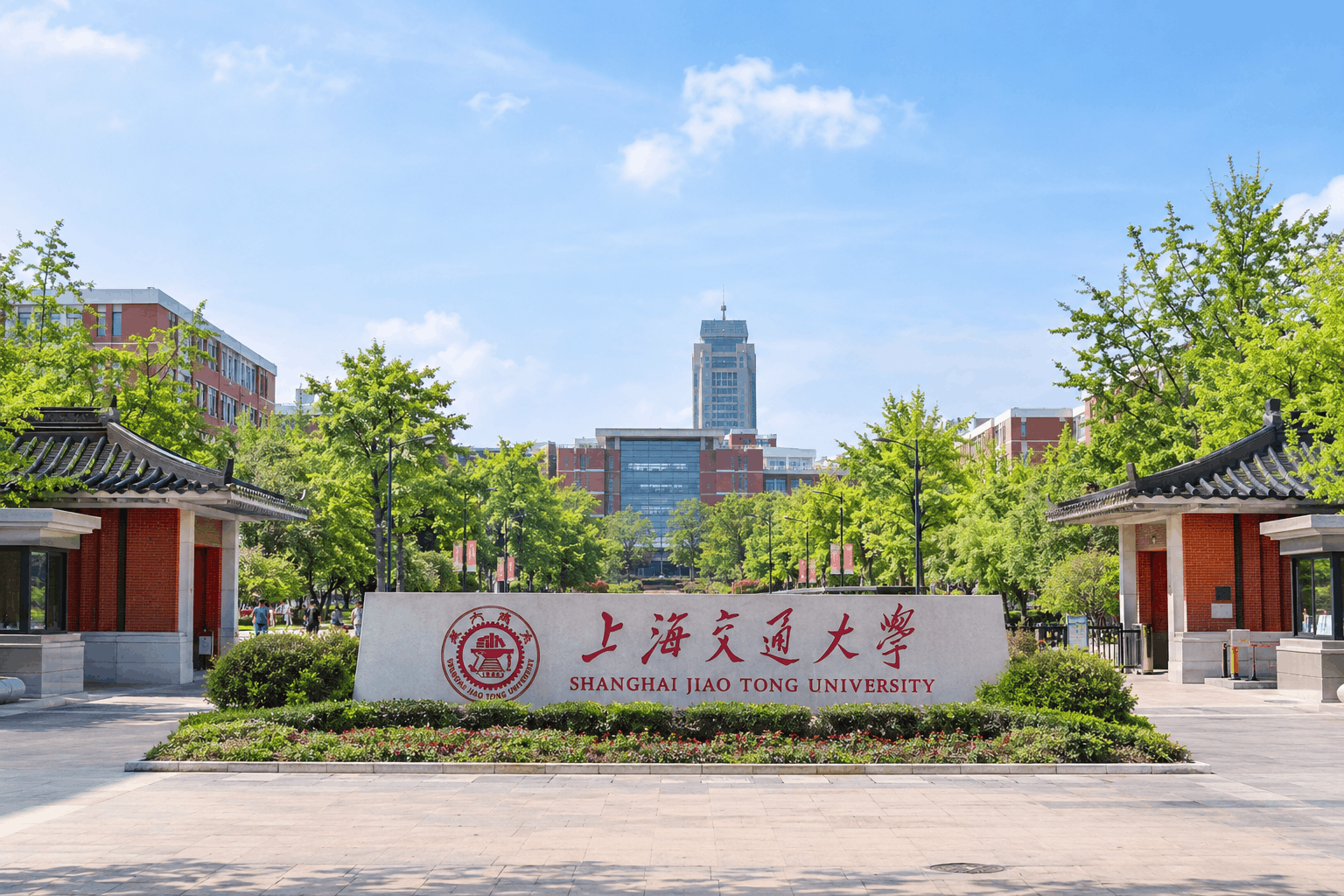
Introduction
Shanghai Jiao Tong University (SJTU) is a major research university in Shanghai, China, with a history that dates back to 1896. Its institutional roots can be traced to Nanyang College, established by Sheng Xuanhuai, and the university has undergone several organizational and name changes during more than a century of development. The institution officially became known as Shanghai Jiao Tong University in 1959.
Today, SJTU operates as a comprehensive university covering areas that include engineering, science, medicine, agriculture, economics, management, humanities, law and interdisciplinary studies. Its academic profile combines teaching with substantial research activity, while its location in Shanghai places students in one of China’s major economic, technological and cultural centers.
For prospective students, understanding SJTU requires looking beyond its international rankings. Its long history, multiple campuses, broad academic structure and strong research orientation all shape the university experience. Students considering SJTU should also examine the specific school or program they are interested in because academic opportunities and requirements can differ considerably between disciplines.
What Is Shanghai Jiao Tong University?
Shanghai Jiao Tong University, commonly abbreviated as SJTU, is a comprehensive research university located in Shanghai, China.
The university was founded in 1896 as Nanyang College. Over time, it developed through several institutional transformations and became Shanghai Jiao Tong University in 1959. In 2005, Shanghai Second Medical University was integrated with SJTU, strengthening its medical education and research capabilities.
SJTU currently has campuses in several parts of Shanghai. The university’s official international admissions information identifies six campuses in Xuhui, Minhang, Huangpu, Changning, Pudong and Chongming, covering more than 3 million square meters in total.
Its academic structure spans numerous disciplines, including engineering, science, medicine, agriculture, management, economics, law, humanities and interdisciplinary studies.
Shanghai Jiao Tong University: Quick Facts
| Category | Information |
|---|---|
| Official Name | Shanghai Jiao Tong University |
| Abbreviation | SJTU |
| Founded | 1896 |
| Original Institution | Nanyang College |
| Current Name Adopted | 1959 |
| Location | Shanghai, China |
| University Type | Comprehensive research university |
| Campuses | Multiple campuses across Shanghai |
| Total Students | 61,100+ reported by SJTU |
| International Students | 2,800+ reported by SJTU |
| Teaching Faculty | 4,130 reported by SJTU |
| QS World University Rankings 2026 | #47, according to SJTU’s official website |
| Official Website | Shanghai Jiao Tong University |
History of Shanghai Jiao Tong University
The Beginning in 1896
The history of Shanghai Jiao Tong University begins in 1896, when Sheng Xuanhuai founded Nanyang College in Shanghai. According to SJTU’s official historical account, the institution represented an important development in modern higher engineering education in China.
During its early years, the institution went through several names and organizational changes. It developed academic areas connected with the technological and industrial needs of the period, including railway studies, electrical engineering and maritime studies.
This early emphasis on technical education became an important part of the institution’s later academic identity.
Development Into Chiao Tung University
During the 1920s, several institutions and academic units were reorganized into Chiao Tung University. The Shanghai branch subsequently went through additional name changes, including Chiao-Tung-Pu Nanyang University and other forms of the Chiao Tung University name.
The university continued to expand its academic activities, particularly in engineering, science and related technical fields.
In 1926, a university-based industrial research institute was established, an important development in the institution’s research history.
National Chiao Tung University Era
From 1928, the institution became associated with the name National Chiao Tung University. During this period, it developed a strong academic identity around engineering, science and management.
The Second Sino-Japanese War significantly affected the university. Between 1942 and 1946, the university’s campus operations were relocated to Chongqing. During the 1940s, the institution also expanded its telecommunications research and graduate engineering education.
These developments contributed to the university’s longer-term research orientation.
The 1950s Reorganization
The 1950s brought major changes to China’s higher education system. In 1952, SJTU’s predecessor institution underwent departmental restructuring, with programs such as mechanical engineering, electrical engineering and shipbuilding continuing as important areas.
In 1955, the main body of Chiao Tung University relocated westward to Xi’an. Two branches subsequently operated in Shanghai and Xi’an before becoming separate institutions in 1959.
This historical split is important because it is connected to the separate institutional histories of Shanghai Jiao Tong University and Xi’an Jiaotong University.
Shanghai Jiao Tong University Since 1959
In 1959, the Shanghai branch officially became Shanghai Jiao Tong University and was recognized as one of China’s key universities.
The institution continued expanding its academic and research activities in the following decades. In 1984, it received state-level support as a key institution and began trial operations of a graduate school. The Minhang Campus opened in 1985, becoming an important part of the university’s modern campus system.
SJTU was selected for Project 211 in 1995 and Project 985 in 1999, reflecting its participation in major national higher-education development initiatives of that period.
The 2005 Medical University Merger
Another major milestone came in 2005, when Shanghai Jiao Tong University merged with Shanghai Second Medical University.
This integration expanded SJTU’s academic scope and created the university’s School of Medicine. The medical institution itself had a longer history involving earlier medical schools in Shanghai.
The merger helped establish the modern SJTU as a more comprehensive university rather than an institution focused primarily on engineering and technical education.
Campus Overview
Shanghai Jiao Tong University has developed a multi-campus structure across Shanghai rather than operating from a single traditional campus.
According to SJTU’s current international admissions information, the university has six campuses located in Xuhui, Minhang, Huangpu, Changning, Pudong and Chongming. Together, these campuses cover more than 3 million square meters.
Two campuses that prospective students are particularly likely to encounter are the Xuhui Campus and Minhang Campus.
Xuhui Campus
The Xuhui Campus is closely connected with SJTU’s historical identity and is located at 1954 Huashan Road in Xuhui District, Shanghai. The university’s official transportation information provides Metro access through nearby stations including Xujiahui and Jiao Tong University stations.
Because of its historical significance and central Shanghai location, Xuhui offers a different environment from the larger Minhang campus.
The university’s history museum has also had a presence at Xuhui. SJTU states that its history museum was inaugurated there in 1996 for the university’s centennial anniversary and later expanded through a new museum facility at Minhang.
Minhang Campus
The Minhang Campus is another major part of SJTU’s modern campus system. Its official address is 800 Dongchuan Road, Minhang District, Shanghai.
The campus opened in 1985 and has played an important role in the university’s expansion.
Minhang is associated with a larger modern university environment, with academic facilities, student services and other campus resources supporting SJTU’s educational and research activities.
For students researching SJTU, the campus associated with a particular program matters because the university’s academic and administrative activities are distributed across multiple locations.
Campus Facilities
Shanghai Jiao Tong University provides facilities designed to support teaching, research and student activities. Its official materials identify laboratories, libraries, research facilities and other academic resources as part of its university environment.
The university also operates museums and cultural facilities. Its Museum of SJTU’s History at Minhang covers 2,350 square meters and includes exhibitions covering the university’s history, present-day development, talent and institutional traditions.
For students, campus resources can vary according to location and academic program. Therefore, applicants should check the facilities connected specifically with their school or department rather than assuming that every facility is available in the same form at every campus.
Academic Reputation
Shanghai Jiao Tong University has a broad academic structure rather than specializing in just one field.
The university states that its colleges span science, engineering, medicine, economics, management, humanities, law and agriculture, alongside interdisciplinary areas.
Shanghai Jiao Tong University is part of China’s highly developed higher-education landscape, alongside institutions such as Peking University.
Its historical development helps explain why engineering and technical disciplines remain an important part of its academic identity. At the same time, the integration of medical education in 2005 and the subsequent development of other schools have made SJTU a much broader comprehensive institution.
For students choosing a university, this breadth can matter because it provides opportunities across undergraduate, graduate and doctoral education. However, the academic experience will depend heavily on the specific program, department and campus.
Shanghai Jiao Tong University is particularly notable for its research strength, similar to other research-focused institutions such as California Institute of Technology.
Research Strength
Research is a major component of SJTU’s current institutional profile.
According to the university’s official figures, SJTU reported:
- 7.9 billion CNY in research funding as of 2024
- 1,553 National Natural Science Foundation of China projects as of 2024
- 25,711 SCI papers as of 2024
- 2,643 highly cited papers as of 2025
- 59 Chinese Academy of Sciences and Chinese Academy of Engineering academicians
These figures illustrate the scale of the university’s research activity, although research indicators should be interpreted in the context of their dates and methodologies.
Students interested in research-oriented education can also compare opportunities at universities such as Cornell University.
SJTU also reports that 21 disciplines were listed among the ESI Top 1% disciplines in 2025, while 23 disciplines were among the top 50 in the 2025 QS World University Rankings by Subject, according to the university.
Students interested in advanced scientific research can also explore institutions such as Australian National University to compare different research environments.
Shanghai Jiao Tong University Rankings
Rankings can provide one way to understand how an institution is positioned internationally, but different ranking organizations use different methodologies. A university’s overall position can therefore vary between ranking systems and from one year to another.
SJTU’s official website currently lists the following figures:
| Ranking | SJTU’s Position |
|---|---|
| QS World University Rankings 2026 | #47 |
| Global Employability University Ranking 2026 | #40 |
| ESI Top 1% Disciplines, 2025 | 21 disciplines |
These figures should be treated as dated ranking information rather than a permanent measurement of university quality. Your master prompt specifically calls for rankings to be presented with their methodology and changing nature in mind.
Academic Programs at Shanghai Jiao Tong University
Shanghai Jiao Tong University offers academic programs across a wide range of disciplines. Its academic structure includes undergraduate, master’s, doctoral, and other specialized educational opportunities.
The university’s broad academic portfolio allows students to pursue traditional STEM fields as well as medicine, business, economics, humanities, law, agriculture, and interdisciplinary subjects.
For applicants, the most important step is to identify the specific school and degree program because admission requirements, language requirements, application procedures, and academic prerequisites can differ between programs.
Major Academic Areas
Students can find programs and academic departments covering areas such as:
- Engineering
- Computer Science and Information Technology
- Natural Sciences
- Medicine
- Economics
- Business and Management
- Agriculture
- Humanities
- Social Sciences
- Law
- Environmental and related interdisciplinary fields
The exact programs available to international students can change from year to year, so applicants should consult the relevant SJTU school or international admissions page before applying.
Undergraduate Programs
Undergraduate education at SJTU covers multiple academic disciplines. Students can apply to programs according to their academic background and the admission route applicable to their nationality and educational qualifications.
For international applicants, SJTU provides dedicated information concerning undergraduate admission. Applicants should carefully review the requirements for the particular program rather than relying on general university-level requirements.
What Undergraduate Applicants Should Check
Before starting an application, prospective students should confirm:
- Whether their desired program accepts international students
- Academic qualification requirements
- Required academic subjects
- Language requirements
- Application documents
- Application deadlines
- Entrance examinations or assessments, where applicable
- Any program-specific requirements
Because these requirements can change, applicants should use the latest official SJTU admissions information for the relevant intake.
Graduate Programs
SJTU offers master’s and doctoral education across a broad range of academic fields.
Graduate applicants generally need to pay closer attention to the specific department because graduate admission can involve academic prerequisites, research interests, language requirements, recommendation materials, and other requirements that differ from undergraduate admission.
For research-focused master’s and doctoral applicants, identifying an appropriate academic department and understanding its research areas can be particularly important.
Graduate Applicants Should Consider
Before applying for a graduate program, students should investigate:
- Degree structure
- Program duration
- Required academic background
- Research areas
- Potential supervisors, where applicable
- Language of instruction
- Required application documents
- Application deadline
- Funding opportunities
- Program-specific admission criteria
A strong academic match between the applicant’s background and the selected program can make the application process more coherent.
Popular Academic Areas
Shanghai Jiao Tong University’s historical connection with engineering remains visible in its current academic structure, but the university’s programs extend well beyond engineering.
Students considering globally recognized universities may also explore Columbia University as another international academic option.
Engineering and Technology
Engineering is one of the university’s historically important academic areas. Students interested in mechanical, electrical, civil, maritime, materials and other engineering-related fields can explore the relevant SJTU schools and departments.
For students interested in engineering and technology, TUM University is another institution worth exploring alongside Shanghai Jiao Tong University.
Computer Science and Information Technology
Students interested in computing, artificial intelligence, information technology and related areas can investigate SJTU’s technology-focused academic programs and research opportunities.
Medicine
Medicine represents an important part of the modern university following the 2005 integration with Shanghai Second Medical University.
Medical education and research are therefore significant components of SJTU’s academic environment.
Business and Management
SJTU also offers education in economics, management and business-related disciplines. These programs may appeal to students interested in finance, management, entrepreneurship, business administration and related fields.
Natural Sciences
The university’s academic portfolio also includes sciences such as mathematics, physics, chemistry and other scientific disciplines.
Humanities and Social Sciences
Students seeking education outside STEM fields can explore SJTU’s humanities, social science and law-related academic offerings.
Shanghai Jiao Tong University Admission Process
The admission process depends on the applicant’s level of study, nationality, selected program and academic background.
A typical application journey can involve the following stages:
- Choose a program
- Review eligibility requirements
- Check language requirements
- Prepare academic and supporting documents
- Complete the online application
- Pay the applicable application fee, if required
- Submit the application before the deadline
- Complete any additional assessment or interview if required
- Wait for the admission decision
- Complete enrollment procedures after admission
This is a general framework rather than a universal SJTU procedure. Specific programs may use different requirements.
International applicants may also compare Shanghai Jiao Tong University with other leading Asian institutions such as the National University of Singapore.
Eligibility Requirements
Eligibility depends on the degree level and program.
Undergraduate Applicants
International undergraduate applicants generally need to hold an appropriate secondary-school qualification or equivalent credential and satisfy the academic requirements specified by the selected program.
Applicants should also verify:
- Age requirements, where applicable
- Academic qualifications
- Required subjects
- Language proficiency
- Program-specific conditions
- Any entrance examination or assessment requirements
Master’s Applicants
Master’s applicants generally need an appropriate bachelor’s degree or equivalent qualification.
The relevant academic department may also specify:
- Required undergraduate background
- Minimum academic performance
- Language proficiency
- Supporting documents
- Research-related information
- Additional assessments
Doctoral Applicants
Doctoral applicants generally need an appropriate master’s-level qualification or equivalent academic background, depending on the program.
Because doctoral education is research-oriented, applicants should pay particular attention to the research interests and requirements of the relevant department.
Required Application Documents
The exact document list depends on the program, but applicants may be asked to provide materials such as:
- Passport identification page
- Academic certificates
- Academic transcripts
- Proof of language proficiency
- Personal statement or study plan
- Recommendation letters
- Research proposal for applicable graduate programs
- CV or résumé
- Additional program-specific documents
Applicants should not assume that one document list applies to every SJTU program.
Important: Requirements and document formats may change between admission cycles. Students should always check the current official SJTU admissions instructions before submitting an application.
English Language Requirements
Language requirements depend on the language of instruction and the specific program.
Some programs may require proof of English proficiency, while programs taught primarily in Chinese can have Chinese-language requirements.
Depending on the program, applicants may encounter requirements involving recognized language examinations.
Possible evidence can include:
- English-language proficiency test results
- Chinese-language proficiency certification
- Previous education conducted in a relevant language, where accepted
- Other evidence specifically permitted by the program
Applicants should check the exact language requirement of their intended program rather than assuming that one test or score applies throughout the university.
Application Timeline
SJTU admission timelines vary according to:
- Degree level
- Program
- Applicant category
- Scholarship application
- Academic year
Applicants should therefore avoid relying on a single university-wide deadline.
A useful planning approach is:
Several Months Before the Deadline
Research programs and verify eligibility.
Before Applications Open
Prepare transcripts, certificates, passport documents, language-test results and recommendation materials.
During the Application Period
Complete the application carefully and upload the required documents.
After Submission
Monitor the application system and email for requests for additional information or further assessment.
After Admission
Complete the required enrollment, visa and registration procedures within the stated deadlines.
Always verify the latest dates on the official SJTU admissions website because application deadlines can change.
Tuition and Fees
Tuition at Shanghai Jiao Tong University varies according to the degree, program, discipline and student category.
There is therefore no single tuition figure that accurately represents every SJTU student.
International students should check the official fee information for their specific program before making financial plans.
Potential costs may include:
- Tuition
- Application fees
- Accommodation
- Insurance
- Living expenses
- Books and academic materials
- Transportation
- Visa-related expenses
- Other university or program fees
Tuition and other charges are subject to change, so figures from an older admission cycle should not automatically be used for a new application.
Cost of Studying at SJTU
The total cost of studying at Shanghai Jiao Tong University depends on more than tuition.
Students should create a budget that includes both university charges and everyday living expenses.
Main Expenses to Consider
| Expense | What Students Should Consider |
|---|---|
| Tuition | Depends on program and degree |
| Accommodation | Depends on housing arrangement |
| Food | Depends on personal lifestyle |
| Transportation | Local transportation within Shanghai |
| Books & Materials | Depends on program |
| Insurance | Required arrangements may vary |
| Personal Expenses | Clothing, entertainment and other needs |
| Visa/Residence Costs | Depends on immigration requirements |
Shanghai is a major metropolitan city, so students should research current living costs before creating a realistic budget.
Scholarships and Financial Aid
Scholarships can reduce the financial burden for eligible students, but availability and eligibility vary according to the scholarship and applicant category.
Prospective students should investigate both:
- University-specific scholarships
- Chinese government or other officially recognized scholarship opportunities
Some scholarships may consider academic performance, research potential, nationality, degree level or other criteria.
What Scholarship Applicants Should Check
Before applying, students should confirm:
- Eligibility requirements
- Application deadline
- Required documents
- Whether a separate application is necessary
- Tuition coverage
- Accommodation support
- Living allowance, if applicable
- Medical insurance coverage
- Duration of the award
- Conditions for renewal
Scholarship benefits should never be assumed based on information from an old academic year.
Scholarships for International Students
International students should pay particular attention to scholarship opportunities specifically available to students from outside China.
Potential funding sources may include government-supported scholarships and university or institutional awards.
The availability of particular scholarships can change according to the academic year and applicant category.
Therefore, students should check SJTU’s official international student admissions and scholarship information before applying.
Student Life at Shanghai Jiao Tong University
Student life at SJTU extends beyond classroom teaching. The university’s international student services include support for student activities, academic assistance, insurance and career information. SJTU also provides information about international student associations and campus events.
For international students, this can provide opportunities to interact with students from different countries while becoming familiar with life in Shanghai.
The university’s international student platform states that students from more than 100 countries study at SJTU.
Clubs and Student Organizations
Student organizations can be an important part of university life. They allow students to participate in activities outside their academic programs and meet people with similar interests.
SJTU provides international students with information about international student associations, while campus events provide additional opportunities for interaction and cultural activities.
Students should check the current organization and activity listings after enrollment because the availability of individual clubs and events can change.
International Student Experience
SJTU has a dedicated international student support structure. The International Student Service Center manages areas including:
- Accommodation
- International student events and activities
- Insurance
- Academic assistance
- Career information and guidance
- Support services for international students
The International Student Center also handles areas such as admissions, scholarships and international degree-student administration.
This separation of responsibilities gives international students specific administrative channels rather than requiring every issue to be handled through a general university office.
International students comparing study destinations may also consider McGill University for its multicultural academic environment.
Housing and Accommodation
International students can apply for on-campus accommodation, although availability is limited and a place is not guaranteed. SJTU lists accommodation options at both its Minhang and Xuhui campuses.
Minhang Campus Accommodation
International student housing at Minhang includes the Nanyang Beiyuan International Student Apartment.
Depending on the building and room type, facilities can include:
- Air conditioning
- Basic furniture
- Campus internet
- Private or shared bathroom arrangements
SJTU’s current information also identifies the No. 9 apartment building for certain categories of international students.
Xuhui Campus Accommodation
At Xuhui, international students can find accommodation options including Tao Li Yuan.
The listed rooms can include:
- Single rooms
- Double rooms
- Private bathrooms
- Air conditioning
- Campus internet
- Basic furniture
Students should check the current accommodation notice before booking because availability, eligibility and prices can change.
Living Between SJTU Campuses
Because SJTU operates multiple campuses, students may need to understand how they are connected.
SJTU states that shuttle buses operate between Xuhui and Minhang campuses. The university also notes that students can use Shanghai’s public transportation network, including Metro Lines 5 and 15, depending on their destination.
The university’s FAQ gives an approximate shuttle-bus travel time of 40 minutes between Xuhui and Minhang under normal conditions.
This is relevant when considering accommodation, classes and daily travel.
Dining and Everyday Campus Services
International student accommodation areas can be located near everyday services.
For example, SJTU’s information about Nanyang Beiyuan notes nearby access to:
- Campus dining
- Supermarket
- Café
- Laundry
- Gym
- Meeting room
The availability of individual services depends on the specific campus and building, so students should check current campus information after receiving their placement.
Research and Innovation at SJTU
Research is one of the central components of Shanghai Jiao Tong University’s academic environment.
The university’s research activity extends across engineering, medicine, science, agriculture, information technology, management and other disciplines.
SJTU’s official information reports substantial research activity, while individual departments operate laboratories and specialized research facilities.
For students interested in research careers, the university’s environment can provide opportunities to participate in academic projects, laboratory work and research-oriented study.
Undergraduate Research Opportunities
Research is not limited to doctoral students.
SJTU has documented examples of undergraduate students participating in research projects, undergraduate innovation programs and thesis-based research.
One recent university profile describes a research pathway involving innovation projects, undergraduate theses, experimental work, data analysis and academic publication.
This demonstrates how research experience can be integrated into undergraduate education in some departments.
However, opportunities differ by school and academic discipline, so students interested in research should investigate their department’s specific opportunities.
Research Areas
SJTU’s research ecosystem covers a wide range of fields.
Important areas include:
Engineering and Technology
Engineering remains an important part of SJTU’s research profile, reflecting the institution’s historical development.
Medicine and Life Sciences
Following the integration of Shanghai Second Medical University, medicine and health-related research became an important component of SJTU’s academic structure.
Computer Science and Emerging Technologies
Computing, information technology, artificial intelligence and related technologies are among the areas represented within SJTU’s modern research environment.
Natural Sciences
Research also takes place in fields such as physics, chemistry, mathematics and related sciences.
Agriculture and Life Sciences
Agricultural and life-science research forms another component of the university’s comprehensive academic structure.
Laboratories and Research Facilities
Research facilities vary by department.
For example, SJTU’s official program information for one of its built-environment disciplines describes a laboratory complex exceeding 3,000 square meters and containing more than 400 sets of advanced equipment.
This illustrates the type of specialized infrastructure available in particular academic departments, although students should not assume that the same facilities are available across every SJTU program.
Industry Connections and Innovation
Shanghai’s position as a major economic and technology center creates an environment in which university research can connect with companies and other institutions.
SJTU emphasizes research, innovation and collaboration as parts of its institutional development.
The university’s international platform also highlights international partnerships and academic cooperation as part of its broader global activities.
For students, industry exposure can take different forms depending on the program, including:
- Research collaborations
- Industry-led projects
- Internships
- Professional events
- Guest lectures
- Entrepreneurship activities
- Joint academic initiatives
The availability of a particular opportunity depends on the student’s school or department.
Career Services at Shanghai Jiao Tong University
SJTU provides career-related support to international students through its International Student Service Center. The university specifically lists career information and guidance support among the center’s responsibilities.
Career support can be particularly relevant to international students who need to understand employment opportunities, internships and professional pathways while studying in China.
Students should distinguish between university career support and guaranteed employment: career services can provide information and guidance, but employment depends on individual qualifications, the labor market, immigration rules and employer requirements.
Internships and Practical Experience
Internship opportunities can help students connect academic learning with professional experience.
SJTU’s international student platform currently provides an Internship Information section, demonstrating that internship-related resources are part of its international student services.
Students should check:
- Whether their program permits internships
- Internship eligibility
- Required university approvals
- Immigration and legal requirements
- Employer requirements
- Whether an internship is part of the curriculum
International students should not assume that they can undertake employment or internships under the same conditions as domestic students. They should verify the applicable regulations and university requirements before accepting an internship.
Career Development Through Academic Programs
Career preparation can also be integrated directly into academic programs.
For example, SJTU’s Antai College of Economics and Management has recently highlighted career development, industry research and alumni-network support in connection with its Master in Management program. The university reported that the program placed 3rd globally in the 2026 Financial Times Global Masters in Management ranking.
This is a program-specific result and should not be interpreted as representing every SJTU degree.
Shanghai Jiao Tong University Alumni Network
SJTU has an extensive alumni community.
According to the university’s current alumni information, SJTU collaborates with nearly 400,000 alumni worldwide and more than 100 alumni organizations.
An international alumni network can be useful for graduates who move to different countries or industries after completing their studies.
Alumni organizations can support:
- Professional networking
- Alumni events
- Academic connections
- Regional communities
- Institutional engagement
- Career-related relationships
The usefulness of the network will naturally vary according to a graduate’s field, location and level of involvement.
Notable Alumni
Shanghai Jiao Tong University has alumni working in science, technology, academia, business, government, culture and other areas.
The university regularly highlights alumni achievements through its official alumni and news platforms.
Recent examples include:
- Hao Zhang and Haihao Lu, who were awarded Sloan Research Fellowships in 2026.
- Sharon Yixuan Li, an SJTU alumna who received a 2025 Sloan Research Fellowship.
- Wang Jiawei, an SJTU alumnus and 1999 graduate of the School of Life Sciences and Biotechnology, who was featured by Cell Press in its “50 Scientists that Inspire” initiative.
These examples illustrate the range of professional and academic fields represented among SJTU alumni. They should not be interpreted as typical outcomes for every graduate.
Global Opportunities and International Partnerships
International exposure is another component of the SJTU experience.
The university’s international platform reports 200+ international partnerships and describes collaboration with institutions around the world.
Depending on the academic program, students may encounter opportunities such as:
- Student exchanges
- Joint research
- Academic conferences
- International workshops
- Visiting scholars
- Collaborative projects
For prospective students, the most useful approach is to check whether their specific school or program has international exchange or collaboration opportunities.
Shanghai Jiao Tong University: Comparison, Application Tips, FAQs, and Final Guide
1. Shanghai Jiao Tong University Compared With Other Universities
Choosing a university is easier when students compare institutions according to specific academic and practical factors rather than relying on a single ranking.
Shanghai Jiao Tong University (SJTU) can be considered alongside other major universities in China and internationally, but the most useful comparison depends on the student’s intended field, degree level, language preferences, budget, location, and career plans.
SJTU vs. Other Chinese Universities
SJTU is a comprehensive research university with academic activity spanning engineering, science, medicine, management, economics, agriculture, humanities, law, and interdisciplinary studies.
Students comparing SJTU with other Chinese universities should examine:
- Strength of the intended academic department
- Language of instruction
- Research opportunities
- International student support
- Campus location
- Industry connections
- Exchange opportunities
- Admission requirements
- Tuition and living expenses
- Availability of scholarships
- Career plans after graduation
A university may have a strong overall reputation while another institution may offer a better match for a particular student’s academic interests. For that reason, applicants should compare the specific school or department rather than relying only on an institution-wide ranking.
SJTU vs. Universities Outside China
International applicants may also compare SJTU with universities in the United States, United Kingdom, Canada, Australia, Singapore, Japan, South Korea, and Europe.
The comparison should include more than rankings. Students should consider:
| Factor | Questions to Ask |
|---|---|
| Academic program | Does the curriculum match your goals? |
| Language | Are your required courses taught in English or Chinese? |
| Research | Are suitable laboratories and research groups available? |
| Location | Are you comfortable studying in Shanghai? |
| Cost | Can you manage tuition and living expenses? |
| Scholarships | Are you eligible for funding? |
| Career plans | Where do you want to work after graduation? |
| International exposure | Are exchange and international opportunities available? |
| Campus environment | Does the campus structure suit your lifestyle? |
| Admission | Can you meet the academic and language requirements? |
SJTU’s official international website currently lists more than 200 international partnerships and provides regional information covering Asia, Europe, North America, South America, Africa, and Australia and Oceania. These partnerships can be relevant for students interested in international academic exposure.
Students looking at universities across Asia can also compare Shanghai Jiao Tong University with Hong Kong University.
2. Potential Advantages of Studying at SJTU
The following points describe features that may be relevant to prospective students. They should not be interpreted as a universal ranking or recommendation.
Comprehensive Academic Environment
SJTU offers programs across a broad range of disciplines. This can be useful for students whose interests cross traditional academic boundaries, particularly in areas connecting engineering, technology, management, medicine, science, and other fields.
Research-Oriented Environment
Research is a major component of the university’s academic structure. Students interested in research should investigate individual laboratories, faculty research areas, institutes, and program-specific opportunities before applying.
Shanghai Location
Being located in Shanghai gives students access to one of China’s major economic, technology, financial, and international business centers.
For students whose academic or professional goals are connected with China or the wider Asian region, location may be an important factor when comparing universities.
International Opportunities
SJTU maintains partnerships and exchange arrangements with universities in multiple regions. Its international programs include semester exchange, short-term programs, visiting student opportunities, summer and winter programs, and research-related opportunities.
International Student Services
The university’s International Student Service Center provides support related to accommodation, activities, insurance, academic assistance, career information, and other services for international students.
3. Potential Challenges to Consider
A complete university guide should also discuss factors that could require additional planning.
Language Differences
Not every program or course is necessarily taught in English. Students should check the language of instruction for their specific program before applying.
For example, SJTU’s exchange information states that course availability can depend on language and capacity, and some schools have limited English-taught undergraduate offerings.
International students who want to participate more fully in everyday life in Shanghai may also find learning Mandarin useful.
Program-Specific Admission Requirements
Admission requirements can vary considerably by degree level, school, and program.
Applicants should therefore avoid assuming that the requirements for one SJTU program automatically apply to another.
Course Availability
Exchange students may have restrictions on which schools or courses they can select. SJTU states that exchange students are admitted through a specific school and may need prior approval to take courses from another school.
Campus Structure
SJTU operates across multiple campuses in Shanghai. Students should confirm where their program is based because campus location can influence transportation, housing, daily routines, and access to facilities.
Cost Planning
Tuition is only one part of the total cost of studying abroad. International students should also plan for:
- Housing
- Food
- Transportation
- Health insurance
- Visa-related expenses
- Study materials
- Personal expenses
- Flights
- Emergency funds
Actual costs can vary by program and lifestyle, so applicants should use the university’s current program-specific information when preparing a budget.
4. Who May Consider Shanghai Jiao Tong University?
SJTU may be relevant to students who:
- Want to study in Shanghai
- Are interested in China’s higher education system
- Want access to a broad research university
- Are considering engineering or technology-related fields
- Want to explore medicine, business, science, management, or other disciplines
- Are interested in international exchange opportunities
- Want to build experience in an internationally connected academic environment
- Are comfortable meeting the language requirements of their chosen program
- Are prepared to manage the practical requirements of studying in another country
However, students should determine their own fit by examining the exact degree program, curriculum, admission requirements, cost, language, and career goals.
5. Application Tips for Prospective Students
Start With the Program, Not the University Name
The first step should be identifying the exact program you want to study.
Check:
- Degree level
- Major
- School or department
- Language of instruction
- Academic requirements
- Required tests
- Required documents
- Application deadlines
- Tuition
- Scholarship opportunities
SJTU publishes separate information for undergraduate, graduate, exchange, short-term, and other international programs.
Check Current Requirements
Do not rely on an old admission guide.
Admission policies can change from one academic year to another. SJTU’s international admissions pages currently publish updated information for different programs and academic years.
Prepare Academic Documents Early
Depending on the program, applicants may need documents such as:
- Academic transcripts
- Graduation certificate
- Passport
- Standardized test results
- Language test results
- Personal statement
- Recommendation letters
- Research proposal
- Other program-specific materials
The exact list should always be confirmed on the official program page.
Review Language Requirements Carefully
Applicants should determine whether their selected program requires Chinese proficiency, English proficiency, or another language qualification.
For example, current SJTU international undergraduate information includes language requirements that vary by program and admission route.
Prepare for Program-Specific Tests
Some undergraduate pathways can require additional examinations or assessment procedures.
SJTU’s current undergraduate information, for example, includes the China Scholastic Competency Assessment (CSCA) for certain international undergraduate applicants and program-specific assessment requirements.
Keep Digital Copies of Everything
International applicants should maintain organized digital copies of:
- Passport
- Transcripts
- Certificates
- Test scores
- Application forms
- Recommendation letters
- Financial documents
- Scholarship applications
- Admission correspondence
This makes it easier to respond to university requests during the application process.
6. Tips for International Students
Understand the Academic Culture
Students arriving from another education system may encounter different classroom structures, assessment methods, communication styles, and academic expectations.
Reading the program handbook and communicating with the department before enrollment can reduce uncertainty.
Learn Basic Mandarin
Even when a degree program is taught in English, basic Mandarin can be useful for:
- Shopping
- Transportation
- Restaurants
- Daily communication
- Local services
- Social activities
It can also help international students engage more comfortably with life outside the university.
Plan Housing Early
Accommodation availability can vary, and international students should not assume that a particular residence will always have space.
SJTU provides separate accommodation contacts for its Minhang and Xuhui campuses through the International Student Service Center.
Understand Your Visa Requirements
Students should follow the university’s current instructions for visa and residence-related procedures rather than relying on advice from unofficial websites.
SJTU provides a dedicated visa contact for international students.
Use University Support Services
International students do not need to solve every administrative issue independently.
SJTU’s international student services include accommodation management, activities, insurance, academic assistance, career information and guidance, and mental-health support services.
7. Frequently Asked Questions
1. What is Shanghai Jiao Tong University known for?
Shanghai Jiao Tong University is known as a comprehensive research university with academic activity across engineering, science, medicine, management, economics, agriculture, humanities, law, and interdisciplinary studies.
2. Where is Shanghai Jiao Tong University located?
SJTU is located in Shanghai, China, and operates across multiple campuses, including campuses in Xuhui, Minhang, Huangpu, Changning, Pudong, and Chongming.
3. Is Shanghai Jiao Tong University suitable for international students?
SJTU has dedicated international student services, international programs, exchange opportunities, and students from many countries. The suitability of the university depends on the applicant’s program, academic background, language ability, budget, and career goals.
4. Does SJTU offer programs in English?
Yes, SJTU offers English-taught programs, but the availability of English instruction depends on the degree and specific program. Applicants should check the current program information before applying.
5. Does SJTU offer undergraduate programs?
Yes. SJTU provides international undergraduate admission routes, with requirements varying according to the program and admission category.
6. Does SJTU offer master’s degrees?
Yes. SJTU offers master’s degree programs across multiple academic disciplines. Its current graduate information lists master’s programs covering a broad range of fields.
7. Does SJTU offer PhD programs?
Yes. SJTU offers doctoral education across disciplines including economics, law, education, literature, history, science, engineering, agriculture, medicine, management, and interdisciplinary studies.
8. Can international students apply for scholarships?
Yes. SJTU lists several scholarship opportunities for international students, including Chinese Government Scholarship, Shanghai Government Scholarship, and SJTU scholarships. Eligibility and application procedures vary by program.
9. Does SJTU have exchange programs?
Yes. SJTU offers semester exchange opportunities for students from partner universities. Exchange applicants generally need to be nominated by their home institution.
10. Can exchange students choose courses from different schools?
Course selection can be restricted. SJTU states that exchange students are admitted through a specific school and may need approval before taking courses from another school.
11. Does SJTU provide accommodation for international students?
SJTU provides accommodation-related services for international students, with separate support contacts for the Minhang and Xuhui campuses. Availability should be confirmed for the relevant intake.
12. Is Shanghai Jiao Tong University expensive for international students?
The total cost depends on the program, accommodation, lifestyle, and other expenses. Applicants should calculate tuition together with housing, food, transportation, insurance, visa expenses, and personal costs.
13. Does SJTU have research opportunities?
Yes. Research is a major component of SJTU’s academic environment, and the university provides undergraduate, graduate, doctoral, and research-related opportunities across different fields.
14. Does SJTU have international partnerships?
Yes. SJTU’s official global network currently lists more than 200 international partnerships and exchange programs across multiple regions.
15. Does SJTU have campuses in different parts of Shanghai?
Yes. SJTU operates multiple campuses in Shanghai. The university’s current international graduate information identifies six campuses: Xuhui, Minhang, Huangpu, Changning, Pudong, and Chongming.
16. What English tests may be required?
Requirements depend on the program. Some SJTU international programs specify English proficiency requirements through tests such as IELTS or TOEFL, while other programs may have different requirements or exemptions. Applicants should verify the exact rule for their program.
17. Is Mandarin required to study at SJTU?
Not for every program. Some programs are taught in English, while Chinese-taught programs can require Chinese-language proficiency. The specific program determines the applicable language requirement.
18. What should students check before applying?
Students should check the current admission guide, eligibility criteria, required documents, language requirements, application deadline, tuition, scholarship rules, and program-specific instructions.
19. Does SJTU provide career support to international students?
The International Student Service Center lists career information and guidance support among its services for international students.
20. How should students verify the latest SJTU admission information?
The safest approach is to use SJTU’s official international admissions pages and the specific school or department responsible for the program. Current admission information can change between academic years.
8. Official Resources Students Should Check
Before submitting an application, prospective students should use the official SJTU resources for the latest information.
Main University Website
Use the main Shanghai Jiao Tong University website for institutional information, news, schools, research, and university-wide resources.
Study@SJTU
The international Study@SJTU portal provides information for prospective and current international students, including degree programs, exchange opportunities, short-term programs, notices, contacts, and FAQs.
International Student Center
The International Student Center is relevant for questions concerning international admissions, exchange, registration, and related procedures.
Graduate Admissions
Graduate applicants should review the current graduate admissions information and contact the Graduate School when program-specific clarification is needed.
Conclusion
Shanghai Jiao Tong University is a large, research-oriented university in Shanghai with a broad academic structure and an extensive international network. Its programs span engineering, science, medicine, management, economics, agriculture, humanities, law, and interdisciplinary fields.
For prospective students, the most important step is not simply comparing SJTU’s overall reputation with another university. The more useful approach is to examine the exact program, curriculum, language of instruction, admission requirements, costs, scholarship options, research opportunities, campus location, and long-term academic or career objectives.
International applicants should also consider the practical side of studying in China, including visa procedures, accommodation, language, transportation, insurance, and day-to-day living.
SJTU provides dedicated services for international students and maintains exchange and partnership opportunities across several regions. However, requirements and program availability can change, so applicants should verify current information directly through the university before making an application decision.
For students considering Shanghai Jiao Tong University, a well-informed application begins with the specific degree program and continues with careful review of the latest official admission information.
[…] Shanghai Jiao Tong University: Admissions, Programs, Fees & Complete Guide […]
[…] Shanghai Jiao Tong University: Admissions, Programs, Fees & Complete Guide […]
[…] Shanghai Jiao Tong University: Admissions, Programs, Fees & Complete Guide […]