
ETH Zurich Guide 2027: Fees, Admissions & Scholarships for Indian Students

QS 2027 #=8, tripled tuition of CHF 2,190 a semester, ESOP scholarship and the November Master’s deadline — verified from official sources.
By Rohit Gupta
Last updated: 11 November 2026
If you are an Indian student looking at Europe, ETH Zurich is the single best value in world higher education — and also the single most misunderstood. It is ranked #=8 in the world (QS 2027) — the highest-ranked university in continental Europe — and its tuition is a fraction of an American university’s. But half the guides on the internet still tell you tuition is CHF 730 a semester for everyone. That was true until the autumn semester of 2025. Since then, foreign students who move to Switzerland to study pay three times that — CHF 2,190 a semester. This guide gives you the real numbers, the real deadlines, and the scholarship that can still make ETH effectively free — with every key fact linked to its source so you can check it yourself.
Key points
- ETH Zurich is ranked #=8 in the world (QS 2027) — #1 in continental Europe — and was #7 in QS 2026. It is Switzerland’s federal institute of technology, founded in 1855. [1][2][3]
- Indian students pay CHF 2,190 per semester (about ₹2.48 lakh) in tuition — CHF 4,380 a year — since the Autumn Semester 2025 tripling. Swiss-resident students still pay CHF 730. The fee group is fixed before you start and cannot change later. [1][4][5][9]
- Living costs are the real expense, not tuition. ETH estimates study and living together at CHF 28,100 a year (about ₹31.8 lakh) in the higher fee group; living alone is about CHF 22,100 a year. [5][10][11]
- The realistic route for Indians is the Master’s, not the Bachelor’s. Bachelor’s programmes are taught in German (C1 required), Indian Class 12 certificates generally do not grant direct admission, and you must sit ETH’s entrance examination. Master’s programmes are mostly in English. [12][13][14][16]
- Master’s applications for Autumn 2027 run 1–30 November 2026 — one window a year, deadline 30 November 2026 at 11:59 am CET, CHF 150 per programme, maximum two programmes. There is no spring entry. [12][13][14][16]
- The Excellence Scholarship (ESOP) covers full tuition plus CHF 13,500 per semester for top Master’s students — around 60 awarded a year. Its deadline is the same 30 November 2026. [1][8][9][14]
- Outcomes are outstanding: 97.2% of graduates are in full-time work (alumni survey), with an average monthly salary of CHF 9,009 (about ₹10.2 lakh a month) and MAS MTEC graduates earning CHF 100,000–124,000 a year after graduation. [17]
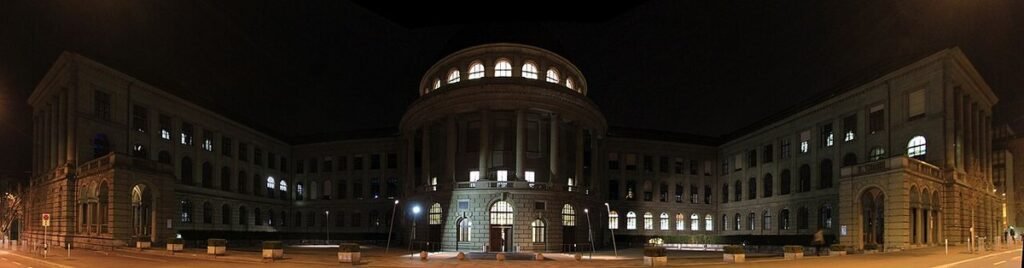
Table of Contents
ETH Zurich at a Glance: Rank, Fees, Deadlines and the Tripled Tuition
| Fact | Detail |
|---|---|
| Full name | Eidgenössische Technische Hochschule Zürich (Swiss Federal Institute of Technology Zurich) |
| Founded | 1855, as the federal polytechnic school (“Polytechnikum”) [1][5] |
| Location | Zurich, Switzerland |
| Type | Public research university of the Swiss Confederation |
| QS World Ranking 2027 | #=8 (score 96.3, tied UCL); QS 2026: #7 (96.7) [1][2][3] |
| THE World Ranking 2027 | #12 (93.6); THE 2026: #11 (93.1) [2][3] |
| ARWU 2026 | #19 (48.0); ARWU 2025: #22 (44.1) [3] |
| U.S. News Best Global 2026–27 | =33 (78.6, tied UNSW Sydney); 2025–26: #35 [2] |
| Students | 26,942 (2025 headcount, including 4,266 doctoral students) [1] |
| International students | About 44.5% (2025, ≈11,989 of 26,942); from about 130 countries [1][6] |
| Departments | 16 [1][6] |
| Campuses | 2 — Zentrum (city centre) and Hönggerberg [2] |
| Programmes | 23 Bachelor’s (mostly German), over 40 Master’s (mostly English) [18] |
| Nobel Prizes associated | 22 [4][5][19][20] |
| Tuition (Indian students) | CHF 2,190/semester (CHF 4,380/year) [1][4][5] |
| Compulsory semester fees | CHF 74 [2] |
| Application fee | CHF 150 per programme [12][14] |
| Living costs | About CHF 22,100/year; total study + living CHF 28,100/year [5][10][11] |
| Acceptance rate | No official figure — estimated 25–27% overall, 10–20% for Master’s [2][13][16] |
| Post-study work | 6-month job-search permit after graduation [18][21] |
The Two Myths That Cost Indian Families an ETH Place
Myth 1: “ETH Zurich charges CHF 730 a semester for everyone.” This was true for many years, and it is the sentence that still appears in guide after guide — including some published in 2026 [18]. It stopped being true in the Autumn Semester 2025, when ETH Zurich (and EPFL) tripled tuition for foreign students who move to Switzerland to study [4][5][9]. If you budget CHF 730 a semester, you will be short by CHF 2,920 a year — about ₹3.31 lakh — and you will discover it only when the invoice arrives. The honest figure for an Indian student is CHF 2,190 a semester, CHF 4,380 a year [1][4][5]. Even at the tripled rate, ETH is still dramatically cheaper than any top-10 American or British university — but you must budget the real number, not the famous one.
Note: Your fee group is set once, before you start, and cannot change later — not even when you move from a Bachelor’s to a Master’s [5]. If you arrive as a foreign student, you stay in the CHF 2,190 group for the whole degree. There is no way to “become Swiss” for fee purposes mid-course.
Myth 2: “ETH is just a cheaper MIT — apply the same way.” ETH is not a cheaper MIT; it is a different system entirely. There is no Common App, no SAT, no holistic American-style review, and no spring entry. There is one Master’s window a year — November — and if you miss it, you wait a full year [12][14]. Bachelor’s admission is not a competition against other applicants at all: it depends on whether your school-leaving certificate is recognised as equivalent to the Swiss Matura — and Indian CBSE/ISC certificates generally are not, which means an entrance examination [16]. And the Bachelor’s is taught in German. The Indian student who treats ETH like an American application will miss the window, fail the language requirement, or both.
My advice: For almost every Indian student, the right plan is: finish your Bachelor’s in India with a very strong CGPA, then apply for an English-taught ETH Master’s in the November window, with the ESOP scholarship application filed at the same time. That single plan avoids the German barrier, the entrance exam, and the certificate-equivalence problem in one move.
Rankings That Actually Matter — and the Ones That Are Just Noise
ETH Zurich is the highest-ranked university in continental Europe, and it has held a top-10 world position for years. For an Indian STEM student, the subject rankings matter more than the overall one — ETH is a specialist, not a generalist.
| Ranking system | ETH Zurich’s position | What it tells you |
|---|---|---|
| QS World University Rankings 2026 | #7 (96.7) | #4 in Europe on the global table; directly behind Cambridge (#6) in the 2026 top ten — MIT 1, Imperial 2, Stanford 3, Oxford 4, Harvard 5, Cambridge 6, ETH 7 [1][2][3] |
| QS World University Rankings 2027 | #=8 (96.3, tied UCL) | A one-place fall; still firmly top 10 — and the only continental-European university in the top 10 [1][4][5] |
| Times Higher Education 2026 | #11 (93.1) | THE weighs teaching and research environment more heavily [2][3] |
| Times Higher Education 2027 | #12 (93.6) | The current edition [2][3] |
| ARWU (Shanghai) 2025 | #22 (44.1) | Research output and Nobel-level recognition [3] |
| ARWU (Shanghai) 2026 | #19 (48.0) | The current edition [3] |
| U.S. News Best Global 2025–26 | #35 | A much lower position — U.S. News weighs different indicators [2] |
| U.S. News Best Global 2026–27 | =33 (78.6, tied UNSW Sydney) | The current edition [2] |
| QS subject: Engineering & Technology 2026 | #3 (92.7) | The ranking that matters most for Indian engineering applicants [7] |
| QS World University Rankings: Europe 2026 | #2 (98.3) | ETH’s regional position — #1 in the 2025 edition; #1 in continental Europe [4] |
A note on the numbers: the QS 2026 top ten runs MIT 1, Imperial 2, Stanford 3, Oxford 4, Harvard 5, Cambridge 6, ETH Zurich 7, NUS 8, UCL 9, Caltech 10. ETH at #7 means it outranks every university in continental Europe and sits one place behind Cambridge.
My advice on rankings: If you are choosing between ETH and a top American university for a Master’s in CS, engineering or natural sciences, the ranking gap is not the deciding factor — the cost gap is. ETH’s total annual cost (about ₹31.8 lakh including living) is roughly a third of Stanford’s or MIT’s. For a PhD, choose on the professor and the lab, as always.
The table below puts the ETH Zurich guide 2027 key numbers in one place. Where a figure is missing, I tag it rather than estimate it.
| Metric | Figure | Note |
|---|---|---|
| QS World Ranking 2026 | #7 (96.7) [1][2][3] | #4 in Europe on the global table |
| QS World Ranking 2027 | #=8 (96.3, tied UCL) [1][4][5] | A one-place fall; still firmly top 10 |
| THE World Ranking 2026 | #11 (93.1) [2][3] | — |
| THE World Ranking 2027 | #12 (93.6) [2][3] | The current edition |
| ARWU (Shanghai) 2025 | #22 (44.1) [3] | — |
| ARWU (Shanghai) 2026 | #19 (48.0) [3] | The current edition |
| U.S. News Best Global 2026–27 | =33 (78.6) [2] | The current edition |
| Acceptance rate | No official figure — guides estimate 25–27% overall, 10–20% for Master’s [2][13][16] | [RESEARCH GAP: Requires manual lookup of ETH Zurich’s official acceptance rate] |
| Student–faculty ratio | — | [RESEARCH GAP: Requires manual lookup of ETH Zurich’s student-to-faculty ratio] |
| Publication volume | — | [RESEARCH GAP: Requires manual lookup of ETH Zurich’s annual publication volume] |
| Tuition (Indian students) | CHF 2,190/semester (CHF 4,380/year) [1][4][5] | Since Autumn Semester 2025 |
| Total study + living | CHF 28,100/year [5][11] | ETH’s own estimate |
16 Departments, 23 Bachelor’s and 40+ Master’s: Where Do You Actually Belong?
ETH Zurich has 16 departments covering engineering, architecture, natural sciences, mathematics, and management and social sciences [1][6]. It offers 23 Bachelor’s programmes (mostly in German) and over 40 Master’s programmes (mostly in English) [18], with over 40 MSc tracks open to Indian applicants [15].
| Area | What ETH offers | Language | For Indian students |
|---|---|---|---|
| Computer Science | BSc + MSc Computer Science; Data Science; Robotics, Systems & Control | Bachelor’s German; Master’s English | A leading route for Indian applicants; MSc deadline 30 Nov 2026 [12][15] |
| Electrical Engineering & Information Technology | BSc + MSc Electrical Engineering and Information Technology | Bachelor’s German; Master’s English | Strong AI/ML and robotics research [20] |
| Mechanical & Process Engineering | BSc + MSc Mechanical Engineering | Bachelor’s German; Master’s English | Classic ETH strength — precision engineering [1][6] |
| Civil, Environmental & Geomatic Engineering | BSc + MSc Civil Engineering, Environmental Engineering | Bachelor’s German; Master’s English | [1][6] |
| Mathematics | BSc + MSc Mathematics; Computational Science & Engineering | Bachelor’s German; Master’s English | [1][6] |
| Physics | BSc + MSc Physics | Bachelor’s German; Master’s English | Einstein’s department — he studied and later taught here [18][19] |
| Chemistry & Applied Biosciences | BSc + MSc Chemistry, Chemical Engineering, Biology | Bachelor’s German; Master’s English | ETH has a Basel department (D-BSSE) since 2007 [20] |
| Architecture | BSc + MSc Architecture | Bachelor’s German; Master’s English | Highest living-cost estimate (CHF 31,400/year total) [5] |
| Management, Technology & Economics (MTEC) | MAS MTEC (Master of Advanced Studies) | English | The highest-paid ETH graduates: CHF 100,000–124,000 a year after graduation [17] |
| Health Sciences & Technology | BSc + MSc Health Sciences and Technology | Bachelor’s German; Master’s English | [1][6] |
| Earth Sciences / Environmental Sciences | BSc + MSc Earth Sciences, Environmental Sciences | Bachelor’s German; Master’s English | [1][6] |
| Humanities, Social & Political Sciences | BSc + MSc; Science, Technology & Policy | Bachelor’s German; Master’s English | The non-technical route — small but real [1][6] |
Pro tip: Each Master’s programme publishes a PDF requirements profile listing the exact knowledge it expects [14]. Read it before you apply — it tells you which courses from your Indian Bachelor’s the department will look for, and which gaps will sink your application. Most rejected Indian applications fail on subject match, not on CGPA.
Fees are uniform by residence status, not by department or programme; per-department Master’s acceptance rates are not published.
The Labs Where the Future Gets Built: Google Zurich, IBM and 500+ Spin-Offs
I judge a research university by what its labs let a scholar actually investigate — and that is the question this ETH Zurich guide 2027 asks me most, so I answer it here before the fees.
ETH’s research is organised through its 16 departments [1][6], and its position is what makes it usable: Google’s Zurich engineering campus is a short tram ride away, and the city hosts the research labs of Google and IBM alongside the headquarters of UBS, Novartis and Roche [20][21]. That proximity lets an ETH researcher work beside industry R&D.
The output of that system is measurable: ETH has spawned 500+ spin-off companies [19], and the Polymesse job fair draws 140+ national and international companies to recruit graduates on campus [17]. 22 Nobel Prizes are associated with ETH’s students, professors and alumni [4][5][19][20] — Einstein studied here and later taught here [18][19].
Doctoral research here is a job, not a scholarship: ETH doctoral students are employed as research/teaching assistants on a salary of CHF 53,500–83,500 a year (ETH’s fixed-rate scale, as of 1 January 2026) [19].
Researcher Insider Tip: Read each Master’s programme’s PDF requirements profile before you apply — it lists the exact knowledge the department expects, and most rejected Indian applications fail on subject match, not on CGPA [14].
The CHF 28,100 Question: What ETH Really Costs — and How to Pay Nothing
Here is the part that separates an honest ETH guide from a copied one: the fee depends on who you are and where you got your school certificate, not on the programme.
| Fee group | Who pays it | Tuition per semester | Tuition per year |
|---|---|---|---|
| Group 1 — simple fee | Swiss and Liechtenstein citizens; anyone who obtained their school-leaving certificate while resident in Switzerland or Liechtenstein; EU/EFTA citizens with a B, L or G permit with the remark ‘right to gainful employment’ (a permit limited to 15 hrs/week is NOT sufficient) or a C settlement permit, held before starting; refugees (F, S or B permit) [4][5] | CHF 730 (about ₹82,700) | CHF 1,460 |
| Group 2 — threefold fee | All other foreign students, including Indian students who move to Switzerland to study [4][5] | CHF 2,190 (about ₹2.48 lakh) | CHF 4,380 (about ₹4.96 lakh) |
The threefold fee has applied since the Autumn Semester 2025 [4][5][9]. On top of tuition, every student pays compulsory semester fees of CHF 74 (Academic Sports Association CHF 35 + Student Union CHF 32 + Scholarship Fund CHF 7) [2]. The application fee is CHF 150 per programme for applicants with a non-Swiss qualification (CHF 50 for Swiss-qualified applicants), non-refundable and not waivable [12][14].
Living costs — the real expense
Zurich is one of the most expensive cities in the world, and ETH is blunt about it. Its own Financial Aid Office estimates the following for international students [10][11]:
| Cost | Per year (CHF) | About |
|---|---|---|
| Room rent | CHF 11,300 | Canton of Zurich average, 2024 [11] |
| Meals | CHF 7,200 | [10][11] |
| Personal expenses | CHF 1,680 | [11] |
| Total living costs | CHF 22,100 (about ₹25.0 lakh) | ETH Financial Aid Office estimate [10][11] |
| Tuition (Group 2) + study costs | ≈CHF 6,000 | Tuition CHF 4,380 + semester fees + study costs = CHF 6,028 [5][11] |
| Total: study + living (Group 2) | CHF 28,100 (about ₹31.8 lakh) | ETH’s own estimate [5][11] |
| Total for Architecture | CHF 31,400 | Higher study costs [5] |
ETH itself recommends budgeting CHF 20,000–26,000 a year for average living and study costs [4][10] — but that range fits Group 1 students (ETH’s Group 1 total is CHF 25,200); a Group 2 student’s ETH total is CHF 28,100 a year. The canton of Zurich accepts CHF 21,000 for twelve months as sufficient living funds for the residence permit [11]. A year at a Swiss public university, all in, typically costs CHF 22,000–35,000 depending on the city [9] — that is a Switzerland-wide range, not an ETH figure; ETH’s own all-in figure is CHF 28,100 a year (CHF 31,400 for Architecture).
(Rupee figures use CHF 1 ≈ ₹113.3, the Wise mid-market rate on 11 November 2026. Check the live rate before you budget — the franc is strong and moves.)
Note: Switzerland is not in the EU [14]. That matters for visas, work rights and residence permits — Swiss rules apply, not EU student rules. Non-EU students may work 15 hours a week, only from six months after the start of their course [6], at part-time wages guides put at roughly CHF 20–30 an hour [21].
The Scholarships That Actually Change an Indian Student’s Arithmetic
ETH has no undergraduate scholarship for Indian students worth planning around. For Master’s students, one scholarship changes everything — and the Swiss government has a second route for researchers.
| Scholarship | What it covers | Who can apply | Deadline / status |
|---|---|---|---|
| ETH Excellence Scholarship & Opportunity Programme (ESOP) | Full tuition waiver + CHF 13,500 per semester living stipend (from Autumn Semester 2027; CHF 12,000 for earlier cohorts), for the regular 3–4 semesters of a Master’s [1][8][9] | Top Master’s applicants — roughly the top 10% of Bachelor’s graduates; around 60 awarded a year [8] | Same as the Master’s application: 30 November 2026 [14] |
| Swiss Government Excellence Scholarships (ESKAS) | Full funding for postgraduate research — CHF 2,450 a month for 2027–28 (research fellowships and PhD scholarships; the postdoctoral track was abolished from 2027/28 — CHF 1,920 was the pre-2026 rate and CHF 3,500 the old postdoctoral rate), plus tuition, health insurance and airfare [10][11] | Researchers from 180+ countries who already hold a Master’s; maximum age 35 [10][11] | Applications open since 20 August 2026, submitted through Swiss diplomatic representations; deadlines vary by country [11] |
| ETH doctoral funding | Full salary — CHF 53,500–83,500 a year (ETH’s fixed-rate scale, as of 1 January 2026); doctoral students are employed as research/teaching assistants, not scholarship holders [19] | Admitted PhD students | With the PhD application |
About ESOP, because it deserves the detail: it is ETH’s flagship Master’s scholarship, and it is genuinely transformative — tuition waived plus CHF 13,500 a semester from Autumn Semester 2027 is roughly CHF 27,000 a year of support, which covers most of your living costs in Zurich [1][8][9]. Decisions are communicated by the end of March [8]. You do not apply separately in the usual sense: the ESOP application rides on your Master’s application in the same November window [14]. That means your November file must be scholarship-grade, not merely admission-grade — your Bachelor’s transcript, your study plan and your references are judged for ESOP at the same time.
Pro tip: ETH’s own ESOP page confirms the stipend rises to CHF 13,500 per semester from the autumn semester 2027 [4] — so a student starting in Autumn 2027 gets CHF 13,500 a semester, not CHF 12,000.
How to Get ETH to Pay for Your Degree
The funding below is what this ETH Zurich guide 2027 covers before the fees make sense — because one scholarship here can make ETH effectively free, and the doctoral route pays a salary.
The ETH Excellence Scholarship & Opportunity Programme (ESOP) is the award that changes everything: a full tuition waiver plus CHF 13,500 per semester living stipend (from Autumn Semester 2027), for the regular 3–4 semesters of a Master’s, awarded to around 60 top Master’s students a year — roughly the top 10% of Bachelor’s graduates [1][8][9]. Decisions are communicated by the end of March [8]. For researchers, the Swiss Government Excellence Scholarships (ESKAS) offer full funding for postgraduate research — CHF 2,450 a month for 2027–28 (research fellowships and PhD scholarships; no postdoctoral track from 2027/28), plus tuition, health insurance and airfare [10][11] — for researchers from 180+ countries who already hold a Master’s, with a maximum age of 35 [10][11].
Doctoral students are not scholarship holders: they are employed as research/teaching assistants on CHF 53,500–83,500 a year (ETH’s fixed-rate scale, as of 1 January 2026) [19]. During study, non-EU students may work 15 hours a week, only from six months after the start of their course [6], at part-time wages guides put at roughly CHF 20–30 an hour [21].
How to apply for funding, step by step:
- File ESOP with your Master’s application — the Excellence Scholarship deadline is the same 30 November 2026 [14]. Your November file must be scholarship-grade, not merely admission-grade.
- Apply for ESKAS through the Swiss diplomatic representation in India — applications opened 20 August 2026 and deadlines vary by country [11].
- Apply for a PhD as a job — doctoral funding comes with the admission offer as an employment contract [19].
Crucial Compliance Note: Your fee group is set once, before you start, and cannot change later — not even when you move from a Bachelor’s to a Master’s [5]. If you arrive as a foreign student, you stay in the CHF 2,190 group for the whole degree.
How to Apply Without Wasting Your One Shot
Master’s (the realistic route for Indians), Autumn 2027 entry
1. Shortlist up to two programmes — and only two. ETH caps you at two programmes per cycle [15]. Rank your first choice carefully. Each programme publishes a PDF requirements profile — read it against your transcript first [14].
2. Check your Bachelor’s qualifies. It must comprise at least three years of full-time study or 180 ECTS credits — a three-year Indian degree meets the formal minimum [14]. ETH publishes minimum grades by country: for India it is 8.8/10 [13]. Meeting the minimum means you can be considered; it does not guarantee a place [13].
3. Sort out English early. ETH accepts TOEFL, IELTS (Academic only — not General Training), C1 Advanced and C2 Proficiency; results must be no more than two years old (five years for C2 Proficiency, and for C1 Advanced with Grade A) [14][16]. The guides put the typical requirement at IELTS 7.0 [12]. You are exempt if your Bachelor’s was taught completely in English and your university officially confirms it — get the medium-of-instruction letter from your registrar in September or October, not in the last week of November [14].
4. Apply in eApply, 1–30 November 2026. The window opens 1 November 2026 and closes 30 November 2026 at 11:59 am CET (4:29 pm IST) — midday, not midnight [12][14][16]. Pay the CHF 150 fee per programme by credit card; it is non-refundable and cannot be waived [14]. ETH says late or incomplete applications cannot be processed [13][14].
5. File ESOP at the same time. The Excellence Scholarship deadline is the same 30 November 2026 [14]. If you want ESOP, your file must be ready in November — there is no second chance.
6. Wait for the decision. Decisions arrive within 2 to 3 months of the closing date [12], and ESOP decisions are communicated by the end of March [8].
Bachelor’s (only if you are serious about German), Autumn 2027 entry
1. Understand the barrier first. The main teaching language of all Bachelor’s programmes is German [14]. You need a German C1 certificate by the application deadline, 31 March 2027 — the deadline is fixed and non-negotiable, and applications with invalid, insufficient or missing certificates are rejected after 31 March on formal grounds [12][13] — and you apply in eApply by 31 March 2027 with that certificate [4].
2. Check whether your certificate is recognised. Bachelor’s admission depends on whether your school-leaving certificate is recognised as equivalent to the Swiss Matura — it is not a competition against other applicants [16]. Indian certificates (CBSE, ISC and most state boards) are generally not on the list of diplomas that grant direct admission [16].
3. Expect the entrance examination. Most Indian Bachelor’s applicants must sit ETH’s entrance examination (the Aufnahmeprüfung) — either the reduced version (mathematics, physics, chemistry, biology) or the comprehensive version (those subjects plus German, a foreign language — French, English or Italian — History and Geography), depending on your qualification [16]. A letter of university admission in the same subject from a recognised Indian university qualifies you for the reduced exam; without it, you sit the comprehensive exam [12].
4. Apply 1 December 2026–31 March 2027. The Bachelor’s window for foreign school-leaving certificates runs 1 December 2026 to 31 March 2027 [12][13]. There is no spring entry.
If you need an entrance examination, note the route: for Autumn 2027 entry you had to apply by 31 March 2026 and the exam is held 18–28 January 2027 [12] — exam registration was 15 September–15 October 2026. So the December 2026–March 2027 window leads to Autumn 2027 entry only through examination-free admission; the exam route from this window leads to Autumn 2028 entry.
My advice on timing: If you are in Class 12 now and dreaming of ETH, do not plan a direct Bachelor’s application. Plan a strong Indian Bachelor’s in your target subject, learn German on the side if you love the language, and apply for the English-taught Master’s in the November window three or four years from now. That is the route that actually works for Indian students.
Every Deadline That Decides 2027 Entry — Miss One and You Wait a Year
| Date | What happens |
|---|---|
| 20 August 2026 | Swiss Government Excellence Scholarship 2027–28 applications opened (via Swiss embassies) [11] |
| 1 November 2026 | Master’s eApply window opens (international Bachelor’s) [12][14] |
| 30 November 2026, 11:59 am CET | Master’s application deadline + ESOP scholarship deadline [12][14][16] |
| 1 December 2026 | Bachelor’s eApply window opens (foreign school-leaving certificates) [12][13] |
| 18–28 January 2027 | Entrance examination (Autumn 2027 entry) [12] — for Bachelor’s applicants who applied by 31 March 2026; exam registration was 15 September–15 October 2026 |
| End of March 2027 | ESOP decisions communicated [8] |
| 31 March 2027 | Bachelor’s application deadline (foreign certificates; German C1 required) [12][13] |
| 30 April 2027 | Master’s window for Swiss Bachelor’s holders (not relevant for India) [12] |
| 30 April 2027 | Bachelor’s deadline for Swiss school-leaving certificates [13] |
| 20 September 2027 | Autumn Semester 2027 begins [13] |
The Documents That Decide Your File — and the Ones That Don’t Matter
| Document | Notes |
|---|---|
| Bachelor’s degree + transcripts (Master’s applicants) | At least 3 years / 180 ECTS; India minimum grade 8.8/10 [13][14] |
| Detailed study plan (only if your programme lists it) | A short document explaining why this programme at ETH and which research areas interest you [16] |
| English test or exemption letter | TOEFL / IELTS Academic / C1 Advanced / C2 Proficiency (max 2 years old; 5 years for C2 Proficiency and for C1 Advanced with Grade A), or an official medium-of-instruction letter confirming English was the sole medium [14][16] |
| Two professors’ references (only if your programme lists them) | Ask in September–October, not in the last week of November [14] |
| Passport | Valid for the Swiss residence permit application |
| Proof of funds | Canton of Zurich accepts CHF 21,000 for 12 months as sufficient living funds [11] (Canton of Zurich figure; no federal SEM figure found) |
| Class 12 mark sheets + German C1 certificate (Bachelor’s applicants) | German C1 required by the application deadline, 31 March 2027 [12][13] |
| University admission letter in the same subject (Bachelor’s applicants) | From a recognised Indian university; qualifies you for the reduced exam [12] |
| Application fee CHF 150 per programme | By credit card in eApply; non-refundable [14] |
Inside ETH’s Two-Campus World: Campus, Clubs and Zurich Prices
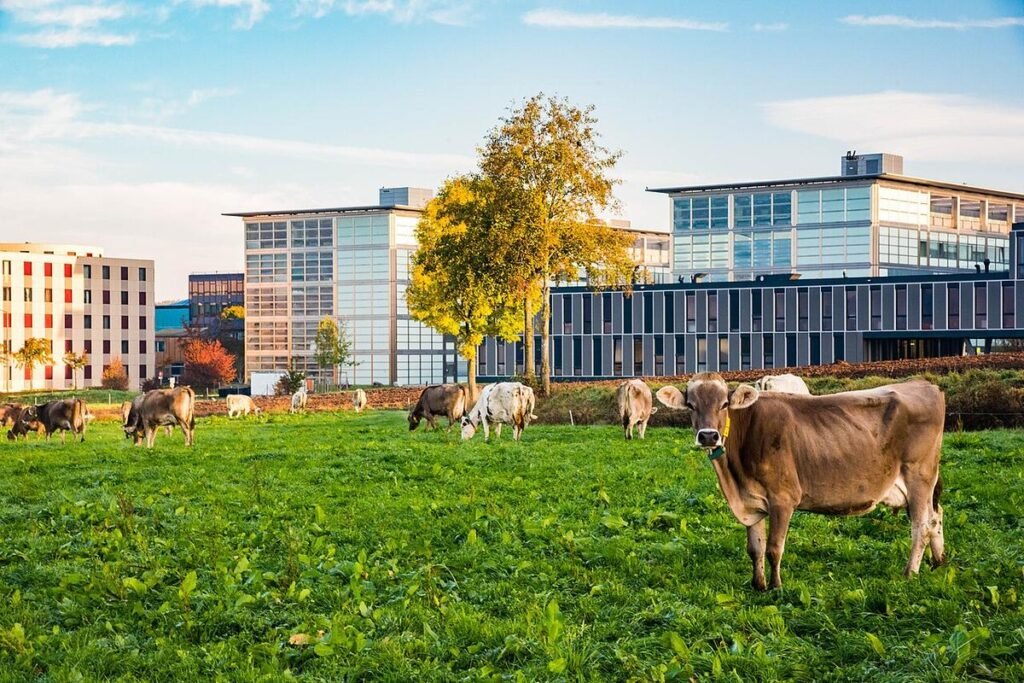
ETH Zurich has two campuses: the historic Zentrum campus in the city centre, built around the main building, and the modern Hönggerberg campus on the hill above the city — where, famously, cows still graze in front of the science buildings [2]. The university is a public institution of the Swiss Confederation, and its stability and independence come from federal funding rather than cantonal budgets [20].
Student life is rigorous and international: about 44.5% of students are international (2025), from about 130 countries [1][6], and the working language of the Master’s programmes is English. The Polymesse job fair — ETH’s own careers fair — draws 140+ national and international companies to recruit graduates on campus [17]. There are hundreds of student associations, and the Academic Sports Association (ASVZ) is part of your compulsory semester fees [2].
Zurich itself is the advantage and the cost. Google’s Zurich engineering campus is a short tram ride from ETH, and the city hosts the research labs of Google and IBM alongside the headquarters of UBS, Novartis and Roche [20][21]. But Zurich is one of the most expensive cities on earth — your CHF 22,100 living budget is a floor, not a ceiling, and a coffee, a haircut and a tram pass all cost Swiss prices.
Note: Non-EU students may work only 15 hours a week, and only from six months after the start of their course [6]. Do not plan your budget around part-time work in the first semester — it is not legally available to you. After graduation you get a 6-month job-search permit [18][21].
I found no verified count of Indian students at ETH to state here. [RESEARCH GAP: Requires manual lookup of the number of Indian students at ETH Zurich]
What ETH Graduates Actually Earn — the Salary Numbers, Honestly Read
ETH publishes its outcomes through alumni surveys rather than a single placement report, so I am using the survey figures the guides report — and flagging where they disagree.
| Outcome | Figure | Source |
|---|---|---|
| Graduates in full-time work (alumni survey) | 97.2% (2,657 respondents) | [17] |
| Average monthly salary (all graduates) | CHF 9,009 (about ₹10.2 lakh/month) | [17] |
| MAS MTEC graduates, 1 year after studies | CHF 100,000–124,000/year [RESEARCH GAP: Requires manual lookup of MAS MTEC graduate salaries one year after studies — CHF 100,000–124,000 vs CHF 115,000–130,000] | [17] |
| MAS MTEC graduates, 5 years after studies | CHF 125,000–149,000/year (for 50% of graduates) | [17] |
| Graduates working in Switzerland | 88.4%; Germany 6.3%, Austria 0.7% | [17] |
| Highest-paid fields (mean wage) | Management/Technology/Economics, Electrical Engineering & IT, Agricultural Sciences, IT — over CHF 11,000/month | [17] |
| Average graduate starting salary (guide estimate) | CHF 95,000/year | [19][21] |
| Graduates employed within 1 year | 95%+ [RESEARCH GAP: Requires manual lookup of the share of ETH graduates employed within one year] | [19] |
| Polymesse job fair | 140+ companies recruiting on campus | [17] |
| Top recruiters (LinkedIn data) | Roche, UBS, University of Zurich, Google | [17] |
Two honest notes. First, the MAS MTEC salary appears in the same Shiksha page as both CHF 100,000–124,000 and CHF 115,000–130,000 one year after studies — I used the lower range [17]. Second, the “average monthly salary of CHF 9,009” comes from an alumni survey, not from a university-published first-destination report — it is the best available figure, not an official one.
The structural advantage is real: Switzerland’s pharma (Novartis, Roche), finance (UBS), precision engineering (ABB) and tech (Google Zurich) sectors all recruit directly from ETH, and 88.4% of graduates work in Switzerland [17] — which means the high Swiss salary is not a brochure promise, it is where graduates actually land.
Einstein, 22 Nobel Prizes — and the Names You Should Read Critically
ETH’s alumni list is dominated by one name — but the depth behind it is what matters.
| Person | What they did |
|---|---|
| Albert Einstein | Studied at ETH 1896–1900 (diploma as a subject teacher of mathematics and natural sciences) and later taught here as Professor of Theoretical Physics 1912–1914; Nobel Prize in Physics 1921 [17][18][19] |
| Felix Bloch | Nobel Prize in Physics 1952; ETH alumnus [17] |
| Richard R. Ernst | Nobel Prize in Chemistry 1991 for Fourier-transform NMR; ETH alumnus and professor [17] |
| Lino Guzzella | President of ETH Zurich January 2015–end 2018 (Rector 2012–2014); mechanical engineering professor [17] |
| The 22 Nobel laureates | 22 Nobel Prizes are associated with ETH’s students, professors and alumni [4][5][19][20] |
ETH is linked to 22 Nobel Prizes [4][5][19][20] — ETH’s own count (“researchers who have or had a connection with ETH Zurich”); older guides saying 21 are superseded. ETH has also spawned 500+ spin-off companies [19].
Why This Guide Names No Professors — and How to Find Yours
The project document for this guide asks for the top professors and principal investigators by name. I am not listing individual professors here, and I want to be plain about why: I could not verify a current, accurate list of individual PIs from a citable source [RESEARCH GAP: Requires manual lookup of current ETH Zurich principal investigators by department], and a stale or wrong list of “top professors” would mislead you more than it would help. Professors move, retire, and change labs; a 2026 guide that names 2023’s stars is worse than useless.
What I can tell you, verified: ETH’s research is organised through its 16 departments [1][6], its close ties to Swiss government research agencies [18], and the pipeline into Google Zurich, Novartis, Roche and the Swiss tech sector [20]. The strongest route to a professor is the department route — read the faculty pages of the department you want, find the labs publishing in your area in the last two years, and write to the PI with a specific question about their work. That email, not a list in a guide, is what gets a PhD applicant noticed. For a PhD, remember: ETH doctoral students are employed on a salary of CHF 53,500–83,500 a year (ETH’s fixed-rate scale, as of 1 January 2026), not funded by a scholarship [19].
More University Guides
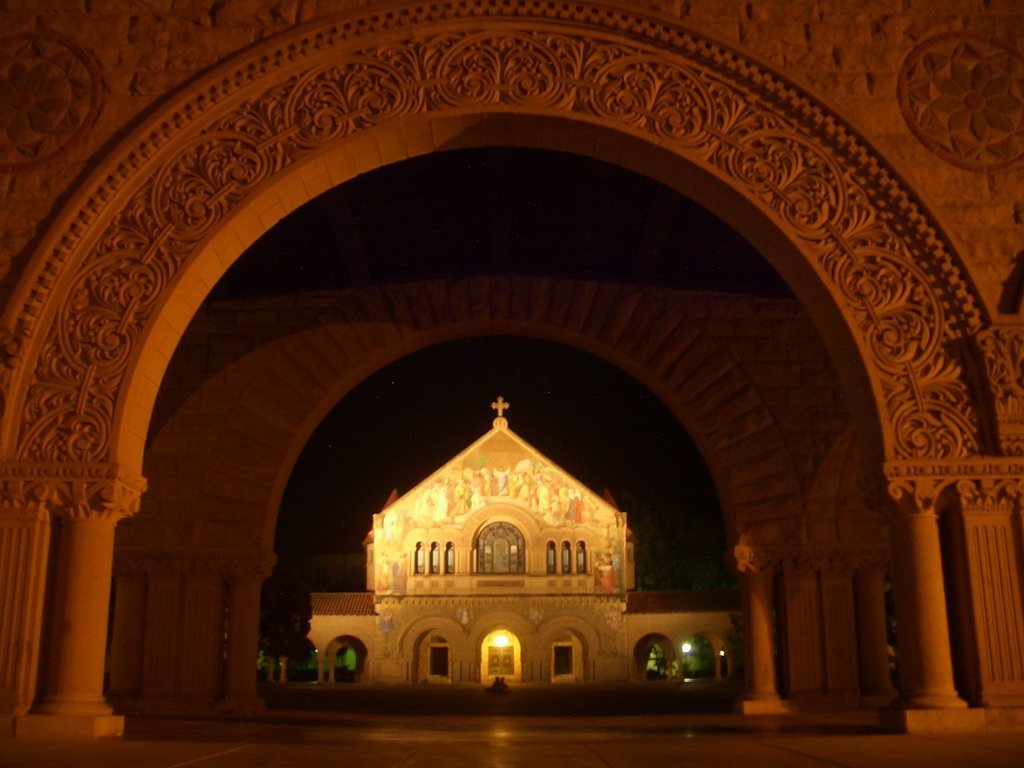 Stanford University Guide 2027: Fees, Aid, Admissions & the Silicon Valley AdvantageUSA • University Guide
 MIT Guide 2027: Fees, Admissions & Scholarships for Indian StudentsUSA • University Guide
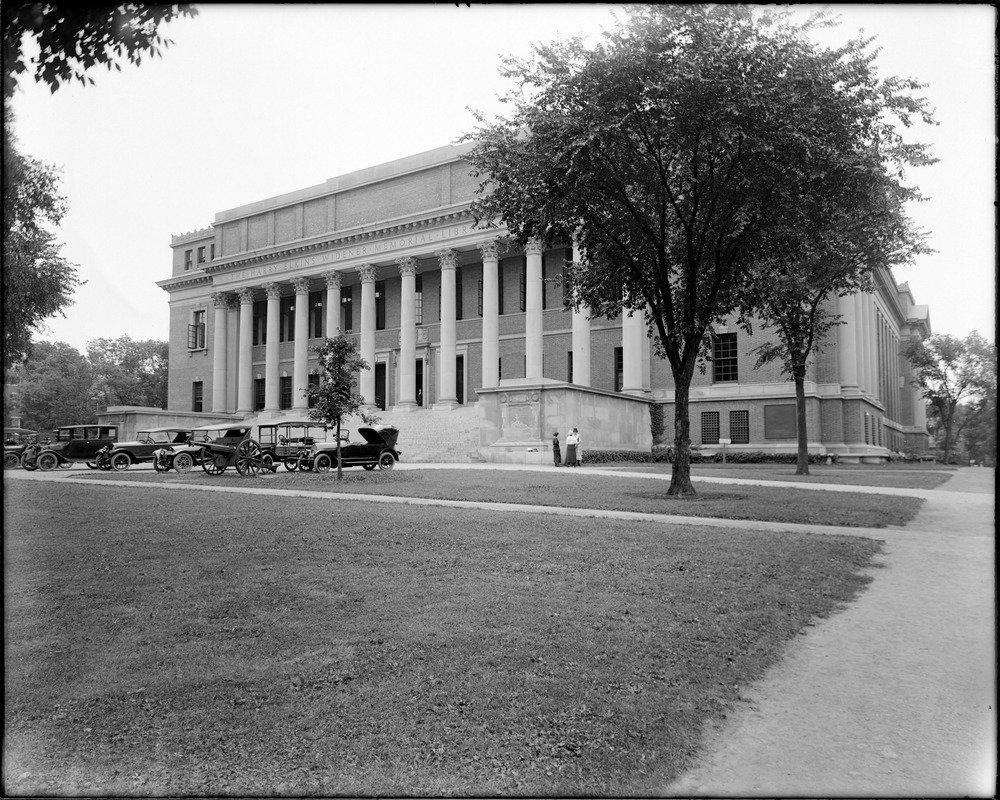 Harvard University Guide 2027: Fees, Admissions & Scholarships for Indian StudentsUSA • University Guide
Frequently Asked Questions
How much does ETH Zurich cost for an Indian student in 2027?
Tuition is CHF 2,190 per semester (CHF 4,380 a year, about ₹4.96 lakh) for foreign students who move to Switzerland to study, in force since Autumn Semester 2025 [1][4][5]. Living costs add about CHF 22,100 a year, taking ETH’s total estimate to CHF 28,100 a year (about ₹31.8 lakh) [5][10][11].
Is ETH Zurich free for Indian students?
Not free — but it can become effectively free. The ESOP scholarship covers full tuition plus CHF 13,500 per semester from Autumn Semester 2027 for top Master’s students [1][8][9], and doctoral students are employed on a salary of CHF 53,500–83,500 a year [19]. Without a scholarship, budget about ₹31.8 lakh a year all in.
What are the ETH Zurich deadlines for 2027 entry?
Master’s applications run 1–30 November 2026, closing 30 November 2026 at 11:59 am CET [12][14][16]. Bachelor’s applications run 1 December 2026–31 March 2027 [12][13]. There is one intake a year — Autumn, starting 20 September 2027 — and no spring entry [12][13].
Can I apply to ETH Zurich for a Bachelor’s after Class 12?
In practice, almost never directly. Bachelor’s programmes are taught in German (C1 required), Indian Class 12 certificates generally do not grant direct admission, and most Indian applicants must sit ETH’s entrance examination [12][16]. The realistic route is an English-taught Master’s after your Indian Bachelor’s.
What is the ETH Zurich acceptance rate?
ETH has never published an official university-wide acceptance rate [16]. The guides estimate 25–27% overall and 10–20% for Master’s [2][13]. For a Bachelor’s, admission is not a competition against other applicants — it depends on whether your certificate is recognised as equivalent to the Swiss Matura [16].
Can I work in Switzerland after graduating from ETH?
Yes — graduates get a 6-month job-search permit [18][21]. The outcomes support it: 97.2% of graduates are in full-time work, 88.4% in Switzerland, with an average monthly salary of CHF 9,009 [17]. During study, non-EU students may work 15 hours a week only from six months after the start of their course [6].
Sources & Last Updated
Last updated: 11 November 2026. All sources were checked on 11 November 2026. Where a source disagreed with another, I have said so in the text.
- ETH Zurich (Swiss Federal Institute of Technology) — SukhadaEdu — founded 1855, 16 departments, QS 2026 #7, QS 2027 #=8, international tuition CHF 2,190/semester.
- ETH Zurich: Rankings, Fees, Courses, Admission 2027 — Shiksha — QS 2026 #7, THE 2026 #11, U.S. News 2025–26 #35, 26,000+ students from 130+ countries, 2 campuses, compulsory semester fees CHF 74, acceptance rate estimated 25–27%.
- ETH Zurich: Admissions Guide 2026 — Vappingo — QS 2026 #7, THE 2026 #11, ARWU 2025 #22.
- ETH Zürich — Complete Guide for International Applicants — College-Council — Bachelor’s eApply by 31 March with German C1, threefold fee CHF 2,190 since Autumn Semester 2025, QS 2027 #=8, 22 Nobel Prizes, ESOP CHF 13,500/semester from HS27, living CHF 20,000–26,000/year, QS Europe 2026 #2.
- ETH Zurich Tuition Fees — StudyU — tripled fee since autumn 2025, annual budget CHF 28,100 (Architecture CHF 31,400), 22 Nobel Prizes, QS 2027 #=8, THE 2026 #11, Master’s applications 1–30 November 2026.
- ETH Zurich — fees, entry bar and funding — Europe Study Point — 16 departments, 20+ Nobel laureates, non-EU work 15 hours/week from six months after the start of the course, Swiss Government Excellence CHF 2,450/month.
- 7 Cheapest Universities in Switzerland for International Students — GlobalScholarships — tuition CHF 730–2,190/semester, QS 2026 #7, #3 in Engineering and Technology (QS subject 2026), 35% of students from abroad, Einstein alumnus.
- ETH Zurich: Tuition, Scholarships & Visa Pathway 2026 — VisaCalc — tuition CHF 1,460–4,380/year, living CHF 22,200/year, ESOP CHF 13,500/semester from HS27 plus full tuition waiver for top 10% Bachelor’s graduates, ~60 awarded a year, decisions by end of March.
- Cost of Studying in Switzerland 2026 — Study-Abroad.org — ETH CHF 730/2,190 per semester (CHF 4,380/year), tripled for non-Swiss/non-EU from Autumn 2025, ESOP full tuition + CHF 13,500/semester from HS27, year total CHF 22,000–35,000.
- Financing your Studies in Switzerland — European Funding Guide — tripled fee since autumn 2025, living CHF 20,000–26,000/year, ETH estimate of living costs CHF 22,100/year (rent CHF 11,300, food CHF 7,200), Swiss Government Excellence Scholarship CHF 2,450/month for doctoral and research stays, over 180 countries.
- Study in Switzerland — StudyCountry — tuition CHF 2,190/730 per semester, Swiss Government Excellence Scholarships 2027–28 CHF 2,450/month (maximum age 35, applications open 20 August 2026 via embassies), canton of Zurich accepts CHF 21,000 for 12 months as sufficient living funds, ETH Financial Aid Office estimate: living CHF 22,100, total with tuition CHF 28,100.
- ETH Zurich Admissions 2027 — Collegedunia — Master’s window 1–30 November 2026 (4:29 PM IST), Bachelor’s 1 December 2026–31 March 2027, Class XII 90%+, German C1, CHF 150 application fee per programme, acceptance estimated 25–27%, IELTS 7.0.
- ETH Zurich Acceptance Rate for International Students — upGrad — acceptance estimated 25–27% (no official rate), Master’s 10–20%, India minimum grade 8.8/10, Bachelor’s German C1, Master’s English, entrance examination in maths/physics/chemistry, Autumn Semester 2027 starts 20 September 2027.
- Study at ETH Zurich as an International Student | 2026 Guide — Falcon Nova Consultants — one Master’s window a year in November, Switzerland is not in the EU, Bachelor’s taught in German, Master’s minimum 3 years/180 ECTS, requirements profile PDF, English exemption letter, deadline 30 November 2026 11:59 am CET (also the ESOP deadline), two-programme cap, CHF 150 fee non-refundable.
- ETH Zurich: Ranking, Acceptance Rate, Fees, and Admissions — Collegedunia — 40+ MSc tracks open to Indian applicants, eApply portal, single Autumn intake, Master’s 3–4 semesters in English, Bachelor’s 6 semesters in German, Bachelor’s total tuition CHF 13,140, two-programme cap.
- ETH Zurich Acceptance Rate 2027: What It Really Is — LeapScholar — ETH has never published an official university-wide acceptance rate, Bachelor’s admission depends on certificate equivalence to the Swiss Matura, Indian CBSE/ISC certificates generally not on the direct-admission list, entrance examination (Aufnahmeprüfung) reduced or comprehensive, Master’s window 1–30 November 2026, IELTS Academic only.
- ETH Zurich Placements 2025 — Shiksha — placement rate 97.2% (alumni survey, 2,657 respondents), average monthly salary CHF 9,009, MAS MTEC CHF 100,000–124,000 one year after (also stated as CHF 115,000–130,000), CHF 125,000–149,000 after five years, 88.4% working in Switzerland, Polymesse 140+ companies, top recruiters Roche/UBS/University of Zurich/Google, alumni Einstein/Bloch/Ernst/Guzzella.
- ETH Zurich | India Guide 2027 — Karan Gupta — 22 Nobel laureates including Einstein, 6-month post-study stay, 500+ spin-off companies; also the source of the outdated “CHF 730 per semester for ALL students” claim corrected in this guide.
- ETH Zurich | Programs, Fees & Admissions — EducationalHub — 22 Nobel laureates, 500+ spin-off companies, doctoral salary CHF 53,500–83,500/year.
- ETH Zurich, EPFL, and Your Child’s AI Future — JetLearn — 22 Nobel laureates, Google Zurich pipeline, federal university funded by the Swiss Confederation.
- Study in Zurich 2026 — Kadamb Overseas — part-time work CHF 20–30/hour, 15 hours/week, 6-month job-search permit, Google/UBS/Novartis in Zurich.
By Rohit Gupta
If you found this guide useful, share it with another Indian student who is dreaming of ETH Zurich. And if you spot a fact that has changed — a deadline, a fee, a new scholarship — write to me at universityresearchers3@gmail.com and I will check it against the official source and update this guide.
[…] 🇨🇭 Switzerland […]
[…] 🇨🇭 Switzerland […]
[…] 🇨🇭 Switzerland […]